Buy anything from 5,000+ international stores. One checkout price. No surprise fees. Join 2M+ shoppers on Desertcart.
Desertcart purchases this item on your behalf and handles shipping, customs, and support to Japan.
🎨 Elevate your DIY game with pro-level precision and speed!
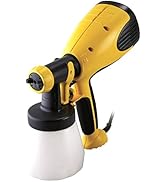
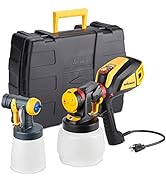
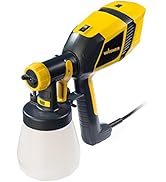
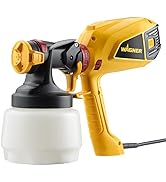
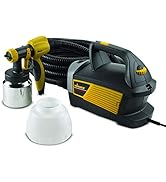
The Wagner Control Spray Max HVLP Paint Sprayer delivers professional-grade finishes with its powerful 510W motor and high volume, low pressure technology. Featuring a 20-foot hose for extended reach and adjustable pressure and flow controls, it handles a wide range of materials including latex paints, stains, and primers. Designed to reduce fatigue with a stationary base and versatile spray patterns, it’s perfect for millennial managers who demand efficiency, quality, and ease in their home improvement projects.


| ASIN | B003PGQI48 |
| Best Sellers Rank | #60,181 in Tools & Home Improvement ( See Top 100 in Tools & Home Improvement ) #133 in Power Paint & HVLP Sprayers |
| Brand | Wagner |
| Brand Name | Wagner |
| Color | Yellow/Black |
| Customer Reviews | 4.3 out of 5 stars 4,019 Reviews |
| Global Trade Identification Number | 00024964194964, 10024964194961 |
| Hose Length | 240 Inches |
| Included Components | 20 ft. Hose, Cleaning Kit, Control Spray Max HVLP Sprayer, Instruction Guide, Metal Cup, Nozzle, Plastic Cup |
| Item Dimensions W x H | 12"W x 18.5"H |
| Item Type Name | HVLP Stain Sprayer |
| Item Weight | 5.1 Kilograms |
| Manufacturer | Wagner Spraytech |
| Manufacturer Part Number | Control Spray Max |
| Manufacturer Warranty Description | 1 Year |
| Material | Metal, Plastic |
| Material Type | Metal, Plastic |
| Maximum Pressure | 2.63 Pound per Square Inch |
| Model Name | Control Spray |
| Model Number | 0518080 |
| Power Source | AC/DC |
| Recommended Uses For Product | 20 ft. hose, Adjustable flow control with 3 spray patterns, Superior nozzle, Use with a variety of materials, Variable aire pressure control Recommended Uses For Product 20 ft. hose, Adjustable flow control with 3 spray patterns, Superior nozzle, Use with a variety of materials, Variable aire pressure control See more |
| Style Name | HVLP Stain Sprayer |
| Tank Volume | 1.5 Quarts |
| UPC | 172304346044 872182815730 080850317329 100177418544 021112826692 763615760683 716080067405 072080017353 024964194964 051020034193 752913147326 651256045354 191120025209 151902999838 351428773442 803982727404 172302816594 |
| Unit Count | 1.0 Count |
M**S
Great Sprayer for the DIYer
I bought this quite awhile back (a little over a year ago), so I have used this item a lot. I now have a more expensive (10X the cost) HVLP rig, but I have found that this little Wagner gun is so MUCH more VERSATILE and EASIER to use, that I use this one more often than the expensive one. I can spray oil-based paints and primers, as well as water-based products, with hardly any effort. Cleaning up is fast and easy, too. You CAN get a 100% perfect, professional finish IF you take your time, read and re-read the manual, and you practice with it, first. Do not expect to pull it out of the box, fill it, spray with it, and have perfect results. I suggest that you gather lots of cardboard and buy a can (quart or gallon) of cheap paint (the same type as your first project requires (water- or oil-based)). Then, buy the appropriate diluent (read the paint can), the compatible additive (i.e., Penetrol for oil-based paints and Floetrol for water-based paints). While you're at the paint store (or you are on Amazon.com) pick up some medium size (pertaining to particle filtration size, not overall size) disposable paint filters. My two spray painting mantras are, "Practice does make perfect!" and "Paint additives can make ALL THE DIFFERENCE IN THE WORLD between a professional-looking paint job, and just an awful looking paint job!" That's it in a nutshell, but I've written at length about the first time I used this sprayer. If what I learned can help you get great results on your first project, it may be worth the time it takes to read: My first project was not the smartest one to choose as a first project to paint with a spray gun. It was the wainscoting and trim in my dining room. But, it came out so perfect, that even after a year, the glassy, smooth, sprayed surfaces still impresses me so much, I cannot believe I did them! But, back then, I didn't know any better, so I thought I would just start right in with the painting, buying the exact same paint and color (Sherwin Williams Alkyd) the installers had used. I lightly sanded all of the wainscoting and trim, as best I could, to scuff up the surfaces. I also used a liquid deglosser, since sanding detailed trim is thankless, tedious work. But, most of all, I spent a lot of time caulking (using PAINTABLE caulk) areas that had pulled apart from "settling," or that were not properly caulked by the installers in the first place. I let the caulk dry thoroughly. Actually, it was all the cracks and crevices in the joined edges of the woodwork caused by improper (or complete lack of) caulking, and some due to settling, that had caused the need to paint the trim and wainscotting. Next, I started in with the viscosity tests. I used paint thinner first, but then I read up on additives. So, I switched to using a combination of paint thinner and Penetrol (by Flood, purchased at Lowes). I can't recall the exact ratio of paint thinner to Penetrol I ended up using, but I think it would be safe to say about half and half. Of course, paint thinner was what my product called for as a thinning agent. Paint additives, like Floetrol and Penetrol, help produce a smooth, glassy finish. The additives can help make up for a multitude of sins! For example, if you did not properly adjust your air/paint flow, you could end up with a painted surface that has an orange peel texture (a common problem). If it's not too bad, the additives themselves can make that problem completely disappear! But, that's not too surprising, because one of their purposes is to reduce, or eliminate, brush marks! Once I had all of my paint thinner and Penetrol added in order to achieve an acceptable viscosity test, I was alarmed at how much I had diluted the paint! I had definitely diluted it beyond what the manufacturer had recommended (as stated on the can). Thankfully, I was worried enough that I decided to practice on some cardboard, rather than on the dining room walls, first, as I had planned on doing after reading all of the positive reviews here, thinking I could just spray the walls and get great results! And, although it didn't take long before I was able to get a nice, smooth coating on the cardboard, I am really thankful I did! I would have been scraping and sanding walls, for sure! I also stood the cardboard up vertically, like the surface I would be spraying (vertical surfaces are much harder to spray without getting drips and runs), so I could get a feel for how much paint I could apply before getting runs. It wasn't very much! I had to keep the gun moving relatively quickly. But, by then, I had to send my husband back to Sherwin-Williams for another can of paint, just to be sure I would have enough paint! Before getting to the viscosity tests, though, I had basically turned my dining room into a giant spray booth, but without an explosion-proof fan mounted in the window! I covered the windows, ceiling, and upper walls with plastic, masking off all of the edges. I also taped plastic over the two doorways, masking around all of the edges of EVERYTHING. I used thick plastic drop cloths on the floor, but I goofed by not taping them down as securely as I should have. So, I had to stop and do some clean-up and remedial taping when I saw that the air coming out of the nozzle was blowing up the edges of the plastic! Naturally, I used a respirator, and was covered head-to-toe in disposable painting attire. The air was thick with paint mist when I did paint. But, I expected that in the enclosed space. I put on a total of four coats, as I thought with all of the diluting, they would be thin coats. They were, but I wouldn't say that was a bad thing! I don't own a mill gauge (something I just recently learned about!), so I couldn't tell you how thick each coat was, but they were thick enough to cover bare wood without being transparent enough to see the wood grain show through, but not so thick that it would cause runs or drips. I always sprayed a small piece of cardboard, leaving it in the dining room, but near the opening, so I could easily check when the paint was dry enough to recoat, without touching the trim or walls themselves. It dried much quicker than I had anticipated, given all of the dilution. I did get a couple of runs, but I just sanded them off when the paint had dried enough to produce a powder when sanded, and not rub or rip. Of course, I sprayed these areas again. Even with the massive amount of prep work required (most of it would have still been required if I was brushing-on the paint, such as all of the caulking), the amount of time It took to spray, clean-up, dry, spray, clean-up, etc., was only a fraction of that time that would have been required for me to brush on all of the coats! The results were, as I said, spectacular. Today, the wainscoting and trim still look as fantastic as they did the day II had finished painting them. I was worried the dilution of the paint would have affected the wear or appearance of the surfaces, but it did not. So, I would never be afraid to dilute paint more than stated by the manufacturer on the can. Not being a paint professional, I do not know how they arrive at those figures, but for myself, I would always dilute the product according to what is recommended in the sprayer manual (using viscosity cup and timing the flow), and not what is stated on the can. But, I always read the can of the product I am using, because it tells me what to use in order to thin the product (the diluent). For oil-based PRIMERS, I use only the recommended diluent or solvent, and I omit the additive (Penetrol). To date, I have not used water-based PRIMERS, but I would probably only use distilled water for the diluent (unless the can stated to use another type of diluent, that isn't water). A shellac-based PRIMER would probably call for denatured alcohol as the diluent. Again, always defer to the can/manufacturer for the diluent to use, but defer to the sprayer manual for the proper dilution rate (using the viscosity cup). For water-based paints, I use a mixture of one part distilled water and one part Floetrol (50-50) to dilute the paint. I also use a medium filter for all paints and primers, and it is the last thing I do before I spray paint. Disposable filters are cheap, so I use a fresh, new filter when I fill or refill my sprayer cup. If I fill the cup three times during a project, I've used three filters. I always gather some cardboard to use to warm-up on, and, most importantly, to help me fine-tune the settings on the sprayer, so that I achieve the best finish possible. If your paint is properly diluted, and your spray is properly adjusted, I just don't think you will be ever be unhappy with the results. Thoroughly cleaning up your equipment as soon as you are finished painting is also extremely important. If you have a tiny, dried, speck of paint in the nozzle, you will not get good results. I have found those really thick pipe cleaners (oh, excuse me, I mean CHENILLE STEMS) are invaluable as an aid to cleaning out the inside of the slanted plastic tube that is inserted into the paint cup. Some other tips I've learned include spray painting early in the morning, when there is less likely to be a breeze, if I am painting something outside. Avoid spraying in direct sunlight, too. Finally, if there is a result that is not to your liking, Google it to find a solution to the problem. I have learned so much from doing this, and watching Youtube videos, too. If all else fails, call the manufacturer because there is always a small chance you could have a defective part that needs to be replaced. Dilute and practice with your cheap practice paint. If you can achieve a great finish on your cardboard (make sure the cardboard has a smooth surface to begin with, too!) using your cheap paint, you will surely be able to get an amazing finish with your higher quality paints and finishes.
C**T
I went ahead and purchased it and it's one of the BEST purchases I have made
I have had the unit for a month now and have used it for its intended purpose, to paint my kitchen cabinets. I read all the comments here and took all of them to heart, as Amazon buyers always give the most helpful remarks. I was hesitant, and a bit apprehensive, as the only spray painting I had ever done was in a can. A home DIY'r to the max, this was new to me. I went ahead and purchased it and it's one of the BEST purchases I have made! Here's some methods I used. Using Behr Ultra latex paint and primer, what worked best for me was adding just 1 cup of water to the entire gallon, and I don't really think I needed to, as straight from the can, the sprayer did very well. I just wanted to extend the paint a bit and make it a bit thinner. I set up a "paint booth" on an enclosed porch with lots of windows, started with one cabinet and took off the doors, everything out of the drawers, etc. By the time I got one section done, I was painting in the kitchen, leaving the doors on and just masking off the insides. The sprayer worked that accurately for me. Once you play with the settings, you can be very accurate as to where the paint goes, with little overspray. I used cheap, $1.00 red poster board, as the paint was white and I could get the best idea of how the paint would go on. I cut the posterboard to the size of the inside of the cabinets, (I did not need to paint the insides), taped it and voila..done in a jiffy! I also used the posterboard, held in one hand behind the doors, while painting with the other hand so no overspray would go anywhere but on the doors. I have the air set as a bit less than medium and painted about two-three inches away from the cabinets. l did used plastic to cover the counters, tv, etc., and did get a bit of overspray on a window, but nothing big and it came right off. My bad..I got much better after this! I painted three coats per "section" (we have a large kitchen), and then two coats of poly the next day..the poly required much less air, but went on perfectly. I did not thin that at all. I took my time, let the coats dry 11/2 hours in between, and they came out beautiful! One thing I had going for me is that we are having a new floor installed, so I didn't obsess about getting any overspray on the floor at the bottom of the cabinets, which isn't much. This machine will work wonderfully for you, take your time, experiment with it, posterboard is great to use in a contrasting color with painters tape. Keep a paint brush around, in case you see some drips so you can blend in. If I had any poly drips, I used the paint brush that had white paint on it and it blended perfectly! Can't wait for summer to get here...Spring, even, so I can move out to refinish the decks. BTW, very, very easy to clean, much quicker than trays, brushes, etc. I highly recommend the Wagner HVLP sprayer! Make sure you have windows open and wear a mask the 3M07192 is great for this. Have fun and Good Luck! Before and after pics
T**S
Perfect for certain types of jobs
SUMMARY: Great product for the money, but only for certain jobs! I would recommend it for any outside work, but would not recommend it for painting interior walls, as the effort required to minimize overspray and obtain the perfect dilution/spray velocity outweighs any gains in speed or ease of use. DETAILS -- FIRST ATTEMPT::WALLS This Wagner has the most hits of any sprayer on the internet, and you can find many video blogs reviewing the product. However, what is lacking of sprayers in general are first-hand accounts of actual end users (especially first-time users). This Wagner is my first paint sprayer. Last year I repainted the entire inside of my house; walls, trim, doors, shelves and all in preparation to move out and get a new house. All of that work was done with traditional rollers and brushes. When we purchased our new house I was desparate to find some way to speed up the process. I researched many sprayers and read many reviews. I found many positive reviews for sprayers in the $800+ range, but was unwilling to commit to that kind of purchase having never used a sprayer. With the Wagner in the $100 range I figured even if it was a bust it was worth the effort. The first two times I used the sprayer was to paint the walls in the dining room and kitchen area, as these were the smallest wall surface areas in the house, and had flooring that was soon to be replaced, so messes were of little concern. The sprayer is very easy to use -- simply dump paint in the hopper, twist-n-lock the spayer assembly together, turn on the power, and push the trigger. Having not ever used a sprayer before, my wife and I spent a great deal of time blue-taping and laying down dropcloths. I taped all trim and I ran a layer of tape along the ceiling where it butted up against the walls, just in case. I had planned to "practice" with all those safety things in place, then decide which I could forego in all the rest of the rooms. It turned out that even the blue tape and dropcloths were not enough to keep all of the overspray out. During the process I stopped to go to the hardware store and purchase a paint shield and some painters paper. I added the painters paper to the ceiling and ended up having painters paper, blue tape, and a paint shield in place while painting the upper edge of the wall. I was disappointed to *still* have a small bit of overspray in a few area of the ceiling. I also tried diluting the paint and adjusting the velocity of the air, but never seemed to achieve the right combination. The problem with diluting is the paint can says, "See sprayer for dilution instructions", and the sprayer says, "See paint manufacturer for dilution instructions". I learned that too much dilution will cause the paint sprayer to "spit" and the paint to run. In the end I completely abandoned the sprayer for the walls and went back to the tried-and-true rollers. I am sure I could have achieve the results I wanted with the sprayer, but it would have taken such a long time as to negate any benefits from the sprayer -- the main reason I bought the thing was to hasten the painting process! DETAILS -- FIRST ATTEMPT::DOORS After rolling all the walls, I decided to give the sprayer a second chance on the doors. I removed several doors and placed them outside against a wall lined with dropcloth. Taking a tip from a painter, I nailed paint stirs to the top of the doors to keep them from butting directly against the wall. After lining them all up, I filled the sprayer and got to work. This time I skipped the dilution; I went full strength and simply turned up the velocity all the way to get the paint flowing as I did not care about overspray. This worked flawlessly! I have never painted doors this fast. In fact, these were all panel doors which are notoriously hard to paint with a brush. I kid you not that I had half a dozen doors, front and back painted in less than 30 minutes easily. I had some minor dripping on the first door, but after acclimating to the paint viscosity, all other doors look great! CONCLUSION For the money this is well worth the investment for anything other than painting interior walls. In fact, if you are used to using sprayers you probably will have success even on interior walls (if you do, please tell me how!). I can imagine painting fences, chairs and other items outside would be even easier than doors as literally no prep (dropcloths, etc.) would be needed.
S**N
Very nice sprayer, easy to use, easy to clean, but watch for over spray
I have never used a paint sprayer before. I have used spray paint in the past but never had good luck with it because I always ended up with uneven results that had runs. I installed some new baseboard over carpet and wanted to paint it after it was installed. This would be an extremely difficult task using paint brushes, hence my desire to purchase a paint sprayer. Wagner makes several paint sprayers with mixed reviews, although the vast majority of people liked this sprayer including myself. I got some masking paper and used a drywall taping knife to carefully tuck the paper between the carpet and baseboard. I then got ready to spray a very thick primer which had the consistency of pancake batter. I added the equivalent of 16 ounces per gallon of distilled water (no conditioner). It was still very thick but this unit had no problems spraying it. I completed over 60 feet of 6 inch baseboard in less than 30 minutes. I had no issues with runs and it was very easy to apply the primer evenly. During the painting, the hose came off the hand unit a couple of times causing a small stream of paint to land on the ground (not the baseboard fortunately). It would be nice if the manufacturer could make the connection tighter. The one issue I did have that I was not aware of was with a particular type of over spray. I always thought over spray was when the paint overshoots the target area and paints the adjacent area. With respect to this type of over spray, there was very little of it as the over spray was less than 6 inches on either side (I used a wide spray pattern). There is a second type of over spray that occurred. There were fine paint particles that did not adhere to anything and dried in the air. When I completed the project, there was a fine film of dry paint dust throughout the room. The dust was heavy and settled quickly and did not spread to other areas of the home. The dust was easy to vacuum (I used a HEPA vacuum to avoid re-spreading it), although I had to re-wash my bed spread and pillow covers. This was totally unexpected but then again I have never used a paint sprayer before. Therefore, goggles and a dust mask are a must as well as covering all furniture and belongings that can't easily be removed. Cleanup was extremely easy. After priming, I applied a coat of paint and diluted it to the equivalent of 8 ounces of distilled water per gallon per the paint manufacturer specifications. I also strained the paint. The paint was still thick but I had no problems spraying it. The finish result was nice but not as good as the results a professional painter can get using a high power airless sprayer and oil based paint; however this machine is very inexpensive for what it can do. I also would never rent a high power airless sprayer because they are dangerous and can cause injection injuries. The latex paint had a mild spray texture to it (not like the orange peel texture described by another reviewer) which is fine for baseboards but probably not as ideal for crown molding which are much more visible. For the crown molding, I want the finish to be as smooth as glass. I will likely use the sprayer to apply the primer and the first coat of paint (as the sprayer works much faster than I can hand paint) and will possibly do a finish coat using my Purdy paint brushes and latex paint with paint conditioners added to slow the drying time to get that final smooth finish. Per the manufacturer Q&A, this machine can be used indoors with latex paint even though the sticker on the unit states it is for outdoor use only.
D**8
Love this sprayer!
I bought this sprayer after weeks of research and confusion as to which one is right for my situation! My primary and immediate use was for two sheds one 10x10, and one 10x20. I needed to build / rebuild the sheds and paint the inside and outside of each. Again I tried to do research but there are so many options it is confusing! I knew I wanted a Wagner because of their reputation and quality of product, but I was not sure which. I finally settled on this one, and have been very happy! I used an exterior latex paint, and used the Wagner Paint Easy conditioner to slightly thin the paint, and this gun has worked flawlessly! The conditioner is only 4 oz per quart, and here locally I can get it for $9.99 with enough in the container to do 2 gallons. The instructions and use of this sprayer are spot on, and could not be easier. Overspray has been minimal, but again I am painting sheds, and really was not too concerned with getting paint on the floor. The only recommendation I have, would be instead of the small metal can in the box, if they would include a second 48oz plastic container. Doing this would allow you to mix three quarts of paint between the two containers and quickly switch them out. I I have found parts a little difficult to find, but have not researched it very well. I would like to order another of the foam seal that sits in the lid, a second container, and a set of the air filters. The length of the hose is very good, and has allowed me to put the motor far enough from the sprayer that there is no concern of overspray getting into the motor. Also, I have seen others complaining about the noise of this pump when it's running, but absolutely did not have any issues with the loudness of the motor. Cleaning all of the components has been very easy, but again I am using a latex paint so soap and water is all I have needed. Again, I love this paint sprayer, and I'm already planning many other projects inside that I have been putting off for years!
B**D
Easy, Fun and Economical. Get one.
Just finished my third project using this sprayer in approximately 2 weeks. During today's project (painting the garage doors) I got to thinking how I had to review this sprayer as soon as I was done. I haven't tried any other sprayers on the market so I have nothing to compare this one to so this review is based solely on my experience with the Wagner HVLP. Bought it to begin with to paint the shutters on our home. We had the exterior brick painted off white and the painter wanted $450 to paint the shutters so to save some money I bought this and did it myself. The shutters turned out great but did require plenty of prep work (cleaning, filling holes, sanding). Could not imagine painting louvered shutters by hand so the sprayer was completely in its element on them. I set up a stand in my back yard on a calm day with drop cloths on the grass and knocked them all 14 out with two coats in about 3 hours. As others have said, practice on a box or board and get your paint consistency correct before beginning. I was using a pretty heavy exterior latex from Porter and would just add a splash of water at a time until it sprayed how I wanted it to. The other projects have been painting two wooden benches that were worn out by sun and rain exposure. With a light sanding and wipe down they took paint extremely well and look brand new. Today's project was garage doors being painted to match the color of the shutters. With proper cleaning using TSP and the necessary taping off they look awesome and give the classic white dated garage door a contemporary update to a grayish beige. I am so glad I purchased this sprayer, it has already saved tons of money and time and has been a pleasure to use. As with any tool you want to last you a long time, it must be well taken care of. I will spend probably 20 mins cleaning it after each use. The directions talk mainly about spraying soapy water through the system but I will take it completely apart and hold it upside down and let the water stream run into the intake while holding the trigger down. You will see watery paint come out for minutes even after spraying soapy water through it under power. I also use an old toothbrush and Krud Kutter spray to get into all the crevices and to clean the exterior. The only con I have found is tying to spray at angles besides straight on. If the straw sucks up any air it will splatter paint instead of spray. This is something you have to get used to and twist the straw in advance according to angles you think you might be experiencing. Highly recommended. Easy, fun and economical to use.
T**G
Works reasonably well, but has a tendency to overheat
This is the first paint sprayer I have purchased. Based on the previous reviews, and given the relatively low price, I set my expectations accordingly. I expected it might be difficult to get the right paint viscosity and expected clean-up to be difficult and time consuming. My initial project was to prime (INSL-X Prime Lock) and paint (Benjamin Moore Advance) 12 new cabinet doors and 8 new drawer fronts constructed from paint-grade maple. I chose the primer and paint based on advice from the BM dealer that these were less viscous than some of the alternatives, improving chances for success with an inexpensive sprayer. As expected, there was a learning curve on the first day. Straight from the can the primer was too viscous, resulting in droplets, even at maximum air volume and minimum paint stream. By trial and error I was able to thin the primer with mineral spirits and eventually found a consistency that sprayed uniformly and provided adequate coverage. I took my time, turning off the unit regularly between panels and when adding thinner. In all, I was able to complete the 20 panels in about 2 hours, using the sprayer about 50% of the time (typically on 5 minutes, off 5 minutes). I must admit I was pleasantly surprised by the clean-up -- it was not as bad as I expected. Even though the primer was oil-based, requiring cleanup with mineral spirits, I was able to clean the parts as recommended in about 15 minutes using about one cup of spirits. After drying, I sanded the doors and drawers with 220 grit paper and they cleaned up well, even those early drawers that had a lot of droplets. The second day I was ready to apply the base coat of BM Advance. I had all 20 panels sanded and lined up in assembly line fashion. I thinned the paint with water to achieve a viscosity similar to the one that was successful with the primer. I filled the 1.5 quart plastic canister and was ready to "go into production". Things proceeded well through the 8 drawer fronts and the first 3 door panels. Then the unit entirely stopped. I confirmed that the outlet still had power, but the unit would not restart. Suspecting it had overheated, I unplugged it and took it inside. Unfortunately part of the cleanup procedure is to spray clean thinner or water through the valve, something that is not possible when the unit is dead. I called the tech service line, but it was Saturday and support is only available Monday through Friday. So there I was with a half-completed project, and messy sprayer, and a dead turbine. After about 45 minutes, the unit would run again, confirming that it was probably a case of overheating. I will "baby" it in the future -- elevate the turbine so it can cool on the bottom surface, have a fan blowing on it, and use it intermittently. It's disappointing that the unit doesn't seem capable of running more than about 20-30 minutes continuously, but I guess that's what you get with a $100 unit. P.S. I am no longer living in Qatar, but I haven't yet figured out how to change my profile in Amazon.
M**Y
Works great, saves paint.
If you're thinking about buying this is probably because you've never owned a paint sprayer before and wonder if it will make your life easier than painting with a brush. Answer- yes. There aren't really any serious drawbacks, even in the cleanup (think of what you have to do with brushes). It works well. The experience is, the paint goes on much more thinly than what you might have imagined; you won't cover an area with one pass the way you would with a brush. So you're in effect building up thin layers of paint as you go. As far as arm the motion of applying the paint goes, you'd have to be trying to make a mistake with this thing for things to go wrong. It's really no surprises kind of deal; the air blows, it takes the paint with it, the paint is pretty evenly applied without bubble spatters or suchlike. Back and forth a few times and viola, it's done. Now it's not a flipping airbrush, meaning, it doesn't apply paint with absolutely no trace of spattering whatsoever- you can't do infinite amounts of shading with it, but it doesn't need to be to paint walls, fences, furniture and still have a completely professional outcome. Perhaps that's what people pay 1000 dollars for when they buy better models, then again perhaps even that doesn't buy you that level of fineness. My point is, it's fine for interior / exterior painting and especially painting surfaces where a brush would make it a lot of work. We had a long fence that fit this description and it literally 1/8th the time it would have taken me. I used something called flocontrol which you can get at your big box. It supposedly makes the paint flow more freely. I can't say I needed it (I have never not used it). I just needed things to turn out right the first time and didn't want to take the chance I would have problems. Just reporting the facts of how I used it. Yeah this is going to change painting for me. It's just faster and better and above all else- how could I have left this out- terrifically more sparing of paint than a brush. I would not be surprised to learn you use half the paint or even less paint than you otherwise would have using a brush. The reason is, you stop applying paint layers when it looks right, whereas with a brush the first stroke already delivers too much paint to the area you put the brush down on and then you try to spread that excess around. Somehow this works out to be much more wasteful of paint than one supposes. Yeah go ahead and get it. Fact: I saved 35 bucks my first time using this because of the paint I didn't have to apply. I have a gallon of paint I never opened. I have to imagine it will continue to save me money going forward for the same reason. I expect it to pay for itself and then save me even more money over its lifetime. Be sure to clean it as per the instructions; you can see how it would cease to function if the small passages inside it where paint flows through and gets "atomized" would cease to function with dried paint stuck to them. You have to have a ready supply of flowing water with which to clean this soon after you're done. It puts that requirement on you. Some parts also need to be swished around in a little cup of water. This is not cumbersome or mysterious, and neither is taking it apart and putting it together. All in all a jolly good buy !
O**4
This thing is a beast!
I tried a cheaper 70$ sprayer/fan combo (forget the brand) and it works ok. But at high velocity or takes a while and doesn't pray a ton of paint. It also clogs up sometimes. This one is insane. You can spray a whole door in seconds and the spray zone is much larger. Adjustments for spray volume and fan speed is awesome. Only thing that sucks is the attached hose that is a bit of a pain and can get in the way. Love it
R**L
Great customer service
A pleasant experience with seller. I do recommend the seller and the product. Thanks
O**R
Sufres por qué quieres ..
Llegó a tiempo y en buen estado. Es un excelente producto, es muy fácil de usar y sobre todo de limpiar, no hace tanto ruido Lo recomiendo ampliamente deja un acabado muy fino una vez que ajustas el chorro. Me tarde más en preparar el cuarto que en pintar con está herramienta
G**L
súper Wagner
funciona bien, un poco difícil de utilizar, por las custiones de la velocidad del aire, supongo es aprendizaje, Una pieza venía suelta y se fue al interior de la maquina, por lo demás funciona muy bien
N**K
I really don't want to send this back, but....
I live in the UK and couldn't find this model of Wagner Sprayer for sale here. Went ahead and purchased one, but obviously it isn't designed for the UKDM. I have now had a chance to test it (after writing an answer to another potential buyers question) by using an American to UK travel adapter. It powers up, but not comfortably. The UK voltage rate is far too high and I don't want to risk damaging it. The thing is, though, I really don't want to have to send this back as it's the one that I want, so will look into getting a transformer to step the voltage down first. Hopefully then it won't run hot. Would I recommend getting a Wagner Sprayer? Yes, definitely. Would I recommend getting one not designed for the UK? Sadly, no.
Trustpilot
1 week ago
2 weeks ago