
DOWNLOAD THE APP


Customer Services
Copyright © 2025 Desertcart Holdings Limited
DOWNLOAD THE APP
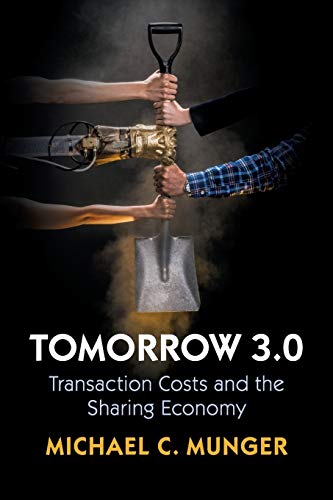
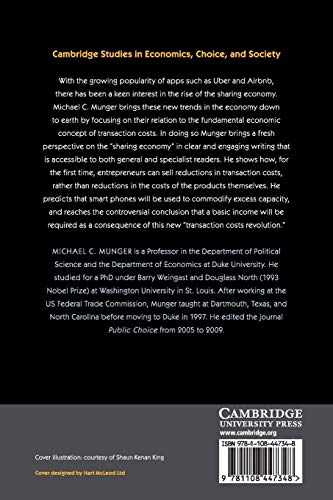

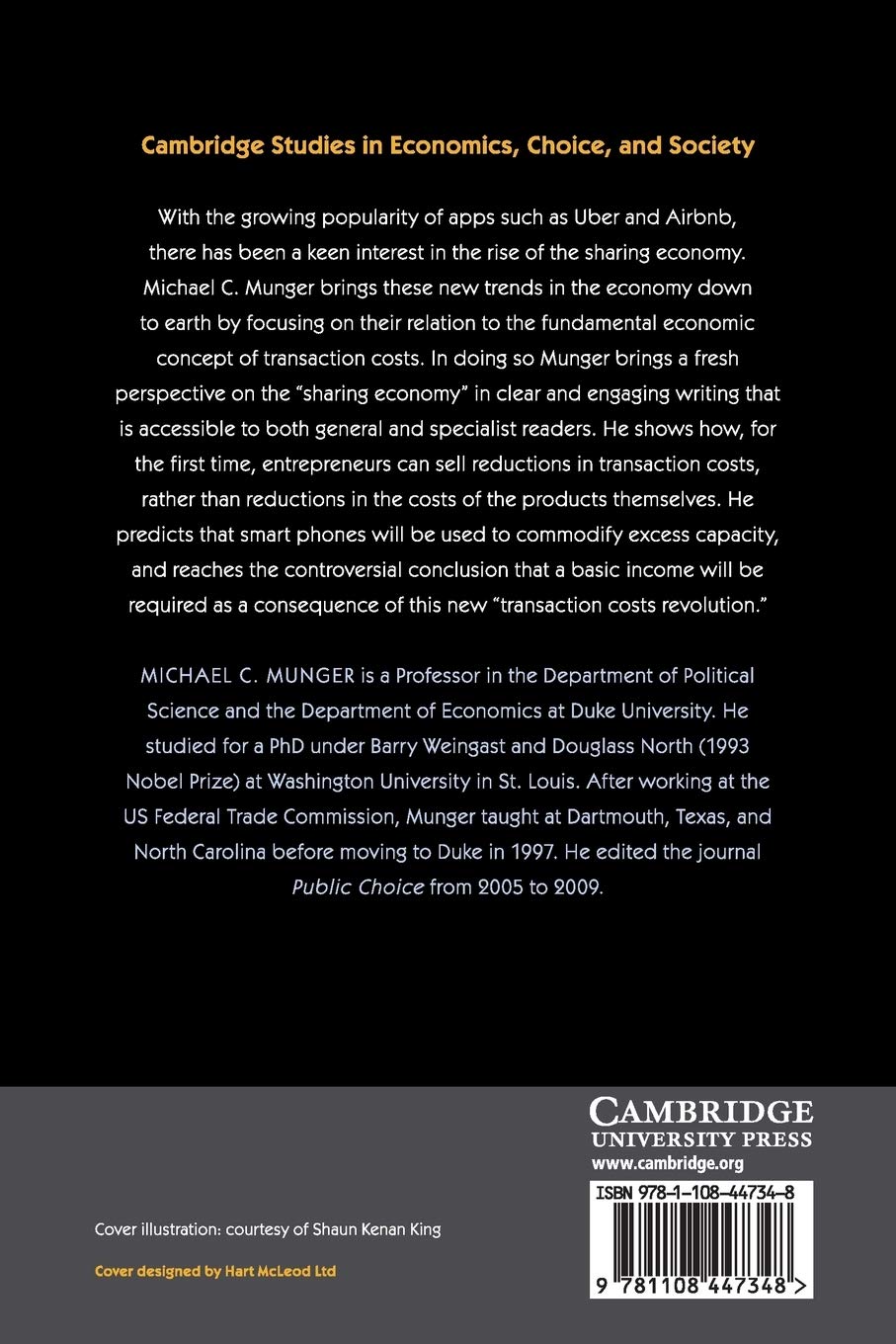
Tomorrow 3.0: Transaction Costs and the Sharing Economy (Cambridge Studies in Economics, Choice, and Society): 9781108447348: Economics Books @ desertcart.com Review: Next economic system - Many ideas to ponder- well referenced - a worthwhile read. The following is to meet the required word count, blah. Review: very good but not great - listen to the podcast EconTalk for a better story but also read this if you like the podcast.
| Best Sellers Rank | #1,912,278 in Books ( See Top 100 in Books ) #243 in Microeconomics (Books) #6,998 in Entrepreneurship (Books) |
| Customer Reviews | 4.4 4.4 out of 5 stars (75) |
| Dimensions | 6 x 0.43 x 9 inches |
| ISBN-10 | 1108447341 |
| ISBN-13 | 978-1108447348 |
| Item Weight | 9.6 ounces |
| Language | English |
| Part of series | Cambridge Studies in Economics, Choice, and Society |
| Print length | 188 pages |
| Publication date | March 22, 2018 |
| Publisher | Cambridge University Press |
Z**S
Next economic system
Many ideas to ponder- well referenced - a worthwhile read. The following is to meet the required word count, blah.
N**V
very good but not great
listen to the podcast EconTalk for a better story but also read this if you like the podcast.
S**N
Thought-provoking and Important
This book explains transaction costs in a way I had never previously considered, and it shifted my thinking about many aspects of economics and public policy. I especially appreciated the way he writes about basic income, a subject I know extremely well and the topic of a book I'm writing, due out in April.
K**N
Rethinking Transaction Costs in the Sharing Economy
Full Disclosure: Mike Munger was my advisor at Duke, many (many) moons ago. As someone who lives in Silicon Valley, I think this book provides a clear path to two key ideas: 1. How to reduce transaction costs in your company's products/services to get more customers. For example, if you can reduce the distance between your customer and your product, you are likely to have more customers. 2. How to think about turning owned goods (like your couch or your TV or the drill you rarely use) into revenue generating assets. Personally, I'm more excited about the latter. The improving opportunities to increase the utilization rate of their owned goods strikes me as a strong way for citizens to (a) make money with what they already have and (b) to reduce production waste. A more environmentally friendly planet would see all goods used at 100% utilization for the duration of goods' lifespans.
M**A
Listen to podcast
Things I wish were better: the author states that Amazon loses money on retail (false), and that AWS is just a “generic service robot” and a hosting platform for matching buyers and sellers (false). Later in the book, the author uses revenue and user numbers for Facebook and Twitter from 2015. This is a book published in late 2018! These companies report quarterly and there is no reason not to have used much more recent figures. There are plenty of typos (no spellcheck was run) and a few rudimentary grammar errors. There are some interesting ideas, yes. But as short as the book already is, it could be 1/4 of the length to communicate those ideas (it actually manages to be repetitive). Listening to the podcast on Econtalk with the author is probably all you need.
S**S
Great read
Really enjoyed it. Not too long.
V**Y
A great look into the future of the economy
This gives a great look ahead of how software will connect people with more information to drive down costs.
Y**G
A bright mind that is talking complete garbage
Absolute garbage, the author should be ashamed of the monstrosity that came out of his brain. Sharing will never work in the society, neither will paying every single citizen for doing NOTHING.
L**P
The book has a stamp that says damaged on it, but I see no visible damage, in fact it came to me in a better condition than some new books I have. If i come across any flaws as I'm reading through it I'll be sure to relay it.
M**D
Munger was a professor of mine in Europe. Very interesting book, rather well written, does not unnecessarily ramble on and on (it's only 150 pages). IMHO, this book offers a new perspective on the present economic transformation and is well worth the price tag.
S**F
Just finished reading. This book has brilliant content is not longer than necessary (less than 130.pages) frames. Superb thesis to help anyone understand how innovations led to economic revolutions in global history (neolithic, industrial revolution) and how innovation is transforming the economy now and will do so in the future.... the biggest problem to people transacting with each other is the presence of TRANSACTION COSTA. Gladly technological innovations (Uber, Airbnb...l help overcome transaction cost helping us to transact more and share goods and services.
Trustpilot
2 weeks ago
1 month ago