
DOWNLOAD THE APP


Customer Services
Copyright © 2025 Desertcart Holdings Limited
DOWNLOAD THE APP

🔋 Power your freedom, fast and green — never miss a moment!
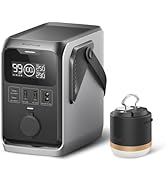
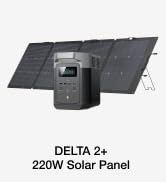
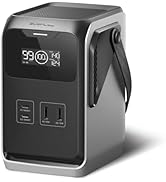
The EF ECOFLOW DELTA 2 is a robust 1024Wh portable power station featuring a long-lasting LiFePO4 battery, ultra-fast 7x rapid charging, and a powerful 1800W AC output. Designed for home backup, camping, and RV use, it supports modular expansion up to 3kWh and clean solar charging up to 500W. With 15 outlets and smart battery management, it delivers reliable, quiet, and eco-friendly power wherever you need it.















| ASIN | B0B9XB57XM |
| Best Sellers Rank | #756 in Patio, Lawn & Garden ( See Top 100 in Patio, Lawn & Garden ) #3 in Outdoor Generators |
| Date First Available | August 17, 2022 |
| Item Weight | 27 pounds |
| Item model number | EFD330 |
| Manufacturer | EcoFlow |
| Product Dimensions | 15.7 x 8.3 x 11.3 inches |
D**.
⭐⭐⭐⭐⭐ Rock-solid home backup setup: DELTA 2 + extra battery + solar (1+ year later)
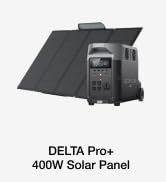
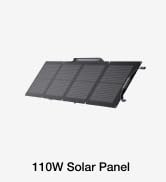
I bought the EcoFlow DELTA 2 along with the add-on battery and 400W solar panels a little over a year ago as a home backup solution—mainly for power outages during extreme weather. After owning and using this setup for over a year, I can say it’s held up very well and has done exactly what I wanted: reliable, ready-to-go backup power that doesn’t feel like a “toy” when you actually need it. Why I chose this setup: I wasn’t looking for something that only charges phones. I wanted a system I could depend on when the grid goes down—something I can: - Keep charged and ready - Scale up beyond 1 kWh - Recharge from solar if outages last longer than expected The DELTA 2 + extra battery checks those boxes in a clean, modular way. What I like most: 1) It’s been durable and dependable for over a year. The main unit and extra battery have both held up very well so far. That’s the biggest compliment I can give any “emergency” purchase—when you buy it for insurance, you want it to still be solid later. 2) The extra battery is worth it. The base unit is great, but pairing it with the add-on battery takes it from “nice backup” to something that feels legitimately useful in longer outages. More runtime means less stress. 3) Solar makes it a real resilience tool, not just a big battery. Having 400W of solar means I’m not purely dependent on wall charging. Even if you’re not trying to run your whole house, solar gives you the ability to replenish power during extended outages, which is exactly why I bought it. 4) It’s fast and practical to recharge and keep ready. One of the underrated things about EcoFlow is you can top it off quickly and keep the system “prepared” without it being a chore. What I’d tell someone considering it: If you’re buying for extreme weather / outages, I strongly recommend budgeting for the extra battery. If you want true outage resilience, adding solar is what turns it into a more complete plan—especially if outages can last more than a day. Whenever this setup eventually gives out, I'll definitely consider replacing with another Ecoflow product.
T**G
Black Friday purchase for supplemental outage backup
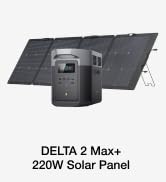
I downloaded the app from the App Store. I’m sure my CCP monitor will approve of this review. Intended use of my units: partial home power backup for small devices/appliances while experiencing a power outage. To be a stop gap while generator setup is performed. Would then be used for nighttime operations of refrigerators and tv setup to relieve generator. There are several more in depth reviews with users having utilized killawatt plugs or an oscilloscope. I have not done this. This review is based upon a single test use only, but I am pleased to this point with only one small gripe. The gripe first. I purchased two Ecoflow Delta 2 units on Black Friday for a considerable discount. One of the two (this one) was a Delta 2/200W (x2 100W panels) solar panel combo. The gripe is related to the solar panel. The unit is supplied with the connectors to link the panels which is as expected. However, the panel to PSS cable isn’t particularly long. If you want to say…leave the battery unit inside while your panels are mounted outside while you charge…well, you will need a male to female XT60 extension. That’s a small gripe, but it will mean another purchase. A 15’ cable inside of the 6’ cable would let me put panels outside while my Delta 2 is more safely kept inside. End gripe The unit seems reasonably sturdy in built. The assembly is tight and nothing rattles or creaks. The fan runs during charging and discharging as needed. It is not particularly loud in my opinion, but this is quite subjective and some may be more sensitive. The display on the unit is adequate telling you remaining charge and consumption rate while using or remaining charge time and input rate when using the AC cord or panels. The app is actually pretty good and easy to use. The unit can be turned on (at the device of course) and left in standby mode with no outlets active until you decide to power them up/down via the manual button or the app. I have not tested how long the device keeps charge while in standby and no outlets active but without load. This would take a long time and I do not see the point of leaving it in perpetual standby. I do like that you can designate upper charge capacity and lower discharge limits via the app. To me, this makes maintaining the device much simpler. I recognize that some will not appreciate the idea of limiting how fully you charge the device as it cannot be known when an outage will happen. Many will want to keep the device fully charged. I plan to follow Ecoflow’s guidelines for maintenance and charge state between actual need of the units. While LiFePO4 batteries are more forgiving, these are expensive and I’d like to keep them within warranty. This is why I got the solar panel option to supplement charging from my generator during an outage. The Deltas can power small items to give the generator a break at night or during oil changes and refueling or simply to help save fuel. The unit is about 27lb. It is not overly heavy for its size but take this into consideration as you may not want to move it a lot during use/storage (see gripe about XT60 cord length). It is early, but so far I am very happy with the quality and capacity of the units. One will run my stove blower for hours, or power the entertainment center for several hours and a refrigerator overnight based upon observed rate of discharge. These appear to be a good supplement to an outage protection plan.
M**R
Quality Product
It's gorgeous to look at I'll tell you that. I know that's not the important thing but why not? So far it's been solid. I do want to get the battery extension for it though for a decent amount of watt hours with certain appliances. Runs my mini fridge for a couple days though before needing a charge. Charges well on the car jack or in a wall outlet.
K**R
An absolute must have
Outstanding Portable Power Solution for Home Backup and Beyond! I recently purchased the EF ECOFLOW DELTA 2 Portable Power Station, and it has truly exceeded my expectations. With its massive 1024Wh LiFePO4 (LFP) battery, I feel confident that I have reliable power during outages or outdoor adventures. The 1800W AC output and 100W USB-C ports offer versatile charging options for a variety of devices, from home electronics to laptops and even small appliances. What I really appreciate is its fast recharge capability and compatibility with solar panels—perfect for eco-conscious users looking for sustainability. The build quality is solid, and it's lightweight enough for easy portability. Whether it's used as a backup power source at home, during camping trips, or for emergency situations, the DELTA 2 delivers consistent, clean energy when I need it most.
A**N
Reliable Portable Power for Home and Travel
This EF ECOFLOW power station is a solid and reliable power solution. It’s easy to use, charges quickly, and provides plenty of power for essential devices like phones, laptops, small appliances, and emergency equipment. The build quality feels sturdy and well-designed, and the display makes it simple to monitor battery levels and usage. It’s especially useful for power outages, camping, or as a backup power source at home. Overall, it delivers great performance and peace of mind, and I’m very satisfied with this purchase.
F**E
Fantastic! I bought it for my 85 y/o mother so she feels safer during short power outages. The unit charges really fast. Easy to operate. Depending on what is plugged in and how much the device consumes, it tells you the amount of time the battery will last. It powers her refrigerator, microwave, toaster, coffee maker, Tv, internet, some lamps, helps change her cell phone and additional rechargeable devices such as flash-lights. NOT ALL TOGETHER AT THE SAME TIME of course. You need to use some judgement when powering devices with it. Simple maths, as it runs watts per hour. You need to check the reader to see how much watts are being consumed. Microwave is the worse because it can empty the battery in 30 minutes. But if you use a microwave a max of 10 minutes during a short power outage, you’ll have plenty of battery left for many hours running lamps, internet, computer, radio, and even get your refrigerator cold again. Used wisely, that’s an amazing power backup for short outages. I’ll buy one for my own home now.
M**O
Funcionou por 3 meses apenas
M**O
Excelente producto, su carga es rápida, he tenido corte de energía por la zona donde vivo y la estación de energía me ha ayudado mucho, la última vez conecté un pantalla de 65 pulgadas, un ventilador, el módem y carga de celular duro más de 4 horas, ya no continué utilizando porque llegó la energía eléctrica. En cuanto al vendedor excelente, llegó en tiempo el producto y en en excelentes condiciones.
L**.
Best part is the ease of use. Plug stuff in, push the little 'AC' or 'USB' on buttons and it just works. This unit keeps us powered remotely for exactly 3 days at a time between recharges - running light power tools (drills, etc.) and all the LED lights in our shipping container, plus charging phones, laptops and tablets. Fast recharge is great. We found it charges 10% per hour with the DC car charger while driving, and it's probably somewhat helpful for the life of the unit to have it charge slowly like this. Very pleased with it so far. Six month update - this continues to be one incredible power pack. Built an entire off-grid cabin from the ground up (including running the cement mixer) using only it and dual 100w solar panels to charge during the day. Also runs a log splitter like a champ. Only issue we had was recurring shutoffs last week with a blinking fan warning light indicating (apparently - who reads the manual until they have to?) a blocked fan. Blew about a pound of sawdust out of the poor little unit and she was back to working like new. Pro tip: Don't set this under the table saw while cutting hundreds of 2x6's! ;) Love the ability to access so much info (state of charge as %, time to charge, wattage draw in-and-out, etc.) via the digital display. We can keep an eye on it minute-by-minute to know when we have to plan a break to recharge and then still have power for overnight camp use. Looking forward to picking up one of the new Ecoflow 'Ultra' power packs in future, given how pleased we are with this smaller unit. 13 month update - still a solid 5-star experience and performing flawlessly - entirely off-grid and using the unit right now to power Starlink and computer. We've recharged it at least 400 times as we've used it every single day for all 13 months, and it has the same power reserve as when it was brand-new. Been a fantastic unit and now shopping for the additional battery for it just for some extra reserve time. The only thing I would like to see it have would be some kind of audible warning chime when reaching 5 or 10% power level - the first and only warning you get is total shutdown when it's out of power.
R**Y
UPS use ,works great for satellite reciever , modem and TV, last about35 hours without any charging input, this unit switches reasonably fast , fan is loud., ITS WORTH IT !!!!!!
Trustpilot
1 week ago
1 month ago