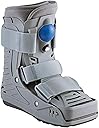


United Ortho 360 Air Walker アンクルフラクチャーブーツ - ラージ、グレー
Product ID: 733979403
💨custom air compression
🦶360° ankle stabilization
🚶♂️rocker sole for natural gait
Desertcart purchases this item on your behalf and handles shipping, customs, and support to Japan.
🦶 Step into recovery with confidence and style!
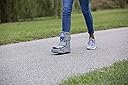
The United Ortho 360 Air Walker Boot offers lightweight, semi-rigid ankle and leg support with a customizable air bladder for compression and edema reduction. Its rocker sole promotes a natural walking motion, making it perfect for post-surgery recovery, fractures, and sprains. Designed for large feet, it combines medical-grade protection with everyday mobility.

| ASIN | B07GSTP4C4 |
| Amazon.co.jp での取り扱い開始日 | 2018/12/4 |
| おすすめ度 | 4.3 5つ星のうち4.3 (515) var |
| サイズ | Large |
| メーカー | United Ortho |
| メーカーにより製造中止になりました | いいえ |
| 商品の重量 | 1.08 Kilograms |
| 商品寸法 (長さx幅x高さ) | 30.5 x 26.7 x 12.7 cm |
| 色 | グレー |
| 製品サイズ | 30.48 x 26.67 x 12.7 cm; 1.08 kg |
| 部品番号 | USA16117 |
| 電池付属 | いいえ |
| 電池使用 | いいえ |
E**.
Good ankle cast.
I have an avulsion fracture on my ankle. I was using a borrowed aircast brand. It was much taller than this but my friend used it for a broken heel. The ankle boot fits way better and supports my ankle better than the tall aircast. Both are comparable as far as materials and comfort but I recommend this short one for ankle injuries. The air pump works good and I can walk in it easily enough. I used the size chart and bought a large. The chart worked for my foot.
A**Y
Got a used item
Gave 2 stars trying to neutral (about the quality) but I didn't even try it on. It was used already which I don't think is acceptable in a medical equipment. I don't mind (sometimes) when I realise that the product I received was opened by someone else or slightly used in a way that doesn't impact the product. But a bot that can have a wounded foot inside it? That is definitely unacceptable.
L**T
Perfect for my fiancé
Works well
J**E
Walker
Good protect for my ankle
A**G
Don't bother with a separate toe-guard, just get this!
So, you've injured your foot, and you have to wear an air cast boot for a while. Your podiatrist charged you double the Amazon new price for a very basic boot, but said maybe your insurance will reimburse you for at least part of it, but you know the only chance you have of recouping any cost is to sell it for $10-$15 online when you're done. So you go to work, because you're not going to let a fracture in your foot stop you, only to get sent home anyway because that boot you just dropped around a Benjamin on technically counts as an open-toed shoe. HR follows up, saying that you either need to buy a toe guard for your current boot (the recommendation I was given was the Darco Body Armor Toe Guard) or buy a new boot altogether (this is the one they recommended). I decided at first to go with the toe guard. I'd already spent so much to buy my boot in the first place, so I wasn't keen on the idea of buying a replacement immediately over an uncovered toe. I checked all of the local medical supply stores, big and small, hoping to avoid shipping times and return to work sooner, but none had it, so I ordered the toe guard from here. Well, I don't know if I wore the toe guard wrong or something as it didn't exactly come with instructions, but I could not find a way of positioning it to where it wasn't very painful to wear. I tried different positions. I used the extra foam pieces that came with the boot. I got some packing foam in order to completely cover my toes with that before putting the toe guard on. There was just no way of wearing it that wasn't more painful than the fracture itself. Defeated, I bought the extra boot. I'd already wasted money on a boot I couldn't work in without an additional attachment, and wearing that had made amputation seem preferable, so again I coughed up out of pocket for a medical boot. Let me get the negatives out of the way first: this boot takes much longer to put on and remove than the basic boot, so you should probably bring the basic with you to change into when you're heading in somewhere for a short time, like a doctor's appointment or the grocery store. Also, if you anticipate that you'll be removing your pants, wear the simple one and not this one, so the mood isn't ruined by all of the extra steps. This thing does have a learning curve. You'll need to know where to put the foam. Inserts in your socks or inside the boot for maximum comfort while walking. Also, there are slots in the top of the boot as well as the bottom of the plate that the hook and loop straps can be fed through. The instructions don't mention whether or not you should use these when "lacing" up the boot so you will have to experiment to see what works for you. Sooner probably rather than later the front of your foot is going to start going numb, or your heel or somewhere else will begin to hurt. As soon as you are able, deflate and begin the long process of unstrapping the boot. Shore up any pain Hotspot like the heel with foam, try making the strap pushing against the painful or numb area a bit looser once your foot feels "normal" again and you go to put it back on. Also, don't overinflate it, though be sure to listen to what your podiatrist said and ensure that the parts your wearing the boot to immobilize aren't loose. Eventually you'll get the hang of it. If your work is kind enough to offer you a lunch break and/or one or two 15-minute breaks, be prepared to spend them giving your foot a break from the boot and make sure to leave yourself enough time to re-strap and re-inflate. If you've been prescribed Voltaren gel, you may need to get some kind of permission/accommodation, as you're not going to have time to get from your station to your car or wherever you kept the gel, completely strip your foot and apply it until dry, replace socks, arch supports, and foam inserts, wait for any foot pain or numbness from the boot to subside, and refasten and reinflate the boot carefully so nothing starts to hurt or go numb within the next few hours, then hobble back to your work station, hopefully washing your hands on the way, and getting back within a 15 minute window. Sadly all of my speedrun attempts at that have ended in failure. The pros are once you've been wearing it for a few days it can actually be kinda comfy, especially when making use of the extra foam for any uncomfortable buts like where the inflation apparatus presses against the shin while walking. Hopefully you'll soon reach a point where you'll only need to take short boot breaks on your work breaks if working for an employer that offers them, so you don't have to drop what you're doing to address sudden numbness or pain and tank your work metrics. Unless your next break is like 5 minutes out just trying to wait it out isn't an option, because when your foot starts hurting from the boot it gets worse exponentially fast. For the most part, after you're used to wearing it, though, it isn't really painful. It will require you to arrive at work early to put it on and spend most of what break time you may have tending to it and your foot, but it counts as a close-toed shoe as far as HR is concerned, and doesn't make me want to just throw the whole foot away like using a toe guard with the basic boot
Trustpilot
2 weeks ago
2 weeks ago