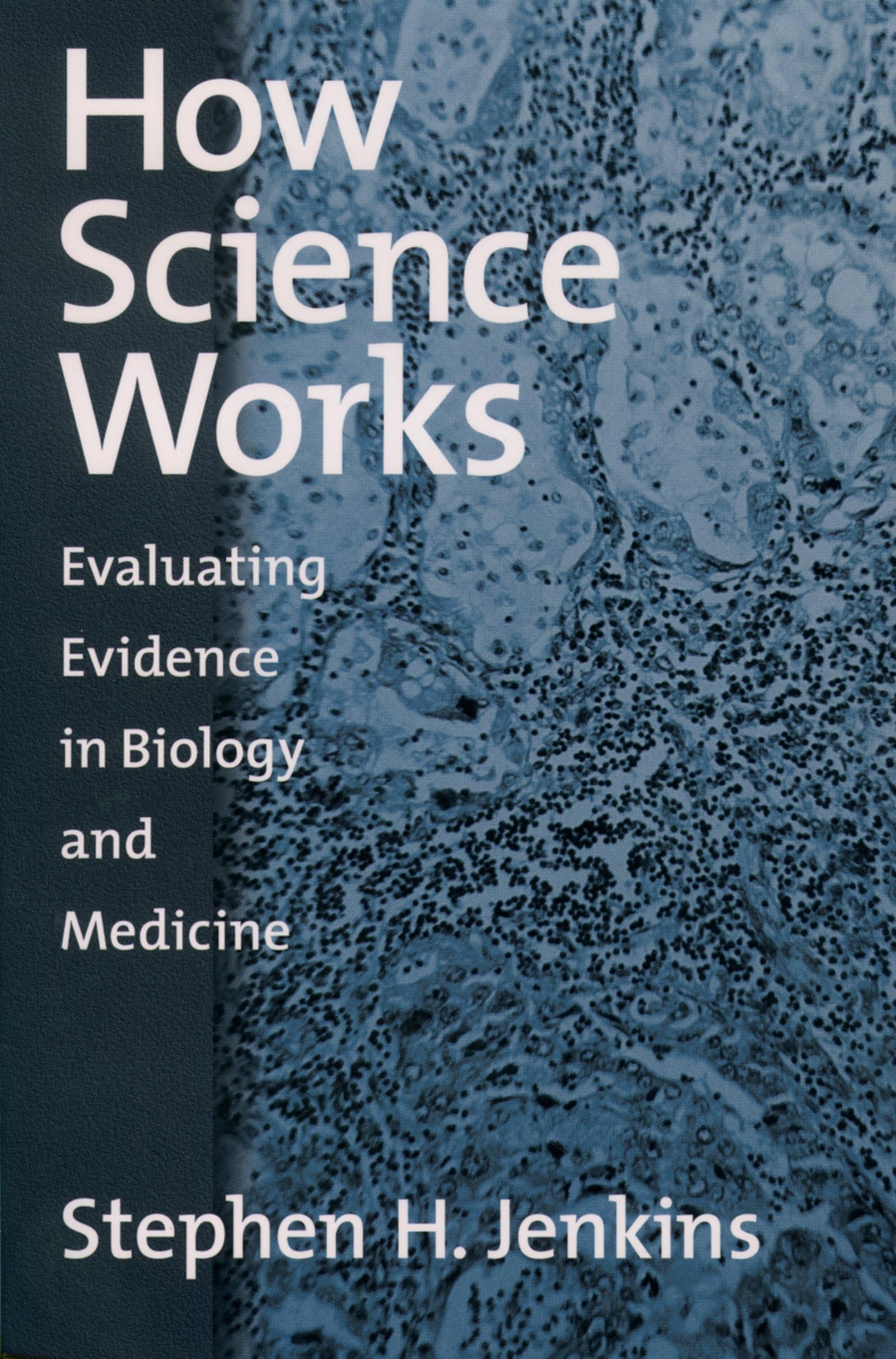
How Science Works: Evaluating Evidence in Biology and Medicine
Product ID: 66682584
Desertcart purchases this item on your behalf and handles shipping, customs, and support to Japan.
One week, red wine is good for the heart. The next week, new reports say it's bad for the health. So which is true? Anyone who's ever read science news with fascination, or who's ever been confounded by conflicting stories will appreciate this book. Taking a look at some true to life contemporary news stories, the author assesses recent studies on topics ranging from vitamin C and caffeine to pollution and cancer. With straight talk and a passion for the whole project of science, he demysifies the cult of the expert and sheds light on the nitty-gritty details of scientific processes. Any scientist loves a challenge, but the biggest challenge of all, observes Jenkins, is shared by scientists and nonscientitsts alike: how to make practical decisions in light of ambiguous evidence. Promising no simple answers, this book does offer excellent food for thought for people pondering that next glass of wine. Review: Great science book - Great book! The author is not only a great storyteller but also a scientist capable of explaining complicated topics and making us understand them. Love the format, short individual chapters, well-explained, and covering several different themes in science. Review: how scientists work with evidence - The great value of this book is that there is real,close attention to decisive detail but without the inclusion of needless and intimidating technicalities.The result is that it is never superficial and yet never inaccesible either.I know of no other book that achieves this combination so well.I have taught undergraduate courses--in the US and UK-- on reasoning in science and would certainly use material from this book if I were planning such a course in future.Justice is done to some sophisticated complexities in extremely lucid ways .I think especially of the discussion of different kinds of causes in the biology of aging ,and of genotype /environment interactions in development.This book deserves a very wide readership among students at all levels and among the general public as well .University and public libraries should certainly be getting it.
| Best Sellers Rank | #3,157,767 in Books ( See Top 100 in Books ) #195 in Laboratory Medicine (Books) #1,085 in Medical Research (Books) |
| Customer Reviews | 4.5 out of 5 stars 12 Reviews |
S**I
Great science book
Great book! The author is not only a great storyteller but also a scientist capable of explaining complicated topics and making us understand them. Love the format, short individual chapters, well-explained, and covering several different themes in science.
M**E
how scientists work with evidence
The great value of this book is that there is real,close attention to decisive detail but without the inclusion of needless and intimidating technicalities.The result is that it is never superficial and yet never inaccesible either.I know of no other book that achieves this combination so well.I have taught undergraduate courses--in the US and UK-- on reasoning in science and would certainly use material from this book if I were planning such a course in future.Justice is done to some sophisticated complexities in extremely lucid ways .I think especially of the discussion of different kinds of causes in the biology of aging ,and of genotype /environment interactions in development.This book deserves a very wide readership among students at all levels and among the general public as well .University and public libraries should certainly be getting it.
D**D
Four Stars
The book has interesting case studies
J**K
what makes good science? read this book to find out
Jenkins' book is a very coherent and straightforward account of the complexities of doing science. Using interesting case-studies, he lucidly describes the proper formulation of scientific hypotheses, the elements of a good experimental or survey design, and the limitations of inference from data. That is, how do scientists discover facts about the natural world, and how do they determine how much confidence to place on such facts. Each chapter is a case-study and a point to be made about the scientific process; thus each can stand alone. But, they also tie together nicely. Given that the case-studies are topical and not overly technical, the general reader lacking a scientific background can still obtain a lot of entertainment and insight from the book. I'd also recommend this book to students in the natural and social sciences, philosophy, medical school, law school, because it is an informative description of what can be considered good sound science versus what is not.
Trustpilot
3 days ago
1 month ago