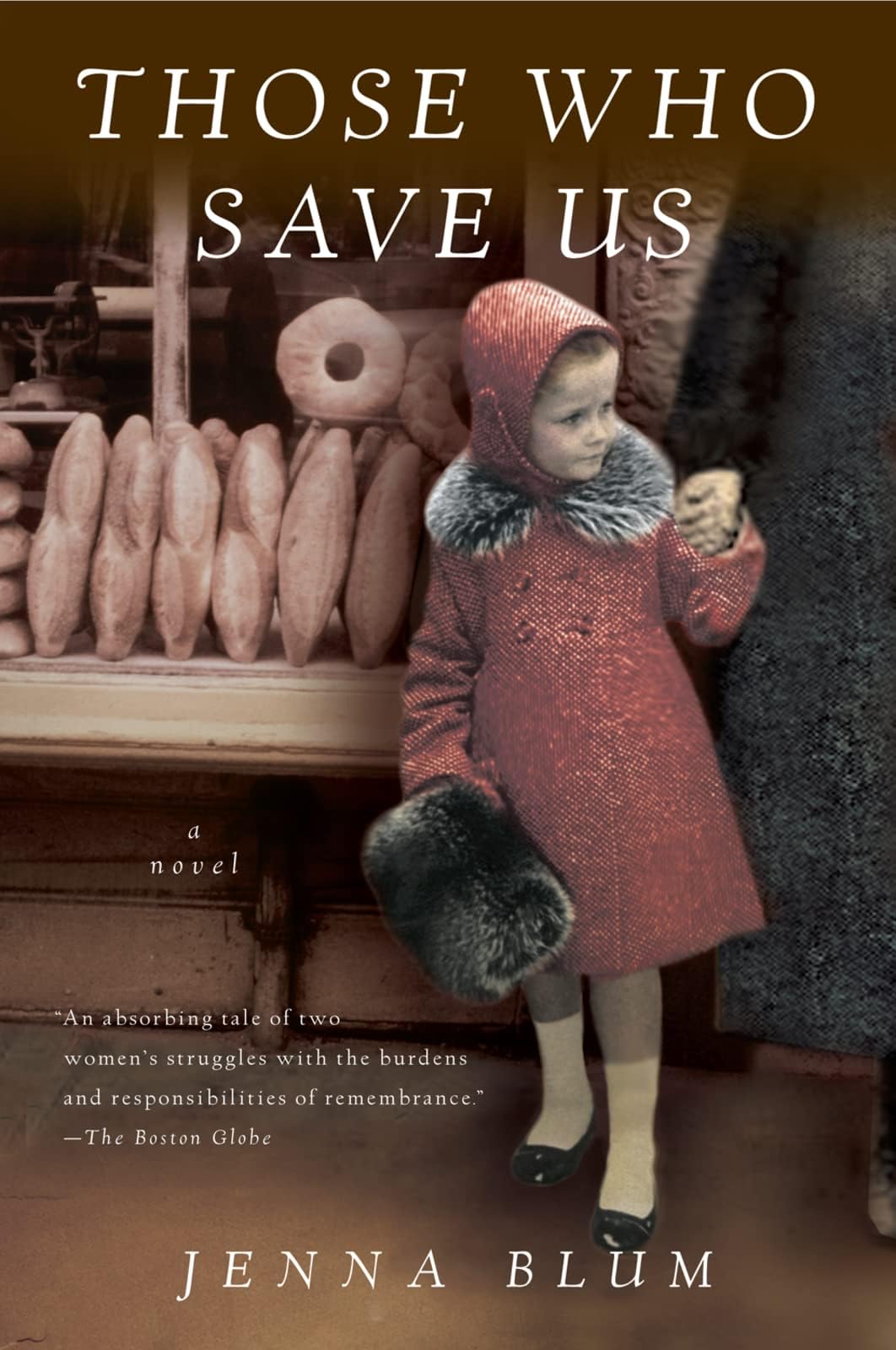
Those Who Save Us: A Bestselling Saga of Mothers and Daughters, Inherited Guilt, and Survival in WWII Germany
Product ID: 6343290
Desertcart purchases this item on your behalf and handles shipping, customs, and support to Japan.
desertcart.com: Those Who Save Us: A Bestselling Saga of Mothers and Daughters, Inherited Guilt, and Survival in WWII Germany: 9780156031660: Blum, Jenna: Books Review: Prepare to stay up late - Sometimes I buy books based on the recommendations of friends, book club members, etc. That was not the case with Those Who Save Us. I simply found it on desertcart and was captured by the first few pages. I added it to my cart with little more thought than it might be interesting. When I began reading, I couldn't put it down. I tried, but then, bleary-eyed, picked it up again. I finished it two days ago. It was a powerful read. So much so, that I needed a few days before beginning my next book - also needed to catch up on my sleep. The story was much more than I expected - a take on normal German citizens during the war which I hadn't thought in depth about until now. Although historical in nature, it is just a fantastic novel, well-written, a wonderful personal story, and great character studies. I will make one exception to this last statement. I would have loved to have had the mother, Anna, fleshed out in much greater depth in the current day narrative. We know her well as a young woman and then she becomes an enigma. I understood the need for that with her daughter, but I would have much preferred she was not an enigma to the reader after knowing her so very intimately earlier. Because of this and the complete lack of quotations (yes, that is correct), I would have given this novel four and a half stars, but lacking that alternative, I rounded up. This is the only novel I have ever read that completely lacked quotations. At first it was off-putting, but the writer is very talented, and normally it was simple to discern what was dialogue and what wasn't. There were some occasions, however, when I had to re-read a portion to determine if the character was actually speaking aloud or just having a private thought. I'm not sure why Jenna Blum chose to write it like this, but I think I would have preferred the quotation marks on dialogue. Would be curious to know what other readers thought of this decision. Review: well-written and well-researched! - I will admit that it took me awhile to get into this book, as the story started off in a relatively quiet manner, but after a few chapters, the story started to pick up and from there, I found the book hard to put down. Since the story starts off with the narrative in the present day (1990s) when Anna is in her 70s living in the U.S. and her daughter Trudy is already a middle-aged woman, I already knew of course that Anna survived whatever horrors and monstrosities she had encountered in her past. However that did not prevent me from wanting to know how she got there, from wanting to understand her back story and what caused her to inflict on herself such an impenetrable code of silence. I was actually less interested in Trudy's narrative in the beginning until I reached the halfway mark and realized what the author Jenna Blum was trying to do in terms of the parallelism between the two women's lives – after that, I became more engaged in Trudy's story and came to appreciate the subtle ways that Blum connected the two narratives. I found it interesting the way Blum incorporated the interview segments into Trudy's narrative and how she put a unique spin to it by making it be from the German perspective. To me, these interview segments were powerful in helping to understand the extent to which the war affected everyone, regardless of one's background. It also showed the gruesomeness of human nature pitted against the instinct to survive as well as the resilience of the human spirit. Of course, Anna's story shows this as well, albeit in a different way, and rather than take away from Anna's experience or all the horrific things she had to endure, the interviews actually complement her narrative and puts things more into perspective. My only complaint with this book is that, in my opinion, there was way too much time spent on describing the "intimate" scenes between Anna and the Obersturmfuhrer – some of the scenes were important (and therefore made sense why they would be included), but some of the scenes weren't and at times, it became a distraction that was unnecessary. I felt like this part of the story was a bit overdone and resulted in an imbalance to the rest of the story. The last third or so of the book felt rushed, almost as if after the relationship between Anna and the Obersturmfuhrer ended, there was nothing else much worth talking about until the revelation at the very end of the book. I felt like I wanted to know more about the "aftermath," about what happened in Germany after the liberation, about how Anna and Trudy pick up the pieces of their lives in America with Jack, etc. Yes, there were a few chapters on this in the last third or so of the book, but compared to all the time spent on Anna and the Obersturmfuhrer, it really wasn't much. I also didn't really like the ending all that much -- though it makes sense why it ended the way it did, I felt like something was missing, like the story should be continued somehow but instead the author chose to end it abruptly. Overall, this was a well-written, well-researched book that was difficult to read at times due to the many realistic and raw depictions of violence and the incredibly abhorrent, inhuman treatment doled out by the horrific Nazi regime. This was also a very emotional read as well, as most books about WWII and the Holocaust are, though this one I felt was more gruesome and sadistic than most of the other similarly themed books I've read in recent years. The story itself was definitely engaging and well-told, though the lack of quotation marks did throw me off a number of times – a small annoyance in the grand scheme of things of course and not a deal-breaker by any means, but I think having quotation marks would have made it easier for me to immerse myself more fully into the story rather than having to pay attention to where dialogue was supposed to start and end. I gave this book 4 stars instead of 5 because it didn't blow me away like other similarly themed WWII-era books did and also because of some of the structural issues I mentioned earlier – regardless though, this is a book that absolutely should be read, if anything, for the myriad of questions it raises about human behavior, attitudes, beliefs etc. and how both unbridled power and deprivation of life's basic necessities in the face of war can push people to behave in the most deplorable ways. This book is disturbing, but it is definitely well-worth the read.


| ASIN | 0156031663 |
| Best Sellers Rank | #89,139 in Books ( See Top 100 in Books ) #962 in Mothers & Children Fiction #2,229 in Women's Domestic Life Fiction #4,817 in Literary Fiction (Books) |
| Customer Reviews | 4.3 4.3 out of 5 stars (11,233) |
| Dimensions | 7.9 x 5.2 x 1.1 inches |
| Edition | Reprint |
| ISBN-10 | 9780156031660 |
| ISBN-13 | 978-0156031660 |
| Item Weight | 12.5 ounces |
| Language | English |
| Print length | 482 pages |
| Publication date | May 2, 2005 |
| Publisher | Houghton Mifflin Harcourt |
G**L
Prepare to stay up late
Sometimes I buy books based on the recommendations of friends, book club members, etc. That was not the case with Those Who Save Us. I simply found it on Amazon and was captured by the first few pages. I added it to my cart with little more thought than it might be interesting. When I began reading, I couldn't put it down. I tried, but then, bleary-eyed, picked it up again. I finished it two days ago. It was a powerful read. So much so, that I needed a few days before beginning my next book - also needed to catch up on my sleep. The story was much more than I expected - a take on normal German citizens during the war which I hadn't thought in depth about until now. Although historical in nature, it is just a fantastic novel, well-written, a wonderful personal story, and great character studies. I will make one exception to this last statement. I would have loved to have had the mother, Anna, fleshed out in much greater depth in the current day narrative. We know her well as a young woman and then she becomes an enigma. I understood the need for that with her daughter, but I would have much preferred she was not an enigma to the reader after knowing her so very intimately earlier. Because of this and the complete lack of quotations (yes, that is correct), I would have given this novel four and a half stars, but lacking that alternative, I rounded up. This is the only novel I have ever read that completely lacked quotations. At first it was off-putting, but the writer is very talented, and normally it was simple to discern what was dialogue and what wasn't. There were some occasions, however, when I had to re-read a portion to determine if the character was actually speaking aloud or just having a private thought. I'm not sure why Jenna Blum chose to write it like this, but I think I would have preferred the quotation marks on dialogue. Would be curious to know what other readers thought of this decision.
L**E
well-written and well-researched!
I will admit that it took me awhile to get into this book, as the story started off in a relatively quiet manner, but after a few chapters, the story started to pick up and from there, I found the book hard to put down. Since the story starts off with the narrative in the present day (1990s) when Anna is in her 70s living in the U.S. and her daughter Trudy is already a middle-aged woman, I already knew of course that Anna survived whatever horrors and monstrosities she had encountered in her past. However that did not prevent me from wanting to know how she got there, from wanting to understand her back story and what caused her to inflict on herself such an impenetrable code of silence. I was actually less interested in Trudy's narrative in the beginning until I reached the halfway mark and realized what the author Jenna Blum was trying to do in terms of the parallelism between the two women's lives – after that, I became more engaged in Trudy's story and came to appreciate the subtle ways that Blum connected the two narratives. I found it interesting the way Blum incorporated the interview segments into Trudy's narrative and how she put a unique spin to it by making it be from the German perspective. To me, these interview segments were powerful in helping to understand the extent to which the war affected everyone, regardless of one's background. It also showed the gruesomeness of human nature pitted against the instinct to survive as well as the resilience of the human spirit. Of course, Anna's story shows this as well, albeit in a different way, and rather than take away from Anna's experience or all the horrific things she had to endure, the interviews actually complement her narrative and puts things more into perspective. My only complaint with this book is that, in my opinion, there was way too much time spent on describing the "intimate" scenes between Anna and the Obersturmfuhrer – some of the scenes were important (and therefore made sense why they would be included), but some of the scenes weren't and at times, it became a distraction that was unnecessary. I felt like this part of the story was a bit overdone and resulted in an imbalance to the rest of the story. The last third or so of the book felt rushed, almost as if after the relationship between Anna and the Obersturmfuhrer ended, there was nothing else much worth talking about until the revelation at the very end of the book. I felt like I wanted to know more about the "aftermath," about what happened in Germany after the liberation, about how Anna and Trudy pick up the pieces of their lives in America with Jack, etc. Yes, there were a few chapters on this in the last third or so of the book, but compared to all the time spent on Anna and the Obersturmfuhrer, it really wasn't much. I also didn't really like the ending all that much -- though it makes sense why it ended the way it did, I felt like something was missing, like the story should be continued somehow but instead the author chose to end it abruptly. Overall, this was a well-written, well-researched book that was difficult to read at times due to the many realistic and raw depictions of violence and the incredibly abhorrent, inhuman treatment doled out by the horrific Nazi regime. This was also a very emotional read as well, as most books about WWII and the Holocaust are, though this one I felt was more gruesome and sadistic than most of the other similarly themed books I've read in recent years. The story itself was definitely engaging and well-told, though the lack of quotation marks did throw me off a number of times – a small annoyance in the grand scheme of things of course and not a deal-breaker by any means, but I think having quotation marks would have made it easier for me to immerse myself more fully into the story rather than having to pay attention to where dialogue was supposed to start and end. I gave this book 4 stars instead of 5 because it didn't blow me away like other similarly themed WWII-era books did and also because of some of the structural issues I mentioned earlier – regardless though, this is a book that absolutely should be read, if anything, for the myriad of questions it raises about human behavior, attitudes, beliefs etc. and how both unbridled power and deprivation of life's basic necessities in the face of war can push people to behave in the most deplorable ways. This book is disturbing, but it is definitely well-worth the read.
U**E
この本の購入の動機は、第二次世界大戦時の迫害されたユダヤ人の物語だろうと見当をつけたからであるが、まさにその通りだった。 Those who save usとは、主人公をユダヤ人と設定し、彼らを助けた人達の感動的な物語だろうと、その表題から想像したが、その推測は大きく外れた。しかし決して失望する内容ではなかった。主人公はユダヤ人ではなかったし、助ける人も誰をどう助けるのかが読み終わるまでは漠然としたものだったが、最終章を読み終わって後、その題名の意図するところを大いに納得することが出来た。これについての感慨はこれから読む人のためにここでは書かないが、大変に興味深くそしてある意味では今までに無いような創造的な物語だったと思う。 その筋書きの一端はこうである。 折りしもドイツがポーランドに侵入する頃、ドイツ人であるアンナは、ユダヤ人の医師を恋し、彼を自宅に匿うのだった。それを知ったアンナの父は、アンナの留守中に彼をドイツ官憲に密告し収容所に送ってしまう。すでにユダヤ人医師の子供を身ごもっていたアンナは、レジスタンス運動をしていたパン屋のおかみさんのところに潜り込み、そこで娘を産むのだった。(あの当時、ユダヤ人迫害に反対して身をもってレジスタンス活動をしていたドイツ人が居たということに、考えてみればどこにも反体制の人たちはいるということに気がつくものの、私は少なからず驚きそして感動した。) これはナチスの時代に生きた人間の記録を、自分の生い立ちに合わせて掘り起こそうとした物語である。作者は淡々と母親の生きてきた軌跡と、真実を知りたいという主人公の意図とを同時進行で描くことにより、読者に時代の流れに翻弄された人々の悲しさとやるせなさを描いたのだった。私はこの事実を厳粛に受け止めて、今の世においても何らかの形でこのようなことは起きているのだろうと瞑したものであった。
K**C
Ich stimme der anderen Rezensentin zu: Ich hoffe auch, dass dieses Buch bald auf Deutsch erscheint. Was wir Menschen tun, um zu überleben und was wir tun, um sich gegenseitig zu helfen oder zu erniedrigen, kennt keine Grenzen. Die Folgen können lange gespürt werden, im positiven wie im negativen Sinne. Im Mittelpunkt stehen Anna, eine junge schöne Frau während der Kriegszeit in Weimar, und ihre Tochter Trudy, die in den 90er Jahren Professor der deutschen Geschichte in Minnesota ist. Als Kind hat sie ein Bild von ihr und ihrer Mutter mit einem deutschen Offizier gefunden und sie fragt sich ihr Leben lang, ob der Mann ihr Vater ist. Erst ein Universitätsprojekt bringt sie in Kontakt mit Deutschen in den USA, die bereit sind mit ihr zu reden. Durch diese Geschichten kommt Trudy auch ihrer eigenen Geschichte näher. Es ist ein sehr bewegendes Buch mit sehr gelungenen Protagonisten. Die Autorin schildert, ohne zu urteilen oder Partei zu ergreifen.
J**T
A DOPIE DEUTSCHE SOAPIE TYPE IN WRITING AND CONTENT
G**T
Extremely interesting. Although I do doubt that the story is actually true as there are some I consistencies in the story. But otherwise a very good read.
H**N
A page-turner which I read from cover to cover in less than a day. Beautifully developed characters and I couldn't help but connect with all of them on some level, be that positive or negative. Historically and psychologically interesting as well which I always consider a plus. Gave me pause to consider myself in many of the scenarios presented and think ... "What would I have done?" Another great piece of literature that gives a new perspective on a shameful period of our history.
Trustpilot
2 weeks ago
1 week ago