
Desertcart purchases this item on your behalf and handles shipping, customs, and support to Japan.
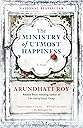
National Bestseller Longlisted for the Man Booker Prize One of the Best Books of the Year: The Washington Post * The Boston Globe * Minneapolis Star Tribune * NPR * Newsday * The Guardian * Financial Times * The Christian Science Monitor The Ministry of Utmost Happiness takes us on an intimate journey across the Indian subcontinent—from the cramped neighborhoods of Old Delhi and the roads of the new city to the mountains and valleys of Kashmir and beyond, where war is peace and peace is war. Braiding together the lives of a diverse cast of characters who have been broken by the world they live in and then rescued, patched together by acts of love—and by hope, here Arundhati Roy reinvents what a novel can do and can be. Review: Ms Roy, please do not make us wait another 20 years! - I understand the spread of opinions from one to five stars for this book. I honestly believe that immersion in Indian life, history, politics and literature is a prerequisite for gaining utmost happiness from this incredible book. I am overwhelmed by Ms Roy's abilty to capture and describe the complex cast of characters in all their irascible and detailed idiosyncrasy - and yet find the essence of their deepest lives and thoughts. Second only to the multiple beings who populate her world is the background of Mother India herself - her cities and her countryside, particularly that of Jammu and Kashmir. On every page there is a story, sometimes a heartbreaking one, or a surprising love story, particularly in the section on endemic militancy. Every chapter creates or ties the threads of the multiple intertwined lives, all told in gorgeous fluid language that speaks to the soul. What a very rich country India is. What a fabulous author to color its story is Ms Roy. Review: Good novel that wants to be the Truth - This is beautifully-written and tightly-plotted, but sort of weird in its politics. It is all about the very seamy side of what is going on in Kashmir--which the author wants to turn into a kind of parable. However all sides in the conflict seem to be distasteful, so she is hard-pressed to find a way for the characters to represent the moral high ground. And the book, for all that's good about it, never gets over that hurdle.
| Best Sellers Rank | #61,880 in Books ( See Top 100 in Books ) #231 in Cultural Heritage Fiction #2,734 in Family Life Fiction (Books) #3,128 in Literary Fiction (Books) |
| Customer Reviews | 3.9 out of 5 stars 7,715 Reviews |
G**E
Ms Roy, please do not make us wait another 20 years!
I understand the spread of opinions from one to five stars for this book. I honestly believe that immersion in Indian life, history, politics and literature is a prerequisite for gaining utmost happiness from this incredible book. I am overwhelmed by Ms Roy's abilty to capture and describe the complex cast of characters in all their irascible and detailed idiosyncrasy - and yet find the essence of their deepest lives and thoughts. Second only to the multiple beings who populate her world is the background of Mother India herself - her cities and her countryside, particularly that of Jammu and Kashmir. On every page there is a story, sometimes a heartbreaking one, or a surprising love story, particularly in the section on endemic militancy. Every chapter creates or ties the threads of the multiple intertwined lives, all told in gorgeous fluid language that speaks to the soul. What a very rich country India is. What a fabulous author to color its story is Ms Roy.
O**Y
Good novel that wants to be the Truth
This is beautifully-written and tightly-plotted, but sort of weird in its politics. It is all about the very seamy side of what is going on in Kashmir--which the author wants to turn into a kind of parable. However all sides in the conflict seem to be distasteful, so she is hard-pressed to find a way for the characters to represent the moral high ground. And the book, for all that's good about it, never gets over that hurdle.
A**E
unevenly brilliant and messy and frustrating
“He narrowed his blindgreen eyes and asked in a slygreen whisper…” Arundhati Roy’s second novel, The Ministry of Utmost Happiness, published 20 years after her first beloved debut, The God of Small Things, was perhaps one of the most anticipated novels of 2017. It’s had a mixed reception and I can see why. The novel starts off in old Delhi with Anjum, a hijra, along with a colorful cast of characters. One of my favorite things about the novel is how the city’s flora and fauna is as much a part of the story as the humans. “When the bats leave, the crows come home. Not all the din of their homecoming fills the silence left by the sparrows that have gone missing, and the old white-backed vultures, custodians of the dead for more than a hundred, million years, that have been wiped out.” The old city’s centuries long Muslim culture and architecture is nostalgically laid out, and Roy’s ear for language and detail is often sublime: “a small tortoise…with a sprig of clover in one nostril.” I found Anjum compelling if tropeful - an elegant fierce outspoken Urdu poetry-quoting drag queen. It wasn’t obvious to me immediately that her companions and antagonists - and pretty much every other character in the book - are also symbols. They represent the many conflicts that routinely tear India apart and that have occupied Roy’s political, human rights, and environmental concerns and her nonfiction writing for the past 20 years: the Hindu-Muslim divide, the caste system, the Kashmir conflict, the Indo-Pak wars, the 1992 Gujarat massacre, the 1984 Bhopal gas leak, and of course the farmers and fishermen whose lands and livelihoods are variously taken over by capitalism and corruption and other horrors. The second half of the novel turns to the monstrous ongoing civil war tragedy that is Kashmir, following four college friends, a civil servant, a journalist, a Kashmiri activist, and the woman they all love. Again, the tropes and stereotypes abound: the quiet noble freedom fighter, the ambitious journalist, the suave diplomat, the mysterious beautiful woman who doesn’t have to say anything, has no past, but everyone falls anyway. “There was something unleashed about her, something uncalibrated and yet absolutely certain.” Despite this, I was wrecked by the account of the war in Kashmir. There is a scene when a boy is brought in after interrogation (i.e. torture, which is so graphically described at times that I wanted to throw up). “To refuse to show pain was a pact the boy had made with himself. It was a desolate act of defiance that he had conjured up in the teeth of absolute, abject defeat. And that made it majestic. Except that nobody noticed. He stayed very still, a broken bird, half sitting, half lying, propped up on one elbow, his breath shallow, his gaze directed inward, his expression giving nothing away.” Even with the overwriting, the melodrama, I don’t think I’ll ever forget this broken bird of a boy. I didn’t grow up in South Asia, and I’ve never been to Kashmir, but its beauty of landscape and people is legendary. I have long recognized the utter wonder in people’s voices when they speak of the region. And it seems as if there’s no way out now, no light at the end of the bloody tunnel. There are so many militant groups, so many broken families, so many displaced people of different religions, so many armies and guerrilla forces from India and Pakistan, so much sorrow, so much loss. No one wants to let go. No one will and everyone suffers for it. This is not a new story to South Asians (which might explain some of the grim subcontinental reviews of the book), but the novel outlines the longevity, continuity, complexity, and intensity of the conflict, and it is overwhelming and horrifying. That said, there are entire sections of the novel where semi-journalistic/semi-diary reports of violence, political intrigue, and human rights abuses in Kashmir are clumped together without context or explanation. This is a shame because these are real and important stories, but without tying them to characters we’ve grown to know or the places they inhabit, they end up feeling extraneous. I read these awkwardly written sections impatiently, trying to figure out how they tied in, and when they didn’t, waiting for the book to get back to the story. It felt like lazy writing, or lazy editing perhaps. The two halves of the novel are tied clumsily together with a plot point - a baby - that appears magical-realism style. Of course, in addition to connecting the two halves, this baby serves its political purpose, standing in for another conflict, this one from the vicious war the Indian government is waging against its own citizens - Maoist guerrillas in the jungle. “Normality in our part of the world is a bit like a boiled egg: its humdrum surface conceals at its heart a yolk of egregious violence.” If you don’t know much about modern Indian history and politics, Roy’s novel is an education, and an indictment of India Shining. Political figures are tarred and feathered, including the current Prime Minister, Narendra Modi, referred to as Gujarat ka Lalla. The country-wide violence, corruption, and discrimination seem bone deep, systematic, inevitable. Perhaps it’s as the novel itself says, “There’s too much blood for good literature.” But I have faith. Maybe now that Roy has painted the broad strokes in her second novel, her third might go more small things than utmost, deeper than wider. However, I have less faith in the future. If history is indeed a revelation of what’s to come as much as it is a study of the past, as The Ministry of Utmost Happiness claims, then “pretending to be hopeful is the only grace we have…”
C**B
restless and moving
So many intertwined stories and destinies, heartbreak, hope. I learned politics and history and dogma through a real human lens.
T**P
Not as good as her first book. I got bogged down. Very political.
I read maybe 2/3 of this book. Maybe a bit more. Having to push myself. Having loved her first book and having recently reread it, I came to this one with much expectation. And much disappointment - due to so much expectation. I can’t fault the writing or the characterizations or the plot. It just falls flat for me, in comparison to her other book. I may eventually return to it. Or not.
K**R
Wow! a delicious read -- did not want it to end
I loved the book but it took Tillottama's story to make it a little bit closer to the heart. -- the first half is compelling, but she does not really get under Anjum's skin or the others either the way she does with Tilo. guess she needs to live it to get us to feel it? Someone had compared to Rohinton Mistry and said she was lacking, but they miss the point -- I cannot for the life of me ever pick up a Mistry book for a re-read. Sure, he brings his characters to life the way no one else can, but the unrelenting misery with no hope in sight is not real either. She captures in a very real way the essence of India, the resilience of life and how it goes on and how people find hope and living happiness in unimaginable circumstances. I would only have said, skip the political diatribes, but knowing that is closer to her heart, and agreeing with every one of her observations, I cannot dock a star for the way those asides interfere with the narrative. If you liked the movie Slumdog Millionaire, you will enjoy this book.
A**7
Didn't Come Together
I first want to share that I did finish reading all the way to the end, but was the only one in the book club who did so we couldn't discuss the book. This isn't an enjoyable read, so I did feel betrayed by my friends and I remain a little bitter. :-) That being said, I loved the idea of telling a shattered story by shattering it and presenting the pieces. I was intrigued by that premise and really badly wanted the story to work, but its pieces weren't well-presented. As others have noted, there was very little dialogue and strangely little "real time" action, so the author had to tell us what was going on...and tell us...and tell us...and tell us. She also had to tell us, tell us, tell us who the characters were, providing voluminous bios for many of them. Even with all that telling, I had trouble understanding the characters' motivations, had trouble keeping the minor characters sorted out, and certainly couldn't visualize the scenery. In addition, the story takes a big jog in a new direction about a third of the way in and then takes a big job back again near the end to tie everything together. But the string used for tying was a little frayed and I wasn't able to buy the resolution. And I honestly didn't get the title. This is not a happy book. I mean...a kitten was killed. A kitten. I get that the graveyard characters are supposed to be quirky and maaaybe living happily on the fringe, but there was so much trauma and violence in the story that I didn't really feel happiness in them. To leave on a positive note, I am grateful that I'm now aware of the conflict in Kashmir. Conveying that awareness was clearly a goal for the author, and I do feel she was successful in that regard.
P**N
The Ministry of Utmost Happiness by Arundhati Roy: A review
I loved The God of Small Things, Arundhati Roy's first novel, and I fully expected to love this one, her second, that was written twenty years after the first. I was disappointed to realize that I didn't. It was not because the writing was not beautiful. Of course it was beautiful. Roy's prose is poetic and musical. It flows, one sentence leading with the inevitably of rushing water into the next. It was not because there were no sympathetic characters. Indeed, the pages are filled with so many sympathetic characters that at times it is hard to focus. Every single one of these sympathetic characters is at the center of a tragic story. There is so much unrelenting tragedy in this book that I began to feel overwhelmed and oppressed by it. And I think my main problem with the book is related to that. The overarching tragedy here that touches every character's life and becomes the theme of some of them is Kashmir. Bleeding Kashmir. That bit of territory that Pakistan and India have fought over virtually continuously since partition. The appalling atrocities suffered by all sides in the conflict - Sikhs, Muslims, Hindus - pile up unendingly. Most of the action of Roy's novel takes place after 1984, after the assassination of Indira Gandhi by her Sikh bodyguards and the resulting violence that wracked the country afterward. She tells her story primarily through the lives of two characters. The first is Anjum, born Aftab. At birth, the child was a true hermaphrodite, with both male and female sex organs. Raised by her family as a boy, she nevertheless always identified as female and when she had the opportunity to leave home, she became a part of a thriving transgender community in Delhi. The second primary character is Tilo, a former architecture student. In college, she was a part of a group of four friends who continue to be connected in later life. One of them, Musa, was her sometime lover, a Kashmiri freedom fighter. She later marries another of the friends but continues to travel to Kashmir to visit Musa, who is in constant danger and must live his life on the run. If the story had maintained the focus on these two lives, I would have found it easier to follow and to empathize with, but the introduction of so many minor characters kept leading me on unwanted detours away from the two heroines of the tale and at times - particularly in the middle of the book - I felt that there was no glue holding it all together and it threatened to fly off into its constituent parts. In describing one of her characters who kept notes, diaries, and memos, Roy wrote: "She wrote strange things down. She collected scraps of stories and inexplicable memorabilia that appeared to have no purpose. There seemed to be no pattern or theme to her interest." That would almost serve as a description of her book. The strongest part of the book for me was the ending where the writer did manage to bring her various "scraps of stories" together into a well-orchestrated and even hopeful conclusion. It was an ending worth waiting for.
R**A
A Mirror we should all see.
I just finished reading "The Ministry of Utmost Happiness", wasn't an easy read as I expected it to be after reading her first "The God of Small Things" not so long ago. But the first thing I did after finishing the book is to Google it to know which category the book is falling on - Fiction or Non Fiction? Biography? or based on real incidences etc, as fortunately or unfortunately as per me it qualifies for any or all of them and worthy of a superb applaud at least from us Indians. Unfortunately the opinions will differ big time on this as she has made herself a "Queen of Controversies" in last two decades surely for her opinions as well as her political stand. Still this is a perfect book coming out at the right time showing the society a mirror of sorts. There will be three types of opinion on this I believe. First will be those will love it (like me) as it shows us a true picture of our own society and ourselves what we do or how we live in today's time. Second will be those whose conscious will accept it but they will deny it, negate it, shoot it down and will call it crap. But the most interesting opinion will be of those third type of people who wont read it for what Ms. Roy is all about but will base their opinion based on the opinion of the Second category of people and will shun it. I will not be shocked if she not only gets the Booker for this as she just got nominated but if the book gets banned also in our part of the world. Whatever said and done, I will definitely applaud the effort big time and will recommend it very highly to everyone. The entire story revolves around three main characters. A Transgender Anjum (born as Aftab), An Architect Tilottama (Roy herself, may be?) and Musa (Tilo's love interest) a Freedom Fighter for Kashmir. Starts from the galiyan of Old Delhi and goes up-to J&K back and forth through these characters and their intertwined lives with so much happening in India in the background. Starting from early 80's Bhopal Gas Tragedy to Indira Gandhi's assassination by her own security guards, making of the then CM of Gujrat Narendra Modi (Gujrat's Lalla as she calls him throughout), Godhra Tragedy, Anna Hazare movement, Hilarious and equally heart touching scenes at famous "Jantar Matar" in Delhi to the turmoil in Jammu Kashmir, Naxalite movement and of-course a plethora of Rape, Killings, Terrorism, Army brutality and loss of life in general, she hasn't left anything at all. It almost covers everything that we have seen or say ignored in the last three decades of our life. In between all those episodes we have the heart touching story of Anjum who herself leaves her own family to live a life of a recluse in a graveyard where only those are buried who have nowhere else to go. How she lives with a handful of people out there and still they have something to cherish and live about is totally awesome, but the language is on your face (not cringe worthy for sure) but shocking giving it a totally real feel as how it is indeed, you just cant deny that. Tilottama's story, her IB connection, husband that she leaves, a lover that she goes around with, her Kashmir visit and experience, the life that she sees up close and personal is totally terrific. If you have ever visited the valley in last decade or so and lived there even briefly, I found it too close to reality. As I said it is not an easy read, the story keeps going back n forth making it further tough for the reader to keep a track of it. The way it moves from one episode of Anjum's life and times in Delhi to Tilo's life and activities to Musa's life in Kashmir, I kept wondering how it all is going to end and is there going to be a solution offered by the book or will it end on a gloomy note. You've got to read it to know how it ends (not a thriller) but has a perfect open ending with no solution offered. One that made me not only agree but will certainly make everyone think harder where it all is going. The entire book is like Ms. Roy's ranting of so many things going around in the country that she kept taking the notes on various pages of her diary(s) and clubbed them all together to make a book and story, still it works and works big time. Although I haven't read the other books nominated for Booker this year, call me a biased Indian too but I seriously wish she gets it and the book gets a wider International audience too. Not that its going to help us as a country anyways, like she accepts and confirms where we are heading and what will be the final outcome as per her prediction. But its a must must read for all. A perfect eye opener. Do read, criticize later.
L**D
One of the best
One of the very best of books, her writing is exquisite, her eye is unwavering and everything is wrapped in a magic carpet ride of a story. Read this as soon as you can, or reread it if you already have!
H**N
What a Tale! I Enjoyed It
The Ministry of Utmost Happiness takes you on a wild political, social and economic whirlwind. Nothing makes sense, yet everything makes sense. That might sound nonsensical, but it isn’t, not when reading this novel. At first, I was leery of reading this book, the reviews made me think I would have to wade through a hefty volume. But I couldn’t put it down. People and events unravelled at a pace that reflects Asian life. If you have lived in an overcrowded country where prejudices, wars and corruption abound, you will relate to this book. Corruption and marginalisation due to economic, social, gender and religious positions in life are a major part of this novel. Wars are fought over religion or economic status to the point where the point is lost, the truth of the battle is lost. One powerful group is not anymore virtuous than another. The central character of The Ministry of Utmost Happiness is Anjum who was born Aftab. Born a hermaphrodite, she struggled early in life with who she was, but as she matures, we see someone who becomes comfortable with herself. Operating a guesthouse (Jannat Guesthouse & Funeral Services out of a graveyard, she attracts other guests who become long term residents or friends, all others who are on the fringes of society but find a place of belonging under Anjum’s roof. This is a far cry from what is happening in the World (Duniya) where wars, hatred and power struggles are the mayhem of the day. Perhaps Roy could have spent less time on the Kashmiri struggle, it is a major part of the book. Yet without its length, we may never see the senseless or the futility of war where the “dead live and the living are really dead.” Themes of identity (only Tilo and Biplab use their real names) and freedom emerge through the pages, as does community vs. society and the non-existence of a heard voice of the marginalised. Kashmiri women whose sons had died come down from the mountains to weep, cry, lament, but no one heard, “no TV cameraman turned his camera on them, not even by mistake.” If you like a novel that looks at deep issues of power struggles, postcolonialism and the plight of the marginalised in India, then this is a definite read. I enjoyed reading it and I hope you do to.
C**I
The ministry of utmost happiness
If possible I've liked it even more than her first book! I ABSOLUTELY recommend this utterly enjoyable reading to everyone
A**R
one everyone should read
I think I would happily read a shopping list by this author. Whether she is writing fiction or non-fiction, it is a joy to read her, and this book does not disappoint. A strange and beautiful story that tastes, smells and sounds like nothing else.
Trustpilot
3 weeks ago
1 month ago