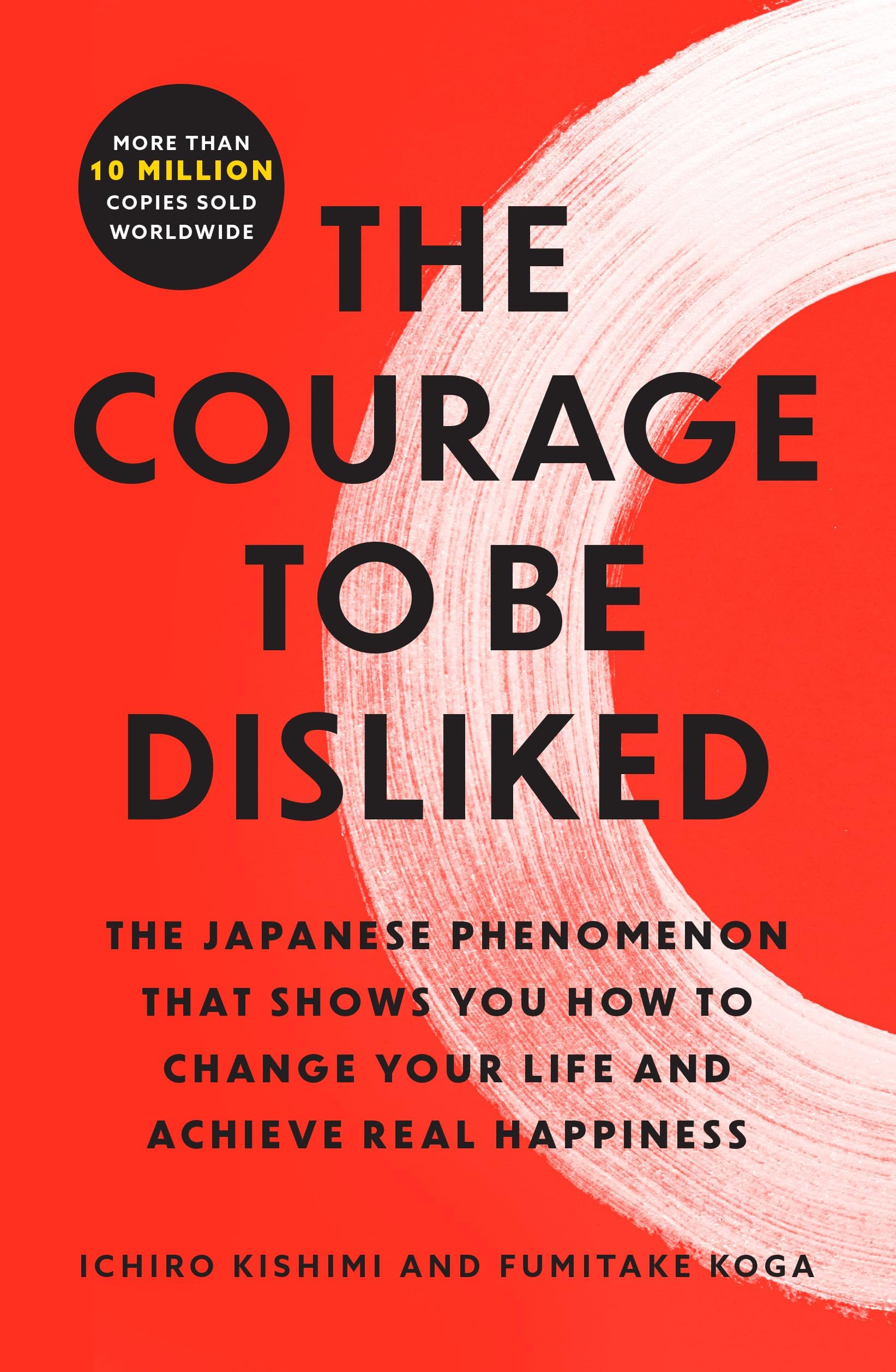


desertcart.com: The Courage to Be Disliked: The Japanese Phenomenon That Shows You How to Change Your Life and Achieve Real Happiness: 9781668065969: Kishimi, Ichiro: Books Review: Conversational style book that will completely change your way of thinking. - I have this book on kindle but wanted a hard copy to keep on hand. When I start to feel unhappy in life I crack open this book and get set back on the right path almost instantly. This is such a great read, it’s conversational style and very relatable. The first time I read it it’s like the book read my mind as to what the youths response was. This was easy to read, very digestible and will make a perfect gift for someone. Review: A very helpful, wise, readable book - I’m reading this now. I started it last night and it’s a very easy read, at the same time as it provides helpful advice. It goes beyond the title. It’s written in the format of a philosophy professor expounding on his or her thoughts, and a student asking questions and weighing in on the ideas the professor speaks about. I’ve read many self-help books and this is the one that really reaches me. I’m an American and this book (in English) was written by two Japanese people. This book makes me want to visit Japan to learn about their culture!
| Best Sellers Rank | #571 in Books ( See Top 100 in Books ) #1 in Free Will & Determinism Philosophy #3 in Happiness Self-Help #9 in Motivational Self-Help (Books) |
| Book 1 of 2 | Courage to |
| Customer Reviews | 4.5 4.5 out of 5 stars (24,676) |
| Dimensions | 5.5 x 0.7 x 8.37 inches |
| Edition | Reprint |
| ISBN-10 | 1668065967 |
| ISBN-13 | 978-1668065969 |
| Item Weight | 2.31 pounds |
| Language | English |
| Print length | 288 pages |
| Publication date | May 7, 2024 |
| Publisher | Atria |
A**L
Conversational style book that will completely change your way of thinking.
I have this book on kindle but wanted a hard copy to keep on hand. When I start to feel unhappy in life I crack open this book and get set back on the right path almost instantly. This is such a great read, it’s conversational style and very relatable. The first time I read it it’s like the book read my mind as to what the youths response was. This was easy to read, very digestible and will make a perfect gift for someone.
S**L
A very helpful, wise, readable book
I’m reading this now. I started it last night and it’s a very easy read, at the same time as it provides helpful advice. It goes beyond the title. It’s written in the format of a philosophy professor expounding on his or her thoughts, and a student asking questions and weighing in on the ideas the professor speaks about. I’ve read many self-help books and this is the one that really reaches me. I’m an American and this book (in English) was written by two Japanese people. This book makes me want to visit Japan to learn about their culture!
S**E
An easy to read and understand view of human psychology mixed with philosophy.
I bought this based on a recommendation on Instagram. It's an interesting concept of a Philosopher talking to a Youth and answering questions. The book mixes Philosophy with Psychology and has some perspectives I hadn't heard before. The chapters are short and all inclusive. There's not a lot here that hasn't been said elsewhere, but the different approach in saying it rings differently. The overall message is to live in the hear and now and not to focus too much on other people's opinions. One metaphor at the very beginning of the book talks about the fact that well water is always 60 degrees, whereever you are and whatever season. But in the summer the water feels cool and in the winter it feels warm. In other words, how we perceive things depends on the circumstances. This book was worth getting and reading in large part because of the different presentation of the ideas.
A**R
Embracing Divine Freedom: The Courage to Be Disliked in the "Christian" Journey
In “The Courage to Be Disliked,” authors Ichiro Kishimi and Fumitake Koga present a compelling dialogue that bridges the gap between psychology and philosophy, drawing on the principles of Alfred Adler, a founding figure of individual psychology. The book is structured as a conversation between a philosopher and a young man, providing a unique narrative style that engages readers on both intellectual and emotional levels. One of the most significant contributions of this work is its exploration of the human desire for approval versus the necessity of self-acceptance. Kishimi and Koga argue that the need for recognition from others often leads to a life dictated by external expectations, thereby stifling personal growth. They challenge readers to cultivate the courage to be disliked, a radical notion in a society that often prioritizes conformity and seeks validation through social acceptance. The authors delve into the importance of embracing one’s individuality and the role of community in fostering personal development. They advocate for accountability to oneself and the value of authentic relationships over superficial connections. This perspective is particularly relevant in today’s hyper-connected world, where social media often blurs the lines between genuine interactions and performative relationships. Moreover, the book resonates with biblical principles, emphasizing themes of personal responsibility and the transformative power of self-acceptance. Readers familiar with spiritual teachings will find profound connections between Adlerian psychology and scriptures that promote love, understanding, and community engagement. The dialogue format maintains a refreshing pace, inviting readers into a philosophical inquiry that prompts introspection. With each turn of the page, Kishimi and Koga’s insights provoke thought and reflection, offering practical guidance that readers can apply to their own lives. While some may find the ideas challenging or even counterintuitive, “The Courage to Be Disliked” ultimately serves as an empowering manifesto for anyone seeking to break free from the shackles of societal expectations. It encourages a shift in mindset, proposing that true happiness lies in the acceptance of oneself rather than the pursuit of external approval. In conclusion, “The Courage to Be Disliked” is not merely a self-help book; it is a philosophical treatise that compels readers to rethink their understanding of self-worth, relationships, and personal freedom. Whether you are a seasoned scholar or a curious newcomer to these concepts, this book is a valuable addition to your library—an enlightening read that promises to foster growth and enhance one’s journey towards self-discovery.
K**M
The book goes way beyond the courage to be disliked
This book is amazing. It goes way beyond having courage to be disliked. It introduces a philosophy of living that creates a deeper connection to both self and a greater energy. I love the way it was written as a dialogue between teacher and student. Well done
あ**あ
Absolutely amazing book and a discovery for me about Adler’s psychology and theories
M**M
Hard to apply in life but why not , interesting facts , love it 😍
A**9
"The Courage to Be Disliked" by Ichiro Kishimi and Fumitake Koga is a thought-provoking and transformative book that challenges conventional wisdom about happiness, interpersonal relationships, and personal growth. Drawing on the principles of Alfred Adler, a renowned psychologist, this book presents a refreshing and liberating perspective on life. The authors introduce the Socratic dialogue format, where a young man engages in conversations with a philosopher, challenging his beliefs and assumptions. Through this dialogue, readers are invited to explore their own deeply ingrained beliefs and societal expectations that hinder personal growth and hinder their ability to live a fulfilling life. One of the most significant takeaways from this book is the concept of "separation of tasks." It teaches that individuals have the power to choose their own thoughts, attitudes, and actions independently of the past or the expectations of others. This notion empowers readers to take responsibility for their own happiness and break free from the victim mentality. It encourages personal agency and self-acceptance, emphasizing that it is possible to live authentically, regardless of external circumstances. Another valuable aspect of "The Courage to Be Disliked" is its exploration of interpersonal relationships. The book challenges the common belief that our past experiences and the behavior of others determine our present relationships. Instead, it argues that we have the ability to form new connections and choose how we interact with others, enabling us to foster healthier and more fulfilling relationships. This emphasis on individual responsibility and mutual respect provides a fresh perspective on the dynamics of human interaction. Furthermore, the book delves into the nature of happiness. It suggests that happiness is not dependent on external achievements or validation from others but stems from an internal sense of purpose and contentment. By embracing one's true self and pursuing one's own goals and desires, readers are encouraged to find a profound sense of fulfillment and joy. One of the strengths of this book is its accessibility. The Socratic dialogue format makes complex psychological concepts easily understandable and relatable. The conversations between the young man and the philosopher are engaging, thought-provoking, and provide practical examples that readers can apply to their own lives. However, it is important to note that "The Courage to Be Disliked" is not a quick fix or a step-by-step guide to happiness. It challenges deeply ingrained beliefs and requires introspection and personal reflection. Readers may need to revisit certain passages or concepts to fully grasp their meaning and integrate them into their lives. In comparison to other self-help and personal development books, "The Courage to Be Disliked" stands out due to its unique approach and philosophical foundation. It encourages readers to question societal norms, overcome their fears of social disapproval, and embrace their own uniqueness. While the book may not resonate with everyone, those willing to explore unconventional ideas will find it a transformative and empowering read. In conclusion, "The Courage to Be Disliked" is a remarkable book that challenges readers to rethink their beliefs about happiness, relationships, and personal growth. Its profound insights, presented through engaging dialogues, offer a liberating perspective on life. If you are open to exploring new ideas and are ready to take responsibility for your own happiness, this book can be a catalyst for personal transformation.
B**R
Doesn't make sense, and there's no real logic to it, but it gives you a certain constructive perspective on how to approach life. If you choose one self-help book, this is the one.
D**.
'The Courage to Be Disliked' is an exceptionally thought-provoking book that presents complex psychological and philosophical ideas in a remarkably accessible way. The content is easy to understand, even when addressing deep and challenging questions about human behavior, responsibility, and happiness. The chosen format, a dialogue between a young man and his philosophical mentor, feels natural, realistic, and engaging throughout. This conversational structure makes the book especially pleasant to read and helps translate abstract concepts into relatable, real-world reflections. Rather than feeling like a lecture, the discussions unfold organically and invite the reader to actively question their own assumptions. What makes this book particularly convincing is its clear departure from Freudian determinism. The underlying message, that we are not victims of our past but active agents in shaping our present and future, is both empowering and refreshing. The idea that each day offers 86,400 opportunities to choose differently strongly resonated with me and reinforces a sense of personal freedom and responsibility. Beyond introducing new perspectives, the book consistently challenges familiar and deeply ingrained ways of thinking. Many commonly accepted beliefs are questioned and reframed, encouraging ongoing self-reflection rather than passive agreement. This is an inspiring, well-structured, and highly readable book that delivers lasting insights. If it were possible, it would easily deserve more than five stars.
Trustpilot
5 days ago
3 weeks ago