Desertcart purchases this item on your behalf and handles shipping, customs, and support to Japan.
📚 Unlock the future of psychiatric care with the ultimate deprescribing playbook!
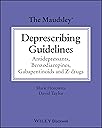
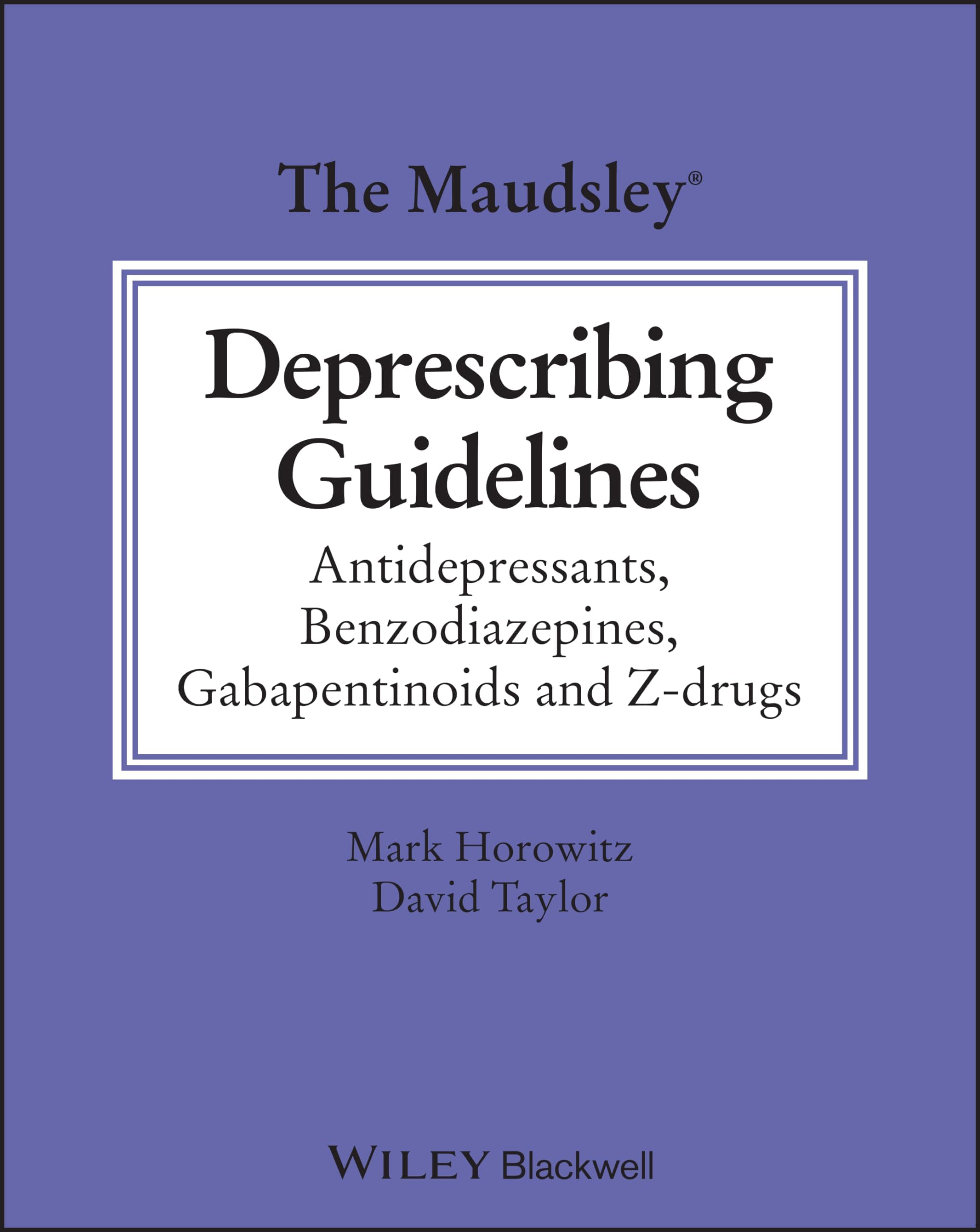
The Maudsley Deprescribing Guidelines is a 592-page, evidence-based clinical resource published in 2024, offering step-by-step, drug-specific tapering protocols for safely reducing or stopping antidepressants, benzodiazepines, gabapentinoids, and z-drugs. Backed by WHO and UN patient rights frameworks, it uniquely clarifies withdrawal versus relapse symptoms and provides practical troubleshooting, making it an essential, authoritative guide for healthcare professionals and patients committed to safe, informed deprescribing.


| Best Sellers Rank | 70,089 in Books ( See Top 100 in Books ) 614 in General Medical Issues Guides 644 in Other Branches of Medicine 881 in Scientific Psychology & Psychiatry |
| Customer reviews | 4.7 4.7 out of 5 stars (236) |
| Dimensions | 16.76 x 3.05 x 24.13 cm |
| Edition | 1st |
| ISBN-10 | 111982298X |
| ISBN-13 | 978-1119822981 |
| Item weight | 1.1 kg |
| Language | English |
| Part of series | The Maudsley Prescribing Guidelines |
| Print length | 592 pages |
| Publication date | 15 Feb. 2024 |
| Publisher | Wiley-Blackwell |
N**B
Things you should know about
If you are taking certain prescribed medications and you have decided to come off of them for whatever reason, and you want to minimise possible discomfort, this is a great tool for safe guidance to achieve your goal. Unfortunately, many healthcare providers can prescribe certain medications, but in my opinion, they have no real idea how to get you off of them. The guidelines provided to them are often outdated and can cause unnecessary discomfort; however, those guidelines are gradually being reviewed and amended to align with those included in this amazing book. If you want to educate yourself and your prescriber, this is exactly what you need.
S**G
Essential advice
The book is well founded and evidence based. It gives clear guidelines in unusual prescribing scenarios. For example: Some prescribers can be scared of using preparations like diazepam liquid in very low doses, out of fear that this is not licensed. In the absence of official guidelines this book can be used as reassurance to do the right thing. Most of the advice is common sense. Some sections, such as the one about deprescribing benzodiazepines, can be a bit repetitive, but this does not affect my 5 star review.
A**R
A brave and essential publication
The authors are to be highly commended for compiling such an important collation of the information 'to date' (November 2023) on the complex issue of the deprescribing - of antidepressants, benzos, gabapentinoids and z-drugs. Having contributed to the patient experience gathered within the reference material cited, it is heartening to see this now being used constructively to inform prescribers - with the express purpose of limiting the damage that we have seen far too many people experiencing - whilst the medical profession has been slow to recognise what has been happening to real life patients. This book will surely raise awareness and kick-start long overdue proper recognition and further exploration of the issues raised - especially in the preliminary discussion section. The future 'proof of the pudding' around the specific drug guidance will itself yield essential information and better understanding of 'what works' in real life for real patients. And then there is the problem of polypharmacy: all too often antidepressants are now the 'gateway' drugs, leading on to the other drugs covered within the book.
M**N
Great resource and information for tapering off of antidepressants and benzodiazepines.
Great resource for anyone wanting to have an understanding on coming off/ tapering from antidepressants or benzodiazepines. Contains examples of how to taper and information on each drug. Mark Horowitz is a co author and is a wonderful advocate and expert here. I recommend this book for those wishing for help and understanding of this incredibly difficult journey for some. I only wish our medical environment would read this as part of their training and use it with patients who struggle here, where it can be as difficult physically and mentally as it gets. An estimated 50% of people struggle with withdrawal from these drugs which can take years.
L**.
Handbook for safe tapering of off medication 🙏
Good news:- Useful and practical handbook designed to help clinicians and patients safely reduce or stop psychiatric medications. Bad news:- I can't say what I think here as the review would not be published 🙏
A**R
The future of psychiatry is deprescription 📉
As a senior data analyst, I was uniquely positioned to leverage advanced analytical skills to develop a highly tailored tapering plan for discontinuing aripiprazole. By analyzing pet brain scan data and extrapolating similar patterns to the graphs featured in The Maudsley Deprescribing Guidelines, I was able to create a precise strategy for reducing my dose over a period of more than two years. This gradual approach helped me avoid significant withdrawal effects and led to the resolution of many iatrogenic issues caused by the medication, such as compulsive behaviors. While I successfully achieved full discontinuation, I eventually experienced a mild relapse, characterized by acute symptoms, which led to reinstatement at my original starting dose. Though this outcome may seem disheartening, it has provided me with a valuable learning opportunity. I’m now in a position to demonstrate a balanced approach to medication use, acknowledging the importance of treatment when needed without succumbing to the stigma of "pill shaming." At the same time, I remain optimistic that I can once again work toward a medication-free life, especially if I address the external stressors that contributed to my earlier challenges. This experience highlights the importance of both data-driven decision-making and flexible, patient-centered treatment plans in managing long-term medication use. With the next volume of the Maudsley guidelines due in January 2025, I hope to gain further insights to fine-tune my approach.
A**A
A beacon of light
I bought this to explain to my doctors that a fast taper of Diazapam is dangerous. I have been put through hell twice by psychiatrists, GPs and pharmacists who don't have a clue how to deprescribe. They think I am making up the horrendous symptoms. Thank you so much to the authors for writing such a clear, concise and important book. I advise everyone on any psychiatric drug to get a copy because it will save your life.
C**O
How to taper off anti depressants
What you need if you're wanting to stop SSRIs. Fantastic hope now.
L**D
Paradigm Shifting.
From the desk of a Canadian MD/academic-clinical psychiatrist/concerned family member/patient. Arriving at my door this week, Deprescribing Guidelines was the first medical textbook where upon opening the cover, I read the first 50 pages straight through. In writing my first ever Amazon review, I would be honoured to be considered by Drs. Horowitz and Taylor to be their peer. There is not enough space here to express the potential benefit of this essential desk reference. A hard copy will be gifted to members of my team. My own busy pharmacist distractedly quipped, “they still make textbooks?” and then lit up at the prospect of the guidance therein. I find it HOPEFUL. Let me explain. This volume deals with Antidepressants, Benzodiazepines, Gabapentinoids and Z-Drugs. Simply put, they are used to suppress feelings and sensations. Notwithstanding several good, humane reasons for temporarily doing so, it turns out that taking them long-term changes the brain so we eventually must rely on the drug. It hurts if we don’t take it, from a little to a lot. I came of age in psychiatry training with the hype of the “decade of the brain” when mental disorders were being thought of as genetic diseases and cures were around the corner. Novel medications were heavily marketed and prescribing for even more DSM disorders took off. Since before PROZAC, we have been far too influenced by the profit driven global pharmaceutical industrial complex focused on starting, switching, substituting, and adding more medication to deal with side effects. This has yielded profits for corporations and tenured careers for academics. In my opinion, it has not improved our lot collectively. Now we have more distressed people taking medication for "treatment resistant" conditions and finance a perennial quest for the next pharmaceutical fix. Misdiagnosis of relapse or the addition of a 2nd and 3rd disorder likewise has resulted from drug company propaganda shaping medical education. Very few prescribers know how to support people finish a course of medication treatment well. Many are afraid or unwilling to supervise tapers and have no capacity to interpret the reactive feelings and sensations arising correctly. Unwittingly, in the absence of a HOW-TO MANNUAL like this one, I will admit I have dismissed my own body’s intuition, my patient’s self-reports and so-called unsanctioned internet forums that quietly whispered, “there must be another way”. Product monographs and the medical orthodoxy has it wrong, including the experts whose consensus we rely upon daily (CANMET Guideline psychiatry panelists included). “Expect a possible brief and mild discontinuation syndrome (for SSRI/SNRIs)" is simply untrue for too many situations. With this resource, I can more deftly refute standard medical advice without fear of censure. I can offer students and colleagues tangible direction to assist them in preventing needless suffering or perpetuating iatrogenic neurological injury. I know who to reach out to for a consult in the UK! After the COVID 19 years further aggravated my therapeutic nihilism, disenchantment and burnout, finding the works of critical psychiatrists and learning from champion deprescribers while on sabbatical has been a game changer. I add my voice to the first author speaking from lived experience, as I too have been swept up in the escalation of prescription drug reliance of our own profession. Mark Horowitz is plain speaking in key academic journals and several youtube/podcast interviews. I am circling back to read his mentor, Dr. Joanna Moncrieff's work now. Not since Hungarian Canadian, Dr. Gabor Mate won my respect in a Physician, Heal Thyself sort of way has someone come along and impressed me as much. Pharmacists, Prescribers of all kinds and Citizen Scientists with a personal stake in the safe handling of psychotropic drugs and moreover, the people taking them- all of us can breathe easier now with this resource to hand. Respect is earned by the publisher for throwing the weight of their name behind the project. Since adding a decent chapter on deprescribing to their last Prescribing Guidelines edition in 2021, this new Title was needed. May it begin to remedy the imbalance of credible, accessible solutions for navigating the stopping of neurologically adaptive drugs, that have harmed as many souls (or more) as they have helped. There is a companion Deprescribing Guide in the works covering mood stabilisers, stimulants, antipsychotics and opioids. My only disappointment is that we will have to wait until Volume 2 is released in 2025. Join me in appreciating the authors and their many collaborators for their hard-fought personal and professional journeys to bring this book forward. Like me, they have skin in the game and have shown courage and perseverance to deliver this work on behalf of the common good. Bravo.
N**B
The best guidelines for deprescribing
The best guidelines for deprescribing. Should be taught to all doctors, nurses and psychologists, regardless of their field (especially ER doctors, psychiatrists, GPs, neurologists, etc.), so they can recognize withdrawal symptoms or guide safely patients to taper off these medications.
S**N
On of the most useful books in psychiatry
Best book in its field currently. Found out about this from Taperclinic Youtube. Best how to taper guide. I used this instead of my doctor's advice (General Practitioner) to safely taper my medication.
M**A
Imprescindible !!
Meses esperando a que se editase y publicase este manual, imprescindible si estás tomando medicación psiquiátrica o si eres psiquiatra. 30 años seguidos tomando hasta 9 pastillas diarias porque los psiquiatras no saben cómo hacer la reducción y eliminación de la medicación y las confunden con "recaídas". Todos los psiquiatras deberían aprenderse este manual de memoria. Gracias, Dr Horowitz!!
B**G
À lire !
Un apport intéressant pour rationaliser la deprescription, qu'en tant que psychiatres, nous pouvions faire de manière empirique. À lire !
Trustpilot
1 month ago
2 weeks ago