Desertcart purchases this item on your behalf and handles shipping, customs, and support to Japan.
🔆 Charge smarter, live greener — power your future with Victron Energy!
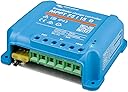
The Victron Energy SmartSolar MPPT 75V 15A charge controller optimizes solar energy harvesting with advanced MPPT algorithms, supports 12/24V battery systems, and offers Bluetooth connectivity for real-time monitoring and configuration. Its synchronized multi-controller capability and intelligent load management ensure maximum battery longevity and system efficiency, all packed in a compact, durable design trusted by thousands of professionals.


| ASIN | B075NQQRPD |
| Best Sellers Rank | #5,508 in Patio, Lawn & Garden ( See Top 100 in Patio, Lawn & Garden ) #3 in Renewable Energy Controllers |
| Brand | Victron Energy |
| Brand Name | Victron Energy |
| Color | Blue |
| Customer Reviews | 4.7 out of 5 stars 5,639 Reviews |
| Display Type | LED or minimal display |
| Included Components | Victron Energy SmartSolar MPPT 75V 15 amp 12/24-Volt Solar Charge Controller (Bluetooth) |
| Item Dimensions L x W x H | 4.7"L x 2.1"W x 1.8"H |
| Item Type Name | Victron Energy SmartSolar MPPT 75V 15 amp 12/24-Volt Solar Charge Controller (Bluetooth) |
| Item Weight | 0.58 kg |
| Manufacturer | Victron Energy |
| Material | Plastic |
| Material Type | Plastic |
| Model | MPPT 75|15 |
| Number of Items | 1 |
| Operating Temperature | 60 °C |
| Part Number | SCC075015060R |
| Product Dimensions | 4.7"L x 2.1"W x 1.8"H |
| UPC | 703774384979 |
| Unit Count | 1 count |
| Voltage | 24 volts |
| Warranty Description | Warranty |
P**E
an outstanding controller at a stellar price!
This controller is amazing. it's changed so much on what have done with my solar setup. First, it's extremely versatile handing both 12V and 24V panels. it handles lead-acid, gel, and LiFePo batteries efficiently. The bluetooth gives me direct insights into what's going on with the controller.. what it's taking in, what it's sending out. I get clear insights into the charging phase and allows me to know where my battery is at in the charging process. the street light process (and load circuits) has allowed me to put in LED lights that shine on my gate after dark and shut off during the day (based on the solar input thresholds you set). The only slight negative is that you have to be within about 10' of the unit to get bluetooth to connect. it's a little weak, but that's a small price to pay for such an overall amazing unit. Overall, the unit is very well designed, super easy instructions, and mostly intuitive setup. Strong improvement from any other 'dumb' controllers you may have.
D**S
Know what you need before you buy! This worked for me.
Solar energy is a great way to have back-up power for your home or for your RV. Solar isn't super complicated, but there are a lot of things you need to know to make the best purchases. Solar charges (like the Victron) come in both PWM and MPPT. PWM are significantly less expensive, but may fit your needs. MPPT is a better option, and this very affordable Victron unit is a fantastic entry-level charge controller. It's 75/15 name refers to the maximum volts it will accept/use from your solar array, and the 15 amps it can accept/use. The Victron Smart Solar 75/15 can handle up to 300 watts of solar panels wired in series or parallel. In series, that's about 68 volts max, well within tolerances, or 16.5 amps max which will be capped at 15 amps. Truth is, except for perfect sun and panel angle, you're not likely to hit the 16.5 amps. Still, that's not bad! A great part of the Victron 75/15 design is that it has bluetooth built in, so don't need to shell out extra for a dongle. Note: if you want this, look for the "Smart Solar," if it doesn't say this, you'll need a dongle. The size of this unit is just excellent; I bought it for my DIY powerstation. It works great, giving me nearly the full 100 watts from my Renogy solar panels under ideal conditions. For the money (about $65 at the time of purchase) it's simple enough for the beginners, or strong enough to manage a modest RV. Cons: It uses small, flat-head screws, so you'll need a small "pocket" screwdriver to make the connections. The input for the wires is pretty small. I had a ferrule kit, so I was able to insert 12 AWG with no trouble. I don't know how you'd easily get 10 AWG (somewhat standard for solar) but what I had worked and I'm happy.
A**X
One of the best solar charge controllers I have installed, configured and used.
I have to say some kind words so far for this charge controller, in short, this is an amazing product. Early in its use, I have a small outdoor solar array using batteries to power a sprinkler system, sound system, lighting and an outlet using a separate inverter. We live on top of a hill, no trees, no wind blocks and get the worst of the weather constantly. I have been through many MANY MPPT Solar Charge Controllers and was a bit scared to go with a Bluetooth only controlled device. I was quickly impressed with the VictronConnect software, giving a demo device so I could test drive the settings and see exactly what I would get and control. Next up, how hard is it to connect and reconnect once I got physical hardware.... It was literally as easy as the demo equipment. I was able to power on the controller using Solar power OR battery, meaning as long as you have 1 power source it just works. Bluetooth connected instantly, one tap on my Android phone and the PIN on side of the controller and I was done. I did notice that the default for me was 24v when I had a 12v battery connected but that wasn't a big deal, went through set to 12 and was all set. Because I do a lot of work with solar controllers, I wanted to see how accurate and fast this little beast was on the phone app, ran a constant 25w load and the app was within a half second reporting accurately. Variable loads also gave good information, up to this point I was already sold that this was a solid device. The app is just about perfect, gives you Amp and Watt usage which is nice for quick math and efficiency conversion. I also really like that the battery stats show when your load is pulling from solar only or from battery, very clever and easy to read. Pros: Super easy to install, Plug and Play Easy to configure easy AND expert settings Complete customization of battery settings and a good number of presets Was able to configure exact settings for my 12.8v LiFePO4 battery! Feels solid and I have no doubt that it will last in harsh environments Easy to mount, Good size fits just about anywhere Easily control load on/off depending on solar input Cons: Cant find any yet but here are some things to note Mine defaulted to 24v, easy change to 12, maybe sensitive batteries and large systems might have connection issues Would be nice to have a day timer for on/off functions as well as solar input but this is being super picky If you are looking for a good MPPT Solar Charge Controller, feature rich and don't mind using your phone and Bluetooth to configure, this is the one you want. Can't comment on longevity thus far but I have no doubts this will last! Will update if anything changes...
S**O
A better solar charger.
I recently installed two 100 watt Renogy solar panels on top of my RV trailer, along with a Renogy 30 amp PWM controller with a bluetooth dongle. The panels work fine, the Renogy SCC (Solar Charge Controller) not so fine. The bluetooth app is broken, crashes frequently, and is mostly a waste of money. While the Renogy SCC did it's job, the performance on cloudy/shaded days was inadequate. With a PWM SCC, you must run your panels in parallel. You cannot fully charge a battery with 13 volts available (cloudy day in trees) from the PWM SCC, no matter what the amps is. With the panels in series, that 13 volts would now be 26 volts. So I ordered the Victron SmartSolar 75/15 MPPT controller with built in Bluetooth. With an MPPT controller, you have the option to run your panels in series or parallel. Running my panels in series doubles available voltage (up to around 40 volts, which the SCC converts excess voltage to the appropriate voltage (12 or 24 volts) and current (amps) to charge your batteries. This SCC handles this nicely. The unit was delivered in brand new condition. I was surprised how small it is. There are three LED indicator lights on the front. You cannot flush mount this device. I installed this inside a wall with a vent pipe, and ran my wires out the top of the RV via the vent exit. Where I mounted inside the wall, I used a tin lid against the wood. The instructions say to mount the unit on a non-combustible surface. I stacked two washers between the wall and tin, offering a better way to dissipate heat from the back of the device. If you look closely at the picture, you can see what I did. Then I made a facade cover with a small "peep hole" to quick view the LED's. These LED's are quite bright, some people tape over them. I would try a black felt tip marker to try and dim things first. There is no way to flush mount this unit. You cannot use wire bigger than 10 AWG. Some claim 10 AWG is too big, but that just isn't so. Just don't mangle the wire ends and they'll fit. But there is a better way, read below. What I do is to "tin" the wire ends. Strip off 1/2 inch of wire, give a slight twist to keep the strands tight. With a good soldering iron, solder the wire end, making sure the solder flows evenly. Not too much or you'll end up with a "fat" end that won't fit in the lugs. You might practice this with a piece of wire, but once done correctly you have a superior connection. Then after inserting the end into the lug, tighten snuggly, then loosen, the re-tighten. Each time the lug will screw down a little tighter as the lug "worms" into the wire end. I'll do this at least 10-15 times, until the lug is snug and secure. Be careful to not over tighten and strip the lug. Use cable restraints. Once the battery is connected, hook up the PV array. I cover my solar panels with some plywood (or some cardboard) to turn down the open voltages while I connected those, which for two 100 watt panels in series is over 40 volts in bright sun and could shock you. I also installed a disconnect switch for the PV panels, next to that is the inverter remote switch. Your battery must be connected first, then connect the PV array. The one weak area of this device is the manual. It comes with a tiny booklet that is difficult to read. You can download the PDF version from Victron's website. Some of the info is sketchy and in not so plain English. For some info you need to install another app called Victron Toolkit. This offers explanations of the various blinking LED functions. The built in Bluetooth requires an app called Victron Connect(I have an Android Nokia smartphone) for reading power outputs, managing battery charging profiles, etc. The app was downloaded and installed without issue. With the app installed and paired to my phone, the app quickly upgraded the firmware for the SCC. Once this was done, the app works very well. I can walk about 40 feet away and can still stay connected, which is about normal for Bluetooth devices. Again, the app is well done and works well. The manual has some odd English to explain some of the functions. I'll try to explain in "plain English" as I see it. When you first hook up the SCC, the manual says 5+ volts from the PV panels over the Battery volts is needed to be "operational" (According to the manual). I would expect the unit to be "operational" when I bought it brand new out of the box. What this really means is this; "When the controller sees 5 or more volts from the PV (solar panels) above the battery volts, it turns on the charger. When the PV volts drops to 1 volt or less then the battery volts, it turns off the charger. You can tell if the SCC is on and charging with a steady blue(or yellow or green, depending on SOC(State Of Charge)) LED, or off with a blinking blue LED every 2-3 seconds. When not charging, you can still use the Bluetooth. As the day progresses the LED's will turn to yellow (absorption mode) to green (float mode) depending on clouds and trees, and of course electrical use. With my panels hooked up in series, mine starts up right about the crack of dawn and is charging in bulk mode with a steady blue LED. With the ability to turn off charging, I have notice right off my battery is still > 80% SOC (state of charge) when it restarts in the morning, even with the propane sensor on (my only parasitic load when parked). I like the Bluetooth app. It gives you complete control over battery settings and you can use just about any type of battery including lithium. The app also has a handy history function that is very useful. Some people complain about the range of communication with the Bluetooth. Mine functions like any Bluetooth, about 40 feet of range and that is that. Even with the SCC inside a tin covered RV and me outside, it works fine. I hope someone reads this before going with a PWM charger. For a few more bucks you can have a superior solar system. But for the somewhat lacking manual, I have no cons for this device. I have also ordered the Bluetooth battery temperature and voltage monitoring device for better charging. My batteries are outside the RV while the SCC is inside, this can skew charging parameters. https://www.amazon.com/gp/product/B07RTYGMBD/ref=ppx_yo_dt_b_asin_title_o01_s00?ie=UTF8&psc=1 I use two Duracell 78 ah AGM Ultra group 24 batteries along with a 1200/2400 watt inverter, so far this is working out well. This device has load outputs. For the average RV person setting up a simple solar system, this can be ignored. Run your 12 volts supply from the battery as it was originally wired. UPDATE July 1st, 2021: I have recently added two more Renogy 100 watt compact solar panes to the other two, making a total of four. To get these to work on the Victron 75/15 Smartsolar charger, I created two groups of two panels in series, then connected the two groups in parallel. Any other way would be over the rated amps or volts (depending on how the panels are connected. This setup delivers to the battery 15 amps @ 13.6 volts (float), which is as high as it can go. Volts remain the same as the original setup with two panels in series, about 43 volts. I just get double the amps. If I want to get the maximum amps I need to buy the next size up, the MPPT 100/20 controller. As it is now with four 100 watt panels, the charge controller works very well. With 4 panels connected, it turns on quite a bit before sunrise. The extra panels are very helpful in shade or cloudy days(or both). And when the sun shines, the output is strong.
D**.
Excellent charge controller
This is an excellent charge controller, loaded with features, very compact, very reliable. The ability to use an app to track the solar metrics extends beyond just that capability. In my case (as a software developer and electronics tinkerer type person), I'm using an ESP32 module (about $6) to capture the Bluetooth broadcast data from the charge controller and upload it to my website, where I can easily monitor the solar performance of my camper remotely. I'm using the VictronBLE ESP32 library with additional code to upload the data to my web server. This charge controller supports around 200 Watts of solar if your battery(s) are 12 V, and around 400 Watts if your battery(s) are 24 V (15 A x 12 V = 180W, 15 A x 24 V = 360 W, however since the charge voltage is a little higher than your battery voltage, it is right around 200 W and 400 W). I'm running 400 Watts of solar (2 x 200 W) with a 12 V battery, so the charge controller can really only make use of about half of my maximum solar power. However, the upside is that on a cloudy day when the panels cannot produce their full power, having double the solar results in double the wattage (IE if one panel can only produce 30 watts on a very overcast day, then I get 60 watts with double the panels). The charge controller handles this just fine - it only allows up to the 15A to flow even if the panels can produce more. I highly recommend this controller. If you don't understand the relationship between the amperage of the controller, the battery voltage, and the wattage, then use AI or research it yourself a little. It isn't too complex. Essentially for this controller, the 75V is the maximum solar voltage it can handle (and that is determined by the properties of your solar panels, and whether you have then in serial or parallel combinations), 15A is the maximum amperage it can send to a battery or load, and 12/24 means it works with both 12V and 24V battery setups.
A**R
BLUETOOTH ENABLED APP VERY COOL
So far so good. This is actually better than the larger 100 W and 30 amp unit. This smaller unit came with Bluetooth enabled communication to the app. Look how cool I attached a picture a screenshot from my app that’s pretty amazing !!! Saddly The larger 100watt/30amp BlueSolar charge controller I ordered for this F-450 bus off grid system failed (and does not have Bluetooth, they wanted me to buy a connector to trouble shoot, I just sent it back instead. But this smaller unit is awesome!. I only have 1 solar panel (265 watt) run to 2 batteries. I’m sending that one back, but I also bought 2 smaller charge controllers for emergencies. I hooked up the 75 watt / 15amp BlueSolar MPPT charge controller…. And so far so good. Showing solid Blue for “bulk charging” to my 2 deep cycle 12 volt batteries (in parallel to maintain a 12v system). Utah sun is shining, we will see how this goes. Crossing my fingers. Easy install. The 10 gauge wires BARELY fit in these smaller slots in this 75/15 unit. But there is a “load port” the larger unit does not have. Just in case I ever wanna run a little LED light straight off the charge controller one day I could always do that.. Update 2 days later. Going strong! FLOAT MODE. This is amazing, I love the Bluetooth app- it tells me my exact stats, charging power, battery level, . This 75W / 15Amp charge controller is plenty strong for my single 265 watt solar panel. This size works better than the big expensive bluesolar 100/30. That one didn’t even have the Bluetooth. This is so cool. Very happy with it. Adding more pics
S**E
Great Charge Controller but it is expensive
I have a small system with two 100 watt PV panels and a 1000 watt pure sine wave inverter. This charge controller allows me to squeeze out all the wattage out of the PV panels even on cloudy days. So far I've seen a max of 175 watts from the two panels in direct sunlight and 24 - 135 watts on cloudy days... not bad. The build quality is exceptional, the plastic case is thick and heavy and the components are solid. I like the simple design. The only thing I don't like about the controller are the wire nuts and ports, they are rather small. You may have a problem connecting any wire gauge smaller than 10 to this controller. The Victron connect app provides useful information via Bluetooth but you need to be within a few feet of the controller to keep a stable connection. I will be ordering the Bluetooth battery shunt shortly and setting up a VE.Direct network to get better battery information as the controller only provides limited information on the battery charge state and voltage. I am finding that Victron is more like expensive Lego blocks if you want additional functionality you need to purchase more "bolt-on" components. Unfortunately most of their components are expensive but you get what you pay for and they make very good products.
B**.
Small size, big opportunity
Love victron products. Their Bluetooth ability is great and easy to understand app makes these charge controls great for off road. These are well built and small charge controls so they can be mounted almost anywhere. Can handle heat so under the hood options work
R**L
Perfecto
Funcionamiento perfecto.
S**M
un prodotto eccellente
Provato quasi tutte le funzioni del Victron e devo dire che funziona tutto alla perfezione. Il collegamento wifi e l'app sono semplicissime da utilizzare e abbastanza complete anche in termini di statistiche. Il prodotto sembra robusto fatto di buoni materiali. La morsettiera e' vermente fatta bene e ben dimensionata per il mio 15A. Le impostazioni del caricatore, tutte impostabili con app in wifi, sono veramete elementari, il voltaggio della batteria la riconosce automaticamente e per ciascuna tipologia e' tutto preimpostato ma se si vuole si possono cambiare i parametri. E' un MPPT al 100%, infatti aggiusta la potenza assorbita in funziona di quella massima disponibile. La corrente erogata a carico da servire (load + batteria) e' maggiore di quella in ingresso da FV ed a tensione inferiore (12 o 24v) come deve essere per un Buck converter. La gestione del carico funziona bene sia in termini di programmazione sia in termini di gestione della potenza. Provato varie situazioni (ad esempio Potenza FV > e < di quella richiesta da carico e dal caricabatteria etc). Funziona veramente bene, come un orologio, un prodotto semplice ma professionale che non crea sorprese. Ho letto di molti MPPT che si comportano in modo strano nella gestione del carico. Ad esempio ho letto di caricatori che non gestiscono correttamente attivazione/disattivazione carico a seguito transizione giorno notte, notte giorno e giorno notte (hai detto niente!!! da buttare) o altre situazioni strane. Non ha ventola e quindi e' silenziosissimo ed io non sono riuscito a farlo scaldare fino a 80W assorbiti. Il prodotto e' eccellente ma ha un lato negativo, il costo che non e' proprio economico soprattutto per correnti da 20a in su. Comunque se non volete problemi e non volete andare a caccia di problemi ve lo consiglio vivamente, io non mi addentrerei in caricatori MPPT da 100A che costano pochissimo, anzi, ve li regalano addirittura, il perche' lo scoprereste certamente in seguito.
M**N
Best item but price to high
Best mppt & communication for raspberry Pi
İ**M
Mppt
Bu işin en iyisi yıllardır kullanılanıyorum
J**Y
value
does the job buy again.
Trustpilot
1 month ago
2 weeks ago