
DOWNLOAD THE APP


Customer Services
Copyright © 2025 Desertcart Holdings Limited
DOWNLOAD THE APP
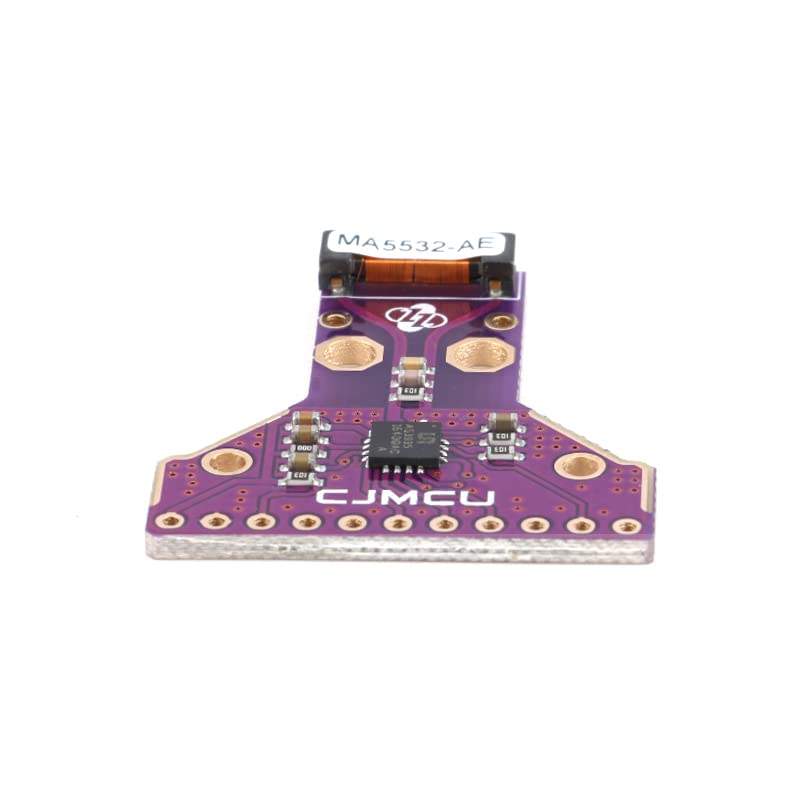


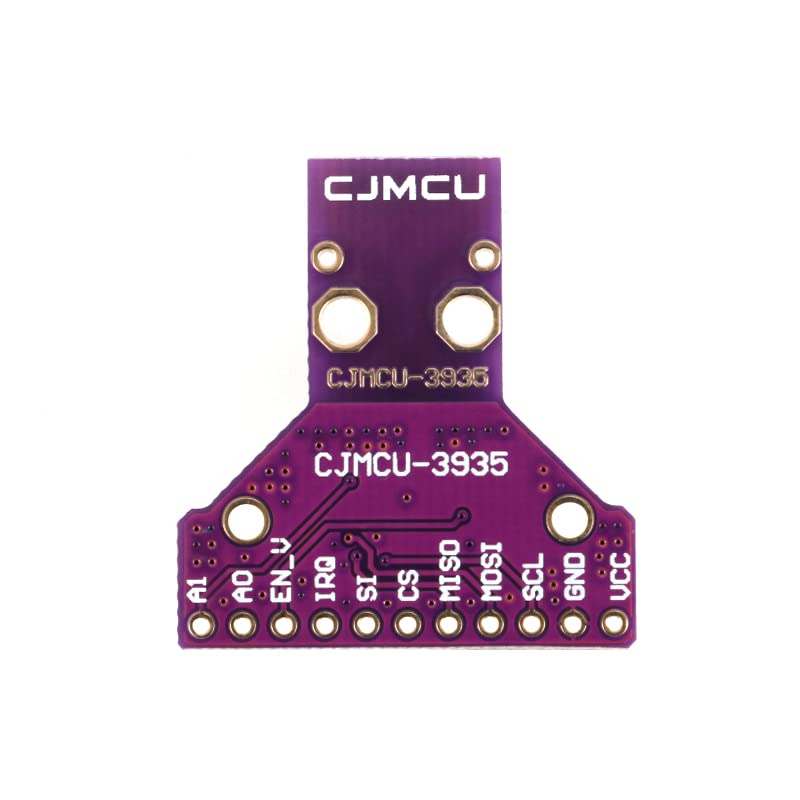

⚡ Stay ahead of the storm—because your safety deserves precision.
The AS3935 Digital Lightning Sensor Module is a compact, programmable sensor that detects lightning activity within a 40km radius and estimates storm distance with 1km accuracy. Featuring advanced man-made noise rejection and dual flash detection, it supports SPI and I2C interfaces for versatile integration in weather stations, portable devices, and safety equipment.
| ASIN | B0BG2GN6T5 |
| Manufacturer | JESSINIE |
| Package Dimensions | 17.4 x 11.8 x 0.8 cm; 10 g |
H**H
I am very happy with this item. I bought this item to use in my home made weather station. I've tested it using an Arduino and the AS3935MI library. I was actually able to test it with a thunderstorm approaching and it actually works. It detected lightning from an approaching thunderstorm and the distance got shorter and shorter as it approached! Very cool. I highly recommend this module for lightning detection. It would be a great experiment for a STEM classroom too.
J**W
I've spent a few hours trying to get this to work with a Raspberry PI, in both i2c and spi. At best i can get a bunch of addresses randomly appearing in i2cdetect but not showing up as it should. It comes with no docs so i can only try different pinout combinations from what I find on the internet, but still can't get it to show up as it should.
K**R
Using the Arduino library, AS3935MI, (AS3935I2C header) from github, it came up on I2C and worked. By happenstance, I finished hookup just before a major storm, and I can say that it did detect lightning. The reason for the preliminary findings gotcha in the header, is that there are a lot of configuration options for this thing and I am just beginning to figure them out. Be sure and wire jumpers as follows. This is not addressed with most websites and libraries. Plug it into 3.3 volts, not 5. MOSI is SDA if you are wondering. (Which I was) SI, A0 and EN_VREG tied to +3.3 A1 to GND (I2C won't run if address is left at 0 Why? Beats me.) CS and MISD can be left alone. The above instructions are also in the Arduino code from Github. A piezo firestarter will trigger it for test. It will usually think it is noise, but on occasion thinks it saw lightning. But it will tell you if it is at least seeing the outside world. FYI. I cannot speak for SPI connections, but with I2C you need to keep the wires as short as possible. Don't even use the standard 8 inch wire jumpers. Otherwise you will get false events that overwhelm the output. My idea of using a two foot I2C cable to get the detector away from the Arduino Uno backfired big time with false detections hitting the max and throwing errors. Making the wires about three inches got it back to working pretty well. A shield would be best, and is what I am building right now. EDIT: Ignore the warning about I2C cable length. By coincidence, the power went out just as I was changing cabling, requiring me to crank up a small generator. That is where the noise was coming from. Took a while to realize the problem. Generator off: long cable back on: no problem. To really understand this thing, you need to download the datasheet for the AS3935 chip. Lots of options that can be used. Fun little device if you live where thunderstorms are common.
T**R
I recently acquired the AS3935 Digital Lightning Sensor Module, and I’m thoroughly impressed. Setting up the AS3935 was a breeze. The clear documentation and straightforward interface made it a joy to integrate into my weather station project. The downside is that it did not come with any type of instructions, which is fine, but not so great if unfamiliar with these boards. The AS3935’s lightning detection capabilities are nothing short of remarkable. It accurately senses lightning activity in the vicinity, providing real-time alerts. Whether you’re a hobbyist or a professional meteorologist, this sensor won’t disappoint. What truly sets the AS3935 apart is its ability to estimate the distance to the head of the storm. With a range of up to 40 kilometers, it’s like having a lightning radar right at your fingertips. The AS3935 doesn’t stop at lightning detection. It also provides information on noise levels. This feature ensures reliable data even in challenging environments. The module’s compact design makes it easy to integrate into various projects. Plus, its robust build ensures longevity and consistent performance. In summary, the AS3935 Digital Lightning Sensor Module is a must-have for anyone interested in weather monitoring, storm tracking, or just geeking out over lightning.
Trustpilot
2 weeks ago
2 weeks ago