
Buy anything from 5,000+ international stores. One checkout price. No surprise fees. Join 2M+ shoppers on Desertcart.
Desertcart purchases this item on your behalf and handles shipping, customs, and support to Japan.
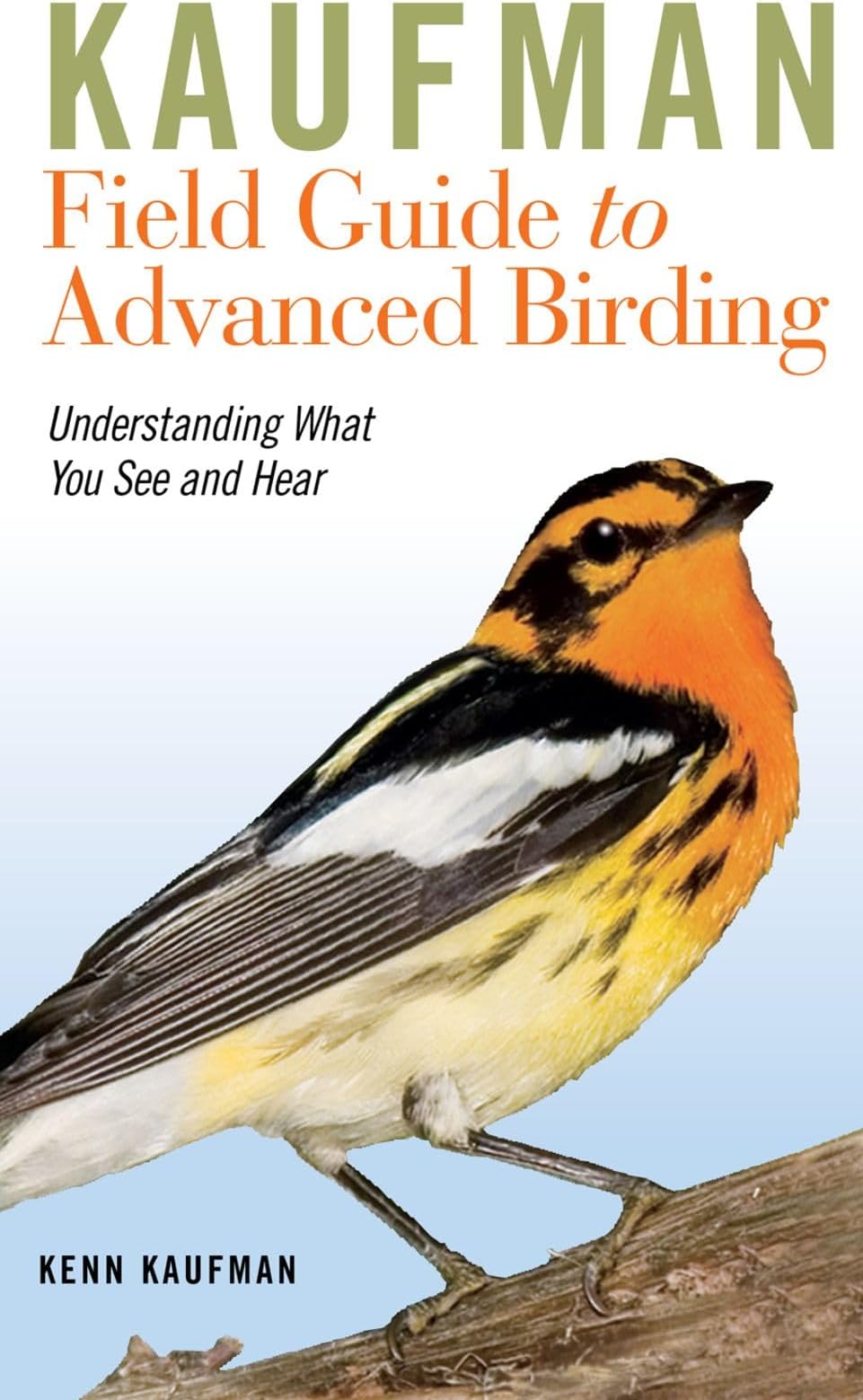
Birders can memorize hundreds of details and still not be able to identify birds if they donโt really understand whatโs in front of them.Today birders have access to almost too much information, and their attempts to identify birds can be drowned out by excess detail. The all-new Kaufman Field Guide to Advanced Birding takes a different approach, clarifying the basics and providing a framework for learning about each group. Overall principles of identification are explained in clear language, and ten chapters on specific groups of birds show how these principles can be applied in practice. Anyone with a keen interest in identifying birds will find that this book makes the learning process more effective and enjoyable, and that truly understanding what we see and hear can make birding more fun. Review: An amazing book! - I am a beginner birder with over 100 species identified in the past year or so. With my love for birds and birding increasing, I crave for more knowledge, and I am very grateful to have found this book, and grateful to Kaufman for putting such complex knowledge in such an accessible way. This book goes beyond the identification by picture approach that a field guide typically offers. It provides a great tool kit for bird identification, such as shape, behavior, seasonality, etc. In a typical field guide, the general info section such as bird anatomy, plumage, molt is often very dry and difficult to understand. I have never managed to finish reading a single page on such topics. But this book is so well written and enjoyable to read. It uses pictures and diagrams very effectively. For example, a picture and a diagram of a bird's wing are put side by side so that the reader can see which name applies to which feathers on a real wing. At the end of the chapter, I could name the feathers correctly 80% of time. The chapters on how to identify specific species are really helpful. For example, Kaufman divides the warblers into different groups by their look, and provides info on what to look for in a warbler. The knowledge I gained from the book has immediately helped me to narrow down the possibilities. Warblers no longer look all the same to me anymore. I can identify them in a more systematic way. In short, if you want to sharpen your birding skills, this book will not disappoint! Other birding books I like in my collection - Sibley's field guide: superb illustration for identification purpose - National Geo's field guide: great for referencing because of its nice index page - Firefly Encyclopedia of birds: huge book with great info and essays, extremely fun to read My tools to aid my birding fun - swaro 8x32 - Canon SX50: compact, light, powerful telezoom and sharp focus that takes amazing bird pictures from distance Review: Terrific Book ! - "Field Guide to Advanced Birding" by Kenn Kaufman This is an incredible book! Kenn Kaufman is recognized world-wide as a leading authority - maybe THE leading authority - on wild bird identification. You will read only a short distance into this book before you realize he is also an incredibly gifted instructor. You will also quickly find that in his book he has somehow combined a huge wealth of professional knowledge and skill with a tremendous amount of common sense and excellent observation to produce a highly readable, highly understandable, highly instructive goldmine of education for anyone who really wants to learn about the birds we share this continent with. And one of the best things he does is point out (quite correctly) that birders come in all degrees of interest and skill and means, and they all ALL important because it is the backyard feeder-watchers who contribute the most new raw data to the field of Ornithology every year. Their information is the bedrock upon which enjoyment and protection of birds is based everywhere for everyone. "Field Guide to Advanced Birding" is indeed "advanced" but Kaufman's skill as a teacher makes that advancement easy and available enough for even the most causal birder to master. Yet even long time "experienced" birders are going to have their eyes opened by Chapter 2, guaranteed! Kenn Kaufman's "Field Guide to Advanced Birding" is unquestionably a classic of Birding literature and it's had to imagine any serious birder who wouldn't gain a world of good knowledge from it. This will be one of the books in your Birding library that you won't loan to ANYBODY.
| Best Sellers Rank | #500,363 in Books ( See Top 100 in Books ) #232 in Ornithology (Books) #662 in Outdoors & Nature Reference #719 in Bird Field Guides |
| Customer Reviews | 4.8 out of 5 stars 142 Reviews |
F**R
An amazing book!
I am a beginner birder with over 100 species identified in the past year or so. With my love for birds and birding increasing, I crave for more knowledge, and I am very grateful to have found this book, and grateful to Kaufman for putting such complex knowledge in such an accessible way. This book goes beyond the identification by picture approach that a field guide typically offers. It provides a great tool kit for bird identification, such as shape, behavior, seasonality, etc. In a typical field guide, the general info section such as bird anatomy, plumage, molt is often very dry and difficult to understand. I have never managed to finish reading a single page on such topics. But this book is so well written and enjoyable to read. It uses pictures and diagrams very effectively. For example, a picture and a diagram of a bird's wing are put side by side so that the reader can see which name applies to which feathers on a real wing. At the end of the chapter, I could name the feathers correctly 80% of time. The chapters on how to identify specific species are really helpful. For example, Kaufman divides the warblers into different groups by their look, and provides info on what to look for in a warbler. The knowledge I gained from the book has immediately helped me to narrow down the possibilities. Warblers no longer look all the same to me anymore. I can identify them in a more systematic way. In short, if you want to sharpen your birding skills, this book will not disappoint! Other birding books I like in my collection - Sibley's field guide: superb illustration for identification purpose - National Geo's field guide: great for referencing because of its nice index page - Firefly Encyclopedia of birds: huge book with great info and essays, extremely fun to read My tools to aid my birding fun - swaro 8x32 - Canon SX50: compact, light, powerful telezoom and sharp focus that takes amazing bird pictures from distance
5**0
Terrific Book !
"Field Guide to Advanced Birding" by Kenn Kaufman This is an incredible book! Kenn Kaufman is recognized world-wide as a leading authority - maybe THE leading authority - on wild bird identification. You will read only a short distance into this book before you realize he is also an incredibly gifted instructor. You will also quickly find that in his book he has somehow combined a huge wealth of professional knowledge and skill with a tremendous amount of common sense and excellent observation to produce a highly readable, highly understandable, highly instructive goldmine of education for anyone who really wants to learn about the birds we share this continent with. And one of the best things he does is point out (quite correctly) that birders come in all degrees of interest and skill and means, and they all ALL important because it is the backyard feeder-watchers who contribute the most new raw data to the field of Ornithology every year. Their information is the bedrock upon which enjoyment and protection of birds is based everywhere for everyone. "Field Guide to Advanced Birding" is indeed "advanced" but Kaufman's skill as a teacher makes that advancement easy and available enough for even the most causal birder to master. Yet even long time "experienced" birders are going to have their eyes opened by Chapter 2, guaranteed! Kenn Kaufman's "Field Guide to Advanced Birding" is unquestionably a classic of Birding literature and it's had to imagine any serious birder who wouldn't gain a world of good knowledge from it. This will be one of the books in your Birding library that you won't loan to ANYBODY.
J**T
Kaufman Field Guide to Advanced Birding
Kaufman Field Guide to Advanced Birding (Kaufman Field Guides) Not so much a field guide as a text. I like this book very much. Kaufman shares his years of experience, considerable knowledge and wisdom on the process of identifying birds. His emphasis is on understanding what you see and hear rather than on an exhaustive discussion of field marks. Probably not a book that would appeal to most beginning birders but a wonderful book for all birders who want to learn how to learn about birds.Much of the material is specific and detailed yet Kaufman manages to describe the general principles for understanding the appearance, behavior and vocalization of birds.Very nice description of anatomical structure, plumage, habitat, songs and behavior as these relate to the challenge of identifying birds. I'm enjoying it and finding it very helpful. This book is a great compliment to any field guide and a "must have" for birders intent on developing their skills and knowledge. Highly recommended.
J**Y
Great review of both general and detailed information
BASICS: softcover, 2011, 448pp; 550+ medium-sized color photos show identification points noted in the text; 10 pairings of similar species cover 46 species; additional species addressed more broadly in the various chapters; majority of the material focuses on how a birder examines certain groups of birds to become more advanced in his observation skills. This new book is an extension and not a replacement of the author's earlier book "Advanced Birding" from 1990. The subtitle of this new book (Understanding What You See and Hear) is a clue to the different angle taken with this book. Although it offers some focused identification material on similar species, the amount is significantly less than the previous book. Instead, the majority of this book gives us a broader view of the birds. It also points out difficult-to-identify groups of birds that challenge us to develop a more advanced focus of birding. This book provides detailed identification notes on 10 distinct pairings of similar birds, comprised of 46 species (e.g., scaup, loons, Accipiters, Empidonax). In contrast, the prior book has 29 distinct pairings covering 88 species. All the birds mentioned in this newer book are also found in the original book. Within this book are over 550 small to medium-sized color photographs that show key points mentioned in the text. These photos may show the entire bird or, sometimes just the head, wing, or bill to help emphasize identification details. Another 30 black-and-white illustrations show additional ID points. It seems the mission of this book is to serve as a primer to learn what is necessary to become an advanced birder. It discusses the "theory and practice" so the birder has the tools to independently discover the finer identification points rather than to simply disclose to the reader what those ID points may be. Basically, you're being given the "theory" to each grouping of birds so you can apply it to your own birding experiences in the field. Regarding the various grouping of birds, nine of them address identification at a broader level without specifically comparing similar species. This material gives the reader advice on what should be examined to aid with identification. Sometimes, nuggets of ID pointers are given for a particular species; however, these are interspersed throughout the pages and may not stand out unless you thoroughly read the chapter. Fortunately, many of these nuggets are used as a legend underneath a photograph to demonstrate what the author is discussing. So, what else will you find in this broader, more generalized (but still useful) material? I'll use the 30-page section on the gulls as an example. Instead of pairing similar species next to each other, this chapter discusses the many variables and complexities the birder will encounter when tackling the identification of gull plumages. The author advises the birder to first practice on and to become familiar with the more common species at hand. This does not mean to simply learn what to call a bird but, to become more intensive in studying the many facets of a bird's feathers, wing shape, head, etc. To develop a more advanced skill with identifying gulls, the author recommends paying particular attention to key physical aspects of a gull, regardless of species. These include body structure, facial expression, bill shape/color, head shape, wing shape and pattern, color of the eye, eye ring, and legs, etc. To demonstrate the complexity of gull plumages, a very nice series of 19 photographs shows the age progression of a Ring-billed Gull from juvenile to full adult. Additional material discusses the complex plumage sequence of the gull family in general, often giving brief examples of a particular species. A warning is also given about new knowledge that sheds light on the molting complexity. Familiar terms used today to describe gulls (e.g., 2nd year) may not actually reflect the bird's true age. Lastly, the section on gulls provides a nice overview and several examples of the truly frustrating event of hybrid gulls plus giving a good overview of the Herring Gull complex. My favorite section of the book is the 41 pages and 63 photographs dedicated to 12 species of Empidonax flycatchers. This chapter delves into great detail, supported by multiple photos of each bird. Another 29 photos zoom in on just the underside of the beak to show the critical pattern plus known variations of the bill's coloration. A few other highlights of this book should be pointed out such as the 22 pages that review the warblers, which is done in a manner similar to the section on gulls; another 7 pages dedicated to the fall Blackpoll, Bay-breasted, and Pine Warblers; 14 sonograms to help aid the description of warbler songs; and, a full page on the enigmatic Timberline Sparrow, currently treated as a subspecies of the Brewer's. Emphasizing the book's focus to help develop a birder into an advanced birder, the first 135 pages provide extended material on anatomical terminology, molt, behavior, voice, and principles of identification. All of this information is necessary to help the birder become both a more keen and an aware observer. Anyone who's wanted to know how to take that next step to becoming more knowledgeable about a particularly frustrating group of birds will certainly want to have this book at home. It is not really a field guide to be toted in one's back pocket, but it is a great resource to examine before and after those birding forays. - (written by Jack at Avian Review with sample pages, April 2011) I've listed several related books below... 1) Advanced Birding by Kaufman 2) Ageing North American Landbirds by Molt Limits and Plumage Criteria by Froehlich 3) Birding in the American West: A Handbook by Zimmer 4) Dichotomous Key to the Shorebirds of North America by Mellon 5) Identify Yourself by Thompson 6) Identification Guide to North American Birds, Part I by Pyle 7) Identification Guide to North American Birds. Part II by Pyle
B**D
Advanced Birding, this book is technique not an exhaustive list
I purchased this book along with some other field guides. I'm glad that I did not buy this book alone. I am a beginning Birder and did not really understand what this book was about, I simply thought that I would get good and become advanced and that this book would be for me. A regular field guide with all the bird identification pictures is required, this book teaches you techniques for watching birds and learning how to correctly identify them and call them or listen for them. It is still way beyond my status as a Birder, but the things that it contains are techniques that Birders should learn. I recommend this as a compliment to your other field guides.
S**T
If you want to learn HOW TO be a better birder
I bought this book because I own the Kaufman guide to Birds of North America, which I love. This book is softcover, and field guide size, not bulky. If you prefer just looking at pictures, this book isn't for you. This book is like a beginner ornithology course (but a lot cheaper that a college course!) I have learned all about the various feather groups on birds, structure of a bird's body and more. By studying this book I'm going to be a much better birder, learning what to look for as far as shapes, bills, feathers, flight and more.
R**K
He makes a compelling case that improving your observational skills and understanding what's behind those differences will make
Insights on learning about birds based on many years of teaching others about birds. Instead of dwelling on memorizing the detailed differences between species, the book is about learning how to observe and think about what you are seeing. He makes a compelling case that improving your observational skills and understanding what's behind those differences will make you a far better birder. It's a an engaging and highly readable book that will be enjoyed by anyone interested in improving their birding skills.
E**R
Recommend for any serious birder.
Kaufman shows himself to be extraodinarily knowledgeable. He writes in a simple, straightforward and understandable fashion while keeping it light enough to keep you from getting bored. The first third of the book is a great resource to improve your birding skills. The remainder deals with keying out the most troublesome groups. It will most definitely be in the car whenever I go after gulls, shorebirds and epidonaxes .
G**O
un libro diverso
Questo libro non รจ una guida analitica all'identificazione di molte specie ma insegna a guardare i particolari per riconoscere le differenze tra specie simili della stessa famiglia. Lo trovo un approccio molto utile per un naturalista che non รจ alla ricerca di una semplice guida da campo ma voglia imparare ad osservare. Naturalmente bisogna conoscere bene i termini ornitologici internazionali anche se la lettura รจ molto scorrevole. ร un vero peccato che tratti principalmente specie americane.
O**G
Librazo
Excelente libro.
N**A
Perfect for every Birder.
An excellent book from the expert author. Though I live in India, but the information about birding seems applicable here as well. Will surely recommend.
G**D
Five Stars
Perfect
B**R
Good Birding Book
Very good book for anyone who is into birding. I paid approximately $6 for used one but it was in very good condition.
Trustpilot
2 weeks ago
1 day ago