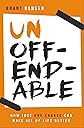
Unoffendable: How Just One Change Can Make All of Life Better
Product ID: 40211676
It turns out giving up your “right” to be offended can be one of the most freeing, healthy, simplifying, relaxing, refreshing, stress-relieving, encouraging things you can do. It’s a radical, provocative idea: We’re not entitled to get offended or stay angry. The idea of our own “righteous anger” is a myth. It is the number one problem in our societies today and, as Dallas Willard says, Christians have not been taught out of it. But what if Christians were the most unoffendable people on the planet? In Unoffendable you will find concrete, practical ways to live life with less stress, including: Adjusting your expectations to fit human nature Replacing perpetual anger with refreshing humility and gratitude Embracing forgiveness and beginning to love others in unexpected ways In a humorous and conversational style, Unoffendable seeks to lift religious burdens from our backs and allow us to experience the joy of gratitude, perhaps for the first time, every single day of our lives—flourishing the way God intended. Review: This book helped me stop carrying offense, respond with grace, and enjoy life with a lot more peace. - I didn’t realize how much offense was quietly affecting my attitude, relationships, and stress levels until I read Unoffendable: How Just One Change Can Make All of Life Better. The message is simple but incredibly powerful. It walks you through why being easily offended is so exhausting and how choosing to let things go doesn’t make you weak, it actually makes you free. The author uses real-life examples, humor, and biblical truth in a way that’s easy to understand and apply immediately. What I loved most is that it’s practical. This isn’t just theory about forgiveness. It gives you a new way of thinking that changes how you react to people, conflict, criticism, and everyday annoyances. Since reading it, I’ve noticed I’m calmer, less reactive, and much quicker to extend grace. Relationships feel lighter, and I don’t replay hurtful moments in my head like I used to. If you struggle with frustration, bitterness, or feeling easily hurt, this book is absolutely worth your time. It’s one of those reads that actually changes how you live, not just how you think for a day or two. Review: I wish every Christian would read this - I just finished this book about an hour ago, and I am still so in awe of what I just read that I'm not quite sure exactly what I want to say about it. This is, without a doubt, one of the most profoundly inspirational books I've ever read on Christian living. And I'm not just saying that because I happen to agree with the author. I actually found myself moved to tears by certain passages in this book, they were so spiritually uplifting—and that doesn't happen to me often. (I should also note that I was moved to laughter by many passages, too, because the author definitely has a sense of humor.) But I do agree with the author. In fact, I've been thinking along those same lines for quite some time, but he articulates the idea far better than I ever could. What he says may seem counterintuitive—even radical—at first, but I think that if you are willing to hear him out with an open mind, you'll see that what he says makes a lot of sense, both from a biblical and from a practical perspective. The author's controversial thesis is that there is no such thing as "righteous anger." (Well, at least not for humans. God's anger is righteous, of course, but we are not God. Not being all-knowing, infinitely wise, or perfectly just, we can't be trusted to never get angry for the wrong reasons or to never let our anger lead us into sin, as God can be.) Everyone feels anger from time to time, of course—it's a natural emotional reaction to things that go against our notion of the way things ought to be—but we are free to choose whether to hold onto that anger and let it fester and eat away at us, or to let it go and move on with our lives. This book argues (and I fully agree) that we should always choose to let the anger go, because no good can ever come of that anger if we choose to hold onto it. We should let that anger go as quickly as we can and not hold onto it for a second longer than we have to. In fact, with a little practice, we can learn to let go of our anger so fast that we barely have time to notice it before it's gone. Once we have freed ourselves from anger, we will feel better, enjoy life more, have more fulfilling relationships with others, and be less tempted to say or do things that we know shouldn't out of frustration or bitterness. That's a win-win for everyone. But if we choose to hold onto our anger, we only end up making ourselves and the people around us miserable, and we run the very real risk that our anger will lead us into sin. This idea is controversial because many people don't want to let go of their anger. They want to hold onto it. They want to feel it seething inside of them. It makes them feel "righteous" (well ... righteous in their own eyes—i.e. self-righteous). So they try to justify their anger, claiming that not only do they have every right to be angry, but that that they are, in fact, right to be angry—that whatever caused their anger was so egregious that anger is the only appropriate response. They try their best to "spin" their anger as a good thing, claiming that it is what motivates them to take action to right the wrong that has been done. (As if they somehow wouldn't be able to step up and do the right thing if they weren't so angry.) And if they happen to be Christians, they will even cherry-pick the scriptures in search of "proof texts," almost always taken out of context or misinterpreted, in order to justify their "righteous" anger. Their favorite passage seems to be Ephesians 4:26, though they only ever seem to quote the first half of the verse—"Be ye angry and sin not"—ignoring the rest of what Paul wrote—"let not the sun go down upon your wrath" (i.e. don't hold onto your anger from one day to the next)—or what he says just a few verses later (v. 31): "Let all bitterness, and wrath, and anger, and clamour, and evil speaking, be put away from you, with all malice." Many people, including many Christians, are apparently so addicted to their own self-righteous anger that they will try to come up with any excuse to cling to it. This is unwise. It is also ungodly. In fact, it is a form of idolatry—they are putting their faith in their own anger-driven "righteousness" rather than trusting in the righteousness of God to set right that which is wrong. Okay, suppose that you are willing to buy into the idea that there's no such thing as "righteous anger" that we humans are entitled to hold onto, and that whenever we feel anger, we should let it go as quickly as possible. What are the implications of this? First and foremost, it means that we ought to be quick to forgive anyone who has wronged us or caused us offense. This really shouldn't be controversial at all, because the Bible clearly and repeatedly commands us to be forgiving. In fact, there are passages that explicitly tie God's forgiveness to our own: Since God has forgiven us, we ought to be willing to forgive others—and if we refuse to forgive others ... well, I'll refer you to the parable of the unmerciful steward in Matthew 18:23-35 and let you draw your own conclusions. The Bible is so clear about the need to forgive others that there should really be no debate about this at all among those who profess to be Christians, and yet many still hold onto their grudges like prized family heirlooms, refusing to part with them, and coming up with all sorts of clever arguments for why they shouldn't have to. (I should probably point out here that forgiveness doesn't mean that you excuse the wrong. To excuse a wrong is to say that there was really no wrong at all or that the wrongdoer was really not at fault. To forgive a wrong is to acknowledge that a wrong was done and that the wrongdoer was at fault, but to voluntarily give up the right to "get even" with the wrongdoer or to hold the wrong over his or her head any longer. So those who refuse to forgive wrongdoers because they don't want to excuse their wrongdoing are missing the point of forgiveness entirely.) Forgiveness can be hard—especially when the wrong that was done caused much suffering—but we have to be willing to forgive anyway. And as hard as it is to forgive others, one of the hardest things for many people to do is to forgive themselves of their own failings. We often feel as if we don't really deserve forgiveness, and so we bear a sense of guilt and shame, which is essentially just anger directed inward—we are angry at ourselves for the wrongs we have done and the suffering we have caused ourselves and others, and so we end up holding a grudge against ourselves. But this anger is not "righteous" either, and we have to learn to let it go. If God is willing to forgive us, then don't you think we ought to be willing to forgive ourselves? (BTW, God IS willing to forgive us; just in case you weren't sure about that. If Jesus was willing to forgive the people who had just nailed him to a cross, then there's really nothing that you or I could possibly have done that is so bad that God would find it unforgiveable.) Again, forgiving ourselves does not mean *excusing* our wrongful behavior—we should always own up to our mistakes, learn from them, make amends where we can, and try to do better in the future—it just means that we should stop beating ourselves up over it and get on with our lives. So the first implication of letting go of our anger is that we ought to be quick to forgive, and that includes forgiving ourselves. The second implication is that we should be slow to judge. In fact, we shouldn't judge at all. This is another thing that is clearly and repeatedly taught in scripture, and yet another thing that far too many Christians try to weasel their way out of with clever arguments and cherry-picked "proof texts." Now, of course, refusing to judge does not mean refusing to acknowledge the difference between right and wrong or refusing to speak out against wrongdoing or injustice. Too many people don't seem to get this. It simply means refusing to play God—refusing to pretend that you are all-knowing, infinitely wise, and perfectly just, and therefore qualified to sit in judgment of another person's soul. It means refusing to claim the right to throw the first stone, as if you yourself were without sin. It means refusing to be the sort of hypocrite who holds others to moral standards that you can't even live up to yourself—always finding ways to excuse your own moral failings but never the moral failings of others. It means refusing to condemn people simply because their sins are different from yours, or because the temptations they struggle with are not the same temptations that you happen to struggle with. It means refusing to count anyone as unworthy of love, or compassion, or mercy, or forgiveness, or grace, or acceptance, no matter what sort of person they are or what sort of things they have done. That's what it means not to judge. Refusing to judge is not easy (no one ever said it would be easy), but it is essential if you wish to count yourself as a follower of the One who said, "I came not to judge the world, but to save the world." (John 12:47) Finally, giving up our (self-)"righteous" anger implies one last thing (and this may be the most difficult of all): We must give up our right to be offended. We've got to stop taking offense and expressing outrage at all of the things in the world that we dislike or disapprove of. And yes, this includes injustice, unrighteousness, and sin. As the title of this book suggests, Christians ought to become "unoffendable." Now, I can imagine that, even if you've followed me thus far, at this point you're probably sputtering apoplectically to yourself and, assuming you can even get any words out, saying something like, "Wh...wh...what? What is he trying to say? I must have misread that. Christians ought to become UNOFFENDABLE? We have to stop taking offense at SIN? Is he CRAZY? That's nonsense! That can't be biblical." Well ... first of all, no, you didn't misread that. And second, no, I'm not crazy (and neither is Brant Hansen, the author of this book). Hansen makes the case far better than I could, and so I would strongly suggest that you read his book for yourself before drawing any conclusions rather than relying on what I have written here, because I simply can't do his argument justice in such a limited space. But I will say this much: First of all, "offense" is really just another word for "righteous anger." When we say that we are "offended" by something, that just means that we are angry about it and that we feel justified in our anger. (Let's be clear here: Being "offended" is not the same thing as being upset or displeased. I can be very upset or displeased about something without being offended by it. It is perfectly natural to feel upset when bad things happen or to feel displeased when someone does something you think is wrong, but in order to take "offense" there has to be an element of moral outrage—self-righteous indignation—to go along with those feelings of upset or displeasure.) So, if we are willing to accept that (so-called) "righteous anger" is never justified (at least not for us mere mortals), then we are forced to conclude that we humans can never be justified in taking offense at anything. Second, it's really hard to forgive others and to refrain from judging them if you are offended by them or their behavior. Remember, offense is more than mere disapproval—it is moral outrage. If you disapprove of something that someone has done, you might shake your head, or you might even pull them aside to quietly and respectfully speak to them about it. But if you are truly *offended* by what they have done, sparks will fly: You may yell and scream, you may fire off an angry e-mail or tweet, you may picket and protest, you may gossip about them behind their back, you may even be tempted to commit acts of violence; at the very least, you're going to steam and stew in your contempt for what you see as their unconscionable behavior. This attitude is inherently judgmental and not at all conducive to forgiveness. Third, we take offense at behavior that shocks our sense of how the world *ought* to be; but since we live in a fallen, sinful world, it is unreasonable for us to expect that the world *ought* to be anything but unjust, unrighteous, and sinful. So, rather than taking offense at all the bad things people do in this world, we ought to accept these things as par for the course and instead take delight in those rare occasions when someone actually does something that is truly good out of pure, loving, unselfish motives. Then, instead of being a bunch of self-righteous sourpusses who always seem outraged or bitter about something, we might actually become the sort of joyous, grateful, compassionate, welcoming people who really can serve as a source of light in a world of darkness. Anyway, Brant Hansen is able to explain all of this so much better than I can, so get his book and read it for yourself. You'll be glad you did. It is a well-written book, lighthearted in tone (at least for the most part), with lots of humor (though, of course, serious matters are handled with all the respect they are due). It is a quick read (it took me only two evenings to get through it, and I probably could have finished it in one had I not had other things I needed to do), and is so delightful that you won't want to put it down. It is divided into 24 short chapters, each of which can be read in just a few minutes (I was usually able to get through two or three chapters on a single cup of coffee before having to get up for a refill). I can't recommend this book highly enough. Everyone should read it.


| Customer Reviews | 4.8 out of 5 stars 6,270 Reviews |
T**M
This book helped me stop carrying offense, respond with grace, and enjoy life with a lot more peace.
I didn’t realize how much offense was quietly affecting my attitude, relationships, and stress levels until I read Unoffendable: How Just One Change Can Make All of Life Better. The message is simple but incredibly powerful. It walks you through why being easily offended is so exhausting and how choosing to let things go doesn’t make you weak, it actually makes you free. The author uses real-life examples, humor, and biblical truth in a way that’s easy to understand and apply immediately. What I loved most is that it’s practical. This isn’t just theory about forgiveness. It gives you a new way of thinking that changes how you react to people, conflict, criticism, and everyday annoyances. Since reading it, I’ve noticed I’m calmer, less reactive, and much quicker to extend grace. Relationships feel lighter, and I don’t replay hurtful moments in my head like I used to. If you struggle with frustration, bitterness, or feeling easily hurt, this book is absolutely worth your time. It’s one of those reads that actually changes how you live, not just how you think for a day or two.
G**L
I wish every Christian would read this
I just finished this book about an hour ago, and I am still so in awe of what I just read that I'm not quite sure exactly what I want to say about it. This is, without a doubt, one of the most profoundly inspirational books I've ever read on Christian living. And I'm not just saying that because I happen to agree with the author. I actually found myself moved to tears by certain passages in this book, they were so spiritually uplifting—and that doesn't happen to me often. (I should also note that I was moved to laughter by many passages, too, because the author definitely has a sense of humor.) But I do agree with the author. In fact, I've been thinking along those same lines for quite some time, but he articulates the idea far better than I ever could. What he says may seem counterintuitive—even radical—at first, but I think that if you are willing to hear him out with an open mind, you'll see that what he says makes a lot of sense, both from a biblical and from a practical perspective. The author's controversial thesis is that there is no such thing as "righteous anger." (Well, at least not for humans. God's anger is righteous, of course, but we are not God. Not being all-knowing, infinitely wise, or perfectly just, we can't be trusted to never get angry for the wrong reasons or to never let our anger lead us into sin, as God can be.) Everyone feels anger from time to time, of course—it's a natural emotional reaction to things that go against our notion of the way things ought to be—but we are free to choose whether to hold onto that anger and let it fester and eat away at us, or to let it go and move on with our lives. This book argues (and I fully agree) that we should always choose to let the anger go, because no good can ever come of that anger if we choose to hold onto it. We should let that anger go as quickly as we can and not hold onto it for a second longer than we have to. In fact, with a little practice, we can learn to let go of our anger so fast that we barely have time to notice it before it's gone. Once we have freed ourselves from anger, we will feel better, enjoy life more, have more fulfilling relationships with others, and be less tempted to say or do things that we know shouldn't out of frustration or bitterness. That's a win-win for everyone. But if we choose to hold onto our anger, we only end up making ourselves and the people around us miserable, and we run the very real risk that our anger will lead us into sin. This idea is controversial because many people don't want to let go of their anger. They want to hold onto it. They want to feel it seething inside of them. It makes them feel "righteous" (well ... righteous in their own eyes—i.e. self-righteous). So they try to justify their anger, claiming that not only do they have every right to be angry, but that that they are, in fact, right to be angry—that whatever caused their anger was so egregious that anger is the only appropriate response. They try their best to "spin" their anger as a good thing, claiming that it is what motivates them to take action to right the wrong that has been done. (As if they somehow wouldn't be able to step up and do the right thing if they weren't so angry.) And if they happen to be Christians, they will even cherry-pick the scriptures in search of "proof texts," almost always taken out of context or misinterpreted, in order to justify their "righteous" anger. Their favorite passage seems to be Ephesians 4:26, though they only ever seem to quote the first half of the verse—"Be ye angry and sin not"—ignoring the rest of what Paul wrote—"let not the sun go down upon your wrath" (i.e. don't hold onto your anger from one day to the next)—or what he says just a few verses later (v. 31): "Let all bitterness, and wrath, and anger, and clamour, and evil speaking, be put away from you, with all malice." Many people, including many Christians, are apparently so addicted to their own self-righteous anger that they will try to come up with any excuse to cling to it. This is unwise. It is also ungodly. In fact, it is a form of idolatry—they are putting their faith in their own anger-driven "righteousness" rather than trusting in the righteousness of God to set right that which is wrong. Okay, suppose that you are willing to buy into the idea that there's no such thing as "righteous anger" that we humans are entitled to hold onto, and that whenever we feel anger, we should let it go as quickly as possible. What are the implications of this? First and foremost, it means that we ought to be quick to forgive anyone who has wronged us or caused us offense. This really shouldn't be controversial at all, because the Bible clearly and repeatedly commands us to be forgiving. In fact, there are passages that explicitly tie God's forgiveness to our own: Since God has forgiven us, we ought to be willing to forgive others—and if we refuse to forgive others ... well, I'll refer you to the parable of the unmerciful steward in Matthew 18:23-35 and let you draw your own conclusions. The Bible is so clear about the need to forgive others that there should really be no debate about this at all among those who profess to be Christians, and yet many still hold onto their grudges like prized family heirlooms, refusing to part with them, and coming up with all sorts of clever arguments for why they shouldn't have to. (I should probably point out here that forgiveness doesn't mean that you excuse the wrong. To excuse a wrong is to say that there was really no wrong at all or that the wrongdoer was really not at fault. To forgive a wrong is to acknowledge that a wrong was done and that the wrongdoer was at fault, but to voluntarily give up the right to "get even" with the wrongdoer or to hold the wrong over his or her head any longer. So those who refuse to forgive wrongdoers because they don't want to excuse their wrongdoing are missing the point of forgiveness entirely.) Forgiveness can be hard—especially when the wrong that was done caused much suffering—but we have to be willing to forgive anyway. And as hard as it is to forgive others, one of the hardest things for many people to do is to forgive themselves of their own failings. We often feel as if we don't really deserve forgiveness, and so we bear a sense of guilt and shame, which is essentially just anger directed inward—we are angry at ourselves for the wrongs we have done and the suffering we have caused ourselves and others, and so we end up holding a grudge against ourselves. But this anger is not "righteous" either, and we have to learn to let it go. If God is willing to forgive us, then don't you think we ought to be willing to forgive ourselves? (BTW, God IS willing to forgive us; just in case you weren't sure about that. If Jesus was willing to forgive the people who had just nailed him to a cross, then there's really nothing that you or I could possibly have done that is so bad that God would find it unforgiveable.) Again, forgiving ourselves does not mean *excusing* our wrongful behavior—we should always own up to our mistakes, learn from them, make amends where we can, and try to do better in the future—it just means that we should stop beating ourselves up over it and get on with our lives. So the first implication of letting go of our anger is that we ought to be quick to forgive, and that includes forgiving ourselves. The second implication is that we should be slow to judge. In fact, we shouldn't judge at all. This is another thing that is clearly and repeatedly taught in scripture, and yet another thing that far too many Christians try to weasel their way out of with clever arguments and cherry-picked "proof texts." Now, of course, refusing to judge does not mean refusing to acknowledge the difference between right and wrong or refusing to speak out against wrongdoing or injustice. Too many people don't seem to get this. It simply means refusing to play God—refusing to pretend that you are all-knowing, infinitely wise, and perfectly just, and therefore qualified to sit in judgment of another person's soul. It means refusing to claim the right to throw the first stone, as if you yourself were without sin. It means refusing to be the sort of hypocrite who holds others to moral standards that you can't even live up to yourself—always finding ways to excuse your own moral failings but never the moral failings of others. It means refusing to condemn people simply because their sins are different from yours, or because the temptations they struggle with are not the same temptations that you happen to struggle with. It means refusing to count anyone as unworthy of love, or compassion, or mercy, or forgiveness, or grace, or acceptance, no matter what sort of person they are or what sort of things they have done. That's what it means not to judge. Refusing to judge is not easy (no one ever said it would be easy), but it is essential if you wish to count yourself as a follower of the One who said, "I came not to judge the world, but to save the world." (John 12:47) Finally, giving up our (self-)"righteous" anger implies one last thing (and this may be the most difficult of all): We must give up our right to be offended. We've got to stop taking offense and expressing outrage at all of the things in the world that we dislike or disapprove of. And yes, this includes injustice, unrighteousness, and sin. As the title of this book suggests, Christians ought to become "unoffendable." Now, I can imagine that, even if you've followed me thus far, at this point you're probably sputtering apoplectically to yourself and, assuming you can even get any words out, saying something like, "Wh...wh...what? What is he trying to say? I must have misread that. Christians ought to become UNOFFENDABLE? We have to stop taking offense at SIN? Is he CRAZY? That's nonsense! That can't be biblical." Well ... first of all, no, you didn't misread that. And second, no, I'm not crazy (and neither is Brant Hansen, the author of this book). Hansen makes the case far better than I could, and so I would strongly suggest that you read his book for yourself before drawing any conclusions rather than relying on what I have written here, because I simply can't do his argument justice in such a limited space. But I will say this much: First of all, "offense" is really just another word for "righteous anger." When we say that we are "offended" by something, that just means that we are angry about it and that we feel justified in our anger. (Let's be clear here: Being "offended" is not the same thing as being upset or displeased. I can be very upset or displeased about something without being offended by it. It is perfectly natural to feel upset when bad things happen or to feel displeased when someone does something you think is wrong, but in order to take "offense" there has to be an element of moral outrage—self-righteous indignation—to go along with those feelings of upset or displeasure.) So, if we are willing to accept that (so-called) "righteous anger" is never justified (at least not for us mere mortals), then we are forced to conclude that we humans can never be justified in taking offense at anything. Second, it's really hard to forgive others and to refrain from judging them if you are offended by them or their behavior. Remember, offense is more than mere disapproval—it is moral outrage. If you disapprove of something that someone has done, you might shake your head, or you might even pull them aside to quietly and respectfully speak to them about it. But if you are truly *offended* by what they have done, sparks will fly: You may yell and scream, you may fire off an angry e-mail or tweet, you may picket and protest, you may gossip about them behind their back, you may even be tempted to commit acts of violence; at the very least, you're going to steam and stew in your contempt for what you see as their unconscionable behavior. This attitude is inherently judgmental and not at all conducive to forgiveness. Third, we take offense at behavior that shocks our sense of how the world *ought* to be; but since we live in a fallen, sinful world, it is unreasonable for us to expect that the world *ought* to be anything but unjust, unrighteous, and sinful. So, rather than taking offense at all the bad things people do in this world, we ought to accept these things as par for the course and instead take delight in those rare occasions when someone actually does something that is truly good out of pure, loving, unselfish motives. Then, instead of being a bunch of self-righteous sourpusses who always seem outraged or bitter about something, we might actually become the sort of joyous, grateful, compassionate, welcoming people who really can serve as a source of light in a world of darkness. Anyway, Brant Hansen is able to explain all of this so much better than I can, so get his book and read it for yourself. You'll be glad you did. It is a well-written book, lighthearted in tone (at least for the most part), with lots of humor (though, of course, serious matters are handled with all the respect they are due). It is a quick read (it took me only two evenings to get through it, and I probably could have finished it in one had I not had other things I needed to do), and is so delightful that you won't want to put it down. It is divided into 24 short chapters, each of which can be read in just a few minutes (I was usually able to get through two or three chapters on a single cup of coffee before having to get up for a refill). I can't recommend this book highly enough. Everyone should read it.
M**N
Loved it!
A friend recommended I read this book. By the end of this review you might have your answer as to why. Personally, I’m glad he did. Out of the hundreds of books I’ve read over the course of my life, only a handful have convicted me about how I’m living or how I ought to live. This is one of those life-changing books. Admittedly, Hansen’s tone is far too casual wear for my refined tastes. T-shirts, spotty jeans, zircon jewelry, and off-brand shoes have their place, but unless I’m painting my house or in my garden, I’m less likely to don a straw hat and tube socks. By this I mean Hansen’s writing is highly pedestrian, conversational to the point of being overly familiar. My inner response to his prose was to gasp on occasion as I fanned myself. I prefer a more respectable wardrobe – name-brands, real leather, high quality corduroy, and twenty-four carat gold. I realize not everything worth reading must be white tie event quality. But I do sometimes wish the maître d’ would force some of these writers sporting shorts and sandals to leave the premises. I prefer the finer works of dead authors, those whose diction smells of lilac and jasmine. The sort of writing that, if bottled, would occupy the top shelf stuff at a classy bar. Essentially diamonds, not zircons. Call me a snob (which I am), but Hansen’s overly conversational, almost flippant, structure came across as reckless. At first anyway. The author soon won me over, however, with his insightful wit and personal, multitudinous, anecdotes. I chuckled often and laughed several times, and, surprisingly, got teary-eyed in places too. (Keep in mind this post isn’t a sworn statement to that effect. So I can always deny this if pressed.) Before we examine the merits of Hansen’s book, I should explain where I’m coming from. I’ve written about this in previous posts, so I’ll only summarize here. Like any teen, I rebelled against my upbringing, but in ways that surprised those within the field of developmental psychology. I didn’t simply reject my youthful habit of watching television; to this day I refuse to have a TV in my house. And, yes, a part of me either scorns or pities those who watch TV, depending on my mood. I didn’t simply reject my religious upbringing, either; I became a self-professed atheist for well over a decade. I didn’t merely reject the emotional dynamism of my mother; I observed the chaos that resulted from her emotionally driven decisions and vowed to refuse my own emotional palate at all costs. I consequently became a cold logician. In the mix, I ended up rejecting anything proletariat since such a class leans toward contempt of things cerebral or abstract. Instead, I demanded greater quality, fine music, literature, and other interests that, if given voice, would decry: I’m better than you. In fact I’d argue, and have, that my autodidactic pilgrimage, which began at age eighteen, was my effort to redeem myself for all the time I wasted wallowing in mediocrity as a middle-class child staring at the cathode ray and attending public school. I don’t recommend holding society in contempt or becoming a cynic of pop culture and television – the lone wolf who doesn’t relate to his peers, an avid reader in a world of semi-literates – unless you, like me, are comfortable in your own skin, enjoy your own company, practice pastimes generally done in solitude (reading, writing), and possess a sufficient amount of personal fortitude (or what I modestly refer to as awesome sauce) to get you through the day. In short, being me requires a thick hide and a strong stomach. I assure you, however, the rewards, while not visible on your bank balance, are significant. Over time, I became less relatable to most everyone I knew. Not deliberately, of course. I just honed in on what interested me, regardless whether anyone else in my immediate orbit cared. Plus, as I got older, I became more discriminate about how I wanted to spend my time and with whom I wanted to spend it. I consequently morphed into a curmudgeon. Worse, I grew unfashionably posh, a prude in the company of vulgarians, an artist performing for Philistines. Yes, despite my annual earnings, social status, and the cost of my wardrobe (or perhaps because of these things), I assumed a superior position, regarding myself as better than my peers. To my mind, I had more in common with the last vestige of the American aristocracy than I had with my own flesh and blood. After all, I’d never been amused by belching or flatulence, even as a child. Yet most within my sphere growing up were, to be polite, uncivilized. My father drank wine on the rocks. My brother’s idea of seasoning a steak was to marinade it in Ketchup. No. I was high-minded, cultured, hygienic, and, unlike modern brutes, I covered my mouth when I coughed. To this day, I remain convinced I was adopted, perhaps a bastard child smuggled out of the home of a Rockefeller or a Vanderbilt family. My idea of fun has never involved watching football and, since entering adulthood, I’ve never deliberately attended a firework display or a parade. Such things are lowbrow, appealing to plebs, which is bad enough, and advertisers, which is worse. In mixed company, to entertain myself, I silently count the number of times people pepper their speech with the word ‘like.’ Most people I interact with on a daily basis would never suspect I entertain these views, by the way. I’m a professional. For one, I absolutely love my job. For two, I have a commendable work ethic. For three, I’m a gentleman. In short, apart from making these stunning confessions on my blog (a blog, I might add, most will never view), I keep my own council. I mention all of this to demonstrate a contrast. Before I read Brant Hansen’s book Unoffendable, How Just One Change Can Make All of Life Better, I was the consummate ass. Don’t misunderstand. I haven’t become a saint as a result of this book. But I’ve improved. I even forgave a number of people who’ve wronged me over the years. I haven’t contacted them to tell them this, of course. This would mean resuming relations with them again at some point. No, thanks. But I’ve acknowledged to myself that I was just, if not more, to blame for the dissolution of those relationships. And that, my inferior friend, is progress. The truth is I’m a simple man with pleasures most find tedious. My retirement fund is laughable. I’ve got goals most doubt I’ll achieve. And, while I’m at it, I’ve got a penchant for coffee so doctored as to qualify as hot ice cream. Not that I care what anyone else thinks anymore, apart from my financial advisor, oh, and my physician, since, let’s be honest, most people are idiots. Truly. Some offense. Let’s face it: most adults don’t know how to spell. Many can’t even read, certainly not at their grade level. Get out on the road and you’ll discover most can’t even drive. Debated anyone recently? Most can’t think rationally or articulate what they’re trying to say. This includes college graduates. So why would I even want such people in my orbit? Not that I’m entirely satisfied with my own life, of course. While close to perfection, I’m not quite there. I’ve got lots to accomplish before I’m ready to retire. This might explain, at least in part, why I refuse to date, keep to myself, and assume roles. This isn’t to say I don’t enjoy good fellowship and conversation, provided the subject matter is worthy of my attention. But I’ve been known to engage in performance art. Pretend. Even much of my blogging involves assuming a personality or an attitude and adopting a corresponding syntax. Excuse me while I clear my throat. Back to Hansen’s book. Hansen maintains that we tend to take offense at nearly everything. What others say, do, and even believe (even when not directed toward us personally), elicits our righteous indignation. We all have a sense of justice, especially when a perceived injustice is imposed upon us. The irony is that we’re just as guilty of giving offense, often deliberately, but fail to see this as comparable to slights from others. Hansen’s persuasive power is found in his anecdotes. In rapid fire, he poses real life circumstances with which the rest of us utterly identify. I grew ashamed by the number of times I saw myself in these situations and how my default mode, too, like most everyone else, was to become angry or offended in some way. So while I’d love to report that I’m a good person, that as an adult I’ve reached a dizzying plateau of consciousness and understanding, the truth is I’m not a model citizen, or a great (and well-endowed) lover, or an intellect the morons of Mensa International envy. In fact, I’m a royal jerk. Which is why I defer to my surefire cliché, namely that I’m a work in progress. Worded differently, I haven’t yet arrived. I’ve still got gobs to learn. (This learning process is a huge part of why I read. To learn. To grow in ways unmeasurable by science.) I should clarify that Hansen doesn’t merely explain that we as a society have no reason to take offense, that we’re just as guilty of the things we identify and resent in others. No. Hansen is a Christian too. So his ultimate message is that as Christians, we’re not only instructed to abandon what he refers to as ‘righteous anger’ (since such things are God’s domain, not ours), but we’re instructed to forgive as well. I’ll admit this is hard, particularly for me. I especially related to Hansen’s examples of being cut off in traffic by idiots either oblivious or indifferent to their immediate surroundings. His instruction forced me to look inward, at myself, at the fact that if I were honest, I’d have to admit that I’m just as guilty of stupidity in some other ways, that I probably annoy others too, which, incidentally, I’m sure, if confronted with, I would justify or rationalize, at least in my own head, just as everyone else does. Stepping back, saying a quick prayer, essentially applying Hansen’s advice, has reduced my high blood pressure. That alone is worth the cost of this book. In addition, you’ll laugh. Perhaps you’ll cry too. It may convict you, dear reader, which in turn could help you to abandon your own detestable ways. Jerk! Highly recommended. Five out of five stars. G
B**R
Love, love, love everything about this excellent book!
This excerpt alone is worth the purchase price and time invested in reading this excellent book: “Sheldon Vanauken tells a story in A Severe Mercy that sticks. I read it once and never forgot it. In fact, I told it to my kids when they were little as a bedtime story. It’s a great story, but you may think something’s seriously wrong with any dad who would use this as a bedtime story. It goes like this: There were two dogs who lived in the country. They had pretty much the ideal country-dog setting: beautiful rolling hills, lots of sunshine and romping, and a good master who was kind to them and loved them. It was the kind of life you’d love to have if you were a dog. Gypsy was an older dog, and the young dog was named Snowball. Every day, about the same time, their master called them in for dinner. They knew to obey; that means they had to respond as soon as they heard their master’s call. One day, at the exact moment the master called them—“Gypsy! Snowball! Dinnertime!”—a rabbit ran across Gypsy’s path. Suddenly, she felt a strange sensation: She wanted to ignore her master and chase after that rabbit. She was tempted. But she yielded to what she knew was right and went to dinner immediately, as she was trained. But the next day, it happened again. And this time, she gave in to temptation. She heard her master’s voice, but she decided she just wanted to chase the rabbit right now. And when she finally came for dinner, she came with her tail between her legs. She knew she had done wrong. She didn’t want to do it again. But she did it again. And again, until it became easier for her. Soon, Snowball was able to run free, while Gypsy was now leashed. Her master was heartbroken. He loved her, but he knew he couldn’t trust her anymore. One day, the master loaded his dogs into the car to take them for a walk in the woods. Gypsy and Snowball loved the smells of the woods. When they arrived, Gypsy, now used to disobeying, took off before the master could put his leash on her. She was free! She ran and ran and ran into the woods! Free! Her master called her name, desperately—“Gypsy! Gypsy! Gypsy!”—in hopes that she would return to him. He and Snowball searched for hours. But to Gypsy, his voice became more distant, until she couldn’t hear him anymore. She was excited, but she noticed it was getting cold. The sun was going down. Meanwhile, Gypsy’s owner and master, who loved her so, cried as he put Snowball back into his car and drove home. He never saw Gypsy again. “Daaaaaaad! That can’t be the end of the story! Daaaad!” As I told you, you might think I’m pretty messed up for telling my kids that story. You may actually want to call the authorities at this time. I respect that conviction. I’ll be here when you get back. Of course, there is a little more to it, but not much. I told them that the master drove home, and while Snowball missed Gypsy, Snowball resumed a wonderful life, romping through the meadows and always responding to her owner. Gypsy lived in the woods the rest of her life. Her fur grew matted, and she was lost and alone. She missed her master’s voice and the way he took care of her. She eventually had some puppies, and she told them about the master and how good he was. But they only knew some stories. They didn’t know him. The puppies grew up, and they told their own puppies about the master, but by then, no one really knew him at all. And that’s the end of the story. Vanauken tells it better, but that’s how I told my kids. I wanted them to know that while I love God, and I want to be close to Him, He has given us all a choice whether or not to serve Him. When they grow up, they’ll have the option to reject God’s love, to go their own way, to buy in to the idea that “freedom” exists elsewhere. Or they can trust that God’s way brings us freedom. He has our best interests at heart. When God shows us how to live, He’s doing so because He wants us to flourish, like Snowball. When He says to get rid of anger, to serve others, and to die to ourselves, it’s in our best interests to obey. He knows how we can thrive... Jesus said that if we come to Him, He’ll give us rest (Matt. 11:28). I’m discovering how multifaceted that is. As a kid, when I heard He’d said that, I had no idea what He was talking about. Looking around at all the church people, it seemed to me that Jesus had sure given them a lot of stuff to do. But as a young man, after I’d had some theological training and some time to really reflect on this . . . I still didn’t understand it. Honestly, I thought maybe it meant after we’re dead. Then we’ll finally get some rest. Jesus will give us a break after a life of doing stuff. He’ll help us rest in peace, or something like that. Now I understand that Jesus was talking to a weary, religion-soaked people. They’d been given so much to do and so many rules to follow. So many rabbis had expounded so much the right ways to do things, and Jesus was saying, “My way is easy to understand. Kids understand it. It’s you adults and ‘experts’ who like to make things complex. My teachings are simple at heart.” I love that so much. He’s offering sweet relief from religious burdens. But He’s doing even more than that. When we pay attention to what He’s actually saying, like in the Sermon on the Mount, and actually put His principles into practice, we find life to be more restful. Still, it’s up to us. My kids are older now, but I want them to know that. They’re free. God knows what’s best for us. He offers peace. He offers rest. But He lets us choose. I’m glad they remember the story, that one about the two dogs. The part I want them to remember most: the Master is very, very good. It’s just conjecture, of course, but I’m guessing, if you were driving home after being forgiven of a capital crime, you’re going to let people merge in your lane without yelling at them. When you’re living in the reality of the forgiveness you’ve been extended, you just don’t get angry with others easily. I suspect our sense of entitlement to anger is directly proportional to our perception of our own relative innocence. So when that illusion is blown up, irrevocably, publicly, in our faces, it’s very, very difficult to be angry with someone else. So yes, as believers in Jesus, remember we’ve all been exposed publicly for what we are. The depth of our brokenness, the extent of our betrayal, has not only been the subject of news; it’s changed history. When did this public exposure happen? Two thousand years ago, our ugliness was made public on a hill, when a man stripped of His clothing was spat upon, made fun of, abandoned, and executed. It happened because of us, and it should have been us, but we were let off the hook. When I take that in, both the depth of my betrayal and knowing that my punishment is no longer hanging over my head, I’m downright joyful. I’m extremely grateful. And, as we already noted, in the human heart, gratitude and anger simply cannot coexist. It’s one or the other. Yes, we’re absolute masters at changing reality to fit our narrative. But Jesus wants to disrupt all of this. He did it with the men who were ready to stone an adulteress to death. They genuinely believed, no doubt, they were doing the “right” thing. They were carrying out God’s justice, they thought. They were angry for all the right reasons. She was guilty, after all. Then Jesus made it simple: You can’t do this, because you’re all just as guilty. Every single one of you. Anger makes me think I have a right to hold the stone. I may not throw it, but I’ll hold on to it, since the other person really did do that horrible thing. But in the story, all the Pharisees drop their stones. The “good” guys, the aggrieved defenders of the faith, walk away empty-handed. They’ve got nothing. Jesus flipped their story upside down. And since He wants to do this for all of us, I say we let Him. When you do, you’ll find you have no standing to hold on to anger, ever. You’re not going to like this, but face it for what it is, and say it out loud: “That person I’m angry with? I’m worse.” It hurts, and we can reject that idea if we want. But at least we’re engaging what Jesus actually said, what He actually tells us about ourselves in the “Unmerciful Servant” story, rather than devising a less radical, less demanding God of our own choosing. Truth is, we want Jesus to leave our self-righteousness intact. He wants to smash it.”
R**R
Jesus is always the answer
Good read. I used it for a book club discussion. We all enjoyed the content.
S**I
fantastic!! helpful presentation of Biblical truths
This book is fantastic! I find it to be Biblically sound and Scripturally based. The author is so very relatable, and makes the material accessible and engaging, while also pointing out Scripture to support the ideas. Applying this material to my life has been a CHALLENGE. It's not a feel-good book. It's work if you take it seriously. But it's so worthwhile, and my life has changed for the better. My biggest take-away is that anger serves no fruitful purpose. As humans, we are biased, and cannot be trusted with judging whether something is just or righteous anger. All anger is bad for us, and for me that's an incredibly freeing realization! It changes everything! And the book and study guide take it a step further to explain how to live this out. For a thorough study, the matching study guide is wonderful.
W**T
Changing my way of life and rewiring my thinking!
Easy read that includes humor, deep and thought-provoking truth, stories, research, and above all, good examination of relevant scripture. This book has profoundly impacted my thoughts and actions as I even more fully embrace the Jesus way of life that calls for radical grace and forgiveness. Unoffendable - what a wondrously, amazing way to live!
P**F
This can really make life better
Great book. Brant uses a combination of humor, story, and biblical references to create a meaningful and VERY thought provoking redefinition of a Christ-like life. I needed this book!
A**Y
Excellent, insightful and funny!
What a great book! An issue that is rarely discussed but very much needs to be. Brant explains it well and makes it very understandable, insightful, and funny. Have told others about it and will buy for gifts. First book I've read by author and I look forward to reading his others.
S**A
unoffendable..a new way to live
This book has truly challenged me to live differently. It explains God’s simple commands to rid ourselves of anger in order to gain peace. I loved this book.
A**R
Not for the not religious!
If you’re not religious this book is not for you! I thought I can read on and look pass the religious quotes and mentions of religious figures but it was too much! Page 11 was my limit!!!
K**R
Some Nice Teachings but Too Much "Christian"
I had picked this book after spending a fair amount of time comparing it with other self-help books on my wishlist. So, naturally, my expectations with it were high. While the book does have some impressive teachings, what can put some people off is the frequent invoking of the "Christian" way of living almost all throughout the book.
K**J
If every Christian read this book, the world would be so different.
This book will change your life. Or at least I believe it has changed mine. Read it. Then buy 5 more copies, and leave them on random chairs in your church. This is so refreshing. Every church should read this book. And if you are about to write someone an angry email. Read this book. If you spend your days in coffee houses being judgey, read this book. If you’re the Pastor of a moaning church (buy them all this book). If you’ve always thought Jesus sounds great, but Christians are awful. Read this book. Thankyou Brant Hansen. Thankyou Jesus.
Trustpilot
1 month ago
5 days ago