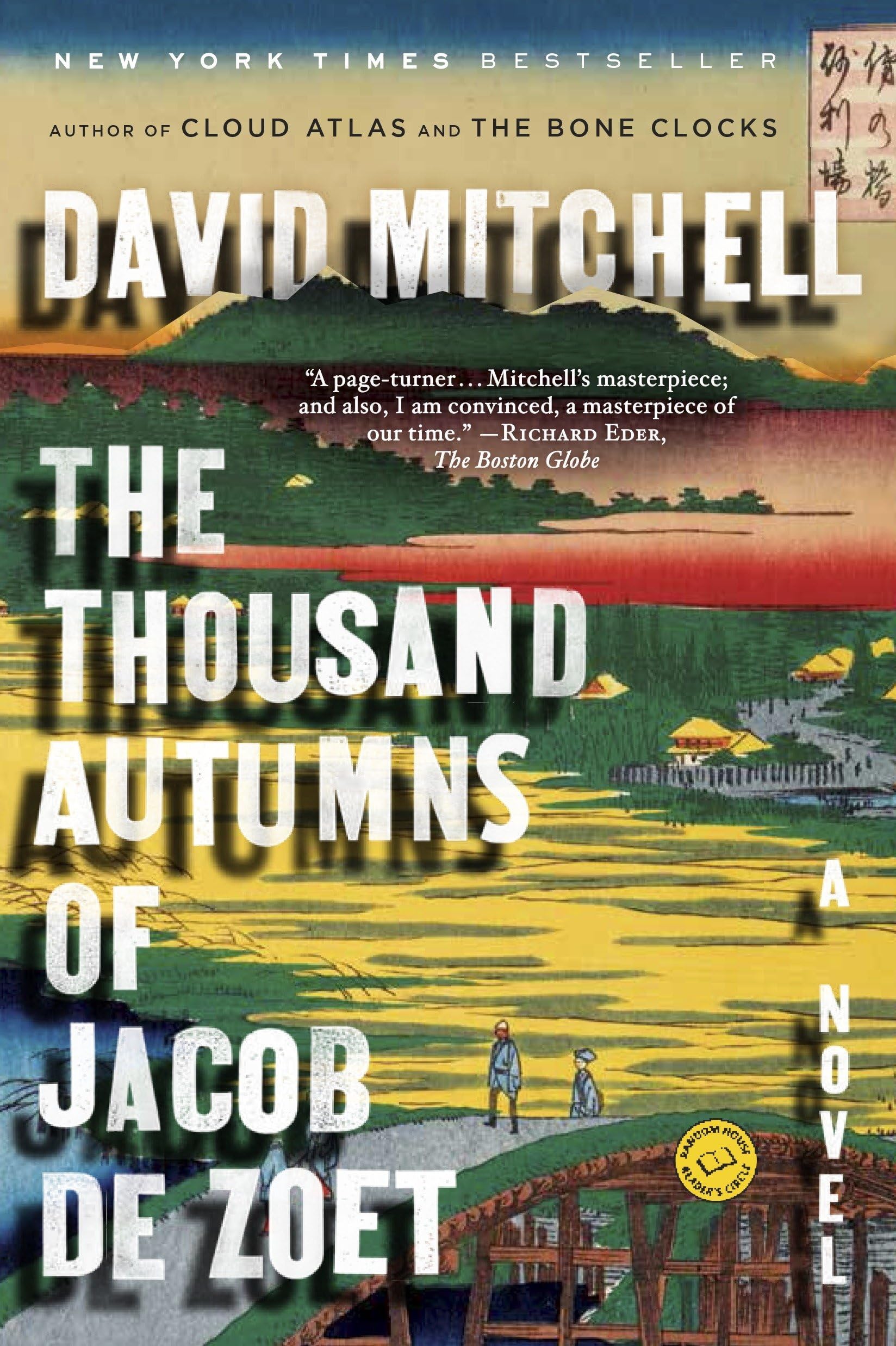
The Thousand Autumns of Jacob de Zoet
Product ID: 400263868
🌏Set in 1799 Dejima, Japan’s Western gateway
🏆Man Booker Prize longlist 2010
📚647 reviews, 4.4⭐ avg
Desertcart purchases this item on your behalf and handles shipping, customs, and support to Japan.
📖 Unlock the timeless allure of Japan’s hidden past — don’t miss the novel everyone’s talking about!
The Thousand Autumns of Jacob de Zoet is a critically acclaimed historical novel by David Mitchell, set in 1799 Dejima, Japan’s sole Western trading post. Blending rich historical detail with a compelling love story and subtle fantastical elements, this Man Booker Prize longlisted work showcases four years of meticulous craftsmanship. Praised for its nuanced prose and intricate plot, it’s a must-read for lovers of literary fiction, historical romance, and immersive storytelling.


| Best Sellers Rank | #137,908 in Books ( See Top 100 in Books ) #521 in Historical Romance #777 in European Literature #1,096 in Literary Fiction |
| Customer Reviews | 4.4 out of 5 stars 647 Reviews |
'**'
Excellent historical fiction...
So far I've written reviews about fantasy, science fiction and horror novels and novellas, but this time I'll write a short review about a historical novel, because The Thousand Autumns of Jacob de Zoet is of exceptional quality and it contains a couple of slightly fantastical elements. At first I wasn't sure if I should write this review or not, because this novel isn't speculative fiction, but I decided to write it, because The Thousand Autumns of Jacob de Zoet is a damn good novel (and I think that several fantasy readers will enjoy reading it). David Mitchell is an interesting author, because he writes different kind of books and he isn't afraid to blend different genres (for example, Cloud Atlas is a combination of mainstream fiction and science fiction). His new novel, The Thousand Autumns of Jacob de Zoet, is a successful and satisfying combination of love story and historical adventure. It's literary fiction at its best and it's David Mitchell's best book so far. David Mitchell spent four years working on this novel and it shows in the text: all the small details are accurate and believable, the story is intriguing and the prose is nuanced, eloquent and beautiful. It's almost amazing how beautifully the author creates a fascinating and stunning vision of Feudal Japan. By using historical details, exquisite worldbuilding and excellent characterization, he brings the story to life. Here's a few words about the plot and the characters: The events take place in Dejima (in Nagasaki Harbor) in 1799. The artificial island of Dejima is Japan's only window to the West. The main characters are Jacob de Zoet, a clerk and Orito Aibagawa, a midwife. Jacod de Zoet tries to earn his fortune in Dejima, but fate has different things in store for him, because he falls in love with Orito Aibagawa. Uzaemon Ogawa is also an important character, because he's an interpreter. The author writes fluently about the lives of Jacob de Zoet, Orito Aibagawa and Uzaemon Ogawa. He also writes fluently about political intrigue and dark cults (dark and mysterious cults add a slightly fantastical element to this novel). The author has divided this book into three parts: "The Bride for Whom We Dance", "A Mountain Fastness" and "The Master of Go". The first part tells how Jacob de Zoet arrives to Dejima, the second part tells what happens to Origo Aibagawa in the mountains and the third part tells how things end. Each part is different and together they form a solid novel. The Thousand Autumns of Jacob de Zoet isn't a novel for hasty readers, because it's a complex and sophisticatedly written novel. It demands quite a lot from its reader, but it's worth reading, because it's a rewarding reading experience. If you like good prose and appreciate a gradually developing plot, you'll love this novel. The Thousand Autumns of Jacob de Zoet was longlisted for the 2010 Man Booker Prize for Fiction, but unfortunately it wasn't selected to the shortlist. In my opinion this novel should've won the Booker Prize, because it's a fascinating and extremely well written historical novel. By the way, if somebody happens to wonder where the name of this book comes from, it's a reference to one of the native poetical names for Japan, The Land of a Thousand Autumns. The Thousand Autumns of Jacob de Zoet is one of the best historical novels I've ever read. It should be read by everybody, who's interested in history (and especially Japanese history). It can also be recommended to fantasy readers, because the second part of this novel reads almost like a fantasy book.
C**.
Excellent historical novel about Nagasaki/ Dejima
Well written and well crafted tale set around 1800 in Nagasaki when the Dutch had a trading monopoly with the Japanese. Note there is a list of characters the back of the book that I did not find until I had finished it. Thoroughly recommend this yarn, a good page turner.
J**O
A delightful read. Sorry to have finished so soon.
Wow. I had a wonderful time with this. Captivating characters, extreme situations, how will it all come out. Not a disappointing ending either.
K**A
Absolutely Engrossing!
I was inspired to read this after the Cloud Atlas and wasn't disappointed at all. The book pulls you in right from the first chapter. But it is not just continuous thrills on every page to keep you reading, it's more of a story-building where you connect with the characters and want to find out what happened next in their lives.
J**Y
Ein weiterer Höhepunkt im Schaffen von David Mitchell
Im Zentrum von David Mitchells wunderbarem neuem Roman steht eine kleine Insel vor Nagasaki, die Japan als Tor zum Westen dient. Diese Insel, Dejima, dient der Dutch East India Company als Basis für den exklusiven Handel mit Japan. Jeder Kontakt zwischen Ausländern und Japanern wird streng kontrolliert und geregelt. 1799 kommt hier der junge Jacob de Zoet an, der sich mit diesem Posten in der Ferne die finanzielle Basis für die Heirat mit seiner "Versprochenen" Anna zu schaffen sucht. Er soll auch interne Vorwürfe und Verdächtigungen über Korruption unter den auf Dejima dienenden Holländern aufklären. Von Beginn an entwickelt David Mitchell die fern von Dienstgraden stehende Beziehung zwischen de Zoet und dem auf Dejima lebenden Doktor Marinus. Durch Marinus lernt er die junge Hebamme Orito Aibagawa, die mit einer Sondergenehmigung an den medizinischen Vorlesungen des Doktor Marinus teilnehmen darf kennen, in die er sich zögernd, aber sicher verliebt. David Mitchell zeichnet ein sehr genau recherchiertes und überzeugendes Bild Japans von der Jahrhundertwende 1799/1800, von einer Zeit, in der die möglichen europäischen Einflüsse wie die Pest gefürchtet wurden. Er dringt tief in die holländisch-japanischen Beziehungen der Zeit ein und zieht den Leser mit jeder Seite tiefer in diese Geschichte von Liebe, Betrug, Loyalität, Vertrauen und Weisheit. Aus abwechselnden Erzählperspektiven, beeindruckend wie fein hier David Mitchell die Sprache des jeweiligen Protagonisten entwickelt, verdichtet sich das Geschehen, und damit auch die Entwicklung von Jacob de Zoet, der zu Beginn des zweiten Teils sogar zeitweilig aus dem Geschehen verschwunden zu sein scheint, der zu einem unvergesslichen Protagonisten wird. Großartig auch der Formaufbau, der diesen Roman zusammen mit der wunderbaren Sprache und großen Spannung zu großer Literatur werden lässt. Spannend auch, wie Mitchell die Kapitelfolge ab dem Teil "The Master of Go" den Zügen eines Go-Spiels anpasst und den Roman so konsequent dem Höhepunkt entgegen treibt. Die beiden sehr kurzen, quasi als Postludien dienenden Schlussteile (4. & 5.) runden dieses feine Buch ab, in dem es keine einzige Zeile zu viel gibt. "The Thousand Autumns of Jacob de Zoet" ist ein spannender und komplexer Roman, der emotionell aufwühlend und perfekt konstruiert ist und David Mitchell ein begnadeter und vielseitig interessierter Erzähler, der sich in jedem seiner Romane neue Zeiten, Schauplätze und Geschichten literarisch erobert und überzeugend einverleibt. Entwicklungsroman, Abenteuerroman, historischer Roman, philosophischer Roman, ein Roman über die Liebe und eine wunderbare Liebeserklärung an Japan in all seiner Unverständlichkeit; das alles und mehr ist "The Thousand Autumns of Jacob de Zoet". Absolute Empfehlung.
Trustpilot
3 weeks ago
3 weeks ago