We remain fully operational. Our teams are working around the clock to ensure your deliveries continue safely.

DOWNLOAD THE APP


Customer Services
Copyright © 2025 Desertcart Holdings Limited
DOWNLOAD THE APP
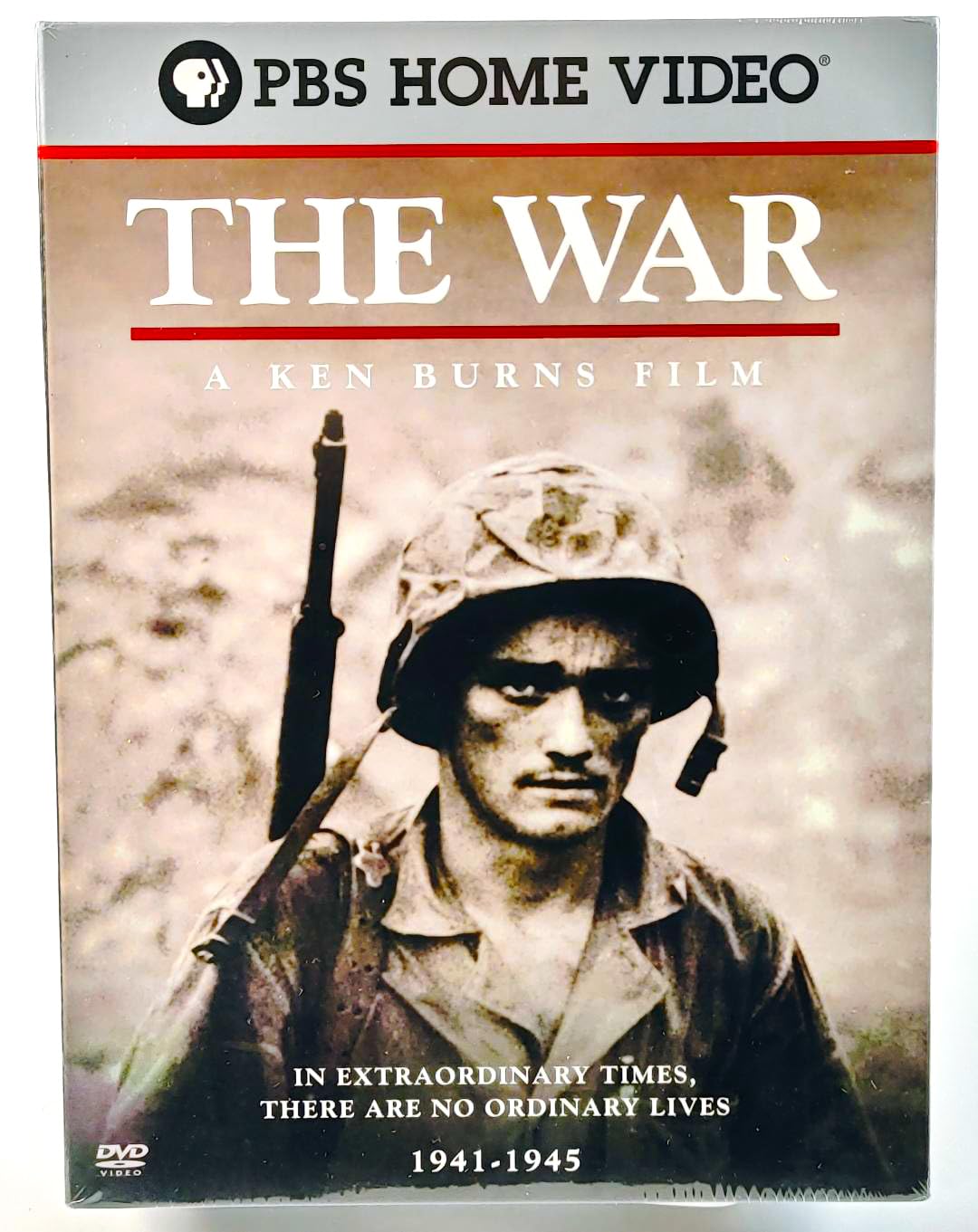
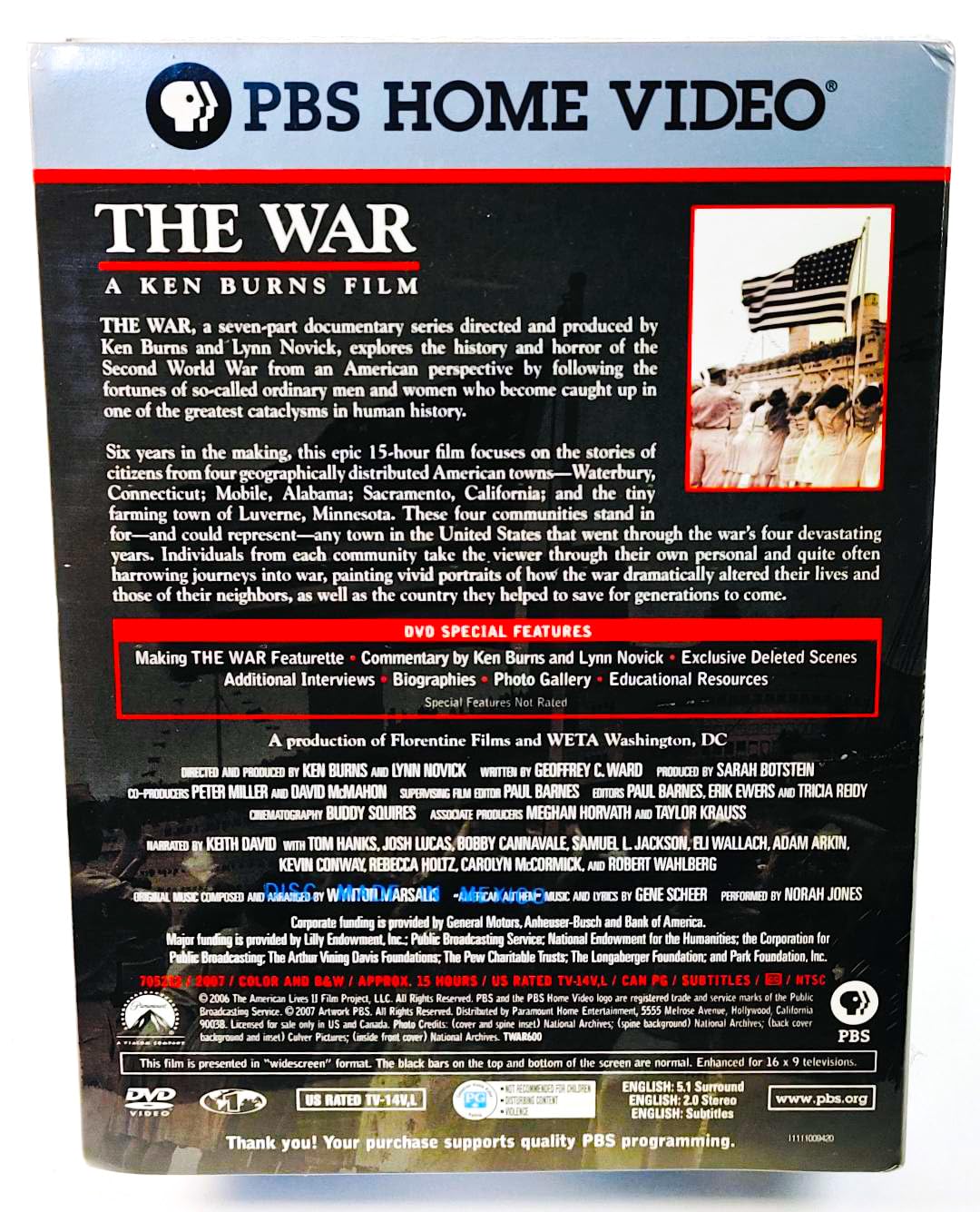
Creating epic documentaries about war is nothing new for Ken Burns, nor is the subject of the Second World War, which never ceases to be a popular subject of films and TV shows. Yet with The War , Burns has definitely succeeded in breaking new ground, exploring in depth the effect of the war on common Americans, and not just the soldiers of The Greatest Generation that fought it. As the narration says at the beginning, "The war affected people in every house, on every street in every town in America." This is nothing less than an attempt to show how the war altered the lives of an entire nation through the portrayal of four individuals from four communities--Waterbury, Connecticut; Mobile, Alambama; Luverne, Minnesota; and Sacramento, California--that could represent any town in the country that went through the war. The result is another stunning achievement for Burns and co-director Lynn Novick. Together the filmmaking team succeeds in bringing the war home through the testimonies, letters, and footage of the people from these towns. The storytelling is compelling--Burns and Novick manage to find the most vivid, intimate, and personal dimensions of a global catastrophe--and brought to life with exceptional voice work from marquee stars like Tom Hanks, Alan Arkin, and Samuel L. Jackson. Much of the footage is brilliantly restored; even the most die-hard History Channel buff will see clips here that they've never viewed before. Many old grainy family films look almost as clean and bright as if they were just shot using a modern camera with black-and-white film (keeping in mind that most of the footage was shot without sound, the audio effects work on The War is particularly impressive and should bring attention to the underappreciated work of the foley artist). It took Burns and Novick six years to make this seven-part, 15-hour film--not surprising, really, considering the miles of footage they must have accumulated in the course of their research--and the time and effort shows in the results. The DVD also includes a making-of featurette, deleted scenes, extensive commentaries, and more, in addition to a companion book, The War: An Intimate History . --Daniel Vancini The War will is a seven - episode series; produced by Ken Burns and Lynn Novick; that will examine the myriad ways in which the Second World War touched the lives of every family on every street in every town in America. By telling the stories of ordinary people in four quintessentially American towns Waterbury; Connecticut; Mobile; Alabama; Sacramento; California; and the tiny farming town of Luverne; Minnesota the series will portray this enormous worldwide catastrophe on an intimate; human scale. The War will intertwine vivid eyewitness accounts of the harrowing realities of life on the front lines with reminiscences of Americans who never left their home towns; and who tried their best to carry on with the business of daily life while their fathers and brothers and sons were overseas. The film will honor and celebrate the bravery; endurance; and sacrifice; of the generation of Americans who lived through what will always be known simply as The War. Review: An important, engrossing, and necessary documentary - Ken Burns' 15 hour PBS miniseries, THE WAR, is stupendous by even his high standards. It gives us a fresh and powerful and poignant portrait of World War Two. We have both the home front and combat in both the Pacific and Europe, battle by battle, mostly from President Roosevelt declaring war in 1941 to V-J Day in 1945. And the home front is viewed through four towns across America: Sacramento, California; the tiny farming town of Luverne, Minnesota; Mobile, Alabama; and Waterbury, Connecticut. As always with Burns (and co-director and co-producer Lynn Novick), we have oral reminiscences, then graphic combat footage to show what is being talked about. In the process, several ordinary people in those four towns emerge as superstar commentators. And the war's horror really comes alive. Libraries are more likely than Blockbuster to stock THE WAR. If you want to buy a copy, desertcart.com is way, way cheaper than PBS directly. The DVD has seven episodes on six disks. Each episode is about two hours in length, with advisories on the front for strong violence. Episode one shows how the attack on Pearl Harbor changed life in the four profiled towns across America for both wives and soldiers. Burns and Novick offer audio commentary, if you have the time to view episode one twice. We go all the way up to December 1942. Episode two gives us 1943 in 24/7 factories across America, battles in north Africa, suicide bombing raids in Europe, and bloody battles in the Pacific. On the same disk, episode three takes place from November 1943 - May 1944. We get Allied forces in Italy and heavy American losses in Tarawa in the Pacific. Meanwhile, on the home front, factories are booming with productivity, leading to ugly racism. On one of these episodes we also see Japanese-Americans rounded up and sent to internment camps, and blacks in their own proud front-line combat unit. D-Day in June 1944 is at the center of episode four, with commentary by Burns and Novick, which I did not play because I wanted to hear the oral witnesses instead. Maybe on a second viewing next year. Episode five is wryly subtitled "FUBAR", which stands for "f----- up beyond all recognition", which tells it like it is in Fall 1944. We are in Holland and Germany, directly fighting the Nazis on their own turf. We also fight one of the most brutal and unnecessary battles in the Pacific. Episode six is set in early 1945. Americans finally get across the Rhine in Germany, after heavy losses in the Ardannes forest, while the Russians are only 50 miles from Berlin in the opposite direction. In the Pacific, we score big with the capture of Iwo Jima and bombing raids on Japan. Finally, episode seven of THE WAR has V-E Day, the battle of Okinawa and the atom bomb droppings on Japan, V-J Day, and a whole world trying to learn to live without war. It is a sobering and poignant finale to a magnificent war miniseries when you have the time for it. Ken Burns and his staff picked the exact right four towns and found the exact right commentators to make the home front and these battles unforgettable. Review: The lessons of "The War" are never ending - This is a very excellent illustration of how to tell a story, it is perhaps a documentary as well and provided this viewer with a unmistakable interest that I have watched the entire series twice and more.I sometimes fall asleep when I want to watch an episode nearing a latter part of the day, but that has not deterred my efforts to listen and watch many times over.This is very excellent story telling. The difficulty in placing this event is that much like the war much should be said, so much that it posed a problem, how much is necessary? Necessary for what? This is that compelling a story, a story that becomes something very personal, the war gets your attention, stories that need to be respected and conveyed to others.The telling of those days became so gruesome that memories returned to me as "With the Old Breed" by EB Sledge.I did not know just how other worldly those days were until I heard in EB Sledge own words.The stories were of an underworld, a darkened day that was truly very nearly the end of life.This is truly the "War".An account that testifies to time-everlasting how terrible that event, how terrible that resolve, whereby some nearly 60 million people world wide would lose their lives.The telling of this story is very much worth the time and effort to know. It is personal, it is a magnificent story, it is both glory bound and of such an unmistakable defeat, that where glory lives death was never far away.The film was from real footage, the sound was good to listen to, the effects were so real that when I first listened to Franklin Delano Roosevelt time, so it seemed stood still.I tear up when FDR in the episode entitled "Pride of Our Nation" prays for our cause, for our boys as this occurred on the evening of the day of the Allied invasion of France. I'am reminded of something that Ernie Pyle wrote when he witnessed the very one-sided account that occurred in North Africa.It is unmistakably excellent writing that suggests we Americans had a very high opinion of ourselves but got our heads handed to us at the expense of Erwin Rommel and the Africa Corp It was Erwin Rommel that wanted to teach the Americans a lesson so thorough as to instill an inferioty complex of no mean order, in part that is what happened. He went on to say that the worst was yet to come.That truly was as it would be an account that set the record straight.The American Army became a great fighting force, however, the debacle at Kasserine Pass, Tunisia was a learning experience, a valuable experience but a learning experience none the less.We had to fight for it and fight for it, we did.This showing is such an excellent approach to this big bad event that it rates well within the ranks of other of its kind. "The World At War" is a comparable comparison, yes the two are different but neither lacks pathos, neither lacks truthfulness with "The War" surprising just how personal the war became.
| Customer Reviews | 4.8 out of 5 stars 1,596 Reviews |
S**D
An important, engrossing, and necessary documentary
Ken Burns' 15 hour PBS miniseries, THE WAR, is stupendous by even his high standards. It gives us a fresh and powerful and poignant portrait of World War Two. We have both the home front and combat in both the Pacific and Europe, battle by battle, mostly from President Roosevelt declaring war in 1941 to V-J Day in 1945. And the home front is viewed through four towns across America: Sacramento, California; the tiny farming town of Luverne, Minnesota; Mobile, Alabama; and Waterbury, Connecticut. As always with Burns (and co-director and co-producer Lynn Novick), we have oral reminiscences, then graphic combat footage to show what is being talked about. In the process, several ordinary people in those four towns emerge as superstar commentators. And the war's horror really comes alive. Libraries are more likely than Blockbuster to stock THE WAR. If you want to buy a copy, Amazon.com is way, way cheaper than PBS directly. The DVD has seven episodes on six disks. Each episode is about two hours in length, with advisories on the front for strong violence. Episode one shows how the attack on Pearl Harbor changed life in the four profiled towns across America for both wives and soldiers. Burns and Novick offer audio commentary, if you have the time to view episode one twice. We go all the way up to December 1942. Episode two gives us 1943 in 24/7 factories across America, battles in north Africa, suicide bombing raids in Europe, and bloody battles in the Pacific. On the same disk, episode three takes place from November 1943 - May 1944. We get Allied forces in Italy and heavy American losses in Tarawa in the Pacific. Meanwhile, on the home front, factories are booming with productivity, leading to ugly racism. On one of these episodes we also see Japanese-Americans rounded up and sent to internment camps, and blacks in their own proud front-line combat unit. D-Day in June 1944 is at the center of episode four, with commentary by Burns and Novick, which I did not play because I wanted to hear the oral witnesses instead. Maybe on a second viewing next year. Episode five is wryly subtitled "FUBAR", which stands for "f----- up beyond all recognition", which tells it like it is in Fall 1944. We are in Holland and Germany, directly fighting the Nazis on their own turf. We also fight one of the most brutal and unnecessary battles in the Pacific. Episode six is set in early 1945. Americans finally get across the Rhine in Germany, after heavy losses in the Ardannes forest, while the Russians are only 50 miles from Berlin in the opposite direction. In the Pacific, we score big with the capture of Iwo Jima and bombing raids on Japan. Finally, episode seven of THE WAR has V-E Day, the battle of Okinawa and the atom bomb droppings on Japan, V-J Day, and a whole world trying to learn to live without war. It is a sobering and poignant finale to a magnificent war miniseries when you have the time for it. Ken Burns and his staff picked the exact right four towns and found the exact right commentators to make the home front and these battles unforgettable.
C**N
The lessons of "The War" are never ending
This is a very excellent illustration of how to tell a story, it is perhaps a documentary as well and provided this viewer with a unmistakable interest that I have watched the entire series twice and more.I sometimes fall asleep when I want to watch an episode nearing a latter part of the day, but that has not deterred my efforts to listen and watch many times over.This is very excellent story telling. The difficulty in placing this event is that much like the war much should be said, so much that it posed a problem, how much is necessary? Necessary for what? This is that compelling a story, a story that becomes something very personal, the war gets your attention, stories that need to be respected and conveyed to others.The telling of those days became so gruesome that memories returned to me as "With the Old Breed" by EB Sledge.I did not know just how other worldly those days were until I heard in EB Sledge own words.The stories were of an underworld, a darkened day that was truly very nearly the end of life.This is truly the "War".An account that testifies to time-everlasting how terrible that event, how terrible that resolve, whereby some nearly 60 million people world wide would lose their lives.The telling of this story is very much worth the time and effort to know. It is personal, it is a magnificent story, it is both glory bound and of such an unmistakable defeat, that where glory lives death was never far away.The film was from real footage, the sound was good to listen to, the effects were so real that when I first listened to Franklin Delano Roosevelt time, so it seemed stood still.I tear up when FDR in the episode entitled "Pride of Our Nation" prays for our cause, for our boys as this occurred on the evening of the day of the Allied invasion of France. I'am reminded of something that Ernie Pyle wrote when he witnessed the very one-sided account that occurred in North Africa.It is unmistakably excellent writing that suggests we Americans had a very high opinion of ourselves but got our heads handed to us at the expense of Erwin Rommel and the Africa Corp It was Erwin Rommel that wanted to teach the Americans a lesson so thorough as to instill an inferioty complex of no mean order, in part that is what happened. He went on to say that the worst was yet to come.That truly was as it would be an account that set the record straight.The American Army became a great fighting force, however, the debacle at Kasserine Pass, Tunisia was a learning experience, a valuable experience but a learning experience none the less.We had to fight for it and fight for it, we did.This showing is such an excellent approach to this big bad event that it rates well within the ranks of other of its kind. "The World At War" is a comparable comparison, yes the two are different but neither lacks pathos, neither lacks truthfulness with "The War" surprising just how personal the war became.
M**N
The Necessary War
My late father (Canadian WWII author George G. Blackburn) would have appreciated this -- but he couldn't be with me, last night, as I watched the first episode of this latest `masterpiece' from Ken Burns. I tried my best to see it through my father's eyes. [He was the longest-surviving "Forward Observation Officer" (FOO) on any front in WWII. FOO's, always with front-line troops, lasted an average of 23 hours before being killed or wounded; George Blackburn lasted ten months from just after D-Day until VE-Day (Victory in Europe).] My father appreciated ALL of Ken Burns' work (especially the "Baseball" series -- Dad was a star pitcher when he was young: he left me his VHS tapes of that one). My father, who almost made it to age 90, lived long enough to author a best-selling WWII trilogy for Canada's largest publishing house. He would have been greatly impressed, I believe, with Ken Burns' latest accomplishment. "Episode One -- A NECESSARY WAR" aired last evening (on our closest PBS station -- "Prairie Public Television" of North Dakota - which gets most of its funding from this Manitoba city of 700,000). I found myself enthralled by Ken Burns' approach to "THE WAR." ----- We're taken in quick sequence to four places: a small town in Connecticut - close to New York City - "Waterbury." Next we visit the Midwest, (a town just to the south of us, here in Manitoba) -- Luverne, Minnesota; then, off to the heart of the South -- Mobile, Alabama; and finally, out to the west coast -- standing in for all of California - SACRAMENTO (a city of "110 thousand that feels like a small town"). The opening thoughts --from Luverne MN - are narrated by a familiar voice (from "Saving Private Ryan") -- Tom Hanks: "Much of the world was already at war in the Fall of 1941 . . . " (and) "There was a saying (in this small town where everybody knew everyone else's business) that, "If you don't want everyone to know about it . . . don't do it." In our first glimpse at Mobile, we're introduced to one WWII veteran, now in his 80s, "John Gray who (because of the color of his skin) would soon be asked to fight a war for `Freedom' - though his own country's definition of that word, didn't include HIM." Then back to the Midwest for a few minutes: "Sam Hynes," a surprisingly young-looking WWII veteran from Minnesota who was "barely 17 in 1941," recalls how, "You could, all of a sudden, choose to be an adult (just) by signing your name; and suddenly (I see myself as) a fighter pilot - an "Ace" . . . or a submarine commander going into Tokyo Bay: It is the opportunity to be someone more exciting than the kid you are." [To inject a personal note (since my lovely, new daughter-in-law "Eriko" hails from Osaka Japan), I was deeply moved by the interviews with Japanese-Americans, now in their 80s, who'd been singled out as enemy aliens, requiring internment. We see and hear "Asako Tokuno" -- born in America, whose parents were born in Japan, as she fights back tears, recalling what it was like (on a day's notice) to be sent off to remote internment camps. We're told how this grim process flowed from a simple, innocuous-sounding "executive order" from President Roosevelt's office: "(First,) designate military areas - then exclude anyone who might pose a military threat." On the strength of which, "110 thousand Japanese-Americans were forced out of their homes, with only the possessions they could carry, and moved inland." But it's the interviews with those "old soldiers" (Navy, Airmen and Marines too), that really hit home: Some of these men being interviewed, were still in their teens when they volunteered for military service; they're still comparatively young-looking today. But you hear some of their stories on this great program - and you wonder how they survived at all. "Glen Frazier" with the infantry in the Phillipines, (the largest, eventual surrender of Americans in U.S. military history) was among those few who survived the infamous "Bataan Death March." A good-looking man in his old age, he quietly sums up the experience in a sentence or two. After a march in which he saw his comrades (and Filipino civilians including women) "beheaded, buried alive" (etc.) -- a march on which between 6,000 and 11,000 died ("no one knows for certain the correct number") -- Mr. Frazier, says, matter-of-factly, "I marched without sleep for six days and seven nights . . . no water and no food. They say you can't do that. But I did. (At the end of the march) my tongue wouldn't go back into my mouth." Ken Burns' approach is so well-balanced and suddenly, inter-cut gracefully with such horrific recollections are the peaceful scenes of small-town America - back where "war bond drives raise one billion dollars in a month." We learn that "The War" cost the U.S. 304 billion dollars ("more than 3 trillion in today's terms"). Citizens of Sacramento - "in one bond drive alone" raised 16 million "to pay for 96 minutes of the war.") Statistics are parceled out in small digestible chunks throughout the show - again a remarkable "balance" to keep the show moving along at a pace that an entire family watching this together, would appreciate. (I watched alone but kept thinking that my ten-year-old grandson would find this as riveting as Ken Burns' "THE CIVIL WAR." ------ Ken Burns reserves the longest, single interview in Program One until the very end. I didn't catch the name of this "old soldier" when it flashed on the screen (I was busy jotting down a note about him). He is an Hispanic-American who joined the Marines -- after the Navy twice turned him down ("too small"). He tells the story of the death of one of his buddies (on one of the Solomon Islands, which he described as "hell on earth") recounting how his "best friend" died on a night "so dark you couldn't see your hand in front of you" - so dark he didn't realize it was his own best friend who'd taken a single bullet of `friendly fire' -- then moaned and cried out in the darkness, "all night until dawn." Not knowing who this dying man was, but, like the rest of his buddies, desperately in need of sleep, he muttered under his breath, "Just DIE -- Die, will you? -- let the rest of us get some sleep." He runs out of words to say - allowing the viewer imagine how he felt at the moment he saw his friend's body in the light of day. The episode ends there, with a fade-to-black in silence. How wished I could have turned to my father to say, "Well . . . what do you think of it, so far?" I believe he'd have said (once again) "Good work, Ken Burns!" But then, I can hear his voice adding, "Bet you Canada (and its WWII efforts) will hardly get a mention." (Hope you're wrong, Dad!)
J**N
A Riveting Documentary
Ken Burns has produced many documentaries on different subjects, including the Civil War, baseball, and jazz music. But he does perhaps his best work with this compelling and revealing documentary about World War II. Focusing on the stories of citizens from Waterbury, CT; Sacramento, CA; Luverne, MN; and Mobile, AL, Burns covers all fronts of the war, from the attack on Pearl Harbor in December, 1941 through VJ day in August, 1945. Burns has included interviews of service men and women from each of these towns. Some served on the front lines, some flew aircraft, some sailed on ships, some became prisoners of war, and some served on the home front. The common factor among all of these men and women was a burning desire to defeat the enemy and return to their lives. These interviews show the viewer the human side of the conflict. These people were young adults at the time, many leaving home for the first time. Yet, they left their homes and loved ones to fight a war thousands of miles away. The interviews give a "human" element to the war that the viewer can easily relate to. Also included is authentic footage, both photographs and film, of the war. By combining this footage with the interviews, Burns gives the viewer a complete feeling of what the war was actually like. This is unquestionably the best documentary I've ever seen. Oral history is perhaps the best way to learn about earlier events, and the interviews with the survivors provide a first-hand account of what the war was actually like. There were good times and bad, but the overriding theme expressed throughout was that these people were simply doing a job. But their sacrifice ensured that future generations would carry on. I give this fine documentary my highest recommendation. Simply put, there is no better documentary history of World War II than this one.
J**K
Highly recommended
Rather than commit to the broadcast airings I chose to order the DVD set. I've nearly completed viewing all seven episodes now. I'd say it is one of the best documentaries I have ever viewed and certainly the best WWII documentary I've ever seen. Some historians have commented that the documentary "is what it is" and is thus good for what it attempts to portray. I agree but I'd add that it does an exceptionally good job accomplishing its goal of telling the stories of those who lived through the horrors and joys of the war years. Despite its length, it is not a detailed historical account or analysis of WWII, its battles, leaders, strategies, virtues or evils although it touches on some of al of that. It is a grand human interest story. It should thus have appeal to a wide spectrum of viewers, not just history enthusiasts. Most powerful and impressive are the interviews of combat veterans and those who lived through the war on the home front. The mental and emotional toll it took on these people, which they feel nearly as strongly today over sixty years after the war needed, is manifest in their interviews. Every episode brought tears to my eyes. The film references in detail American wrongs as well as America's virtues during the war. For example, the unconstitutional internment of Japanese-Americans, discrimination against black servicemen, and even retaliatory atrocities committed by Americans are explained. Of course, the valor and sacrifice of those supporting the troops and of the troops themselves, as well as the ultimate triumph of good over evil are plainly emphasized. It contains graphic depictions of the results of battlefield violence and some occasional but mostly mild profanity, nothing gratuitous though. If the "F" word spoken clinically is unbearable to the listener then you will want to silence the very beginning of the "FUBAR" and "SNAFU" episode where the narrator briefly explains the meaning of these acronyms which originated on the WWII battlefield. I highly recommend this film.
D**G
The War
The War is documentary on the second world war. Right up front we are told it is about four communities in the USA. It then takes us through the war pretty much from the beginning to end. It covered the whole war from Western Europe to Easter Mediterranean and Northern Africa and then all of Pacific. How ruthless the Japanese were. The movie showed us. When the first atomic bomb was dropped it showed the tremendous destruction it did. The Japanese would not surrender unconditionally. They did believe we had built a second bomb. Almost immediately they surrendered as requested. We were loosing over 1,500 men every day in the Pacific. I could go on for sometime but I'm sure you get the idea. I've purchased a nine + war related videos. They work on my computer just fine except the last three disks. They would not load up and play no matter what I did. Out of desperation I try a disk in my DVD player in the living room. That work just fine.
F**E
Excellent Film
The most impressive detail about this DVD is the cover photo. It looks a lot like my father. He did not serve in uniform, or overseas. He did serve as a civilian supervisor shipping supplies to the pacific for the Seabees during The War.
J**S
Best WWII documentary from an American perspective
I started reading about WWII in 6th grade. My personal library contains well over 80 books strictly dedicated to WWII history, and I continue to add new ones as I find them. Over the years, I watched hundreds of documentaries, battle footage taken by combat cameramen on celluloid film and other WWII-related movies, and viewed thousands of still photographs. I visited many WWII museums including all of the sites in Hawaii (visiting Pearl Harbor was a life-long ambition realized as an adult). WWII is the one subject I studied the most in my life. Sixty million people died as a direct result of that conflict. The civilized world never before witnessed such a widespread level of destruction as hundreds of towns and cities across the world were literally obliterated. It was a horrible war, indescribable in its savagery that caused world-wide suffering on a scale never seen before or since that time. I once heard someone say that the war touched every human life on the planet for multiple generations. Both sides of my family were involved: My uncles served and many of my friends had direct relationships with family members who served in WWII. My Uncle, SMSgt Donald Burton Richards, served in Europe as a gunner on A-26 Invader bombers in the Army Air Corps and was my inspiration to make the Air Force a career. He eventually participated in the Korean and Vietnam wars before retiring in 1970 after 26 years of service. My wife's father served with General Patton, and her Uncle (her father's brother) also served during the conflict. The National World War Museum states that just over 600 WWII veterans die each day: We lose 219,000 WWII veterans a year. Within seven years, only a tiny handful of WWII veterans will remain. Many families including my own no longer have living WWII veterans. In 2007, Ken Burns released a seven part serious entitled "The War". I consider it the best WWII documentary from an American perspective that anyone ever produced. It captures the entire essence of the conflict and leaves a deep and lasting impression upon the viewer. It provides a stunning unfiltered view of a war that destroyed so many and so much and changed our world forever. I urge everyone to watch it and then to watch it again, because it's impossible to absorb it all after only a single viewing, and it takes a while for the enormity of the entire event to fully sink in to your consciousness. This film allows us for a time to actually experience the War's scale and the impact it had on our world. Many of the veterans interviewed in the film have since passed away. We must never forget this war or the reasons that led the world into such a destructive time in history. Our nation's very future depends upon it.
Trustpilot
2 weeks ago
2 weeks ago