Some deliveries may take a little longer than usual due to regional shipping conditions.

DOWNLOAD THE APP


Customer Services
Copyright © 2025 Desertcart Holdings Limited
DOWNLOAD THE APP
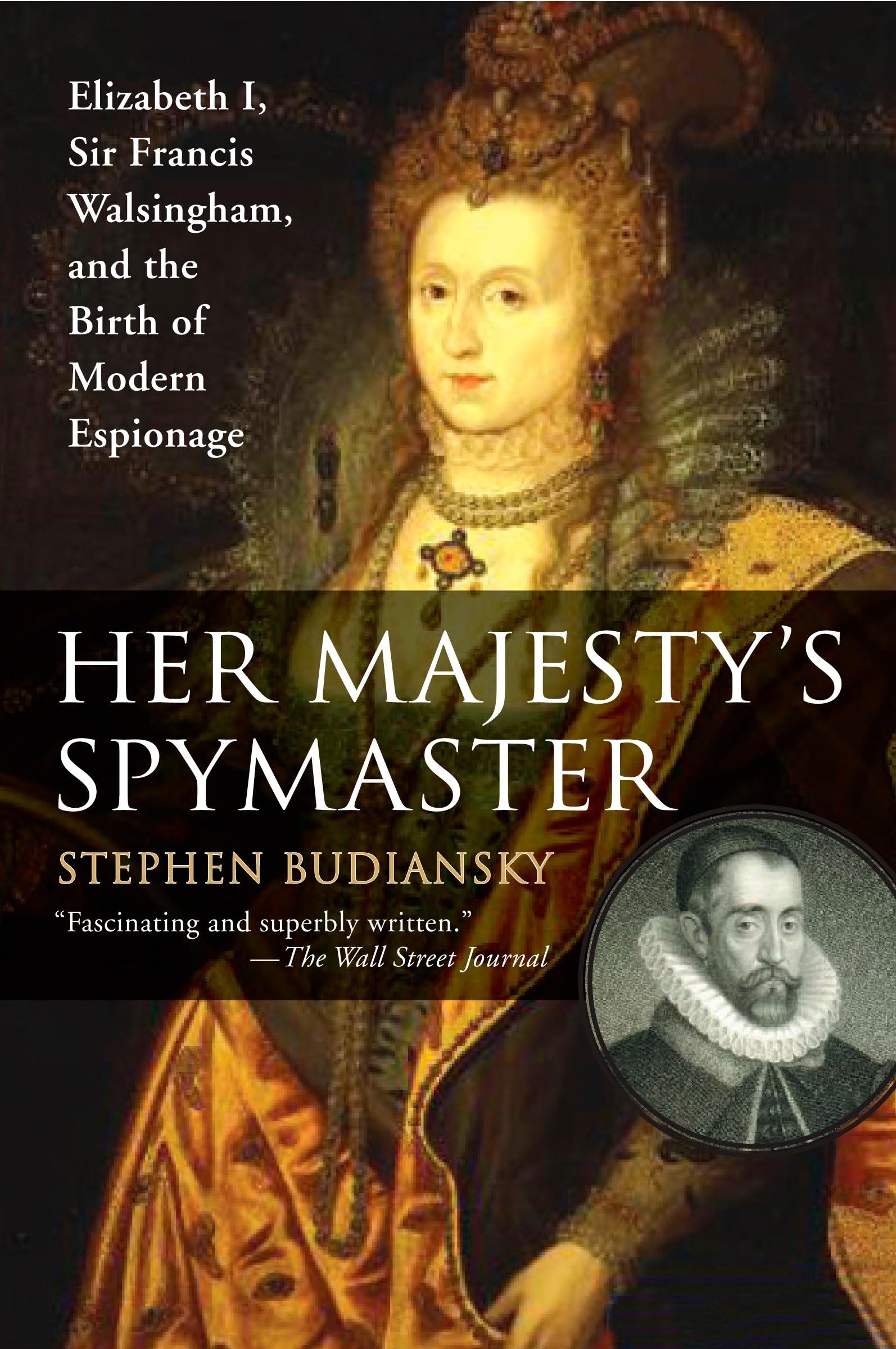
Her Majesty's Spymaster: Elizabeth I, Sir Francis Walsingham, and the Birth of Modern Espionage [Budiansky, Stephen] on desertcart.com. *FREE* shipping on qualifying offers. Her Majesty's Spymaster: Elizabeth I, Sir Francis Walsingham, and the Birth of Modern Espionage Review: Great book for an undergrad or the casual reader! - Having just read the review by the esteemed Lisa Jardine (her "Worldly Goods: A New History of the Renaissance" is a great book)for the Washington Post, I felt compelled to respond. She's rather harsh with it I think. I don't think Budiansky's history is any less accurate just because he is writing to an audience wider than us nerdy historians. It's just a lot less technical. I'm sure she misses all the footnotes and endnotes that we tend to live for, but I think that his narrative style gives his subject life and makes it a lot more fun to read than most history that is written for historians. I think this book is a great introduction into the world of Elizabethan politics and espionage. Budiansky's work should not be compared to one such as Conyers Read's (still a great historian if a bit outdated), for they have completely different audiences for which they are writing. That said, perhaps Jardine was trying to say as much when she cited "Shakespeare in Love", but I think that's an unfair comparison... Budiansky takes FAR fewer liberties with fact. So, if you are a non-historian, a casual reader, or if you're looking for a book for your undergraduate students, I recommend this book. If you are a history junky, and/or trying to find an authoritative work on Walsingham for graduate studies, you'll probably only want to use this book as a quick summary (it's an easy/fast read) of the carreer of Mr. Secretary Walsingham, if at all. There are certainly more authoritative books out there, but few as entertaining to read. And shouldn't history be fun to read? Review: espionage and treachery under Elizabeth I - This is a popular history of events in the reign of Elizabeth I, focused on the life of Sir Francis Walsingham, a senior member of the privy council who was responsible for a wide array of cloak-and-dagger work. It includes many details of the intricate and treacherous world of spies and double agents of the period, including the intercepted letters that eventually led to the execution of Mary Queen of Scots. It is sometimes a little light, but it is very readable. It helped me better understand the connections between events such as the St Bartholomew's massacre of the protestant nobility in Paris, the Spanish Armada, the conspiracies around Mary, and the distinctly paranoid atmosphere of Elizabeth's court. It isn't surprising that the protestant leadership of England were highly alarmed after what they had seen happen to their coreligionists in Paris and amidst the various rumoured conspiracies around Mary. Elizabeth herself is portrayed as continually vacillating. Sometimes by intent, to stall and delay her enemies or to allow events to unfold, but sometimes out of mere habit and apparently sometimes out of alarming genuine indecisiveness. This is by no means a complete history of Elizabeth I's times. But it sheds some interesting light and reminds us of the long dark history of spies and double-dealing between nations.
| Best Sellers Rank | #265,802 in Books ( See Top 100 in Books ) #141 in Historical British Biographies #170 in Espionage True Accounts #1,143 in Political Leader Biographies |
| Customer Reviews | 4.4 4.4 out of 5 stars (143) |
| Dimensions | 5.31 x 0.61 x 8 inches |
| Edition | Reprint |
| ISBN-10 | 0452287472 |
| ISBN-13 | 978-0452287471 |
| Item Weight | 8.2 ounces |
| Language | English |
| Print length | 267 pages |
| Publication date | July 25, 2006 |
| Publisher | Penguin Publishing Group |
T**'
Great book for an undergrad or the casual reader!
Having just read the review by the esteemed Lisa Jardine (her "Worldly Goods: A New History of the Renaissance" is a great book)for the Washington Post, I felt compelled to respond. She's rather harsh with it I think. I don't think Budiansky's history is any less accurate just because he is writing to an audience wider than us nerdy historians. It's just a lot less technical. I'm sure she misses all the footnotes and endnotes that we tend to live for, but I think that his narrative style gives his subject life and makes it a lot more fun to read than most history that is written for historians. I think this book is a great introduction into the world of Elizabethan politics and espionage. Budiansky's work should not be compared to one such as Conyers Read's (still a great historian if a bit outdated), for they have completely different audiences for which they are writing. That said, perhaps Jardine was trying to say as much when she cited "Shakespeare in Love", but I think that's an unfair comparison... Budiansky takes FAR fewer liberties with fact. So, if you are a non-historian, a casual reader, or if you're looking for a book for your undergraduate students, I recommend this book. If you are a history junky, and/or trying to find an authoritative work on Walsingham for graduate studies, you'll probably only want to use this book as a quick summary (it's an easy/fast read) of the carreer of Mr. Secretary Walsingham, if at all. There are certainly more authoritative books out there, but few as entertaining to read. And shouldn't history be fun to read?
G**M
espionage and treachery under Elizabeth I
This is a popular history of events in the reign of Elizabeth I, focused on the life of Sir Francis Walsingham, a senior member of the privy council who was responsible for a wide array of cloak-and-dagger work. It includes many details of the intricate and treacherous world of spies and double agents of the period, including the intercepted letters that eventually led to the execution of Mary Queen of Scots. It is sometimes a little light, but it is very readable. It helped me better understand the connections between events such as the St Bartholomew's massacre of the protestant nobility in Paris, the Spanish Armada, the conspiracies around Mary, and the distinctly paranoid atmosphere of Elizabeth's court. It isn't surprising that the protestant leadership of England were highly alarmed after what they had seen happen to their coreligionists in Paris and amidst the various rumoured conspiracies around Mary. Elizabeth herself is portrayed as continually vacillating. Sometimes by intent, to stall and delay her enemies or to allow events to unfold, but sometimes out of mere habit and apparently sometimes out of alarming genuine indecisiveness. This is by no means a complete history of Elizabeth I's times. But it sheds some interesting light and reminds us of the long dark history of spies and double-dealing between nations.
G**G
A great read that for a non-fiction book has real momentum
If you like the Tudor period and Elizabeth I in particular, this book is a treat. It deals in great detail with Francis Walsingham’s life and progress through his career to become Elizabeth’s primary advisor.
J**.
The Spymaster who saved England
Great history of the troubled times of Elizabeth’s reign, Mary queen of Scots bid for power, the struggle of the Reformation and the Spanish Armada.
H**E
Entertaining History of Walsingham
Stephen Budiansky's "Her Majesty's Spymaster" is a very readable popular history of Sir Francis Walsingham, Queen Elizabeth I's personal secretary and informal chief of intelligence. Written in a breathless novelistic style, Budiansky captures the atmospherics and endless intigues of the Tudor period in a way designed to capture the interest of the average person without background in the era. He succeeds in making the religious struggles and dynastic wars of this distant period accessible to the modern reader. Walsingham was unusual in his time in that he served in a high position in government without having come from the nobility. His rise from what would now be termed a middle class upbringing was based on education, talent, and good service. Walsingham turned out to be a superbly capable spymaster who could get and keep secrets and protect the fortunes of his Queen and country. Walsingham was especially effective in managing the English rivalry with France, including the dangerous problem of the status of Mary Queen of Scots, and the running conflict with Spain. Budiansky is less than effective in making the case that Walsingham gave birth to modern espionage. Walsingham learned his craft from his mentor and predecessor, Lord Burghley, and his success was due less to inventing new methods of espionage than to making fewer mistakes than his contemporaries in executing already widely-known tactics and techniques. This book is recommended to the casual reader looking for an introduction to the intrigues of the Elizabeath period. The close student of the history of the period will find no information that has not been covered in more detail elsewhere.
D**S
THE REAL ELIZABETH I
I loved the book. I learned more about Elizabeth I in these pages than I ever did in school or from watching movies about her. She came real and so did Mr. Secretary. The Armada and Drake were also totally different from the tripe we were taught. Mr. Budiansky held my attention throughout. I will read others of his works as well.
S**R
Fascinating life of one of key Elizabethan power broker
I love stories about Elizabeth's political times, because of what they show about the birth of England's non-royal civil service class, and I love spy stories. Walsingham was a) honest b) a non-bigoted, loyal Protestant c) a brilliant administrator and diplomat and d) a brave man when advising his Queen. What's not to love about this story?
O**Y
Excellent biography of a key person in a critical time
Excellent biography of a key person who has not received the attention due. The bibliography and notes are excellent starting points for those looking to learn more about the players who made Elizabeth's reign one of the most "successful" periods in English history.
S**T
With four years on the market and not a single note of reader recommendation, I will take on the task of writing one. This biography concerns stories of scores of intrigues and counterplotting. It also relates historical fact. It could then fall into the trap of either meandering through different theories of conspiracy, in a quest of, in the end, who really took who in, finally probally rewriting history. It could otherwise be a dry littany of facts. But then it avoids both of these, being a witty, clear cut and yet very firmly strung description of Master Secretary's life. I can understand that the matter of relating happenings, in which whole nations lay at conflict, can indeed result in completely different stories. Yet, the prime intent of history is to teach, even if, as some people say, randomness makes a greater part of our life, then we may think. It is the attitude of clearing away the fog of different perspectives and curtly presenting certain happenings, that makes me recommend this book.
C**B
Great if you like this sort of thing,
J**S
I have a particular fascination for "powers behind the throne", something that describes Walsingham well. This is a good insight into the life of Walsingham, though, for me, it spends too much time doing what other books do - telling me about the man - and not about his techniques. In some areas it seems to go out of its way to avoid giving details. Overall, a useful addition to my collection, but not exactly what I was hoping for.
K**M
This is not a dry as dust biography; indeed it isn't really a biography at all. It is more a collection of intricate cameos of Walsingham's life, which seemed to consist of work, work and work -- all for Queen and country. It is more about the political machinations and associated espionage plus Walsingham's part in keeping Good Queen Bess afloat: he was one of the few who could speak his mind to Elizabeth and keep his head. Walsingham was cunning, ruthless and dangerous; he orchestrated impressive spy-rings but somehow above it all as Elizabeth's equivalent of Prime Minister. Well written; highly readable; absolutely fascinating and definitely in the "I can't put it down" league. Lots of little and large insights into the workings of the father of modern espionage and Elizabeth's court. If you're interested in spying or the Tudors then this is a must.
A**1
Great service; great book
Trustpilot
2 weeks ago
5 days ago