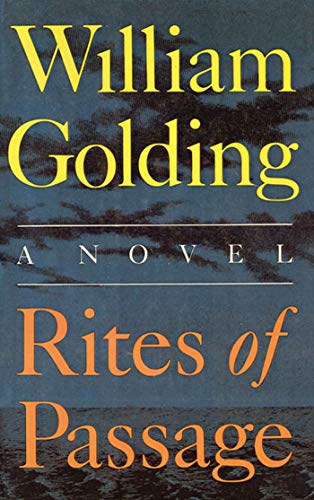
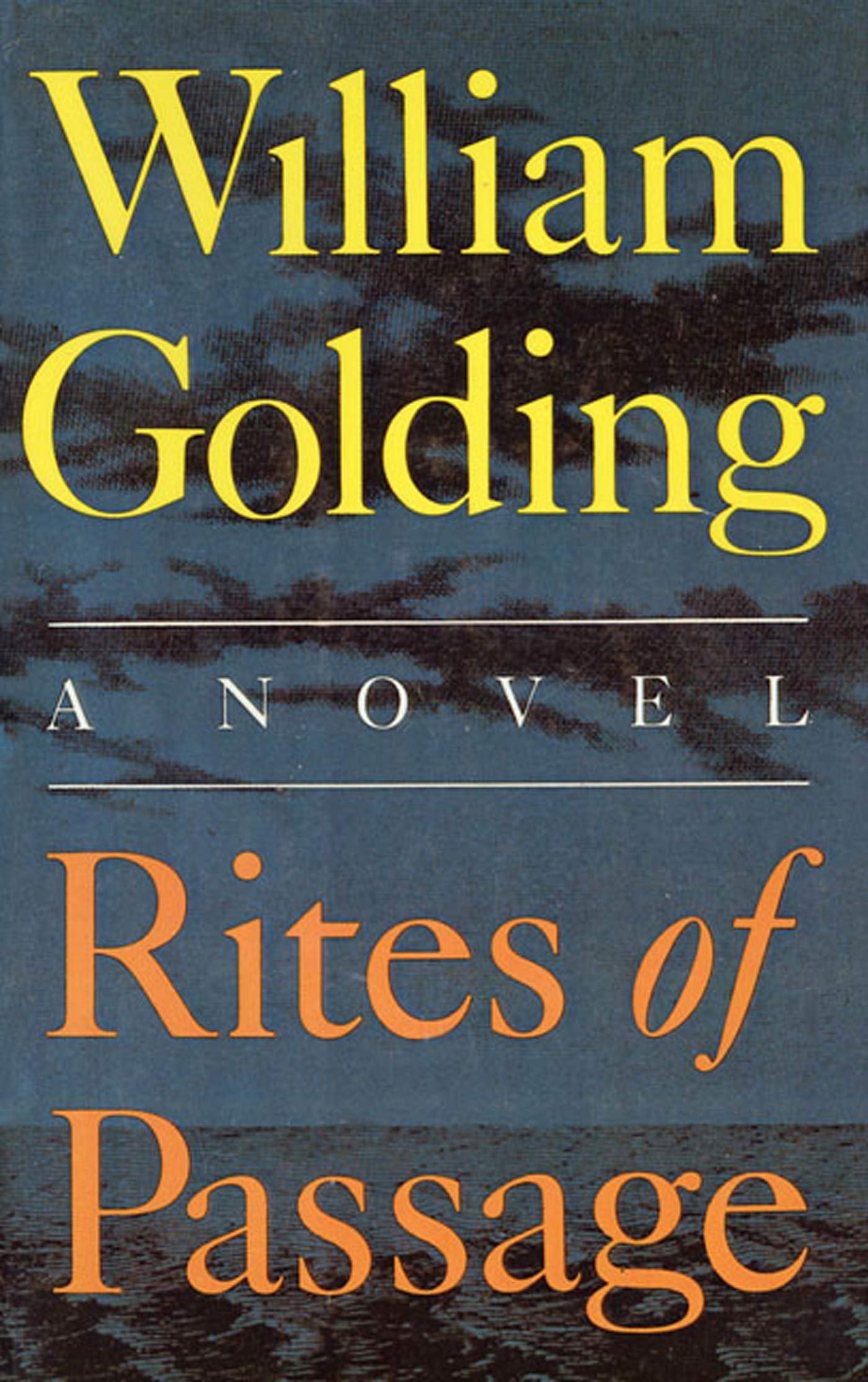
Rites of Passage: A Novel (To the Ends of the Earth, 1) [Golding, William] on desertcart.com. *FREE* shipping on qualifying offers. Rites of Passage: A Novel (To the Ends of the Earth, 1) Review: Great memory’s of my Navy days - Nice was a nice touch and the initiation over the equator was a great recall of some great memories “Shell Back” Review: A sea voyage to Australia and the development of Edmund Talbot's view of life. - William Golding, a Nobel laureate in literature, is a favored author of mine. I read Rites of Passage because it received the Booker Prize, and I am on a quest to read all of the Booker Prize winners. But, Rites of Passage is the first of a trilogy about this sea voyage -- the others are Close Quarters, and Fire Down Below -- and I will read the entire trilogy because of the depth of Golding's writing here. At first, a young man on his way to a government position in Australia begins a journal at the request of his benefactor -- who also gave him the journal. At first, the information comes regularly, and while entries tended to be mundane -- e.g., the smell of ballast on an older ship -- it was still interesting. When young Talbot begins to speak about the crew, and the passengers, with him on this trip, the reader is introduced to different social customs, different concepts of what society expects of a gentleman, and how the influence a lord had to get Talbot a position had absolutely no impact on a sea captain taking what may be his last voyage. It is the introduction and development of the characters, their issues, and Talbot's reactions to them that make the book easy to read and hard to put down. To be sure, there are passages that are quickly passed because they inform the reader of heat and windless skies that lead to little movement, but these are relatively short. A major event occurs when an aspiring minister, who does not possess the charisma to make his knowledge at all interesting to his companions or the crew, commits a social breakdown that raises difficult issues from the characters different viewpoints, and helps the reader see how the same event from these viewpoints is so starkly different. This exploration takes Rites of Passage from a book about a certain era and makes it a book relevant to the various issues we all face today. It is a good read. More to the point, it has inspired me to obtain Close Quarters and Fire Down Below so I can finish the trilogy and learn how every issue and every person survive this voyage.
| Best Sellers Rank | #1,261,280 in Books ( See Top 100 in Books ) #1,067 in Sea Stories #11,288 in Classic Literature & Fiction #35,507 in Literary Fiction (Books) |
| Book 1 of 3 | Sea Trilogy |
| Customer Reviews | 3.8 3.8 out of 5 stars (292) |
| Dimensions | 5.5 x 0.64 x 8.5 inches |
| Edition | First Edition |
| ISBN-10 | 0374526400 |
| ISBN-13 | 978-0374526405 |
| Item Weight | 14.4 ounces |
| Language | English |
| Print length | 288 pages |
| Publication date | October 1, 1999 |
| Publisher | Farrar, Straus and Giroux |
| Reading age | 8 - 12 years |
S**N
Great memory’s of my Navy days
Nice was a nice touch and the initiation over the equator was a great recall of some great memories “Shell Back”
T**R
A sea voyage to Australia and the development of Edmund Talbot's view of life.
William Golding, a Nobel laureate in literature, is a favored author of mine. I read Rites of Passage because it received the Booker Prize, and I am on a quest to read all of the Booker Prize winners. But, Rites of Passage is the first of a trilogy about this sea voyage -- the others are Close Quarters, and Fire Down Below -- and I will read the entire trilogy because of the depth of Golding's writing here. At first, a young man on his way to a government position in Australia begins a journal at the request of his benefactor -- who also gave him the journal. At first, the information comes regularly, and while entries tended to be mundane -- e.g., the smell of ballast on an older ship -- it was still interesting. When young Talbot begins to speak about the crew, and the passengers, with him on this trip, the reader is introduced to different social customs, different concepts of what society expects of a gentleman, and how the influence a lord had to get Talbot a position had absolutely no impact on a sea captain taking what may be his last voyage. It is the introduction and development of the characters, their issues, and Talbot's reactions to them that make the book easy to read and hard to put down. To be sure, there are passages that are quickly passed because they inform the reader of heat and windless skies that lead to little movement, but these are relatively short. A major event occurs when an aspiring minister, who does not possess the charisma to make his knowledge at all interesting to his companions or the crew, commits a social breakdown that raises difficult issues from the characters different viewpoints, and helps the reader see how the same event from these viewpoints is so starkly different. This exploration takes Rites of Passage from a book about a certain era and makes it a book relevant to the various issues we all face today. It is a good read. More to the point, it has inspired me to obtain Close Quarters and Fire Down Below so I can finish the trilogy and learn how every issue and every person survive this voyage.
K**0
Three stars
I'm up to 1980 in my quest to read all the Booker Prize winners in order. I would not have read this book otherwise, and finished it only because of my commitment to myself. I confess to so skimming. Set in the early days of the 19th century, this journal of a minor official on his way to Australia is mostly tedious posturing by a young man very pleased with himself. He writes of his superiority to the other passengers. One in particular is a Mr Colley, a clergyman. Only toward the end of the book do we find out that Mr Colley also kept a journal, and his account is very different from Mr Talbot's. Actually nothing much happens in the book, and I didn't care very much about any of the characters.
M**T
Excellent
The author, what can one say that hasn't already been said? I will read the trilogy, after having watched the on screen adaptation starring Cumberpatch.
J**T
A good book
A good book by the author of Lord Of The Flies
P**H
A reading group chore
Found it a heavy going novel with only a couple of bits of humour here and there. Thought having it set out as a journal quite an interesting tway of portraying the journey - paralleling a ships log but won' t be reading it a second time, and if it hadn't been my reading groups book this month, am pretty sure would not have bothered finishing it!
D**S
Classic novel...
A classic novel, but I mistakenly thought it was a nonfiction treatment! Maybe I'll read it someday just for enrichment.
B**O
A good read
I read this when it was originally published along with the other two in the series. It is a good read and maintains the reader's interest.
D**N
It was an amusing 'read', and I enjoyed it, though I doubt it would be everyone's "cup of tea". Who knows?
D**Y
I expected to enjoy an interesting novel in regard to Edmund's seagoing experiences, but found the book is overlong. Events are far too drawn out to hold one's interest.
S**S
I got the book having seen the movie based on the film of the trilogy but won't bother to get the other two as the writing is turgid and boring.
B**Y
This is a great read. The most entertaining of all Golding’s books, with actual jokes as well as all the profound insights into the difficulties we all have in knowing our true selves, that I am used to in his other works. With this in mind, maybe the hilarious, drunken artist, Brocklebank, is a kind of self portrait by Golding. He is a wonderful, Dickensian character, whose contrast to the others is stark, because he is entirely lacking in shame. It is all the key characters relationship with this emotion that give shape to the story. Shame at one’s social position and Shame at one’s sexuality, are the motivations that drive the story. With the unreliable narrator Edmund Talbot, ultimately learning shame at the very end.
C**N
The novel starts promisingly with a vivid description of the cramped conditions and pervading stink below decks in an early 19thC sailing ship. However, once the ship sets sail we hear far more about the interaction of the passengers and officers and very little about what it actually might have felt like to sail across the world at that time. Golding is concerned mostly with social issues of class distinction and protocol, and descriptions of sea, weather and ocean life come a distant second. The pace picks up a little when parson Colley's confessional letter takes over from Edmund Talbot's repetitive and narrow minded journal, but too much of the book is spent in the doldrums and too many characters have too little time to fix themselves in the memory.
Trustpilot
5 days ago
1 week ago