
DOWNLOAD THE APP


Customer Services
Copyright © 2025 Desertcart Holdings Limited
DOWNLOAD THE APP
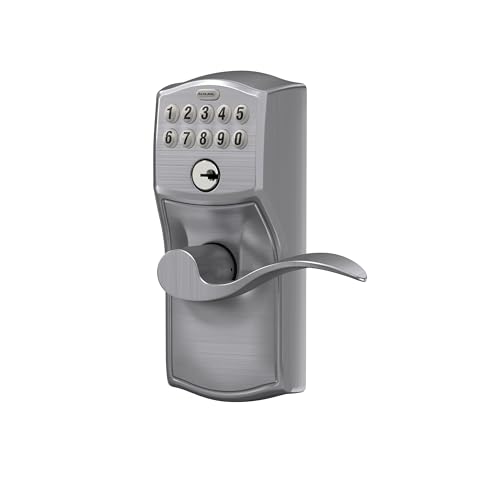
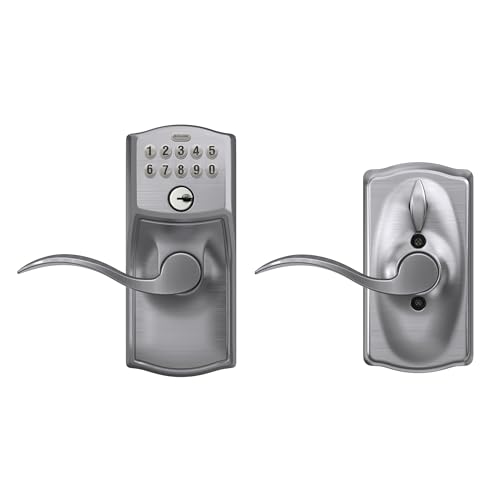
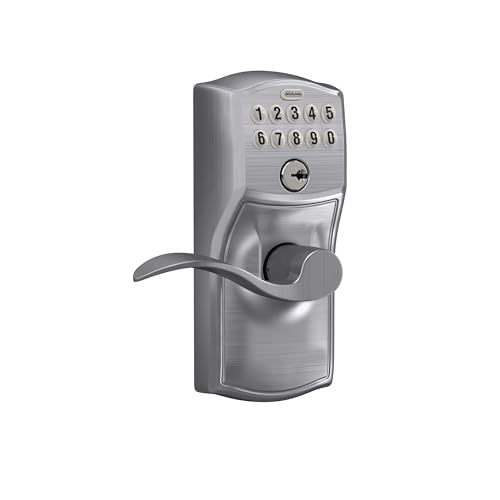




🔑 Unlock the future of home security with Schlage’s smart, stylish keypad lock!
The Schlage FE595 CAM 626 Camelot Keypad Entry combines advanced keyless technology with user-friendly features like a backlit keypad, Flex-Lock toggle, and easy code programming. Designed for standard doors and finished in brushed chrome, it offers a secure, stylish upgrade for front, back, or office doors—perfect for professionals who value convenience and modern security.


| ASIN | B001GPL5WU |
| Best Sellers Rank | #337,121 in Home Improvement ( See Top 100 in Home Improvement ) #32 in Door Levers |
| Brand | SCHLAGE |
| Colour | Chrome |
| Connectivity Protocol | Wi-Fi |
| Control Method | Touch |
| Controller Type | Keypad Control |
| Country of Origin | USA |
| Department | Schlage Electronic Security |
| Finish Type | Brushed Chrome/Chrome |
| Generic Name | Flex Lock, Electronic Keyless Entry |
| Global Trade Identification Number | 00043156896974 |
| Included Components | Key |
| Item Dimensions LxWxH | 7.6 x 7.6 x 17.3 Centimeters |
| Item Weight | 1 kg 910 g |
| Item dimensions L x W x H | 7.6 x 7.6 x 17.3 Centimeters |
| Item model number | FE595CAM626ACC |
| Lock Type | Keypad |
| Manufacturer | Schlage |
| Material | Metal |
| Model Name | Camelot Keypad Entry with Flex-Lock and Accent Lever |
| Net Quantity | 1.0 Count |
| Number of Pieces | 1 |
| Product Dimensions | 7.62 x 7.62 x 17.27 cm; 1.91 kg |
| Recommended Uses For Product | security |
| Shape | Rectangular |
| Special Feature | Keyless Features |
| Style | Camelot Trim |
| UPC | 043156896974 |
P**.
O produto está de acordo com a descrição.
C**B
No template attached to the booklet or in the pack and over an hour wasted trying to find one online and unable to get to the product support page (link goes nowhere). HUGE and expensive waste of time. Sending back for refund!
H**L
Todo muy bien, fue muy fácil de instalar siguiendo las indicaciones.
D**I
I have only had my Schlage FE-595 for a few weeks, but I am extremely happy with it so far. As explained in the review by Fred, it is very easy to install the lock – no harder than a standard mechanical lock. The only part that is a bit fussy is making sure that the wires are tucked into the plastic back plate so that they are not pinched when the interior potion is screwed on tightly. I did, however, have a frustrating, amusing and educational experience with this model. All the doors in our house use Schlage locks and deadbolts, which are all keyed alike. I initially ordered my lock from a major home improvement retailer, so that I could have it rekeyed to match. I went to the hardware department, and the two gentlemen working at the time looked at it and said they had never attempted to rekey one of these locks. They said they would leave it for Dale, who knew the most about locks. When I arrived later in the day I met up with Dale, who had not been asked to rekey anything. We spent about 15 minutes searching for the lock until he found it under the service desk. As it turned out, it had already been rekeyed, so I went home to install it. After I installed the lock in the door I discovered that the door would not lock at all. I took it off and reinstalled it, to no avail. Assuming that the gents who had rekeyed the lock had failed to reassemble it correctly, I returned to the store when Dale was working. He opened the lock and several components fell out. Although we both laughed about it, I had to return the lock and order a replacement. When the replacement arrived I once again met with Dale and watched him rekey it. Although he knew how to rekey the cylinder, it was clear he didn’t really understand how the mechanism worked. He tried not to disturb anything, although he was still forced to try to align certain parts that seemed liked they should be more secure. Installing the new lock at home, I discovered that this time I had a lock that was perpetually locked – neither the key or the programmed codes would unlock it. It also rattled when I shook it, which seemed like a sure sign it was improperly assembled. I thought this couldn’t possibly be rocket science and decided to completely disassemble and reassemble the lock. After 3 or 4 tries I still did not have a working lock and decided to give up. While cleaning up and getting ready for bed I noticed a small spring on the floor and shortly thereafter happened to read Mark Hornig’s review. Eureka – I now know what was missing and how to assemble to mechanism. Everything worked properly now, but the lock made more noise than I thought it should. I was certain that at least one component had become bent under Dale’s or my attempts to reassemble the unit. You will note that Mark Hornig’s locks had also been rekeyed, and I suspect that the folks who did his were only slightly smarter than those who worked on mine. I decided to order a third lock from Amazon. When it arrived, I disassembled the older lock to remove the cylinder. I then carefully disassembled the new lock without disturbing the mechanism and swapped out the cylinder. I reassembled the new lock and installed it; voilà – it worked flawlessly. I then returned the old lock to the home improvement chain. My conclusions are as follows: 1) The lock itself works well. 2) If you can use the key that comes with the lock, the installation is a piece of cake. 3) If you want it rekeyed, there is a high probability it will not be reassembled properly and will either not work at all or will fail in the near term when a component that was not properly installed works itself loose. As Schlage does not seem to provide instructions, this is what I have learned about how to replace the cylinder if you want to rekey the lock: 1) Carefully remove the four Torx screws while holding the lock so that front and back do not separate. 2) Place the lock so that the outside is facing up. As the spindle will protrude from the underside, you will need to either be working at a table or bench with a hole ,or holding the lock in your lap with the spindle between your legs. 3) Gently lift off the outside of the lock, making sure everything (including the buttons) remain seated on the underside portion. The cylinder is the only component attached to the outside of the lock. 4) A simple screw holds the cylinder in place, which can easily be removed to rekey the lock. 5) After the cylinder has been reinstalled, gently place the outside of the lock on the inner portion, being careful not to jostle any of the components. 6) Hold the two pieces tightly together until the Torx screws are fully tightened. Enjoy…
M**R
Great saves fumbling for a door key
Trustpilot
2 months ago
1 day ago