
Buy anything from 5,000+ international stores. One checkout price. No surprise fees. Join 2M+ shoppers on Desertcart.
Desertcart purchases this item on your behalf and handles shipping, customs, and support to Japan.
Review: One of the best books I ever read - This is an incredibly insightful and broad analysis of a medium that, beforehand, I didn't really care about or even take seriously... I'd say this is archetypal of one of the best experiences in life; when through another's eyes you come to appreciate something that you had previously dismissed as 'not for me'. I read this as a teenager and recently bought a copy for my 9-yr-old daughter who is super keen on both reading and making comics of her own (sorry, my apologies... "they're graphic novels dad!!"). It is advanced material for her age, but she finds it fascinating and eye-opening nonetheless. I suspect she will read it multiple times as she ages and evolves her art. Review: Great for teaching! - I purchased this item, along with McCloud's other book Making Comics, to teach a course on comics in English to art students at Cheongju University in South Korea. Both of these books really lend themselves to teaching, each one is divided into chapters which discuss specific comic concepts and elements. Two excellent chapters: The first chapter in Understanding Comics is great because it discusses the history of comics, and some great activities can be done having students think about and search for comics in the real world and instances of comics in history. This chapter really validates the fact that comics are interesting and useful, rather than just being treated as a 'fake' art or a 'not really real' subject. Chapter three is excellent because it breaks down transitions not only in American comics, but European and Asian comics as well, and explains his thoughts as to why these differences exist. This allows students to compare the differences and broaden their understanding of how different cultures think differently. This chapter also discusses how comics are subtractive, and lends itself to an excellent lesson whereupon students can draw comics with many pictures, then keep subtracting and combining pictures until they have the miminum number of pictures that tells the gist of their story. In other chapters: Chapter two discusses word choice and flow in comics, four discusses time, chapter five discusses displaying emotion by using different types of lines (and similarities and differences between comics from different cultures), chapter six discusses how words and ideas complement each other in comics, and chapter seven discusses six steps to making comics. In my opinion, each book is worth its weight in gold alone for a comic class, but they have a synergistic effect when used in tandem with each other. Concepts from one book flow into the other book, and vice-versa, giving the students in-depth knowledge of both how to make comics and how to understand comics from other authors better. All of the concepts from the chapters can be seen easily in comics online or from newspapers, and so each week I first do the lecture, then use a few examples on the overhead that I have found from other comics, then give the students homework pertaining to the concepts discussed. Through use of the two books, the students' work is really improving, and it is fun to see them working specifically with each comic element. Each of the concepts discussed in the chapters is a great starting point to get the students' creative juices flowing. I would recommend this book to any teacher or lecturer interested teaching comics at almost any level and to any audience.
| Best Sellers Rank | #8,757 in Books ( See Top 100 in Books ) #1 in Comics & Graphic Novel History & Prices #4 in How to Create Comics #12 in Educational & Nonfiction Graphic Novels |
| Customer Reviews | 4.8 out of 5 stars 3,063 Reviews |
I**D
One of the best books I ever read
This is an incredibly insightful and broad analysis of a medium that, beforehand, I didn't really care about or even take seriously... I'd say this is archetypal of one of the best experiences in life; when through another's eyes you come to appreciate something that you had previously dismissed as 'not for me'. I read this as a teenager and recently bought a copy for my 9-yr-old daughter who is super keen on both reading and making comics of her own (sorry, my apologies... "they're graphic novels dad!!"). It is advanced material for her age, but she finds it fascinating and eye-opening nonetheless. I suspect she will read it multiple times as she ages and evolves her art.
P**L
Great for teaching!
I purchased this item, along with McCloud's other book Making Comics, to teach a course on comics in English to art students at Cheongju University in South Korea. Both of these books really lend themselves to teaching, each one is divided into chapters which discuss specific comic concepts and elements. Two excellent chapters: The first chapter in Understanding Comics is great because it discusses the history of comics, and some great activities can be done having students think about and search for comics in the real world and instances of comics in history. This chapter really validates the fact that comics are interesting and useful, rather than just being treated as a 'fake' art or a 'not really real' subject. Chapter three is excellent because it breaks down transitions not only in American comics, but European and Asian comics as well, and explains his thoughts as to why these differences exist. This allows students to compare the differences and broaden their understanding of how different cultures think differently. This chapter also discusses how comics are subtractive, and lends itself to an excellent lesson whereupon students can draw comics with many pictures, then keep subtracting and combining pictures until they have the miminum number of pictures that tells the gist of their story. In other chapters: Chapter two discusses word choice and flow in comics, four discusses time, chapter five discusses displaying emotion by using different types of lines (and similarities and differences between comics from different cultures), chapter six discusses how words and ideas complement each other in comics, and chapter seven discusses six steps to making comics. In my opinion, each book is worth its weight in gold alone for a comic class, but they have a synergistic effect when used in tandem with each other. Concepts from one book flow into the other book, and vice-versa, giving the students in-depth knowledge of both how to make comics and how to understand comics from other authors better. All of the concepts from the chapters can be seen easily in comics online or from newspapers, and so each week I first do the lecture, then use a few examples on the overhead that I have found from other comics, then give the students homework pertaining to the concepts discussed. Through use of the two books, the students' work is really improving, and it is fun to see them working specifically with each comic element. Each of the concepts discussed in the chapters is a great starting point to get the students' creative juices flowing. I would recommend this book to any teacher or lecturer interested teaching comics at almost any level and to any audience.
O**S
Exactly what you look for... perhaps more?!
I really don't want to write a lengthy review about this book (Well...I tried), for there aren't as many things to complain as to clarify. This book is exactly what it promises. I'm not used to black-&-white comic art, but some pages into the book I forgot that totally; the conceptual diversity and exploitation of visuals for their representation hooked me right away. And, when you reflect on the ideas, their developments and conclusions that Scott McCloud keeps stating, you can easily imagine this as an academic essay or a formal conference: really solid thinking. There is, perhaps, a situation which didn't much disliked me as surprised me and changed my experience with this book (not for worse, but truly different). Let me just call it (for the fun of it) "Yea, it's goo...WHOA, TOO GOOD, TOO GOOD." Hehe. Or "Is it good? Mmm. It seems goo..WHAM![IN YO FACE] GOOD IDEED!" It's just the tone. I wasn't expecting a book this in-thought, conceptually rich/solid, rigorously studied... it just surprised me. I found myself laughing at some part in which he synthesizes, wonderfully in one or two comics' pages, concepts from McLuhan thoughts about media and thinking to myself "you... magnificent bastard!" (because it was something I was wishing without looking for it). Can you get the idea now? More than I was looking for, which makes it part of my permanent collection of valuable materials; but nobody warned me! Why did I got the impression that this book was lighter and softer than it actually is? It could be just me... right? I bought with the intent of reading it quickly, I ended up, at weekends, reading Chapter 2 & beginning of 3 (the most dense ones?) at a pace of two pages each 3 or 4 hours and going back to mentally rephrase and make better connections between concepts. That didn't felt bad, actually; that felt refreshing and a healthy challenge. I got used to that. So, sorry for making it this long; hope was worth it. Just remember, you, "nameless-ageless-neutral-gender potential" reader... adjust your expectations and prepare for the ride. (From slacking in the beach to motorcycling in Cornell? Heheh)
L**H
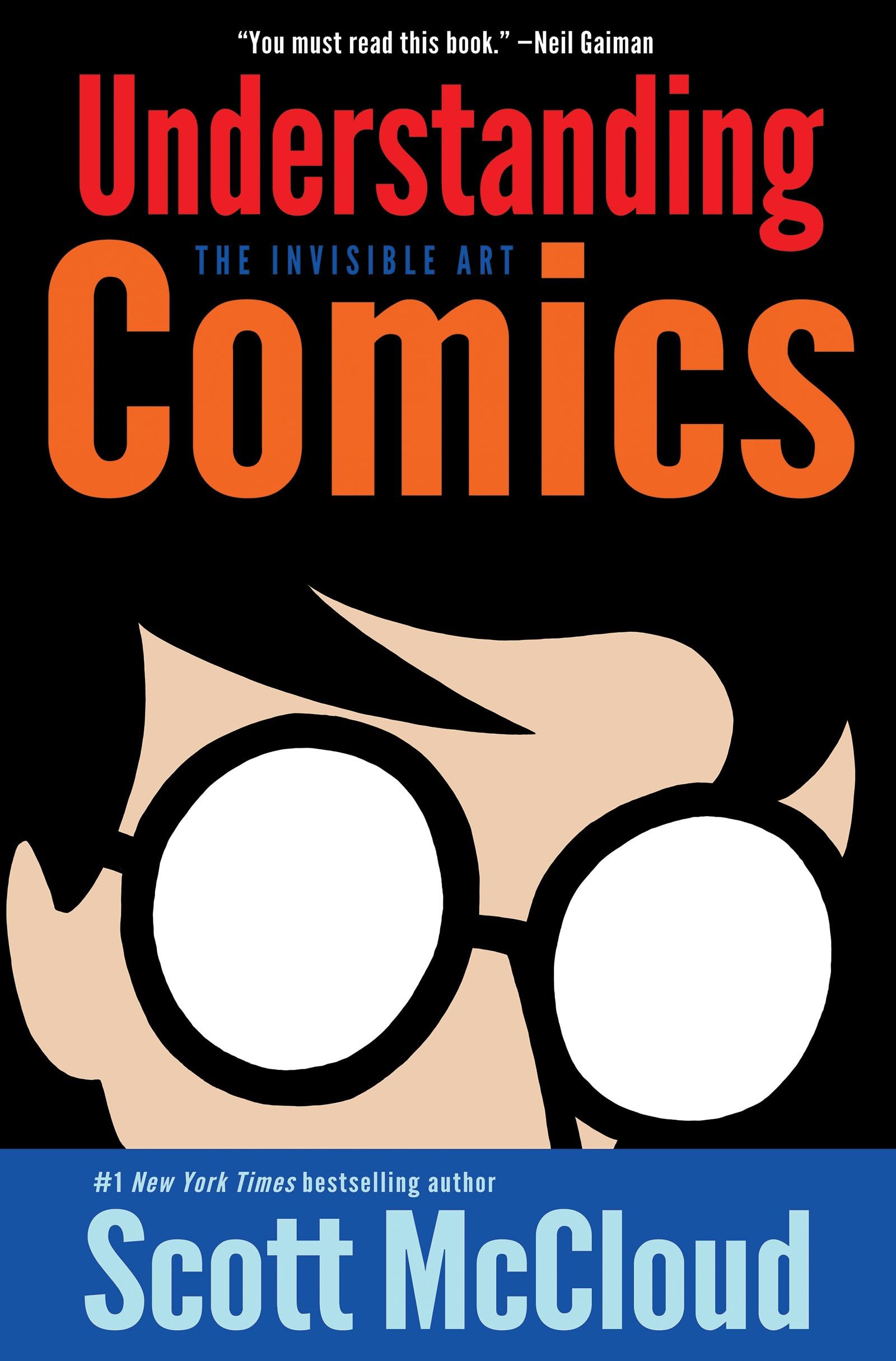
Quoting Neil Gaiman from the back cover "... you must read this book"
Scott McCloud is doing something phenomenal in this book. Not only providing a guide to the sequential imagery of story telling that is comics, he does do with a mastery of the craft. I did not grow up with comics being ubiquitous, there were no comic book stores where I lived (I'm not originally from the US, came here as an adult) - however I did like reading comic books in my childhood and youth. The medium always fascinated me. As and adult, now living in the US, access has become much easier, the range of what's available is staggering. This book can not only helped me understand the medium even better, it helped me create a deeper emotional bond with it. It also provides as a guide of sorts of prominent works, authors and artists that are worth checking out. It has been published in 1993, but the points made and the content still holds up. If you always thought comics was "just for kids", give this book a chance - it will not only change your mind - it will reveal the wonderful world you missed, and guide you through it. If you always liked comics, but wanted to learn about it's evolution and history - this book will be a joyous ride that you'll want to revisit multiple times in the future. If you wanted to understand what makes this medium different, what are it's strength, what are the struggles facing the world of comics (and it's industry) definitely read this. I can't think of anyone who will not find this book fascinating. When you're done, I highly recommend his next book, from 2000, Reinventing Comics.
S**D
Outdated, but still gold.
This is a great book, and it looks into the techniques used by a number of comic creators. It gives a fairly general overview, and one of the best things is the entire thing is in comic format, so the techniques he describes are illustrated as well. The only problem I had with the book is that my college instructor used it as a textbook, and it is *not* set up for memory retention or to draw attention to key concepts. Every page is almost filled with ink, and only 1 chapter uses any color at all. Thus, it is a great read and I recommend it to anyone interested in the genre, but definitely suggest something else for teaching purposes. Oh, and this should be obvious, but it's a bit outdated. McCloud has written a more recent book on the subject, but I have not read it yet.
D**A
A lot of good content
It really makes you appreciate comics and give them the respect they deserve. McCloud is funny and a good teacher.
G**E
A Must-Read For Comic Fans
I didn't really start getting serious with comics until I was in college, oddly enough. This work would be my first foray into the comic art, and it was a great one at that. McCloud's Understanding Comics offers something for both the novice and veteran of comics, giving the layout, history, and nuances of it to the former and revealing new insights to the latter. The thing that really strikes me about this work is that it is clearly a product of McCloud's experience with comics. He offers some really good points about why comics work, why they are popular, and what they say about us humans. With the writing style Scott employs, there is a healthy dose of comedy and knowledge, and he easily strings along the reader throughout the comic. We become familiar with some of the deepest mechanics at play in comics and the different regional variations. In truth, the fact that the book itself is written in comic form is partly why it is so effective. The reader learns about the medium while getting used to reading it in its natural format. The insight McCloud gives about art in particular is something that really stuck with me. His interpretation was something new for me, and, upon further reflection, highlights why this comic is so enjoyable. It is polished, well-founded, fun, and a true learning experience that will stay with you long after you have finished reading it. A must have for any person who enjoys comics, graphic novels, etc.
D**Y
Absolutely a must read
I happened across this book in the library, and was _that_ close to putting it back on the shelf. I was looking for art books to teach sketch drawing. I went back to the shelf for a second look, then couldn't put it down. The comic book method of combining words and pictures to convey a message was amazingly effective in this book. It's a book about how to understand comic books, and it is itself a comic book. What opened my eyes was just how powerful a medium it is. The medium hasn't even remotely been explored completely. It's wide open. This book is itself an amazing poster child for the art itself. McCloud's artwork is beautiful, and absolutely effective in every line. His range of capabilities is astounding. It's a pleasure experiencing this book. When my kids get older, I want them to read it and I hope they'll get excited about drawing. Anyway if you're interested in creating comic books of your own, or are interested in learning about comic books themselves, this book is a must read. It is certainly McCloud's best work. The drawings are clearly drawn by hand with pen and paper. McCloud's later work is clearly done on computer, and something precious is lost in the translation. I'm sure the computer saves a great deal of time, but the end result is...just not the same. This book spoke to me in a very profound way. Get a copy for yourself.
Trustpilot
1 month ago
2 weeks ago