
DOWNLOAD THE APP


Customer Services
Copyright © 2025 Desertcart Holdings Limited
DOWNLOAD THE APP
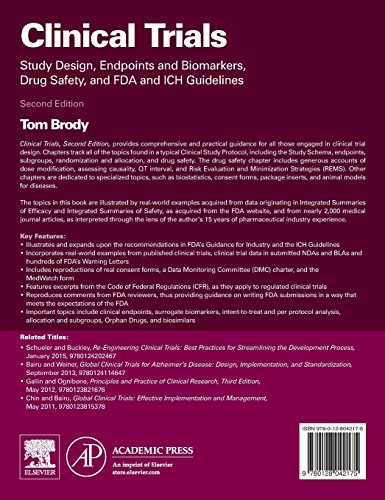
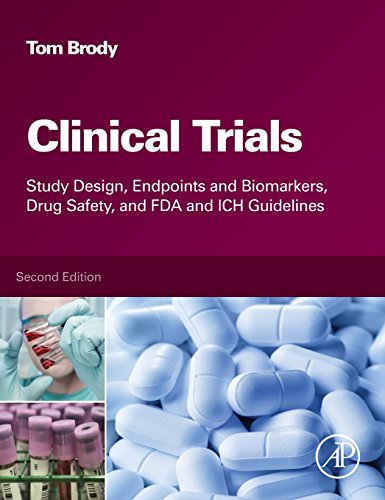


Clinical Trials: Study Design, Endpoints and Biomarkers, Drug Safety, and FDA and ICH Guidelines [Brody PhD, Tom] on desertcart.com. *FREE* shipping on qualifying offers. Clinical Trials: Study Design, Endpoints and Biomarkers, Drug Safety, and FDA and ICH Guidelines Review: Great Reference for Those Working in Industry - I would strongly recommend this book for those beginning a career in the pharmaceutical industry or for those already working in industry for use as a reference. It is especially useful in the oncology therapeutic area and for its explanations of frequently-used statistical analyses. It is thorough, broad in scope, and well-referenced. After more than 20 years of working in industry, I find it relevant and extremely useful. It would be a wonderful text book for a graduate-level introduction to clinical research in industry. I'm very glad to have invested in this addition to my reference library! Review: DRY READ - This has good information, but its so hard to get through because the reading is so dry!
| ASIN | 0128042176 |
| Best Sellers Rank | #1,099,481 in Books ( See Top 100 in Books ) #53 in Clinical Pharmacology #307 in Pathology Clinical Chemistry (Books) #386 in Medical Research (Books) |
| Customer Reviews | 4.1 4.1 out of 5 stars (30) |
| Dimensions | 7.75 x 2 x 9.75 inches |
| Edition | 2nd |
| ISBN-10 | 9780128042175 |
| ISBN-13 | 978-0128042175 |
| Item Weight | 4.4 pounds |
| Language | English |
| Print length | 896 pages |
| Publication date | March 26, 2016 |
| Publisher | Academic Press |
S**R
Great Reference for Those Working in Industry
I would strongly recommend this book for those beginning a career in the pharmaceutical industry or for those already working in industry for use as a reference. It is especially useful in the oncology therapeutic area and for its explanations of frequently-used statistical analyses. It is thorough, broad in scope, and well-referenced. After more than 20 years of working in industry, I find it relevant and extremely useful. It would be a wonderful text book for a graduate-level introduction to clinical research in industry. I'm very glad to have invested in this addition to my reference library!
V**G
DRY READ
This has good information, but its so hard to get through because the reading is so dry!
A**R
Five Stars
Clear, well-structured,up-to-date
C**L
An essential reference book for all clinical researchers and pharmacological scientists
I have recently evaluated this comprehensive guidebook, which describes all aspects of design, conduct, and interpretation of clinical research studies, and am highly impressed with both its scope and detail. Each chapter focuses on a different topic, all germane to the development of pharmaceuticals, and very useful to have collected together in one resource. The introductory material sets the stage, including helpful background on the structures of various types of drugs, the design and interpretation of animal models, and discussions of biosimilars and orphan drugs. The following two chapters detail the actual design of clinical trials, including extremely detailed advice for development of the overall study schema, the writing of the Clinical Trial Protocol, the determination of appropriate control groups, and the development of the important "run-in" period prior to treatment. Chapters 4 through 8 cover the critical trial design topics of inclusion/exclusion criteria, blinding, use of placebo groups, and the determination of "intent to treat" versus "per protocol" analysis. A further two chapters (8 and 9) also regard data analyses, with a fascinating -- and easy to understand -- discussion of biostatistics for the interpretation of trial results. Kaplan-Meier plots and One- or Two-tailed T-tests, for example, are not only explained in detail, but results from actual drug development trials are provided and placed in context. As the choice of endpoints for a clinical trial are critical for obtaining useful information regarding the actual activity of a possible therapeutic compound, Chapters 11 to 24 completely cover this topic, ranging from oncology, to immune and infectious diseases, and even "quality of life" studies. The ensuing chapters include other diverse and important topics for the pharmacological investigator: drug safety and mechanism of action, with separate detailed chapters for cancers, immune disorders, and infectious diseases. As clinical trials cannot be run without patient understanding and agreement, "consent forms" are covered in Chapter 30. Information regarding requirements for information provided in a package insert is given in Chapter 31. Chapter 32 provides detailed descriptions of the various types of FDA warning letters and their consequences; for example the significance of Institutional Review Boards (IRBs) and Data Monitoring Committees (DMCs). The approval, or non-approval, of a drug is considered in Chapter 34, including the types of approval which can be sought. The final chapter is a fascinating discussion of the topic of drug patenting. In all, I find this reference book to be an exhaustive and essential tool for anyone learning about clinical trials, designing or conducting clinical trials, or involved in any aspect of therapeutic development. An additional positive point about this book is that the reference citations are provided at the bottom of each page, for ease of referral.
A**R
book is broken
T**Y
"Search-by-word" function of this book works instantly with the pdf file. Search-by-word function also works w INDEX and TOC
CLINICAL TRIALS: Study Design, Endpoints, and Biomarkers has various "search-by-word" functions, and they all work perfectly. These search-by-word functions include the following: (1) If you own the pdf file version of this book, you can easily search the pdf file. This type of search will search the text, figure legends, and footnotes. (2) If you own the hardcover version of this book, you can perform your "search-by-word" by using the Index at the end of the book.. (3) As an alternative to performing your "search-by-word" function with the Index, you can use the less inclusive method by using the Table of Contents. The Table of Contents (TOC) is located near the front of the book. (4) Finally, you can conduct a "search-by-word" routine by using the good old fashioned method of turning the pages, one by one, and scanning each page rapidly with your eyes, until you arrive at the desired word or desired topic, and where the word occurs in a section heading or in the text. TEST RESULTS FOR "SEARCH BY WORD" FUNCTION USING pdf FILE. Of possible interest to readers, are the results from a search-by-word that I just conducted. I did three searches on my pdf file. The word CATHETER occurs on pages 184, 489, 540, and 828. The word SYRINGE occurs on pages 62 and 709. The word INFUSION occurs on pages 21, 51, 146, 148, 190, 206, and many other pages. The word PACLITAXEL occurs on pages 1, 5, 39, 40, 41, 45, 46, 71, 93, 96, 98, 178 and on many other pages. See, it works!!!
L**E
Very disappointed.
This book does not have a search-by-word function. Storedid not honor my return request.
F**S
The book written by Tom Brody focuses exclusively on regulatory aspects of clinical trials and provide an incomplete picture of the difficulties and challenges of conducting such trials even from the pharmaceutical industry perspective. From a regulatory perspective, you could argue that this book provides an incomplete perspective of the clinical development of new medicines since, for example, it does not address issues related to HTA appraisals. However, my main concern with this book is the absence of discussion relating to important aspects of clinical trial (design, conduct and analysis). In particular, the part of the book dedicated to endpoints focuses on endpoints used in trials conducted in oncology. The measure of the quality of life only deals with QoL scales used in oncology trials and misses the choice of generic scales (EQ-5D, SF-36, etc.). The book is completely missing the issues surrounding surrogate endpoints (choice, validation). The choice of the comparator focuses on placebo controlled studies. Finally, the book falls short of providing any relevant discussion on the primary hypothesis (superiority, equivalence and non-inferiority), the choice of the margins and the consequences in terms of design etc. On the same subject, I would strongly recommend other textbooks which are much better at addressing key issues associated with clinical trials design: S Senn - statistical issues in drug development, John Wiley and sons & S Piandatosi - Clinical trials a methodological perspective, Wiley intersciences (next edition to be published very soon). Otherwise, spending some time to retrieve the relevant regulatory (FDA, ICH and EMA) and health technology assessment guidelines will probably be more useful and much less expensive than buying this book.
M**.
E' un libro molto utile, perchè fornisce moltissime informazioni sui Clinical Trials e la loro realizzazione. Da leggere però non è proprio agevolissimo. Più di 800 pagine, molte delle quali assai concentrate.
Trustpilot
2 months ago
2 weeks ago