The Incredible History of the Indian Ocean
Product ID: 234014889
Desertcart purchases this item on your behalf and handles shipping, customs, and support to Japan.
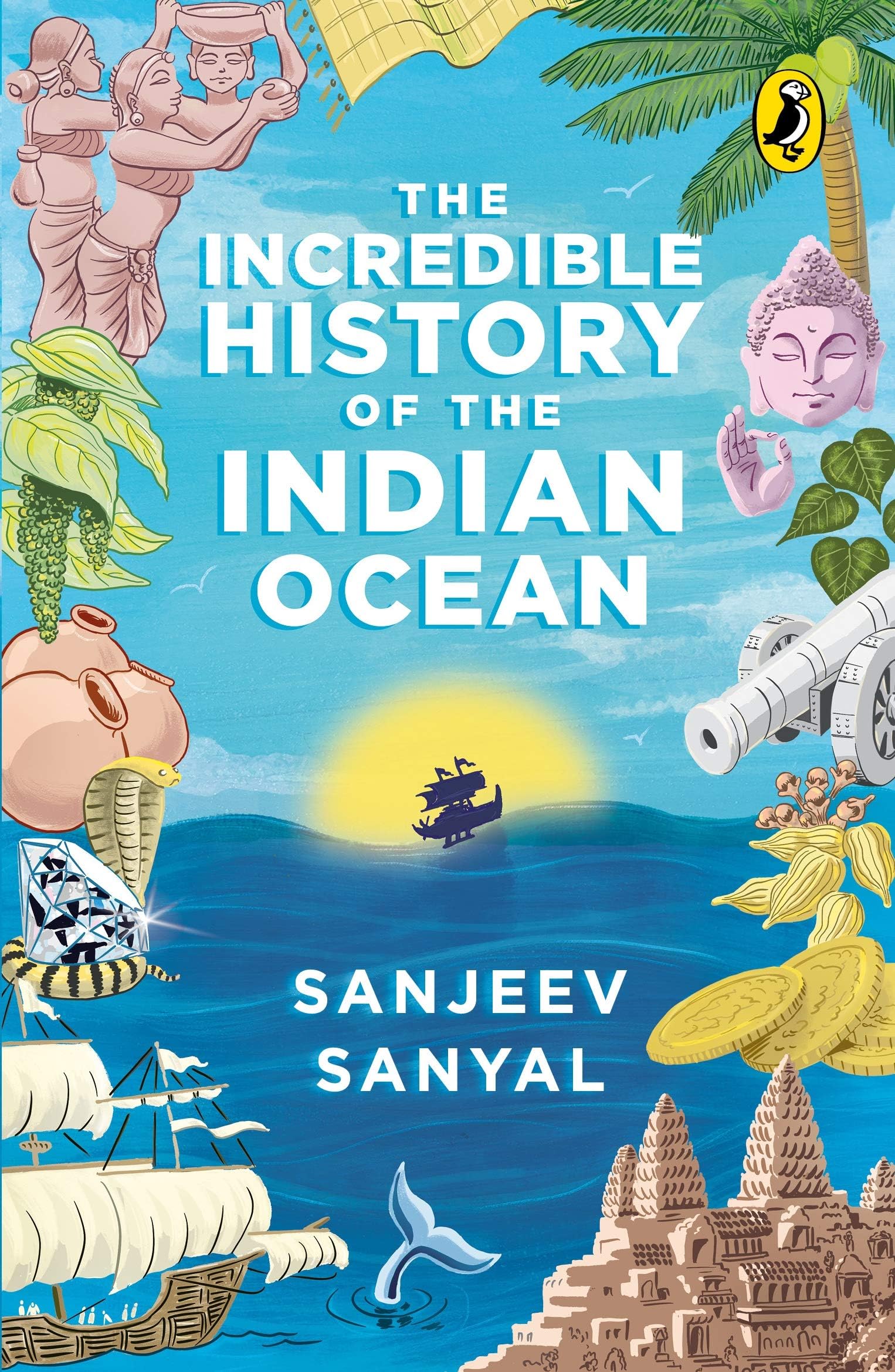
An adaptation of The Ocean of Churn for young readers When did the first humans arrive in India and how did they get here? What are Roman artefacts from hundreds of years ago doing in a town near Puducherry? How did merchants from Arabia end up near Kochi? From the east coast of Africa to Australia, one big blue body of water has connected diverse peoples and cultures for thousands of years: the incredible Indian Ocean. Read on to learn about the fearless travellers and sailors, pirates and conquerors who set out to cross the ocean in search of gold and glory, and discover how geography can shape the course of history. Review: Nice Book - I was very excited to read it and writing style of sanjev sanyal is quite good ,easy to understand.I think everyone must read this book . Review: Must read for students - Historical facts are nicely explained in brief. Out of academic interest, I am gathering more detailed information on many of the topics covered in book. Will read again.


| Best Sellers Rank | #9,315 in Books ( See Top 100 in Books ) #3 in Maritime History & Piracy #6 in Transportation & Automotive (Books) #12 in History Reference Material for Young Adults |
| Customer Reviews | 4.6 out of 5 stars 573 Reviews |
V**A
Nice Book
I was very excited to read it and writing style of sanjev sanyal is quite good ,easy to understand.I think everyone must read this book .
K**R
Must read for students
Historical facts are nicely explained in brief. Out of academic interest, I am gathering more detailed information on many of the topics covered in book. Will read again.
B**A
Unique exposition of an important but lesser known facets of Indian History
This book is highly readable and interesting. It highlights how history of India was not only shaped by the land but also ocean. The remarkable maritime history of India has been presented in a way which will not only be of interest to serious readers but also lay persons and children.
P**M
Good 👍
Good 👍
P**I
Informative
Excellent to read
A**R
Must read for all kids
History books in schools should stop focussing on dates and chronology of events and start teaching history like this. My kid developed a lot of interest in history after reading this book.
D**A
I enjoyed reading the book.
The book is very well written. It helped me to update my knowledge of history. My 10 year old daughters are also enjoying reading sections of the book. and we like to discuss it. Planning to buy the second book by Sanjeev Sanyal.
C**V
History through story
The book is Superbly written in very simple language, without any complicated explanation. Any layman can comprehensively understand the history of the areas around Indian Ocean.
S**A
Book that covers lot of history unknown to mainstream
I just loved this book. It covers many aspects of history that was unknown to me before reading this book. I mean who knew how Sri Lankans are linked to people in Odisha? It covers many such aspects based on recent excavations and finding and is fascinating to read.
B**.
Good introductory history of Indian Ocean area: India, Southeast Asia, east Africa, southern Arabia.
It’s a very good introductory and summary history of the area around the Indian Ocean. It starts with a discussion of the two waves of human migrations from Africa around 30,000 and 60,000 years ago that eventually resulted in the modern populations of southern Asia and Southeast Asia. It then provides histories of the peoples, kingdoms, and empires that comprise modern-day India, Sri Lanka, Malaya - Singapore, Sumatra, Java, and the coasts of East Africa, southern Arabia, and the Persian Gulf. The author cites DNA testing to establish the relationships of the peoples in the Indian Ocean area and the estimated times of migrations. The book especially discusses the historic trade routes that evolved among these areas, starting as long ago as 2000 BCE. Roman coins and wares have been found in India and China; Chinese porcelain and Indian products have been found in the Roman - dominated areas of the Mediterranean and in ancient Egypt. Diamonds were only mined in the Deccan Plateau in India until the 19th century when they were found in South Africa and Brazil. I think the book is intended for a high school audience. The line printing is 1 - 1/2 spaced; the nominal 300 pages book would be around 200 pages with standard printing. I didn’t find that to be an issue; I still found the book to be informative.
Trustpilot
1 month ago
1 month ago