Desertcart purchases this item on your behalf and handles shipping, customs, and support to Japan.
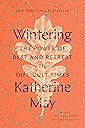
THE RUNAWAY NEW YORK TIMES BESTSELLER โKatherine May opens up exactly what I and so many need to hear but haven't known how to name.โ โKrista Tippett, On Being โEvery bit as beautiful and healing as the season itself. . . . This is truly a beautiful book.โ โElizabeth Gilbert "Proves that there is grace in letting go, stepping back and giving yourself time to repair in the dark...May is a clear-eyed observer and her language is steady, honest and accurateโcapturing the sense, the beauty and the latent power of our resting landscapes." โWall Street Journal From the author of the New York Times bestseller Enchantment and the forthcoming Tending: How Care Binds the World , this is an intimate, revelatory exploration of the ways we can care for and repair ourselves when life knocks us down. Sometimes you slip through the cracks: unforeseen circumstances like an abrupt illness, the death of a loved one, a break up, or a job loss can derail a life. These periods of dislocation can be lonely and unexpected. For May, her husband fell ill, her son stopped attending school, and her own medical issues led her to leave a demanding job. Wintering explores how she not only endured this painful time, but embraced the singular opportunities it offered. A moving personal narrative shot through with lessons from literature, mythology, and the natural world, May's story offers instruction on the transformative power of rest and retreat. Illumination emerges from many sources: solstice celebrations and dormice hibernation, C.S. Lewis and Sylvia Plath, swimming in icy waters and sailing arctic seas. Ultimately Wintering invites us to change how we relate to our own fallow times. May models an active acceptance of sadness and finds nourishment in deep retreat, joy in the hushed beauty of winter, and encouragement in understanding life as cyclical, not linear. A secular mystic, May forms a guiding philosophy for transforming the hardships that arise before the ushering in of a new season. Review: Beautifully written, narrative nonfiction. - What do you think of when you think of winter? Is it a stressful imagining or a peaceful one? Cozy? Uncomfortable? Necessary? With the inevitable approach of colder months, many of our memories or associations with the season - good or bad - are bound to be emphasized by the ongoing COVID pandemic. Author Katherine May invites us to embrace this winter with all that it has to offer. And May doesn't just mean the season, but rather the "fallow period in life when you're cut off from the world, feeling rejected, sidelined, blocked from progress, or cast into the role of the outsider." Sounds fairly familiar at the moment, right? We're struggling for community in ways that many of this generation could never have anticipated. In 'Wintering', May gives us a playbook and philosophy to handle our own personal winters. Beautifully written, May was inspired to share her experiences from her own periods of winter and what she has learned from the radical act of real self-care (i.g. getting enough sleep, being restful, and generally slowing down our routines to combat the workaholic culture). May fearlessly combats the wave of toxic positivity - a newly morphed Instagramable version of bootstrap mentality - that has taken over many of the books that attempt to discuss our reactions to stress. What one can instead expect from 'Wintering' is a guide that is more akin to sharing a coffee with a friend than reading a self-help book. 'Wintering' is difficult to place into any one genre. It is the type of British narrative nonfiction I love and is reminiscent in tone and style to the introspection found in Helen Macdonald's H is for Hawk. Like Macdonald, May reminds us that opting out of misery isn't an option. Instead we must embrace it and learn from it. May doesn't just look at weathering personal winters, she turns her pen to the anthropological and the historical as she examines how other cultures and creatures prepare for winter. May seeks out the peace and solace found in nature's winter. Observing everything from the hibernating nests of dormice, wolf dens, and the survival tactics of bees, to the practice of ice swimming, the wonder of the northern lights, and the frigid cold of the Arctic Circle and how those who choose to live there embrace winter. Casting her net wide a little closer to home, May writes about different spiritual practices that welcome winter; such as attending the winter equinox celebration at Stonehenge, discussing the rituals of winter with her Finnish friends, and evaluating the experiences of those who are battling with Seasonal Affective Disorder. May even includes the literary aspect of wintering by weighing the importance of snow in fairy tales, meditating on John Donne's poem "A Nocturnal upon St. Lucy's Day" and Sylvia Plath's "Wintering". May concludes that to welcome winter is to survive it. It is a hopeful and philosophical approach that I found deeply comforting. In a lovely bit of writing, May reveals that in times of distress she likes to travel north. That the cold air feels clean and uncluttered and that she can think straight. I adhere to May's belief that the cold has healing properties. As she writes, "you apply ice to a joint after an awkward fall. Why not do the same to life?" There will always be winters. There will always be periods of sadness and solitude. Therefore, we must prepare for them as best we can. What does this look like in practice? Baking? Soup making? Reading my candlelight in cozy socks? Yes and no. Those things certainly aren't going to hurt your mentality when dealing with winters. However, it is more about recognizing when you need to coil into yourself. Protect yourself. Sleep. Slow down. Grow. Anticipate spring. Feel the turning of the year with gratitude. I was initially drawn to pick up 'Wintering' because winter is my favorite season. Reading May's book was like finally being clued in to the operating tenets of a fan club. May and I speak the same language in our love of winter. She eloquently expresses her appreciation of the season on every page. The solitude of the cold dark. The cleansing power of breathing in the scent of snow. The ritual of lighting a home fire or candles in the long evenings. Of hygge. She is also realistic, blunt, and deeply practical, clearly defining band-aids for confronting winter and actual solutions. If, as you have grown, find that you are sinking into workaholic tendencies, that the highlights of the year (like holidays) pass with little joy and too much stress, if you missing feeling the different seasons and instead seem surprised upon their arrival - this book is for you. If you enjoy cultural studies and nonlinear narrative histories - this book is for you. If you like observant and engaging authors who are honest and not prone to navel-gazing - this book is for you. If you enjoy guided meditations - this book is for you. I would recommend this book to just about everyone. Based on the variety of topics within, the likability of the author, and the intriguing chapter layout, 'Wintering' makes for an engaging read that I already want to reread and buy more copies to giveaway. Review: A great read! - I dislike winter and this book was very lovely!


| Best Sellers Rank | #2,296 in Books ( See Top 100 in Books ) #58 in Memoirs (Books) #59 in Personal Transformation Self-Help #71 in Motivational Self-Help (Books) |
| Customer Reviews | 4.4 out of 5 stars 10,168 Reviews |
D**N
Beautifully written, narrative nonfiction.
What do you think of when you think of winter? Is it a stressful imagining or a peaceful one? Cozy? Uncomfortable? Necessary? With the inevitable approach of colder months, many of our memories or associations with the season - good or bad - are bound to be emphasized by the ongoing COVID pandemic. Author Katherine May invites us to embrace this winter with all that it has to offer. And May doesn't just mean the season, but rather the "fallow period in life when you're cut off from the world, feeling rejected, sidelined, blocked from progress, or cast into the role of the outsider." Sounds fairly familiar at the moment, right? We're struggling for community in ways that many of this generation could never have anticipated. In 'Wintering', May gives us a playbook and philosophy to handle our own personal winters. Beautifully written, May was inspired to share her experiences from her own periods of winter and what she has learned from the radical act of real self-care (i.g. getting enough sleep, being restful, and generally slowing down our routines to combat the workaholic culture). May fearlessly combats the wave of toxic positivity - a newly morphed Instagramable version of bootstrap mentality - that has taken over many of the books that attempt to discuss our reactions to stress. What one can instead expect from 'Wintering' is a guide that is more akin to sharing a coffee with a friend than reading a self-help book. 'Wintering' is difficult to place into any one genre. It is the type of British narrative nonfiction I love and is reminiscent in tone and style to the introspection found in Helen Macdonald's H is for Hawk. Like Macdonald, May reminds us that opting out of misery isn't an option. Instead we must embrace it and learn from it. May doesn't just look at weathering personal winters, she turns her pen to the anthropological and the historical as she examines how other cultures and creatures prepare for winter. May seeks out the peace and solace found in nature's winter. Observing everything from the hibernating nests of dormice, wolf dens, and the survival tactics of bees, to the practice of ice swimming, the wonder of the northern lights, and the frigid cold of the Arctic Circle and how those who choose to live there embrace winter. Casting her net wide a little closer to home, May writes about different spiritual practices that welcome winter; such as attending the winter equinox celebration at Stonehenge, discussing the rituals of winter with her Finnish friends, and evaluating the experiences of those who are battling with Seasonal Affective Disorder. May even includes the literary aspect of wintering by weighing the importance of snow in fairy tales, meditating on John Donne's poem "A Nocturnal upon St. Lucy's Day" and Sylvia Plath's "Wintering". May concludes that to welcome winter is to survive it. It is a hopeful and philosophical approach that I found deeply comforting. In a lovely bit of writing, May reveals that in times of distress she likes to travel north. That the cold air feels clean and uncluttered and that she can think straight. I adhere to May's belief that the cold has healing properties. As she writes, "you apply ice to a joint after an awkward fall. Why not do the same to life?" There will always be winters. There will always be periods of sadness and solitude. Therefore, we must prepare for them as best we can. What does this look like in practice? Baking? Soup making? Reading my candlelight in cozy socks? Yes and no. Those things certainly aren't going to hurt your mentality when dealing with winters. However, it is more about recognizing when you need to coil into yourself. Protect yourself. Sleep. Slow down. Grow. Anticipate spring. Feel the turning of the year with gratitude. I was initially drawn to pick up 'Wintering' because winter is my favorite season. Reading May's book was like finally being clued in to the operating tenets of a fan club. May and I speak the same language in our love of winter. She eloquently expresses her appreciation of the season on every page. The solitude of the cold dark. The cleansing power of breathing in the scent of snow. The ritual of lighting a home fire or candles in the long evenings. Of hygge. She is also realistic, blunt, and deeply practical, clearly defining band-aids for confronting winter and actual solutions. If, as you have grown, find that you are sinking into workaholic tendencies, that the highlights of the year (like holidays) pass with little joy and too much stress, if you missing feeling the different seasons and instead seem surprised upon their arrival - this book is for you. If you enjoy cultural studies and nonlinear narrative histories - this book is for you. If you like observant and engaging authors who are honest and not prone to navel-gazing - this book is for you. If you enjoy guided meditations - this book is for you. I would recommend this book to just about everyone. Based on the variety of topics within, the likability of the author, and the intriguing chapter layout, 'Wintering' makes for an engaging read that I already want to reread and buy more copies to giveaway.
H**R
A great read!
I dislike winter and this book was very lovely!
R**M
Beautiful, Beautifully Written and Helpful
Beautiful, beautifully written, deep, vulnerable and warm. We often admit to our closest friends that we or someone we love are going through a โrough patchโ. In Tibetan Buddhism, we speak of the bardo, this space of emptiness, where life has stripped us of our identities; divorce, death, job loss, major life events that we may not have necessarily wanted. In this space in-between who we are and who we will be, itโs easy to feel impossibly untethered, unbalanced, lost, sadโฆafraid. Finding myself in the bardo, I wished I could share with a knowing friend, or go for a walk and be near someone kind, maybe just to hold someoneโs hand for a moment. This book is that walk, that friend and maybe a nod from the universe that lets you know that itโs not your imagination, it is incredibly dark and uncomfortable- and this book shows us a way, how to live through it. Well done, Katherine May, and thank you.
P**T
Looking forward to reading the entire book
I have only just started this, but so far it is very interesting. I love the term "wintering". Seems like a good word to describe certain seasons of many things.
D**D
Save ur money
I shouldโve read the reviews before I bought the book. I also felt it was quite boring and a little too much weird detail about things such as Stonehedge and other topics. Someone on YouTube recommended it and it sounded like it was more of a book to gather wisdom about life. It truly was boring.
C**S
Coziness in a Book
Wow! Though the stories are not overly compelling the language is so smooth that the words simply fly right off the page. Itโs so easy to read. There is a very slight barrier between the authorโs British vernacular and an American reader but itโs just a mild stumble every now and again. Occasionally the story meanders off course a little, especially toward the end, but it recovers leaving the reader feeling all warm inside. The author is amazing in relating her personal struggles and reflections to others. She does it so well that you feel like youโve experienced them right there with her. This book is charming, cozy, and thought-provoking.
L**E
Pearls of wisdom
Chock full of pearls that I highlighted and want to carry me everywhere. I've referred to them when leading by meditation, or when speaking to patients. Winter is as much a season of life as it is a season of the earth. Both are necessary withdrawals from the constant demand to grow! Flourish! Do! Smile! (Don't the sunflowers even get tired of it all?)! Rather, Wintering is a season where life demands a slowing down, a deep introspection, of growing roots- one day those roots will rise, but today we rest.
L**N
a thoughtful read and reminder
I found this book interesting and enjoyed learning about different aspects of wintering. The core message resonated with me as a reminder to be kind to myself
A**E
A cosy reading about getting over hard times
A wonderful book about getting over the hard times. Cosy reading.
A**S
Too hyped up
I bought this book to be more in tune with the vibes of winter, to allow myself to winter. And I read so many good reviews. I was expecting practical tips and how-to's. But that is not what this book is. The author tells you her hard winters and the thoughts she had during them; the few things she tried and her findings on those activities. It's basically a journey with her through her winters. No conclusions, no deep insights, just experiences. Overall a fine book, I liked her writing style. But if you are already aware of the fact that this concept exists, it won't be beneficial to read it. It was a cozy read but I won't be reading it again.
A**R
Balm for the soul!
So beautiful! Loved the analogies! Brilliantly written book!
A**N
A beautiful book, comforting and touching and completely relatable
Everyone should read this book. Itโs so comforting to read especially if you are going through a time of stress, grief or facing challenges in your life. It is like being given permission to stop and heal from what challenges you. Beautifully written and so engaging. Highly highly recommended.
R**Y
Loved it
Great book I really loved it
Trustpilot
4 days ago
2 months ago