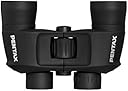
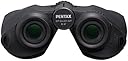
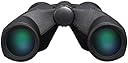
I purchased these to use as astronomical binoculars, but have found them to be good general-purpose binos as well.... As of this writing, I've owned them about six months, and had many hours of use, including I for stargazing and at a music festival over a weekend.Short version: They are awesome. You can mount them on a tripod or monopod for extended stargazing sessions (I'm hunting Messier objects, which are very faint), but you can also hand-hold them briefly (say, 10 or 15 seconds at a time, and I don't like to hand hold any binocular stronger than 7x, in general.) The built quality is excellent and the optics are very good. Used them all weekend at a music festival, and they are as good for watching human stars as they are for celestial stars!Long version:First Impression:The Pentax SP 20x60 WP binoculars arrived in a double box with no bubble wrap. The inner box was the same grey Pentax binocular box that they've used for at least twenty years (I own several Pentax binos and they all came in these grey/silver boxes.) I can only guess the lack of substantial padding means Pentax is not overly concerned about the prisms shaking loose and getting misaligned. And these were perfectly aligned out of the box. The binos don't look that big, compared to other astronomical binoculars (they are only 60 mm objectives compared to more conventional 70mm or 80mm.) I expected the high 20x magnifcation would make them very hard to hand-hold, but the lighter weight of the 60mm objective seems to balance it out, so you can actually hold them suprisingly well.Size: I was surprised how not-big they are. They don't look like awkward "big binoculars" with extra-big objectives grafted onto a regular-size body. Instead, they just look kind of beefy. Comparing them to my Pentax 10x50, the 20x60 doesn't look big, but rather the 10x50 just looks kind of stubby. In additional to taking the 20x60s stargazing, I used them all weekend at a music festival, and no one seemed to notice them. My wife used them several times, and I don't think she even realized these weren't my old 10x50 binos (she was just really impressed at how well she could see Arlo Guthrie from 100 yards away.)Appearance: The binos are black and covered with a rubber "armor" -- I can only guess it's same stuff covering all my other Pentax binos, which does not seem to distintegrate over time (at least not in twenty years or so.) The design is very aesthetic -- if Peter Jackson's elves made binoculars, their binoculars might look like these. I don't think there is a straight line on them anywhere.Features: The eyecups twist up in click-stops. I found that at the first click-stop, they were in the perfect position to use with my glasses on. In fact, I don't remove my glasses to use these, which I usually have to do with other binos or telescopes.The diopter adjustment on the right eyepiece also works in click stops, but it uses thes little levers on the side, rather than actually twisting the eyepiece itself. I thought it worked fine. I think this would be a useful feature, should you need to adjust the diopter while wearing gloves.The center focus knob locks into place. I use this feature quite a bit on my 10x50s, and thought I would use it on these, but then I found myself using these for non-astronomical viewing as well, and so I'm not using the focus lock that much.Optics: The field of view is narrow (2.2 degrees), which had me concerned before I got them. Once you look through them, this is not that important -- everything just looks very immersive. Where it matters is when you are finding something. It's like pointing a high-powered telescope -- can be a little tricky to know where exactly you are looking at first. For terrestrial viewing, it's not an issue, though you may need to fish around a bit more than normal to find your subject. For astronomy, I just had to be very careful about what I was aiming at, and then make use of my atlas to star-hop as I would with a telescope. Given all the great things about the binoculars, I'm not worried about the 2.2 degree field of view. It's the price you pay for handholding a 20x binocular.The exit pupil is small - only 3mm. I sold a pair of smaller binos with this exit pupil size, because I found them hard to use, but in this case, the trade off is worth it. In the day time, when your own pupil is already contracted, it can be a little hard to line up the binoculars just right to see through them. You'll need to fiddle with the inter-ocular distance and maybe move your head around. I found that pulling the eyecups out to the first click forced me to line my eye up properly, and after a few tries I didn't notice it much anymore. The problem is lessened when you are stargazing, because your pupil dilated more, but you still need to hold your head just so. This may be a deal-breaker for some -- that's why got rid of some other binos I had with a 3 mm exit pupil. In this case, however, I think it's a good tradeoff for the portability and usability of this instrument.The image is sharp across most of the field, with just a tiny bit of distortion around the very edges which was not distracting. There is some noticeable flare when viewing a very bright object (namely Jupiter) against a dark background. I can minimize it by adjusting my eye position, but it is there. On the other hand, I can see the rings of Saturn. It is very tiny, but you can tell what they are. That is amazingly cool to me. So I've given up on Jupiter cloud bands, but I got Saturn's rings.... Deep sky objects under a dark sky had good contrast. I found several Messier objects in Ophiucus, including a Mag 8 globular cluster I could never find before.... The Pleiades look fabulous. The Andromeda galaxy looks like a bright, large fuzzy blob (like it always does) but was easy to find while hand holding and just fishing around.Accessories: The binocular comes with the standard narrow Pentax neckstrap.It comes with a soft cover/bag/case. Much has been made of the lack of a hard case, but I think the soft case is fine (and economical) and you can buy a hard case of your choosing if you want one. The case is a codura/pleather outside with a thin padding and slick nylon interior and seems relatively sturdy. It will keep the binocular scratch- and dust-free -- the rest is up to you! I've always treated my binos and cameras with great care and have so far never needed anything more substantial. I don't think the bag is a liability -- I appreciate the moderate cost of the binocular enough to not want to pay extra for a hard case. The soft case is all-black with a pleather reinforced bottom and trim.The lens caps for the objectives stay on very well. The binos have this ridge of rubber along the barrels (you can see it in the photos), so the outside of the barrel is not quite round. The round lens caps fit snugly because of this ridge. The eyepieces share a single large lens cap, which does not fit snuggly, but then it's also harder to lose because it is so big. But the eyecups protect the eyepieces pretty well, so the lens cap is mostly just to keep dirt out, anyway.I use the Pentax "N" adapter to mount these on a monopod or tripod when needed. It works fine. The monopod is very nice for terrestrial use (such as at a concert) for extended viewing. I've also done this for many years with my 10x50 binos. For extended/serious stargazing, a tripod is essential, but for just looking around in the sky for a few minutes, I can hold these by hand.Other Observations: I live in a downtown with massive light pollution and needed a high-power bino to punch through to as much sky as I could get. A larger objective would be good too, but at some point, you are just collecting more light pollution in your instrument. The 20x60 seems to do the trick. Under dark skies, it will show you plenty. If Iived near really dark skies and could use them exclusively for astronomy, I'm sure a 20x80 or 25x100 would be awesome, but here, I think those would be wasted. The 20x60 are, I think, a good choice for urban dwellers like me who sometimes can get out to a dark sky, want to see more from our homes, and can use the binos for daytime use as well.And you have to live with your stuff, so I appreciate the multi-purpose utility of these binos. I expected them to be more or less dedicated only to astronomy, but they've turned out to be very useful for all kinds of things. When I travel, I know these will find a place in my luggage, because they are not monsters and they can be used for many different things. I get the distinct impression from the cordura case, waterproofing, and overall sturdiness of the instrument that it was designed to be out in the world, not in a padded case on a shelf. Hope I get to use them a lot more in many more places!Addendum (2021): In 2018 or 2019, I carelessly banged these binos on a post and knocked them slightly out of alignment. The problem was slight but eventually annoyed me enough to get them fixed. Pentax did repair them under warranty! Not a speedy process, but definitely appreciated. A few other notes since the original review. While I like these for stargazing, my experience has been that others find them difficult to use. I've given up trying to show off the subtle objects like galaxies through these, because most people say they can't see them. I think it's a combination of the small exit pupil and narrow f.o.v. for a binocular. Now, a 3mm exit pupil and 2.2 deg f.o.v. are quite generous in a telescope, with only a single eyepiece to look through, but I think in this binocular, aligning the two eyepieces also requires careful adjustment of the intraocular distance, plus a little fishing around to find your optimum distance from the eyepiece, and that's just more than a casual viewer is able to do. I have much more success with folks looking through my 10x50 or 7x50 binos for astro demonstration.After the repair situation, I invested in an inexpensive hard case from Harbor Freight, and have since traveled quite a bit with these. They are a good choice when I don't have room or inclination to pack a small telescope. As I've gotten a bit older, my Pentax 7x50s have become my favorite general purpose binocular, but I still enjoy using the 20x60s for specific purposes like telescope replacement and stargazing. Mounted on a tripod, they are also excellent for wildlife viewing- truly a class above handheld 7x or 10x binoculars and more like a dedicated spotting scope. On camping trips, these can be handy for daytime or night time use. (Plus, telescopes are known to attract clouds and bad weather like black clothes attract cat hair, so using these instead might help keep you clear and dry on your trip. ;-) )An additional accessory for stargazing that I've found very useful is a slow motion alt-az controller. This mounts on top of your regular tripod and allows you to fine-tune the movement of the binocular by turning micrometer-precision knobs, like you would with a telescope. At 20x, the "slop" or play in a tripod is magnified so much that it becomes frustrating to find or track objects otherwise.I still enjoy and recommend these after 5 years, so I've not changed my stars rating. I thought others might find these additional experiences helpful, though. Also, I apologize for all the typos. All this has been written on mobile devices, and my QC is subpar....