We remain fully operational. Our teams are working around the clock to ensure your deliveries continue safely.

DOWNLOAD THE APP


Customer Services
Copyright © 2025 Desertcart Holdings Limited
DOWNLOAD THE APP
Full description not available
P**B
Highlights the gap between the fantasy and the reality
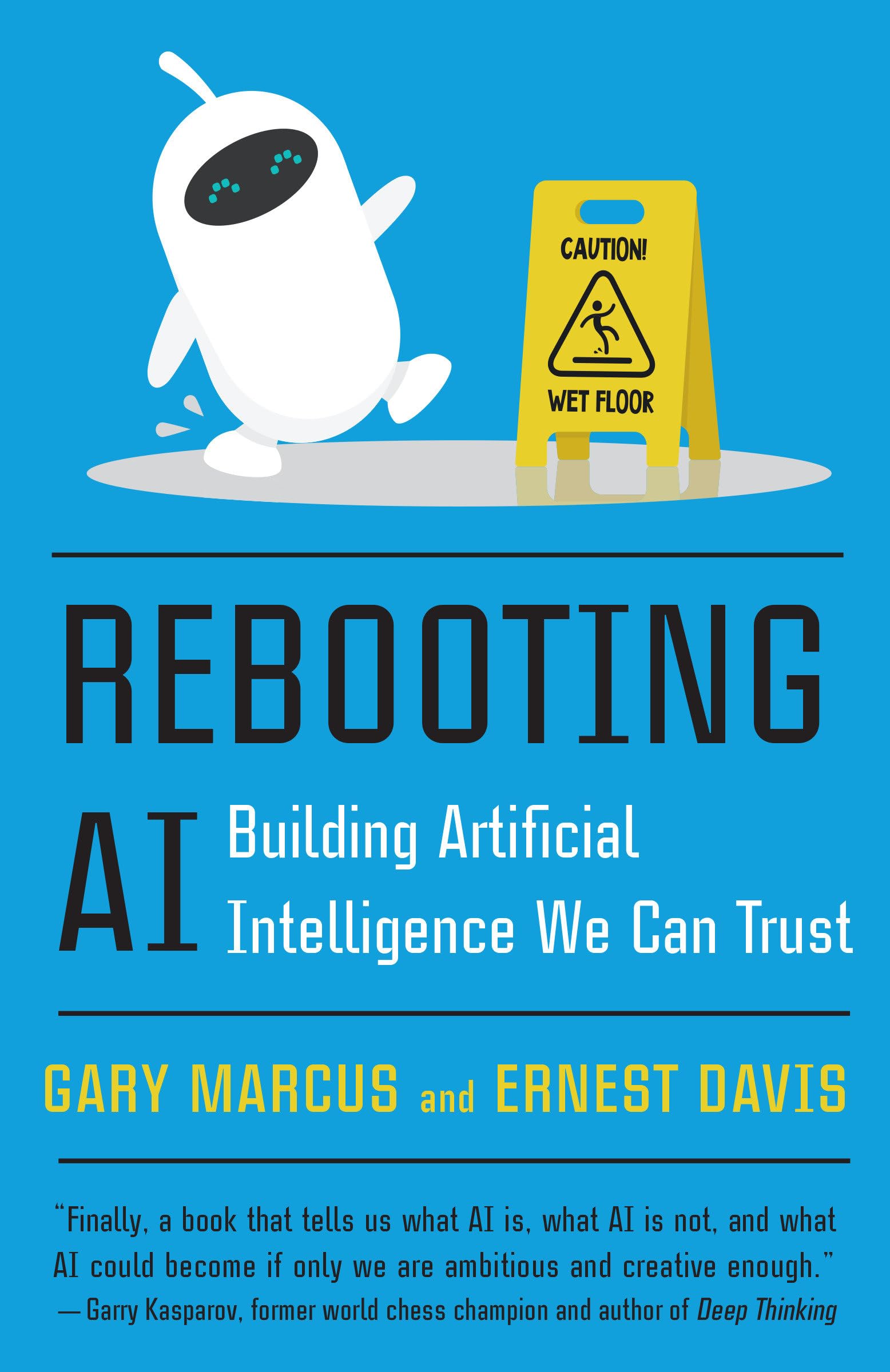
Easy read and tends to be a litany of "Oh but A I cannot do this or shortfalls there", which in itself is interesting versus your own perception of the hype.Effective exposition of the gap between the reported era of A I and the actual capabilities.(Even my kindle spellchecker won't let me type A I & keeps correcting it to SO, hence the gap between the letters)
A**R
A detailed list of problems. Little insight on alternatives.
Got off to a good start with an insightful and very detailed discussion about the limitations (and relative dumbness) of most of the current approaches to AI. A second half, offering possible avenues, merits and barriers is teased but never materialised. Instead the book goes on to longer and longer and more meandering reasons why narrow AI and big data doesn't hold all the answers (thanks, that's kinda why it's called narrow, no?). These guys appeat spot on with the central argument, but they're not the visionaries to lead us to brighter and more powerful alternatives.
A**I
Disingenuous appraisal of the state of research
Marcus and Davis are, at a surface level, correct in their assessment that current AI technologies are not as capable as the media may make them seem, and are definitely not as capable as humans. But their diatribe absolutely fails to consider any nuance on the state of research, and instead reads as an uninformed attack on current research progress. They provide criticism after criticism of research, while failing to appreciate the actual punctate research problems being solved, instead assuming that every advance must somehow also solve all the problems in AI research at once. For example, results using deep neural networks for Atari or Go are bashed for their brittleness and non-human like solutions, but where is the discussion on the state of AI before this research? Where is the talk about how this research is the first to solve seriously difficult planning problems from raw visual input? Instead its criticized for not being a fully competent AI system -- well of course it's not! This is simply an act of shifting the goal posts.Even more frustrating is their complete lack of proposed solutions to the problems they outline. They hand-wave their way forward by pointing to a necessary understanding of causality, time, and space, as if researchers in the field do not know that these are important capacities and aren't working on them (and making important advances!). Finally, they propose formal logic as a necessary component for AI systems, without going over the history of why formal logic is doomed to fail.Altogether this reads as an attack on a booming field by some people who want to cling to old methods that have failed time and time again. Yes, we're not at fully competent AI yet, but it's a great disservice to paint research and researchers in this field as completely unaware of the very basic ideas and "solutions" presented here. A reader might get some value out of it if they think that terminators are a step away from walking the earth, but anyone remotely clued into the current research will just walk away annoyed and frustraed.
Trustpilot
2 weeks ago
1 week ago