We remain fully operational. Our teams are working around the clock to ensure your deliveries continue safely.

DOWNLOAD THE APP


Customer Services
Copyright © 2025 Desertcart Holdings Limited
DOWNLOAD THE APP
K**R
Everything you could expect from a Philip Glass opera
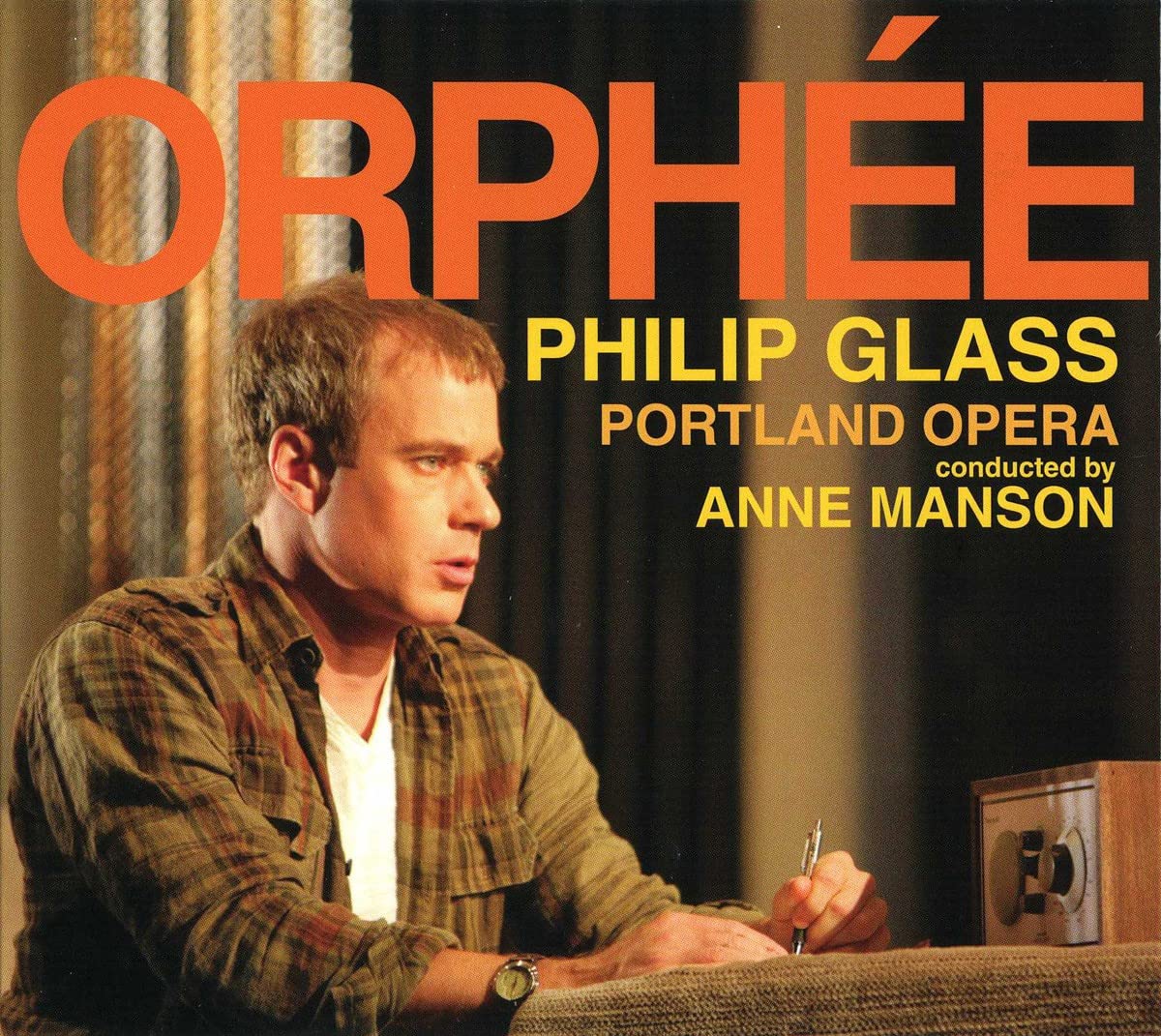
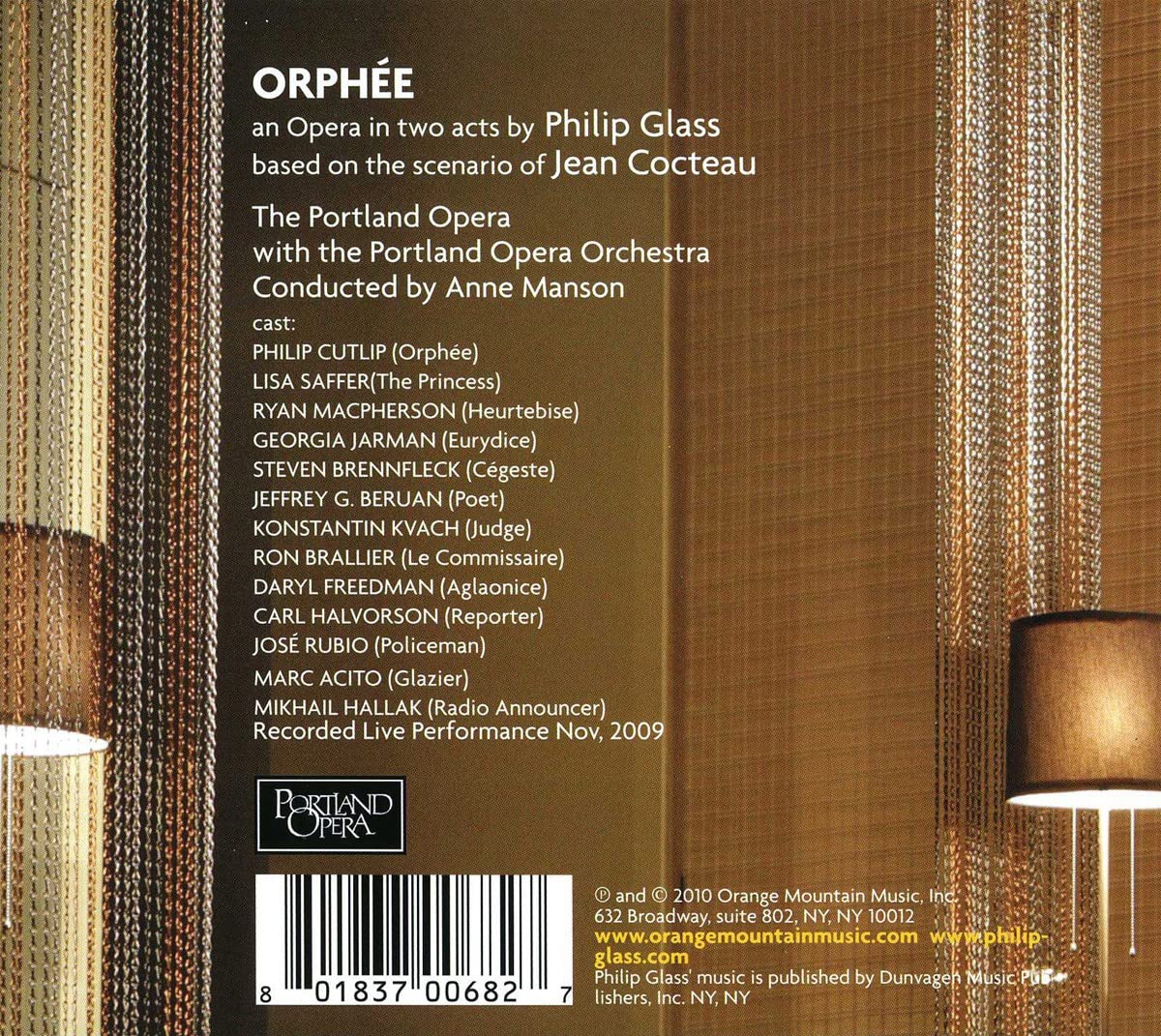
This opera just gets better and better as it goes along, and the whole of the third act is a real tour de force. Just listen to Orphee's return, the second to last track; I guarantee you haven't heard such gorgeous music for a long time. This is very recognisably Glass music but in an unexpectedly intimate setting. Very rich orchestrationIt's a pity that the physical presentation leaves something to be desired. On the plus side, the box, the pictures and the two sleeve booklets are high quality and very convenient, as are the synopsis and the libretto. But why is there no analysis, why no introduction and why no critical reviews of this frankly difficult opera? If you buy 'Einstein on the Beach' you read exhaustive notes on the composer's intention. So why not with this one? It's interesting to work out the roles of Heurtebise, the Princess and similar characters, but it would be good to have some pointers too. This opera is a lot more complicated than the Orpheus story you might know from Monteverdi or Gluck.But that aside, if you're a Glass fan, you must get this opera.
M**S
At long last, Orphée
Philip Glass premiered Orphée in 1993 so it has been a long wait for this outstanding opera. The work is a delight from first moment to last, and it is also gripping in the sensation it creates of an alternate reality.Orphée is the first of Glass's trilogy based on works of Jean Cocteau in each of which he experimented with different relationships between film and opera. As the first in the series, Orphée is more film-like in that the singing is closest to spoken language, with the orchestral writing providing the melodic elements and most of the emotional setting. And this music is some of the most powerful and passionate that Glass has written.That Glass should have begun his cinematic trilogy with Orphée is perhaps logical considering the operatic nature of the story, witness the many previous operatic settings. However, Cocteau greatly altered the sense of the Greek myth with the construction of two new and intersecting story lines: "Death" falling in love and Orpheus's egotism."Death" in the Cocteau-Glass work is a beautiful woman, called "The Princess," and she conforms in part to a standard operatic subject: the icy woman melted by love. Turandot and the Brünhilde of Siegfried come to mind, but in these operas they end up, at least temporarily, with the man whose love melts their ice. Orphée's Princess shares more with the Empress in the Strauss/Hofmannsthal opera "The Woman Without a Shadow". In finding human emotion the Empress learns to sacrifice for the happiness of others: the Dyer and his wife whose marriage she had selfishly threatened. But in sacrificing all the Empress gains all. The opposite is true for the Princess in Orphée. She sacrifices knowing with absolute certainty that she will lose all. She will be tried for meddling in human affairs and using her power to kill for her personal reasons. She will be imprisoned and subjected to torturous punishment. The music of her scene of relinquishment is the emotional core of the opera: searing music that leaves one breathless.After this climax the concluding domestic scene with Orphée and Euridice seems mundane, but it is the appropriate climax to the second story line concerning Orphée's egotistical and inward-focused relation to his art. Glass treats this theme in two other operas, The Fall of the House of Usher, and the third of the Cocteau Trilogy, Les Enfents Terribles, arguing that art focused inward towards the psyche is incestuous and ultimately self-destructive. For Glass, art needs to deal with social issues. As evident in the final scene of Orphée, the reverse is also true: everyday life should be practiced with all the skill and integrity of art-making.This final scene also represents a healing. Before this point, Orphée had chosen the Princess--Death--over life as represented by Euridice and their unborn child. He even engineers his own death to be with the Princess. Too weak to resist this self-destructive obsession, he would be lost without the strength and determination of the Princess to sacrifice their love for his welfare.In general, note that all of Cocteau's satirical jabs are maintained in the opera, though not necessarily with satirical-sounding music. What produces the funniest scene is how Cocteau makes sense of the proscription against Orphée looking at Euridice after they return from the underworld. This is an example of "Let the punishment fit the crime" worthy of the Mikado. Orphée had refused to look at Euridice while she was dying, so he is condemned not to look at her at all. The ways she tries to avoid his gaze were extremely funny on stage and the music is jocular as well. On the other hand, the stage production, illustrated in photographs in the booklets accompanying the two disks, while a masterful solution to the idea of presenting multiple locations in a single set, does not indicate the surreal gloom of the underworld in which much of the action takes place, and which is masterfully portrayed in Glass' music. The buyer is advised to view the Cocteau film to make more sense of the musical atmosphere.While the orchestra, conducting, and singing are all excellent, I do feel that it is worth complementing the outstanding performances by the two leading women: Lisa Saffer as the Princess and Georgia Jarman as Euridice. Sapper displays vocal mastery throughout, and the combination of determination and suffering she conveys in her climactic scene of sacrifice is riveting. Jarman's contribution to the tender dialogue with the Princess' chauffeur Heurtebise is a masterclass in modulated vocal dynamics. Perhaps because Jarman raised the bar so high, Ryan MacPherson as Heurtebise does his best singing in this haunting duet.
A**A
Truly Amazing
As far as I know, Glass is the only composer to dare cross the line between film and score, by his daring projecting of the films while the script is being sung on stage. I saw the premiere of The Beauty and the Beast at the Brooklyn Academy and was utterly wowed. Once you get into the Glass, you enter another dimension, as Orphee well discovered!
E**E
A Great Gift
A requested Christmas gift so recipient loved it!
R**A
Philip Glass: Orphee
A contemporary masterpiece! Glass's setting of the Orpheus legend is musically and textually outstanding. The composer brings a musically mysterious soundscape to the text. The lighter moments are equally good. Highly recommended.
I**N
Amazing
Saw Virginia Opera do this last year - also amazing. Don't miss it if it comes to your area. .
Trustpilot
3 weeks ago
3 days ago