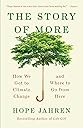
The Story of More: How We Got to Climate Change and Where to Go from Here
Product ID: 185938389
Desertcart purchases this item on your behalf and handles shipping, customs, and support to Japan.
The essential pocket primer on climate change that will leave an indelible impact on everyone who reads it. • “ Jahren asks the central question of our time: how can we learn to live on a finite planet?" — Elizabeth Kolbert, New York Times bestselling author of The Sixth Extinction "The voice that science has been waiting for.” — Nature Hope Jahren is an award-winning scientist, a brilliant writer, a passionate teacher, and one of the seven billion people with whom we share this earth. In The Story of More , she illuminates the link between human habits and our imperiled planet. In concise, highly readable chapters, she takes us through the science behind the key inventions—from electric power to large-scale farming to automobiles—that, even as they help us, release greenhouse gases into the atmosphere like never before. She explains the current and projected consequences of global warming—from superstorms to rising sea levels—and the actions that we all can take to fight back. At once an explainer on the mechanisms of global change and a lively, personal narrative given to us in Jahren’s inimitable voice, The Story of More is “a superb account of the deadly struggle between humanity and what may prove the only life-bearing planet within ten light years" (E. O. Wilson). Review: Climate change and a simple fix - A clear, concise book that explains how we got to climate change. Interspersed with the science are stories of Ms Jahren growing up in a farming community. She is an extremely engaging and talented writer and anything she writes is worth reading in my opinion. This book is a fast and very pleasurable read. It’s easy to understand if we just consume a bit less there can be enough for all. Sharing IS caring. I had read that she is coming out with a young adults version of this book soon. The Story of More is so easy to read that I wonder if it was truly needed but maybe it will be better for younger children. Review: Where to Go from Here - This is a wonderfully written account of how our production and consumption of energy and natural resources dramatically increased during the author’s life. Since her birth in 1969, the world’s human population doubled, production of grain and meat tripled, consumption of seafood tripled, energy use tripled with electricity use having quadrupled, and the number of airline passengers, as well as the production of plastics, increased tenfold. None of this is sustainable and has increasingly significant impacts on the environment. This consumption is not equally distributed among the people of the world. For example, 20% of the population uses 50% of the electricity. The United States tops most countries for per capita consumption of energy and natural resources. The subtitle of the book is “How We Got to Climate Change and Where to Go from Here.” Most of the book covers the first part, and not “where to go from here.” Maybe it doesn’t need to, however. I think most people know how to use less energy and resources. For example, buy a small electric car or hybrid car instead of the big SUV or truck. Live in a smaller house. Use less air conditioning. Buy less stuff! None of this is new. I was 12 years old in 1969 when the author was born and remember being moved by an article in Boy’s Life about the importance of conserving energy and other natural resources to help preserve the environment. 1970 marked the first Earth Day. 1973 marked the Arab oil embargo. The second oil crisis occurred in 1979. The 1979 book, Energy Future, Report of the Energy Project at the Harvard Business School, called conservation the “key energy source.” People know how to save energy and natural resources. The question is whether we have the collective will and courage to use less for the sake of future generations and life on this planet. As the book points out, once basic needs are met, more stuff does not make people happier. I highly recommend the book.
| Best Sellers Rank | #105,759 in Books ( See Top 100 in Books ) #78 in Climatology #95 in Environmental Economics (Books) #160 in Environmental Science (Books) |
| Customer Reviews | 4.6 out of 5 stars 1,069 Reviews |
O**S
Climate change and a simple fix
A clear, concise book that explains how we got to climate change. Interspersed with the science are stories of Ms Jahren growing up in a farming community. She is an extremely engaging and talented writer and anything she writes is worth reading in my opinion. This book is a fast and very pleasurable read. It’s easy to understand if we just consume a bit less there can be enough for all. Sharing IS caring. I had read that she is coming out with a young adults version of this book soon. The Story of More is so easy to read that I wonder if it was truly needed but maybe it will be better for younger children.
M**M
Where to Go from Here
This is a wonderfully written account of how our production and consumption of energy and natural resources dramatically increased during the author’s life. Since her birth in 1969, the world’s human population doubled, production of grain and meat tripled, consumption of seafood tripled, energy use tripled with electricity use having quadrupled, and the number of airline passengers, as well as the production of plastics, increased tenfold. None of this is sustainable and has increasingly significant impacts on the environment. This consumption is not equally distributed among the people of the world. For example, 20% of the population uses 50% of the electricity. The United States tops most countries for per capita consumption of energy and natural resources. The subtitle of the book is “How We Got to Climate Change and Where to Go from Here.” Most of the book covers the first part, and not “where to go from here.” Maybe it doesn’t need to, however. I think most people know how to use less energy and resources. For example, buy a small electric car or hybrid car instead of the big SUV or truck. Live in a smaller house. Use less air conditioning. Buy less stuff! None of this is new. I was 12 years old in 1969 when the author was born and remember being moved by an article in Boy’s Life about the importance of conserving energy and other natural resources to help preserve the environment. 1970 marked the first Earth Day. 1973 marked the Arab oil embargo. The second oil crisis occurred in 1979. The 1979 book, Energy Future, Report of the Energy Project at the Harvard Business School, called conservation the “key energy source.” People know how to save energy and natural resources. The question is whether we have the collective will and courage to use less for the sake of future generations and life on this planet. As the book points out, once basic needs are met, more stuff does not make people happier. I highly recommend the book.
T**N
Human progress and its downsides
Hope Jahren is an award-winning scientist as well as a brilliant writer, and it shows. The book is filled with interesting and relevant facts with the associated references from reliable sources. The book is balanced, well-reasoned, educational and the author shows a deep understanding of the subject(s). This is in contrast to many books on science related topics written by journalists or lawyers. This book gives a great overview of human progress and its downsides, with special focus on what has happened since the author’s birth in 1969. She tells us about the improvements in health, longevity, wealth, crop yields, the sharp reductions in child mortality, and poverty. She tells us about population growth, increased production and consumption, the astounding growth of cities, the five doubling of air travel, and the three doubling of our use of fossil fuels. Unfortunately, human progress is a double-edged sword. With it comes habitat destruction, species extinction, climate change and ocean acidification. She tells us about factory farming, excessive meat production and wastefulness. We shouldn’t reverse human progress, but we can address the damage we are doing and distribute our wealth more evenly. However, there are a couple of things that I did not like about the book. First, she is not giving nuclear power a fair shake. Second, with respect to how we can improve the situation, she seems to put the onus on the purchasing habits of consumers while not discussing policy or information much. Politicians are shockingly misinformed, consumers don’t know how to make the best choices for the environment, information is politicized, and misinformation is widespread. Addressing this is very important. In general, we cannot decide where to get our electricity from (there are a few exceptions). That’s decided by large corporations and politicians, and we can influence that via various forms of political action. Therefore, I felt there were a couple of holes in an otherwise great story. Which is why I give the book four stars instead of five.
R**N
Planet of the Cars - A Love Story (not)
This is a delightfully written and thoughtfully researched survey of the outcome of decades of all-out fossil-fueled frontier growth economics with timely commentary on the sad state of global wealth inequality we see today. Notably, the impressively credentialed scientist-author is not ashamed to confess to a twisted love/hate relationship with CARS! Well ... it's not really twisted. And actually ... it's hate, pure hate. According to the author, there are over one BILLION of these seductive, gorgeously styled, brilliantly marketed Terminators — globally, car-related deaths outnumber all murders and suicides combined, according to the author — rumbling down the world's roadways. And every day, they are terrorizing too-casual pedestrians and too-fearless cyclists. So there are lots of 'em ... to hate ... and for good reason! (Incidentally, I can easily imagine an alien space traveler zipping by and blithely observing a Planet of the Cars before hastily trekking on.) Responding to the author's specific request for a haters-gonna-hate reach-out in solidarity with her clear distaste for these dangerous metal cages on wheels, here's my take: Sadly, a powerful and pervasive car culture in developed countries insulates and isolates so many of us from so many beautiful things in the natural world — and we will not likely protect that which we can no longer relate to or do not deeply appreciate, which we no longer love. Advertising for this deeply rooted car culture sends a deceiving message (like most advertising): Happiness and freedom are not found behind the wheel of car. Nor good health. For honesty’s sake, car advertisements really should show drivers who are indebted, overweight, and stressed-out; since that is the ultimate outcome of lifestyles so overly dependent on the automobile and so averse to walking and bicycling and to re-engaging with the beautiful (and rapidly dying) natural world.
S**G
Hard but Necessary and not Without Hope
This was one book I was determined to finish before year’s end. I’m glad for these kind of milestones, as it got me off my stall. Why did I stall? I think because it’s easier to turn to bright shiny fun things (like Historical Fiction, my Brain Candy) than it is to digest hard truths. But we should all do hard things, if not once a day or once a week or month, certainly, then, once a year. So finish, I did. And I’m glad, for I’ve begun dedicating at least one yearly goal to doing something in reducing my footprint. Thankfully, Jahren leaves some well thought out ideas on how to do that, another reason to finish the book before the New Year. Or to read now, if you haven’t. Well done, and thank you, Hope Jahren. Great reading, too.
C**S
Required Reading
I feel this book should be required reading for every American. Jahren covers topics that we often do not see. She uses a great deal of research to back up her topic. For instance, she thoroughly discusses our food supply and how much gets wasted while people go hungry. I love her writing style; it is terse, no wasted words, she gets to the point. But there is often humor to make you smile. Along the way, she inserts her own life occurrences.She presents her research and information in a way that you realize you can make decisions to assist in our battle against climate change. Don’t miss reading this book! It is a life changer!
E**O
Humans of the world, wake up!
I have always fret that we, humans, were going to be the main cause of our own extinction. This book is all the fact you need to confirm that we are an unstoppable force of destruction. Unless some radical change happens pretty soon, this dystopian future is around the corner. The author presents hard facts on the way we, humans, are affecting the planet and endangering not only our future but that of our progeny, not to mention that of the countless other species in our world. This book is a wakeup call for all of us, a realization that we cannot, we must not, continue down this path. It is a slap in the face that makes us realize that we cannot wait for our governments or the industry or the rich of the world to do something about it. It is my responsibility, it is yours, it is ours. Individually, every one of us can make a difference. Pick up a flag and become the flag bearer of a cause, demonstrate your integrity in the way you consume energy, what you eat, what you wear, how you spend and invest your money, how you educate your children, how you live your life. Are we going to wait for the capitalists of the world to do something about it when they know it will cost them money? Can you hear them advocating for consuming less, using less energy, for reducing their revenue with the purpose of being one with the environment? This has gone too far. Educate yourself, educate your children, make a difference. Humans of the world, this book is the punch in the stomach we all were seriously needing. Let's unite with the thousands of other people that individually are trying every day to slow down this destructive snowball. Be this book a humbling experience, to recognize that those of us who enjoy a good life are probably doing it at the expense of the lives of others less fortunate, humans, animals, and other organisms. We can still change this course, together, but we are running out of time. You can clearly see this book has been a profound experience for me. I wish every sapiens of this world had the chance to read a copy of it. Hopefully it would have the same waking effect it had on me.
L**R
Extremely Important Book by a tremendously capable Writer
"The Story of More" is a quick read that is packed with vital and easily understood information regarding the too long poo-pood issue of greatest importance: Climate Change. Why? For just one of many reasons, because Climate Change has a lot to do the initiation and spreading of new diseases such as the deadly COVID-19 virus Pandemic. This concise book is so well researched, and so very well written, I want to read a lot more by this author. I read a lot of books on natural resources, especially on the intersection of humanity and misuse/abuse of nature's life sustaining gifts. And this is the best recently published books I hav encountered. Highly recommended.
P**K
Less Stuff, More Hope
More cannot be said about the need to consume less stuff in fewer words than in this crisp work. Very US-centric but is of global relevance. Fact after fact is presented by Jahren about production and consumption, often in interesting nuggets. She is upbeat about how we can overcome climate catastrophe and the sixth mass extinction and offers the mantra that we should use less and share more. There are also tips on how to do this. If the facts she presents are correct, there is little reason to justify her optimism that things will turn out well. But “positive thinking” is an American condition and Jahren cannot escape it. The Indian middle class should take a look at Hope.
S**M
Must read for anyone who cares about living on this planet
Amazing and sad. Much needed reading for everyone
R**S
Environment Changing
Outstanding book. Conveys a great deal of information, although to be not so long.
F**S
You shulould read this.
Dead easy to get a hold of the concepts in this book. Easy to read, difficult to comprehend what it saying in that time has run out to wait to see if the scientists are wrong.
A**A
Excelente lectura
Está lectura solo incrementará en importancia con el tiempo y en un mundo post Covid.
Trustpilot
1 month ago
2 weeks ago