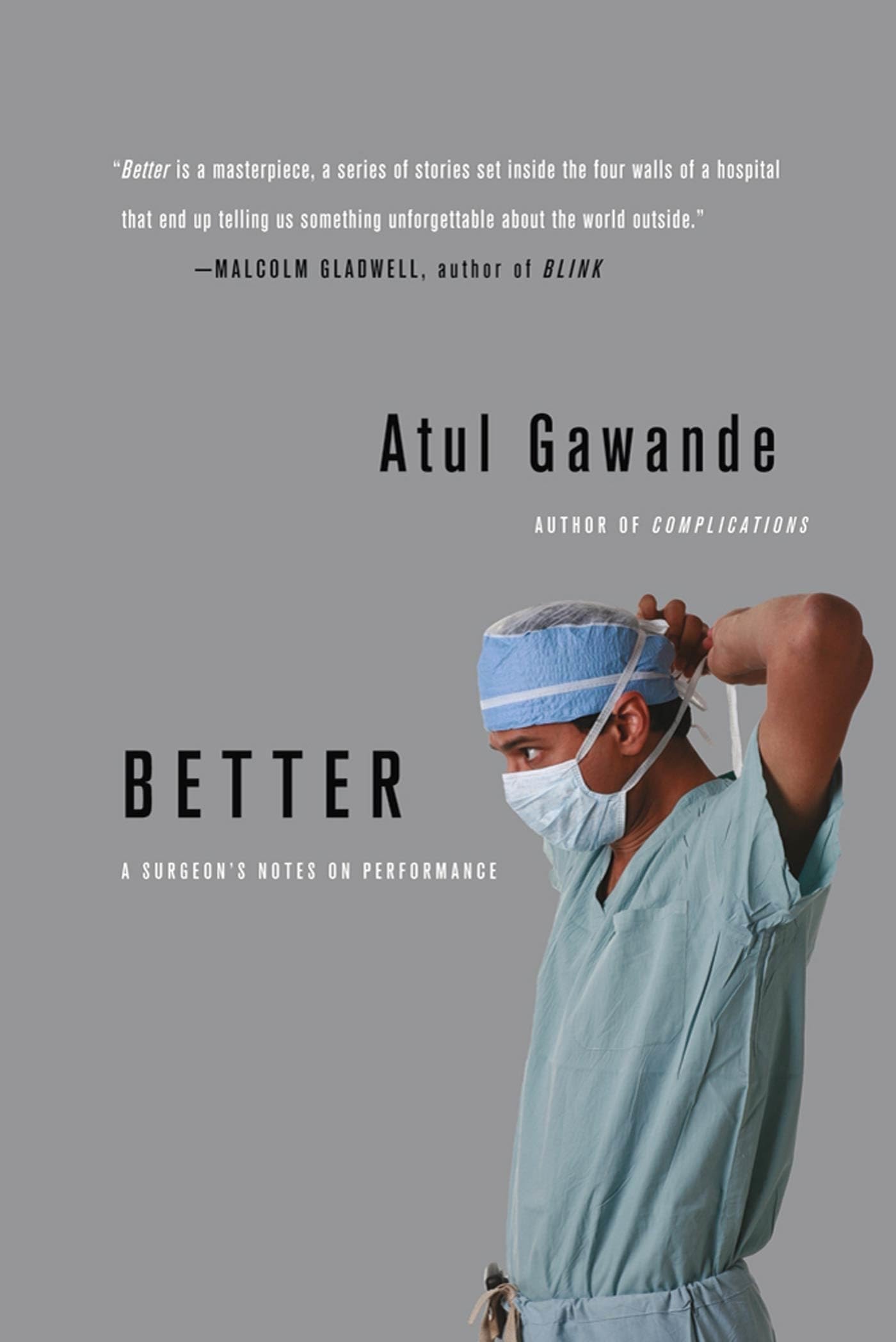
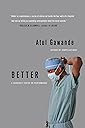


Better [Gawande, Atul] on desertcart.com. *FREE* shipping on qualifying offers. Better Review: Atul Guwande is a fantastic writer - One of my favorite books on medical topics. Atul Guwande is a fantastic writer, knowledgeable, empathetic, just an all-around good read. The initial chapter on hospital-borne infections, hand washing, and the reference to the work on positive deviance and childhood malnutrition in Vietnam is eye opening. I've given away several copies. Review: Though-provoking and a terrific read - This is a non-fiction book so compellingly written it begs to be read in one sitting like a novel. And luckily it's short enough for the reader to do just that and come away with useful insights. Readers seem to get different things from this book. Some are most interested in the chapters on medical ethics. What I found most interesting was what I took as the main theme: that the practice of medicine is complex; that through attention to detail in can be systematically improved in non-obvious, pragmatic ways that are far from the big-money, high-profile research our attention is usually drawn to; and that this improvement can come from dedicated individuals and groups all over the world. Even better, some of the lessons here can carry over to other disciplines. My job has no relation to medicine but I found this book to provoke lots of ideas for my own work. Thanks, Dr. Gawande. A previous reviewer felt that the author's work was becoming "conceited." I have to disagree; I found it refreshingly self-effacing. Unlike some books written by surgeons, this one isn't focused on the tribulations or poetry of the practice of medicine. Rather, it's focused on how practitioners with no more than average skills could help make medicine serve humanity better.


| Best Sellers Rank | #26,945 in Books ( See Top 100 in Books ) #6 in General Surgery #31 in Health, Mind & Body Reference #31 in Medical Reference (Books) |
| Customer Reviews | 4.6 4.6 out of 5 stars (3,940) |
| Dimensions | 5.6 x 0.75 x 8.2 inches |
| Edition | First Edition |
| ISBN-10 | 0312427654 |
| ISBN-13 | 978-0312427658 |
| Item Weight | 9.9 ounces |
| Language | English |
| Print length | 288 pages |
| Publication date | January 22, 2008 |
| Publisher | Metropolitan Books |
T**A
Atul Guwande is a fantastic writer
One of my favorite books on medical topics. Atul Guwande is a fantastic writer, knowledgeable, empathetic, just an all-around good read. The initial chapter on hospital-borne infections, hand washing, and the reference to the work on positive deviance and childhood malnutrition in Vietnam is eye opening. I've given away several copies.
A**R
Though-provoking and a terrific read
This is a non-fiction book so compellingly written it begs to be read in one sitting like a novel. And luckily it's short enough for the reader to do just that and come away with useful insights. Readers seem to get different things from this book. Some are most interested in the chapters on medical ethics. What I found most interesting was what I took as the main theme: that the practice of medicine is complex; that through attention to detail in can be systematically improved in non-obvious, pragmatic ways that are far from the big-money, high-profile research our attention is usually drawn to; and that this improvement can come from dedicated individuals and groups all over the world. Even better, some of the lessons here can carry over to other disciplines. My job has no relation to medicine but I found this book to provoke lots of ideas for my own work. Thanks, Dr. Gawande. A previous reviewer felt that the author's work was becoming "conceited." I have to disagree; I found it refreshingly self-effacing. Unlike some books written by surgeons, this one isn't focused on the tribulations or poetry of the practice of medicine. Rather, it's focused on how practitioners with no more than average skills could help make medicine serve humanity better.
E**Y
For the Most Part
I appreciate the structure, narrative method, illustrative anecdotes, and efforts to present the range of positions one might consider related to each topic Dr. Gawande addresses. This orderly and seemingly for-the-most-part balanced approach is eye-opening, memorable, and compelling. Why not 5 stars? “For-the-most-part” suggests a few topics / issues where he leveraged a writer’s advantage to get the last word in. I’d have preferred he not.
R**I
Very good read
The medical system is filled with compromise, problems and lack of understanding. Variants of care vary drastically from place to place without a complete understanding of how or why. Questions of ethics, morals and codes doctors must abide by with little oversight. Understanding the medical system is a tedious and seemingly hopeless task. One must often wonder, what holds this system together? Dr. Atul Gawande has taken a selection of real life stories of great and inspiring acts in the field of medicine. His portrayal of these stories is even inspiring to those who have no interest in medicine. His description of a hospital team that's primary job is preventing infection. There struggle to get people to simply keep their hands clean was daunting. However it proved when you involve everyone in the solution you can more effectively fix the problem. His description of FST (Field Surgical Teams) in Iraq was eye opening. Little attention by the press was given to this handful of surgeons who saved countless soldiers and civilians lives. One of their greatest accomplishments being the tedious collection of information, which ultimately helped shape war time trauma care. The depiction of the Adgars scale and how its creation dramatically increased newborn mortality rates. It was created by an unlikely Anesthesiologist, the second female in the country given this title. I could go on, however I will save the book for your reading. Overall the book beat my expectations, so I would recommend reading it. It will inspire you to seek to do "Better". You will feel as though however small your achievements it's the collective efforts of us all that overcome all odds.
S**K
Better: Good for more than just those interested in medicine
I enjoyed reading Better for the insights it gave into the various forces shaping medical practice, and how important the individual and collaboration are in a profession one often thinks of as the being dominated by individual practitioners with highly specialized skills. What was especially interesting to me was how this book brought to mind parallels with what seems to be a vastly different profession: software development. ALmost every chapter brought to mind a parallel. The stories of practice in rural India seemed to make a case for the value of "generalizing specialists," the discussion of infection prevention was an echo of the value (and difficulty) of getting a team to be disciplined in using a few simple practices, etc. I suspect those in other fields that require individual skill, judgement, and collaboration might find the same thing. This wasn't unexpected, as I had first read The Checklist Manifesto: How to Get Things Right , but that book was explicit about the parallels. If you are interested in health care, want to understand how to apply skills more effectively, or simply just like a good story, Better is good, Gawande mixes anecdote, data, and an almost suspenseful presentation style to make what could be an academic discussion approachable and entertaining.
D**A
El libro es lo máximo
V**O
Interesting read for anyone who's spent any amount of time in a hospital. gives a different outlook into health care.
K**I
good
J**K
What does the term 'better' mean to a surgeon? Atul gives his interpretation in a clear and easy to follow way. I have found that is was easily applicable to the aviation field (which is more relevant to me) and gave an interesting starting point for us to define our own 'better. I am a fan of his work anyway so was confident I would enjoy this book. As I work with people who have English as a second language there are often concerns about misunderstandings, I find that I am attracted to books that define terms that we all thought we knew already. They give an insight into the complexity of a topic and remind me that even between native speakers we can interpret what something means differently. A great read for people wanting to discuss what better means for their work.
J**M
Take aways that stand out: pick something that gets you up every morning; change it; count it; write about it; ask for feedback; don't complain; a refreshingly positive deviant.
Trustpilot
1 month ago
1 day ago