DOWNLOAD THE APP


Customer Services
Copyright © 2025 Desertcart Holdings Limited
DOWNLOAD THE APP
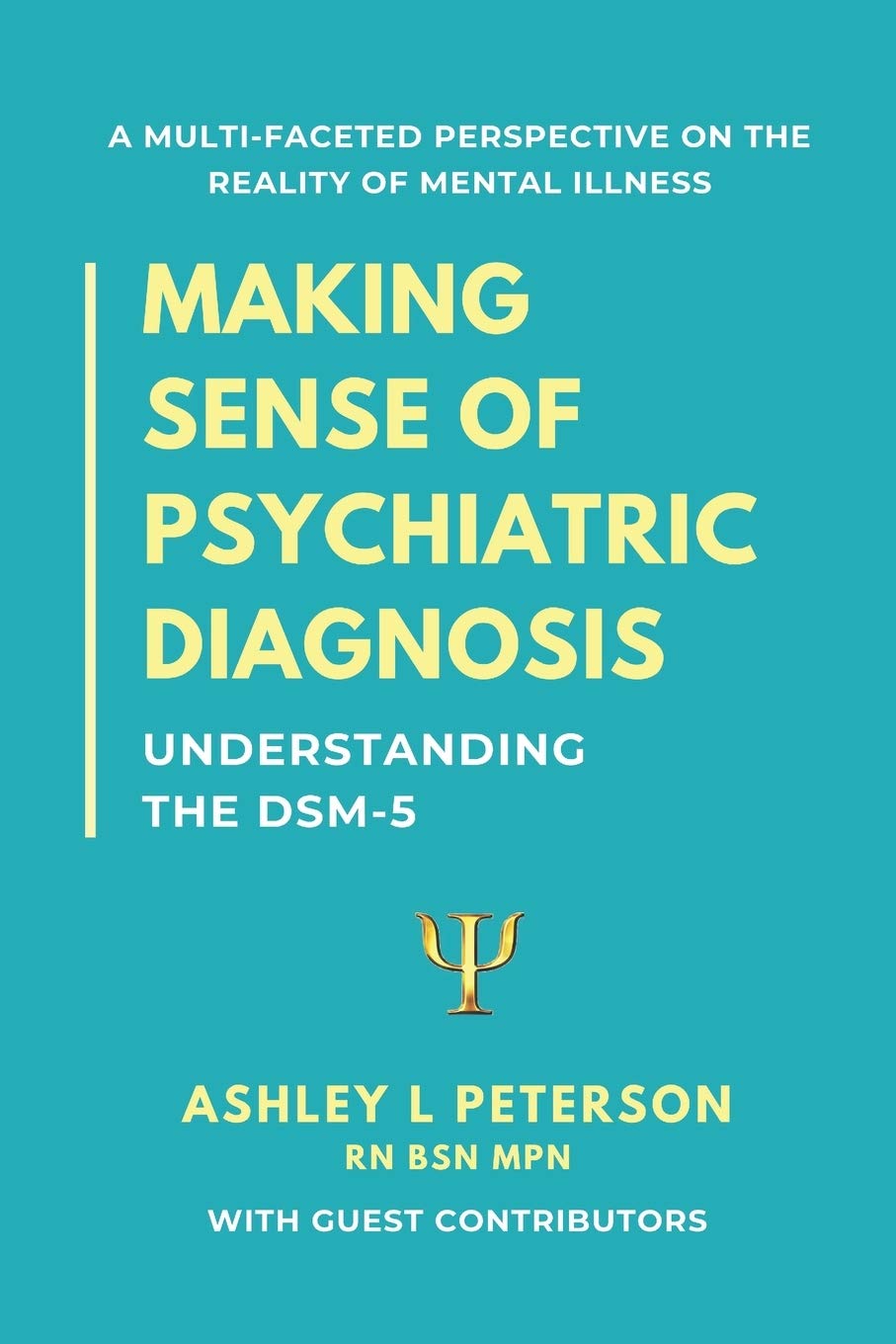
Making Sense of Psychiatric Diagnosis: Understanding the DSM-5 [Peterson, Ashley L] on desertcart.com. *FREE* shipping on qualifying offers. Making Sense of Psychiatric Diagnosis: Understanding the DSM-5 Review: Well written and a very interesting read - I love this book!! I could not put it down! It was actually a page turner...something very unusual for a clinical book in this therapist's experience....user friendly for clinicians or non...Also the author writes great introductions that explain the book to non - clinicians the diagnostic system. Each chapter has a diagnostic heading and a description of the disorder. I think its a great idea for patients who have the disorder to write about their experiences. This does add a different perspective to the disorder for clinicians and is a great review for clinicians!..Buy this book. Review: Fabulous stories! - This book is filled with real-life stories of people who've been diagnosed with DSM-V mental illnesses. It's a great resource for anyone who struggles with mental illness or knows someone who does; or for a college psych student. The real-life stories are so raw and real that reading some of them is hard. They provide a real insider's look at mental illness.
| Best Sellers Rank | #1,891,869 in Books ( See Top 100 in Books ) #909 in Medical Mental Illness #2,033 in Medical Psychology Pathologies #2,777 in Popular Psychology Pathologies |
| Customer Reviews | 4.7 4.7 out of 5 stars (176) |
| Dimensions | 6 x 0.4 x 9 inches |
| ISBN-10 | 199900082X |
| ISBN-13 | 978-1999000820 |
| Item Weight | 8.5 ounces |
| Language | English |
| Print length | 157 pages |
| Publication date | September 6, 2019 |
| Publisher | Mental Health @ Home Books |
S**A
Well written and a very interesting read
I love this book!! I could not put it down! It was actually a page turner...something very unusual for a clinical book in this therapist's experience....user friendly for clinicians or non...Also the author writes great introductions that explain the book to non - clinicians the diagnostic system. Each chapter has a diagnostic heading and a description of the disorder. I think its a great idea for patients who have the disorder to write about their experiences. This does add a different perspective to the disorder for clinicians and is a great review for clinicians!..Buy this book.
J**.
Fabulous stories!
This book is filled with real-life stories of people who've been diagnosed with DSM-V mental illnesses. It's a great resource for anyone who struggles with mental illness or knows someone who does; or for a college psych student. The real-life stories are so raw and real that reading some of them is hard. They provide a real insider's look at mental illness.
C**Y
Fantastic Book!
Great book with detailed descriptions of mental illnesses. Plus, there are awesome essays from people who battle with these diagnosises daily!
F**A
Useful book
This book makes some diagnosis simplified. It’s pretty good.
M**N
Helpful info on subject.
Clear understanding.
A**M
good book, helpful
Great book for any therapist
J**2
Therapist recommended!
The DSM-5 is basically the mental health bible. Therapists, psychiatrists, nurse practitioners, and clinicians use the DSM-5 to organize psychiatric symptoms, known as diagnoses. Ashley’s book can be summarized as, “The DSM-5 for Dummies.” I wish I had this book when I was in graduate school because it would have made understanding mental illness much easier! “Getting a diagnosis can be a good starting point for learning more about the condition(s) and its symptoms, and it can be a springboard in the journey towards wellness.” Ashley is a mental health nurse who also lives with Major Depressive Disorder, so her insights are academic and based on personal experience. Other than being user-friendly, Ashley’s book takes a unique approach to diagnosis by featuring the stories of people living with various mental illnesses. I had the privilege to be a contributing writer to this book and share my story about being diagnosed with Panic Disorder. “To a casual reader, the DSM may seem kind of like a cookbook- if you have enough symptom ingredients, then you’ve got yourself a diagnosis. However, the DSM was never intended to be used that way.” “The DSM is not perfect by any stretch of the imagination. Previous editions have included things that would be viewed as absurd now, such as listing homosexuality as a mental illness.” I would recommend this book to everyone, as it removes a lot of the mental health jargon and concisely describes various mental illnesses. As a therapist and mental health advocate, I love the first-person stories like Alice’s story about Tourette’s Disorder, Katie’s story about OCD, Noha’s story about Schizoaffective Disorder, and Meg’s story about Schizophrenia. I have no doubt that Making Sense of Psychiatric Diagnosis will be beneficial in spreading awareness and eliminating mental health stigma.
A**R
Good content.
Easy to understand contents. Lots or relatable stories. Writing gets 4.5 stars. Book binding gets 0 stars. First time I opened it and the pages just started falling out.
L**N
This book is a really useful guide for anyone who finds themselves trying to navigate mental health services to get help. Dealing with diagnoses in turn; it explains the nature of each disorder; how a diagnosis is made and any controversies or recent changes in thinking clearly and concisely, debunking any jargon. A personal account from a sufferer in each chapter provides a rich personal dimension to each disorder that I’m sure will resonate for readers. The last 3 chapters share experiences in relation to getting diagnosed and misdiagnosed, being understood and misunderstood, treatment and recovery. Experiences are mixed but overall the messages are positive and provide hope for fellow sufferers. Mental health professionals understanding of the lived experiences of their patients will be better for reading this. Whilst I think our current diagnostic system for mental distress is an inadequate one; focusing too much on symptom clusters and individual factors rather than the contexts within which they arise; it is the system in current use, and this book will help make it work better for those having to use it. A good mental health consultation should always involve the professional sharing their thinking with the patient to reach a shared understanding; but too often it does not; or it can be hard to retain all the information. This book helps address that and empowers patients to be more equal partners in their mental health experiences. Every mental health service should have this in their waiting room! Dr Louise Atkin Consultant Psychiatrist
N**U
A good value book for social work and for psychological diagnostic disorders. Good buy, thank you
S**N
Ok
J**D
Having found this author's book on psych meds full of impenetrable jargon I feared the worst when I picked this book up. I was pleasantly surprised to find it an engaging and informative book. It shed light on my own conditions and helped me to understand those of some other people I know. The author cautions against using this book for self diagnosis and is wise to do so, , especially given the fact that we all display some of the symptoms of a number of conditions from time to time. A qualified person should make the diagnosis first. Once this has been done the book comes into its own as a useful resource
M**A
I bought this as an extra resource for my AQA Psychology A Level. It's useful for extra clarification of the DSM V symptoms and how someone with those conditions might present, but this book doesn't even touch on phobias. It contains: Diagnostic Systems Anxiety Disorders Bipolar & Related Disorders Depressive Disorders Dissociative Disorders Feeding & Eating Disorders Gender Dysphoria Neurodevelopmental Disorders OCD & Related Disorders Personality Disorders Psychotic Disorders Somatic Symptom & Related Disorders Substance Use Disorders Trauma & Stressor-Related Disorders. Each of the above categories has 0-3 sub-categories. Overall, it's useful for psychology students and in fairness, the information left out can be found on the internet, but I'm not sure I'd say it's informative enough for university students. Overall, a good resource to build general knowledge on the most common categories of the DSM V, and a good piece of reading on the side for Psychology students, and you can refer to it when necessary, however I'd say this material is entry-level rather than particularly in-depth, and I would recommend that University students get a resource that's more detailed.
Trustpilot
2 days ago
5 days ago