Herbs & Spices: Over 200 Herbs and Spices, with Recipes for Marinades, Spice Rubs, Oils, and Mor
Product ID: 15613249
Desertcart purchases this item on your behalf and handles shipping, customs, and support to Japan.
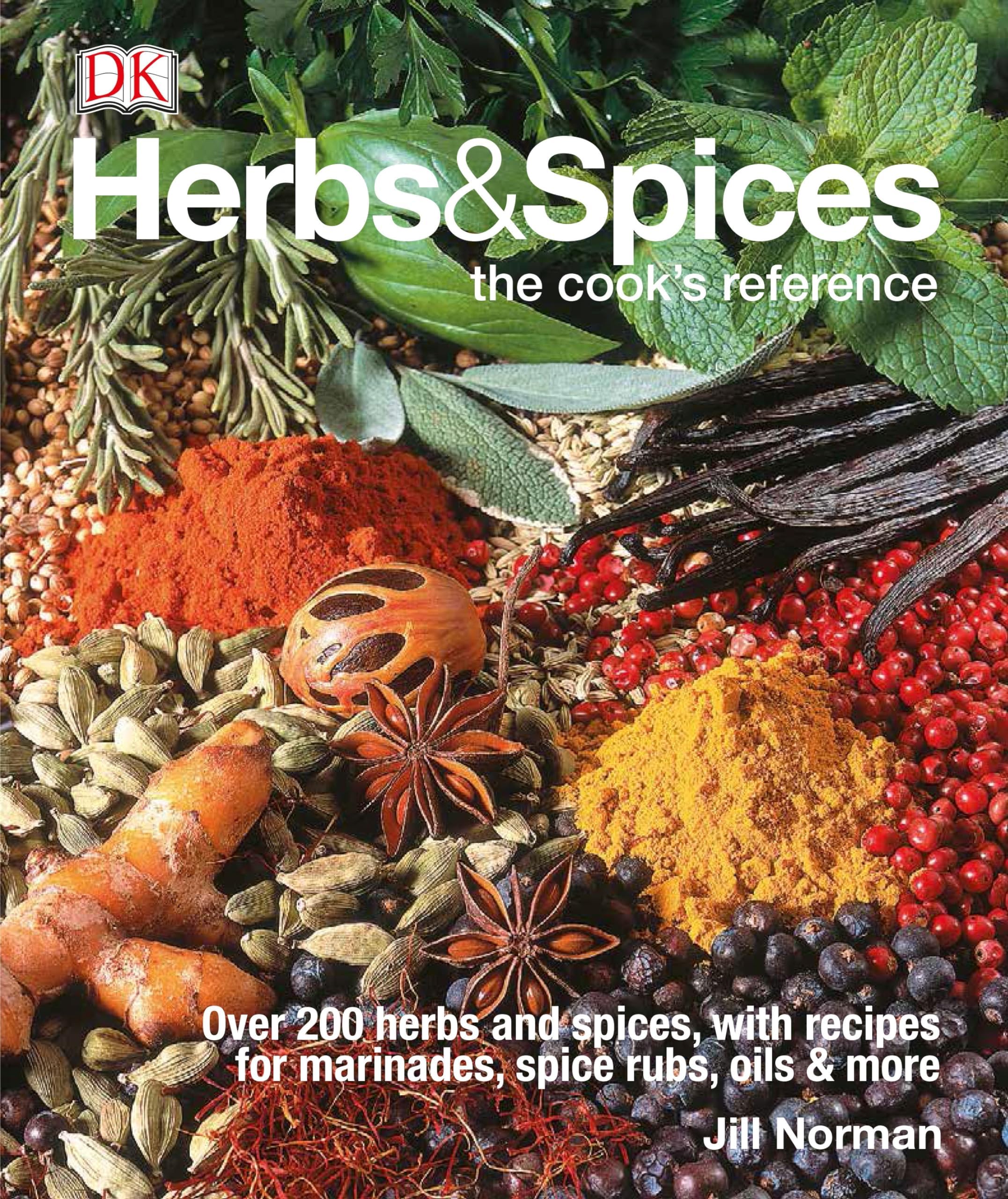
Herbs & Spices is the essential cook's companion, now redesigned and updated with all new recipes. A classic reference, the best-selling Herbs & Spices is a trusted resource in the kitchen, with more than 200 unique herbs and spices from around the world showcased alongside gorgeous, full-color photography, flavor notes, and pairings. This new, updated edition includes the newest herbs, spices, and flavorings influencing global cuisine today, plus more than 180 recipes for main dishes, marinades, pastas, pickles, and sauces. Part spice cookbook, part kitchen encyclopedia, Herbs & Spices offers handy seasoning how-tos: How to identify and choose the best herbs, spices, and other flavorings. How to prepare and cook with them to ensure you are making the most of their flavors. How to make your own blends, spice rubs, sauces, and more ― then customize them for your family's palate. Herbs & Spices is perfect for beginning cooks just setting up a kitchen, foodies exploring the deliciously exotic mash-ups of today's modern cooking, and experts looking for ways to experiment with new flavor combinations. This practical illustrated reference book gives you all the guidance you need to become a master of seasonings and to make tantalizing food from around the world. Review: Only book you need on herbs and spices - `herbs & spices, the cook's reference' is the latest of eight different books on either herbs or spices by noted culinary editor and author, Jill Norman, one of the more influential disciples of the great English culinary writer, Elizabeth David, who contributed two books of her own to this subject. I chose this book to review since I had a backlog of herb and spice books to review, and I wanted to start with one I could assume to be a standard against which all other books can be measured. The problem with starting with the standard is I'm assuming this role purely on the basis of the author's reputation in the field. I am happy to say that I find virtually nothing in this book to invalidate my holding it up as a standard against which other books on the subject may be judged. For starters, Ms. Norman convinces us at the outset that the difference between an herb and a spice is vague enough around the world to require that we treat the two together, thereby eliminating any chance of leaving something out because it was not thought to be a spice or an herb. Part of this ambiguity is her statement that in the United States, a dried herb is considered a spice. Since Ms. Norman is an expert on the subject, I must assume that there is a faction in America that believes this. She states this to make it clear that her basis for distinguishing herbs from spices is based on the current British thinking on the subject. But, since she is covering both, the issue is academic in this book. Much more interesting is Ms. Norman's separation of the various herbs and spices into a large number of categories based on flavor. Herbs are divided into `Fresh and mild herbs' featuring parsley, `Sweet Herbs' featuring lavender, `Citrus or tart herbs' featuring lemon balm, `Licorice or anise herbs' featuring dill and fennel, `Minty herbs' featuring mint, `Onion herbs' featuring garlic, `Bitter or astringent herbs' featuring celery, `Pungent and spicy herbs' featuring sage, thyme, and cilantro. This division alone is a great service, as it gives us a sound basis for substituting one herb for the other, as when we may need borage, and see that it's in the same class as parsley. A deeper look at this lineup of herbs shows that Ms. Norman is covering a far broader range of species and varieties within species than most other books or sections of books on herbs. Most of us know of two or three varieties of basil. Ms. Norman shows us fourteen, divided between three groups, Genoese and purple basil (Ocimum basilicum), `other basils', and Asian basils. The inclusion of the scientific name is essential in a work like this. The most important need is when you wish to buy seeds to grow these plants, the scientific name is the only way you have to guarantee getting the species or variety you want. If you happen to see seeds for `Asian Basil', know that this could be any one of seven different species or varieties! Within sections such as those for the Asian basils, the pictures in this book really shine, as the pictures of these seven varieties are all on the same page, including stems and flowers in many cases, as many of the leaves from two different varieties are almost identical in appearance. We are especially happy that Ms. Norman has drawn outside the lines in her including several plant species which border on what we think as teas (such as sassafras), salad greens (such as sorrel and celery), or root vegetable (such as horseradish and wasabi). The only lapse I can find in all the material on herbs is that the distinction between the Mediterranean bay is not clearly made from the New World plants often called `bay'. Spices get an equally thorough treatment, being divided between `Nutty spices' such as sesame, `Sweet spices' such as vanilla, `Acidic and fruity spices' such as tamarind, `Citrus spices' such as lemon grass, `Licorice or anise spices' such as anise, `Warm and earthy spices such as saffron, `Bitter or astringent spices such as capers, `Pungent spices' such as chiles, ginger, mustard, and pepper. One of my fondest discoveries in this book is that not only are ginger and galangal shown to belong to two different biological genus, they are categorized as in two different taste classes. These two are commonly mistakenly lumped together. The sections on chilis (genus capsicum) are as vividly colorful as all the others, with a surprise in that the heat in a chili species is rated on a scale of 1 to 10 rather than the better known (in the U.S. at least) Scoville scale. The chapter in this book which makes it the only book you should need on herbs and spices is the one on recipes, featuring combinations for all the world famous herb and spice mixes, and lots you may never have heard of. The very best aspect of this section is that it provides not one recipe for things such as bouquet garni, but seven, for beef, pork, lamb, poultry, game, fish, and vegetables. The very last chapter on general recipes could have easily been left out, as what comes before is more than enough to justify this as the only book you will need on herb and spice usage. One thing some readers may miss and the one thing that may justify a second book in you library dedicated to herbs and spices is one that deals with the history and geography of herb and spice origins. This book will not satisfy your curiosity over how New World Tomatoes joined up with their soul mates, Mediterranean basil. An excellent book and a `must have' for a foodie library. Review: Gorgeous photos - PROS: The pictures in this book are gorgeous. It helps tremendously to see what the herbs/spices look like. What I like most about this book is that each page is organized the same way. Along the left side of the page there are tasting notes, below that is parts used, next buying and storing info and then info on growing your own. The rest of the page contains culinary uses and what the herb/spice combines well with. At the top is a general discription of the herb/spice and its scientific name. This makes it so easy when I want to quickly look at how each herb/spice tastes. I don't have to search in paragraphs somewhere on the page for the info, its always in the upper left hand corner. CONS: At times I wish the book had been organized alphabetically but instead its organized by dominant aroma and flavor. I have to constantly use the index to look up where the spices/herbs are located in the book. Also, while the photos are lovely they seem to dominate the book at times. Overall its a nice addition to my cooking library. I almost gave the book only 4 stars because of the way its organized; it slows me down when I'm searching for a spice/herb. But then I realized how helpful it can be to have the ingredients organized by dominant aroma and flavor especially if I'm looking for a flavor substitute so I gave it five stars.


















| Best Sellers Rank | #271,096 in Books ( See Top 100 in Books ) #141 in Herb Gardening #215 in Herb, Spice & Condiment Cooking #545 in Cooking Encyclopedias |
| Customer Reviews | 4.7 out of 5 stars 803 Reviews |
B**D
Only book you need on herbs and spices
`herbs & spices, the cook's reference' is the latest of eight different books on either herbs or spices by noted culinary editor and author, Jill Norman, one of the more influential disciples of the great English culinary writer, Elizabeth David, who contributed two books of her own to this subject. I chose this book to review since I had a backlog of herb and spice books to review, and I wanted to start with one I could assume to be a standard against which all other books can be measured. The problem with starting with the standard is I'm assuming this role purely on the basis of the author's reputation in the field. I am happy to say that I find virtually nothing in this book to invalidate my holding it up as a standard against which other books on the subject may be judged. For starters, Ms. Norman convinces us at the outset that the difference between an herb and a spice is vague enough around the world to require that we treat the two together, thereby eliminating any chance of leaving something out because it was not thought to be a spice or an herb. Part of this ambiguity is her statement that in the United States, a dried herb is considered a spice. Since Ms. Norman is an expert on the subject, I must assume that there is a faction in America that believes this. She states this to make it clear that her basis for distinguishing herbs from spices is based on the current British thinking on the subject. But, since she is covering both, the issue is academic in this book. Much more interesting is Ms. Norman's separation of the various herbs and spices into a large number of categories based on flavor. Herbs are divided into `Fresh and mild herbs' featuring parsley, `Sweet Herbs' featuring lavender, `Citrus or tart herbs' featuring lemon balm, `Licorice or anise herbs' featuring dill and fennel, `Minty herbs' featuring mint, `Onion herbs' featuring garlic, `Bitter or astringent herbs' featuring celery, `Pungent and spicy herbs' featuring sage, thyme, and cilantro. This division alone is a great service, as it gives us a sound basis for substituting one herb for the other, as when we may need borage, and see that it's in the same class as parsley. A deeper look at this lineup of herbs shows that Ms. Norman is covering a far broader range of species and varieties within species than most other books or sections of books on herbs. Most of us know of two or three varieties of basil. Ms. Norman shows us fourteen, divided between three groups, Genoese and purple basil (Ocimum basilicum), `other basils', and Asian basils. The inclusion of the scientific name is essential in a work like this. The most important need is when you wish to buy seeds to grow these plants, the scientific name is the only way you have to guarantee getting the species or variety you want. If you happen to see seeds for `Asian Basil', know that this could be any one of seven different species or varieties! Within sections such as those for the Asian basils, the pictures in this book really shine, as the pictures of these seven varieties are all on the same page, including stems and flowers in many cases, as many of the leaves from two different varieties are almost identical in appearance. We are especially happy that Ms. Norman has drawn outside the lines in her including several plant species which border on what we think as teas (such as sassafras), salad greens (such as sorrel and celery), or root vegetable (such as horseradish and wasabi). The only lapse I can find in all the material on herbs is that the distinction between the Mediterranean bay is not clearly made from the New World plants often called `bay'. Spices get an equally thorough treatment, being divided between `Nutty spices' such as sesame, `Sweet spices' such as vanilla, `Acidic and fruity spices' such as tamarind, `Citrus spices' such as lemon grass, `Licorice or anise spices' such as anise, `Warm and earthy spices such as saffron, `Bitter or astringent spices such as capers, `Pungent spices' such as chiles, ginger, mustard, and pepper. One of my fondest discoveries in this book is that not only are ginger and galangal shown to belong to two different biological genus, they are categorized as in two different taste classes. These two are commonly mistakenly lumped together. The sections on chilis (genus capsicum) are as vividly colorful as all the others, with a surprise in that the heat in a chili species is rated on a scale of 1 to 10 rather than the better known (in the U.S. at least) Scoville scale. The chapter in this book which makes it the only book you should need on herbs and spices is the one on recipes, featuring combinations for all the world famous herb and spice mixes, and lots you may never have heard of. The very best aspect of this section is that it provides not one recipe for things such as bouquet garni, but seven, for beef, pork, lamb, poultry, game, fish, and vegetables. The very last chapter on general recipes could have easily been left out, as what comes before is more than enough to justify this as the only book you will need on herb and spice usage. One thing some readers may miss and the one thing that may justify a second book in you library dedicated to herbs and spices is one that deals with the history and geography of herb and spice origins. This book will not satisfy your curiosity over how New World Tomatoes joined up with their soul mates, Mediterranean basil. An excellent book and a `must have' for a foodie library.
A**R
Gorgeous photos
PROS: The pictures in this book are gorgeous. It helps tremendously to see what the herbs/spices look like. What I like most about this book is that each page is organized the same way. Along the left side of the page there are tasting notes, below that is parts used, next buying and storing info and then info on growing your own. The rest of the page contains culinary uses and what the herb/spice combines well with. At the top is a general discription of the herb/spice and its scientific name. This makes it so easy when I want to quickly look at how each herb/spice tastes. I don't have to search in paragraphs somewhere on the page for the info, its always in the upper left hand corner. CONS: At times I wish the book had been organized alphabetically but instead its organized by dominant aroma and flavor. I have to constantly use the index to look up where the spices/herbs are located in the book. Also, while the photos are lovely they seem to dominate the book at times. Overall its a nice addition to my cooking library. I almost gave the book only 4 stars because of the way its organized; it slows me down when I'm searching for a spice/herb. But then I realized how helpful it can be to have the ingredients organized by dominant aroma and flavor especially if I'm looking for a flavor substitute so I gave it five stars.
K**3
Comprehensive
Covers a much neglected topic in American cuisine -- that of spices and flavor. This book as an appropriate balance of scientific, historic, and practical information, it covers many cuisines from around the world, has attractive and accurate drawings and pictures, and it is presented in an orderly and logical manner. Easy to read, informative, and filled with suggestions, recipes, etc.
W**W
A trove of valuable information, but not without its faults
There is a lot that I love about this book - it is truly encyclopedic in its coverage of herbs and spices. You'd be hard-pressed to find something that isn't in here. Also the photos are huge and gloriously rendered, making it nearly trivial to correctly identify spices and herbs at the grocery store without looking at any signs or labels. Also a nice touch is that if an herb or spice has many commonly used varieties, the book goes into detail about each variety and any differences in flavor, aroma, or preparation. I also like that it gives some common uses for each and some flavors it combines well with - nowhere near as comprehensive or inventive as the Flavor Bible in this regard, but a nice addition nonetheless. I think other reviewers covered the book's strengths better than I can. Now for my critiques: First, it's important to know that despite being an American edition, this book was clearly originally written by a UK author for a UK audience. For my fellow American readers, some terms and phrasings may confuse you (if you were wondering where the scallions / green onions are, they're listed as "Welsh onions"). This isn't much of a gripe, just kind of a minor annoyance at times. I was a bit surprised that the author recommends that most of the herbs be stored in plastic bags in the refrigerator - I was under the impression (especially from other well regarded authors) that many herbs are better stored in a jar of water like flowers. But not that big a deal. The book is oddly inconsistent at times - some entries mention whether or not there is a dried version of an herb, for instance, while others don't even make such a mention. For those that do mention whether there is a dried version, not all of them mention whether or not the dried version is any good. Of those that do mention whether the dried version is any good, they don't mention it in the same place - some of them include it in the "parts used" section, others in "Buying and storing," and others yet in "Culinary uses" in the long description. Worse yet, some entries have almost comically vague estimated storage times: "Dried thyme will retain its flavor through the winter." (p. 100) What does that even mean? How long is that? 4 months? 3 months? 5 months? Despite my critiques, this really is an incredible book so I'm only going to dock it 1 star.
A**R
An Absolute Reference for Every Cook and Gardner
This book needs to be in your reference library if you are a cook or a gardener. The author, Jill Norman, divides the book into herbs and spices using a more European classification or structure. I found it worked well, because it did a very good job of putting herbs and spices that could fall into several classifications easy to find. It did a very good job of giving you information on how to grow individual herbs and how to harvest them. For spices while not telling you how to grow them, it tells you about harvesting them. The recipes included at the end of the book, give you a plethora mixtures herb, spice, marinade recipes from around the world. Additionally, you will find soup, light dishes, fish, meats, veggies and then some desserts and drinks. While it's not a cookbook, the recipes it gives you on how to use herbs and spices and and the information it provides on individual plants and in many cases, varieties of a given herb or spice will, if used, make you a better cook or gardener. Simply, it's a five star book that belongs with your cookbooks or gardening books.
N**E
Superb Single Cooking Reference for Herbs
The format of Herbs and Spices is wonderful, and the content is - well, let's just say that it's wonderful depending on what you are looking for. We considered several herb books before selecting this one. There are other that are more detailed. Some that are health-oriented. Still more that focus on gardening. All good, all interesting. What we wanted, however, was a useful, but still survey-level reference with a cooking focus. Herbs and Spices is just that, with a page or two for each entry. Notes on scent and taste are included, as well as references to typical dishes (nothing oddball here). All usable parts of each plant are covered. Notes on purchasing and storing are included with each entry. GOOD pictures of each herb are included as well. In short, a compact reference with an instantly understandable and usable format. Highly recommended.
J**D
great resource book on herbs and spices
I bought this book as a birthday gift for a family member who is an avid gardener. She is growing a variety of herbs and spices and I know she is going to love this book as it helps to identify them, how to prepare and cook them, how to make your own blends and spice rubs. It has recipes for rubs, marinades oils and much more. It is a practical illustrated reference book that gives you guidance to become a master of herbs and spices.
B**0
Excellent Herb and Spice Reference Book
I bought the hard cover version probably 10 years ago. It is a high quality printed book but it is heavy for it's size. It is also a bit slippery. It slipped from my grip, landed corner first on my closed laptop computer, dented the case, and cracked the screen. I bought the Kindle version because it is just as good as the print version and doesn't weight anything loaded on my phone or Kindle Fire. You just need to know it not only takes a long time to download into a Kindle reader or app, but it takes an extremely long time to download. I gave up and returned the Kindle version the first time. This time I gave it 45 minutes or longer to download and it it works fine.
A**ー
たくさんのハーブとスパイスの本
様々なハーブとスパイスが紹介されています。 写真もとてもきれいです。 レシピも紹介されています。
M**S
Really good for spice novices
Ordered this after reading other reviews and I'm glad I did. The layout is really clear and each spice/herb is discussed really well, describing tastes and how it can be used, with what etc. Have always been afraid of trying different spices because I don't like 'hot' foods, but this will definitely help make my food more interesting and encourage me to try different flavours.
N**.
Five Stars
BUY IT
M**R
The spice of your life !
Although this book does not have as nice a cover as others similar books, don't be fooled by it's appearance. The book is divided in sections that make sense (herbs vs spices) and they are further divided by taste. The book is printed on full color glossy pages, providing quality pictures of the item discussed. Also, we have the common name in bold letters, but also the Latin name, which can help tremendously when a plant has more than one common name. There are notes on the side of the page regarding the taste, which parts are used, when/how to buy and store it and even advice on growing your own, when possible. There is also good details on it's culinary uses, and pairings with other foods or spices are suggested, The book covers a wide range of herbs / spices, and I can usually find information about rare spices used in medieval cooking, like cubeb, galengal or gains of paradise, that most people are not familiar with. There is also a more extensive section on preparing and preserving herbs at the end of the first section, as well as the equivalent in the spices section. The end of the book covers recipes.... so herbs mixtures, spices mixtures, it shows you how to make condiments or just plain regular cooking with the mixes you just made. I really enjoyed this book, it has great contents and a wide enough range of items so that I can feel like if I'm looking for something, this book would have it.
A**A
una bibbia sulle spezie
Bellissimo libro, da leggere e consultare a più riprese sia per i dilettanti che per i professionisti. L'ho regalato a due cuochi di alto livello e ne sono andati pazzi.
Trustpilot
2 weeks ago
1 month ago