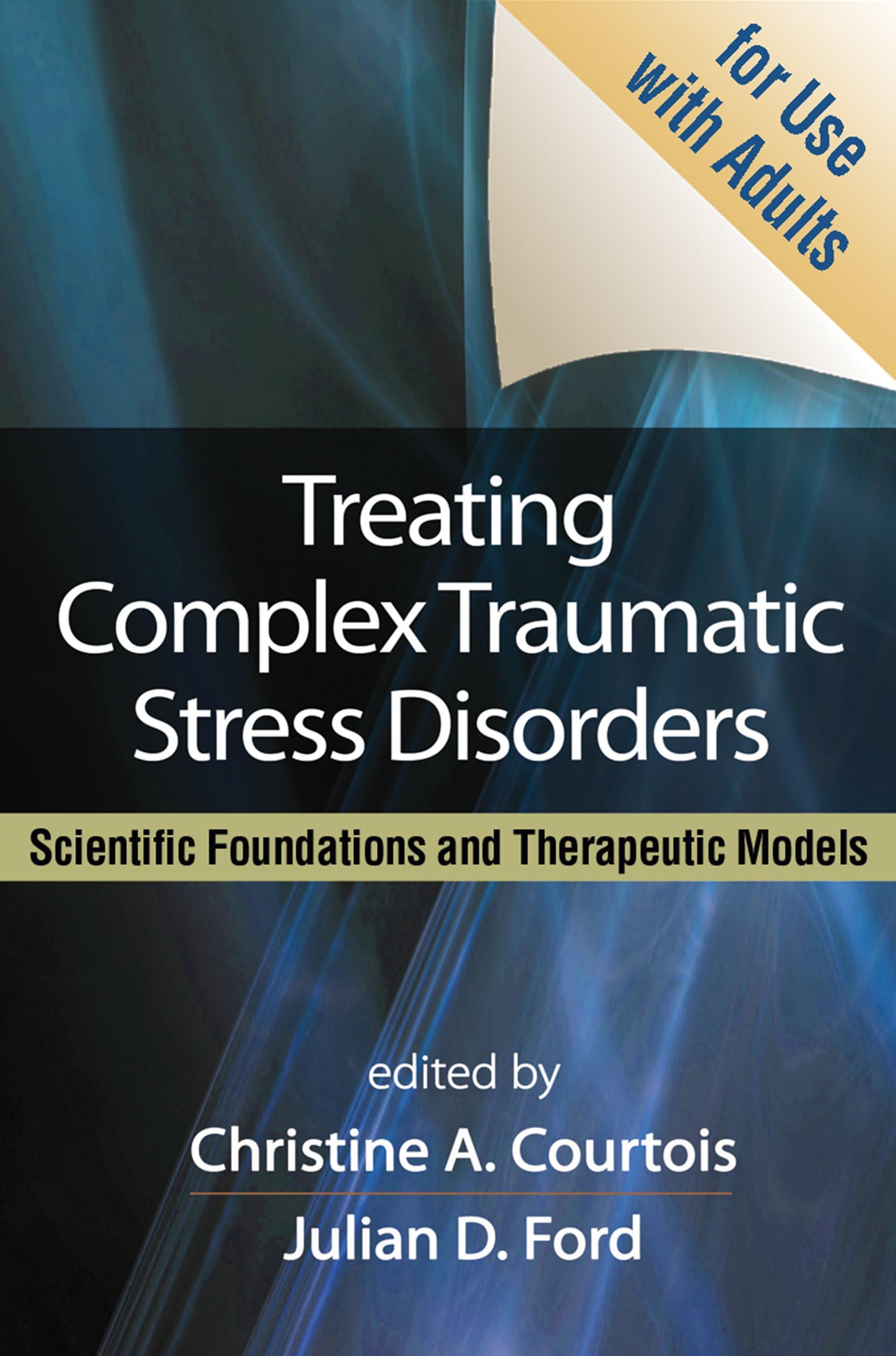
Treating Complex Traumatic Stress Disorders (Adults): Scientific Foundations and Therapeutic Models
Product ID: 1501635
Desertcart purchases this item on your behalf and handles shipping, customs, and support to Japan.
Full description not available
D**G
A Must-Read!
As a psychotherapist, I've struggled to treat various forms of Complex PTSD, in children & adults, for over 20 years, including borderline personality disorder, Reactive Attachment Disorder (RAD) and current forms of multi-deployment Combat PTSD.This recent collection of 20 articles from over 30 leading scholars, researchers and clinicians in the field will doubtless be the standard reference for Complex PTSD for many years. If you want to know more about how to understand, diagnose and treat Complex PTSD, START HERE! The articles are divided into three sections: overview, individual treatment approaches and strategies and - what a relief! - systemic treatment approaches and strategies. I say, "What a relief!", as often in reviews of treatment approaches, systemic approaches are given short shrift. And in my experience, systemic approaches are often VERY much needed, in some cases indispensible, for healing Complex PTSD, especially with children & teens, and especially with major problems with attachment - one sadly common hallmark of Complex PTSD. Each article has an extensive bibliography for those who want to know more.The "Overview" section covers a satisfyingly large number of topics, including current approaches to understanding & defining Complex PTSD, overviews on best Practices with children & teens and with adults, cultural issues, risk management/treatment alliance and compassion fatigue/vicarious traumatizing. I want to compliment the editors for this last article. Few areas of psychotherapy are more prone to therapist burnout via PTSD by association than Complex PTSD. I strongly recommend that all clinicians who work significantly in this area become competent in assessing their own risks to compassion fatigue and take regular steps to manage this.The "Individual Treatment Approaches and Strategies" section is refreshingly clear of biases toward one school. In addition to the standard Cognitive/Behavioral models, they also include articles on Experiential and Emotion-Focused Models, Sensorimotor Psychotherapy and - useful for clinicians to know --Pharmacotherapy. Each article presents an initial summary, the model's basic assumptions/theory, reviews the research, discusses specific clinical applications and presents a case example and/or transcript. While not lengthy, they provide enough information for clinicians to decide whether to pursue an approach further.The "Systemic Treatment Approaches and Strategies" section includes Richard Schwartz's "Internal Family Systems" as well as traditional multi-person "systems" treatments - Couple Therapy, Family Systems Therapy and Group Therapy. As with the individual treatment section, each section includes overview, basic assumptions, review of research, clinical applications and case example/transcript. Both the "Internal Family Systems" and the "Couple Therapy" articles are written by the field's giants - Schwartz and Susan Johnson & Christine Courtois. These two articles are gems for a moderate introduction. I found the family section more disappointing - particularly since so little has been "overviewed" in this field. But then this could be because my giants - Daniel Hughes (see Attachment-Focused Family Therapy and Building the Bonds of Attachment: Awakening Love in Deeply Troubled Children ) and Heather Forbes & B. Bryan Post (See Beyond Consequences, Logic, and Control: A Love-Based Approach to Helping Attachment-Challenged Children With Severe Behaviors ) - weren't even referenced. Nor did they reference the Grand Dame of RAD family approaches, albeit less therapy than parenting -- Nancy Thomas. (Her 2nd ed. of "When Love Is Not Enough: A Guide to Parenting Children with RAD" is a strong improvement, correcting parts in the 1st ed. which could be misinterpreted and lead families to become punishing.)I have three complaints, which are serious, but which don't take away the true importance of this collection. First is that by emphasizing treatments ONLY, they mention, but do not emphasize as much as, in my experience, as is desperately needed, the difficult relationship-building aspects. In my experience, building specific Complex-PTSD relationships is more important than particular treatment approaches. For information about building relationships, and about more on accessing client strengths & feedback, I recommend Psychotherapy Relationships that Work: Therapist Contributions and Responsiveness to Patients and The Heart and Soul of Change: Delivering What Works in Therapy (Be sure to get the 2nd ed., 2010!).Second is that large areas of Complex PTSD are neglected or even completely ignored. For example, as someone who treats Combat PTSD with soldiers (and their families) who've experienced three and four deployments of a year or more, I'm finding that the worse the deployment, and more deployments appear to be creating symptom clusters highly typical of Complex PTSD. Another area: as someone who treats individuals with Asperger's/High Functioning Autism, I find that many AS/HFA teens, especially, because of problems they face - socially, educationally, vocationally, in managing feelings, cognitively - also appear to develop symptoms quite similar to the Complex PTSD cluster.Third is that I strongly wish that issues of addiction & various forms of self-medicating were more integrated into the Complex PTSD concept and into the treatment approaches. I find addictions/self-medicating distressingly common in Complex PTSD. And when present, addictions/self-medicating greatly complicates building treatment alliances and other relationships, the resources available to clients and finding approaches which integrate this into general Complex PTSD treatment.Again, though, I want to emphasize: if you work in this field, I'd recommend buying this book. Its rampant pluralism of approaches is just what Complex PTSD needs. Here, like nowhere else in my clinical experience, one size does NOT fit all. Not only are different treatment approaches needed, commonly different modalities, such as family & group, are also needed. Therefore, knowing several approaches helps the vital process of individualizing treatments.We can never know enough treatments for helping these people & their families. And "Treating Complex Traumatic Stress Disorders" can help us all find more approaches that can help us help more clients.
M**M
Excellent service
The book arrive sooner than I expected. There were no highlights or other distractions in the copy.
S**D
Comprehensive and Interesting
I am not a practitioner, but a well-educated, research-oriented consumer. This is a really thorough and comprehensive series of reviews of current treatment practices in the trauma field. Each chapter is a stand-alone review on a particular focus, and chapters are grouped together when they concern similar treatment modalities. It's quite a bit to wade through in a sitting, but if the reader were not interested in all types and areas of treatment, he/she could read just the chapters of interest. The summaries are generally quite good, with good background material, and lots of references for the ambitious to find more to read on the topic. I appreciated that they summarize research in the field, and acknowledge when good research studies are lacking. I'm sure a practitioner would take a great deal more out of this book, but even non-practitioners with an interest in the material will benefit from this excellent book. Overall, it is well written and interesting to read.
A**R
Half Trauma Theory, Half Therapy Technique, All Good
I bought this book for a master's level social work class. It's the first textbook I've ever read cover to cover.The first half gives in depth trauma theory, including the neurological components, multicultural treatment, and trauma theory development. This will either present you with new and necessary ideas, or a solid reminder of the foundation of trauma work. The second half consists of several chapters that outline specific types of trauma treatments, including transcripts from real therapy sessions. As a student, I appreciated reading about the variety of treatment methods that I can later pursue in post-grad training. I also think it would be good to know what other people are doing, even if I opt not to.One warning, this book is specifically catered to complex traumatic stress disorder, not PTSD. Although, it does point out the connections and similarities.
A**.
Rental is damaged. Don't charge me for it.
I received this today. It's my second Amazon rental book and both have cuts on the cover and a couple of pages under the cover, like box cutter cuts. It's not going to interefer. I just don't want to be charged for damages I didn't cause. Otherwise, fast shipping and the rest of the book is fine.
N**Y
This is an excellent book for a college student or anyone with a ...
This is an excellent book for a college student or anyone with a sincere interest in understanding and/or treating the results of childhood abuse, neglect and trauma. This book was recommended, but not required, for a trauma treatment class that I am taking. I am very glad that I purchased it. It provides a look into the mind and thinking patterns of the repeatedly traumatized child and the very real results of that traumatization in adults and how it impacts daily life.
K**Y
Desperately Needed!
This book is THE ultimate resource and current "How To" for trauma work that does Not fit neatly into a (now outdated) definition of "trauma". Complex trauma is a much more realistic picture of what we have been seeing in today's world. Thanks to the humility, dedication, and commitment of this remarkable list of contributors to share information, this specialty is in top form. I have been privileged to work with trauma survivors for many years and how wonderful to have the "creme de la creme" at my fingertips...How wonderful to have this extraordinary field of work given it's due. By the way, the chapter on Internal Family Systems Therapy is a real bonus.
R**T
Excellent summary of current think on Complex PTSD
This is an excellent summary of current thinking about Complex PTSD edited by experts in the field, after they had interviewed hundreds of Complex PTSD clients and their therapists. I was sold when they started by stating that the relationship between therapist and client is more important than any technique used. Everybody who works with Complex PTSD survivors should read this book.
D**L
Five Stars
excellent for understanding trauma and what is involved in treating
G**S
Topnotch and well written
Awesome book!! Will use as ongoing resource. Highly recommend.
D**M
Five Stars
Very informative for anyone seeking to learn more about trauma.
K**Y
Beautiful!
Thank you amazing service!The content of this book, appears to hold a very potent collaboration of Dr. Judith Herman with some references to Dr. Bessel Van Der Kolk! I can't wait to read it! Mint condition! I'm definitely a satisfied customer :)!
Trustpilot
2 weeks ago
1 week ago