
Buy anything from 5,000+ international stores. One checkout price. No surprise fees. Join 2M+ shoppers on Desertcart.
Desertcart purchases this item on your behalf and handles shipping, customs, and support to Japan.
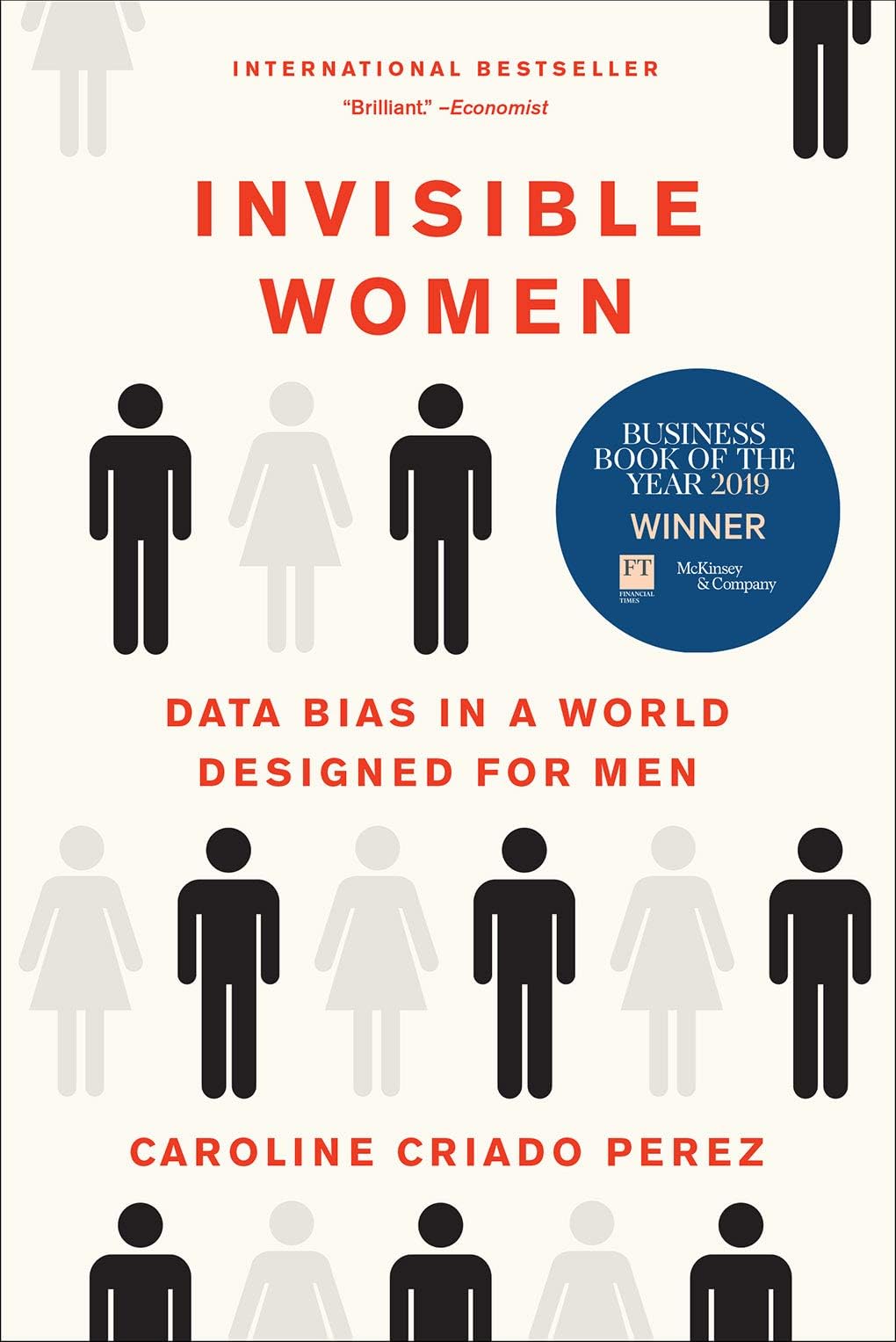
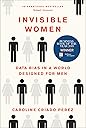
The landmark, prize-winning, international bestselling examination of how a gender gap in data perpetuates bias and disadvantages women. #1 International Bestseller * Winner of the Financial Times and McKinsey Business Book of the Year Award * Winner of the Royal Society Science Book Prize Data is fundamental to the modern world. From economic development to health care to education and public policy, we rely on numbers to allocate resources and make crucial decisions. But because so much data fails to take into account gender, because it treats men as the default and women as atypical, bias and discrimination are baked into our systems. And women pay tremendous costs for this insidious bias: in time, in money, and often with their lives. Celebrated feminist advocate Caroline Criado Perez investigates this shocking root cause of gender inequality in Invisible Women . Examining the home, the workplace, the public square, the doctor’s office, and more, Criado Perez unearths a dangerous pattern in data and its consequences on women’s lives. Product designers use a “one-size-fits-all” approach to everything from pianos to cell phones to voice recognition software, when in fact this approach is designed to fit men. Cities prioritize men’s needs when designing public transportation, roads, and even snow removal, neglecting to consider women’s safety or unique responsibilities and travel patterns. And in medical research, women have largely been excluded from studies and textbooks, leaving them chronically misunderstood, mistreated, and misdiagnosed. Built on hundreds of studies in the United States, in the United Kingdom, and around the world, and written with energy, wit, and sparkling intelligence, this is a groundbreaking, highly readable exposé that will change the way you look at the world. Review: Exceptionally well-written book describing missing and biased data against women - As a woman working in a STEM field, I was already aware of biases, differences in pay, workplace harassment, and more against women in the workplace. I have experienced it myself. But this book brings a much-needed investigation that goes far beyond my anecdotal incidents and really looks at the data (both what exists and what is missing) and the consequences of dismissing half of the world’s population as irrelevant or atypical. This book is arranged with a preface, introduction, six sections, an afterword, an epilogue specific to Covid-19, and almost 100 pages of endnotes and index. Although the book (sans endnotes and index) is 326 pages long, it is very readable and so brilliantly written that it’s funny, and sad, and insightful, and infuriating, and more all at once. The author brings to light numerous issues that at first glance didn’t really seem to be gender/sex-related at all but after looking at them, they actually are. I think this book would be so helpful for people in many fields, especially in leadership in corporations, government, churches, the medical community, small businesses, and more. Introduction: The Default Male The introduction sets up the whole book to show how nearly universally, a default male (body, size, height, weight, shape, behavior, lifestyle, etc.) is used as the default for data, decisions, planning, policies, history, teaching, models, examples, etc. and how this excludes fully 50% of the world’s population’s experiences, bodies, behaviors, needs, and values. Part 1: Daily Life In the first chapter, “Can Snow-Clearing be Sexist?”, the author reveals how many activities, like plowing the snow from roads, have been set up based on male norms without consideration of how females have different norms. In the case of clearing the roads and sidewalks for travel and commuting, when women’s needs and patterns were considered, it was found that clearing side roads and sidewalks prior to major roads reduced injuries and accidents and the overall cost of snow conditions compared with the plan which only considered men’s needs and patterns. Chapter two, “Gender Neutral with Urinals”, looks and bathroom usage and compares the usable square footage and time to use restrooms of men’s bathrooms, which can accommodate more men, with the needs of women who cannot use urinals, often have children or elderly to help, and have physical needs which just take longer than men. As such, equal size bathrooms are simply not equitable. And many worldwide women don’t have access to safe facilities at all. Part 2: The Workplace Part 2 has 4 chapters. “The Long Friday” refers to a day when 90% of women in Iceland decided to strike so that their contributions, many unpaid, would be recognized. Statistically, women do far more unpaid work like childcare, elder care, shopping, cooking, and cleaning compared with men. These tasks cannot be skipped; they are essential but unpaid. “The Myth of Meritocracy” shows how advancement in the workplace based on merit favors men who don’t have essential unpaid work to do at home and can invest more at work. Furthermore, men’s accomplishments are recognized and rewarded more often even when they are not more merit-worthy than women. “The Henry Higgens Effect” refers to a character in My Fair Lady who wonders why women can’t be more like men, as if the solution is to force women to act like men rather than recognize that half of the population is not male and behaving like a woman is quite appropriate for women. The final chapter in this section is “Being Worth Less than a Shoe” and discusses workplace safety standards and equipment that were developed for men without consideration for the women and their size and physiological differences. “Women have always worked. They have worked unpaid, underpaid, underappreciated, and invisibly, but they have always worked. But the modern workplace does not work for women. From its location, to its hours, to its regulatory standards, it has been designed around the lives of men and it is no longer fit for purpose. The world of work needs a wholesale redesign – if its regulations, of its equipment, of its culture – and this redesign must be led by data on female bodies and female lives. We have to start recognizing that the work women do is not an added extra, a bonus that we could do without: women’s work, paid and unpaid, is the backbone of our society and our economy. It’s about time we started valuing it.” p142. Part 3: Design In the section on Design, there are three chapters. “The Plough Hypothesis” looks at cultures where farm equipment, designed for men, allowed men who have significantly more upper body strength and hand grip to become the primary income-generating farmers but in cultures that used hoes, both men and women farmed. Farming practices that favor men aren’t limited to equipment but also impact crop types. Some high-yield varieties increase the time the women had to spend on cooking and preparing the crops and “clean” stoves designed to reduce harmful smoke emissions often increase the effort and time for women to cook and tend to the food. “One-Size-Fits-Men” discusses the issues with equipment, gear, and algorithms designed for an average-sized man and how these ill-fitting products do not properly protect, and sometimes even increase risk because they do not fit properly on women simply because women don’t have the same size, shape, and expression, as an average man. “A Sea of Dudes” shares the difficulties women have getting funding for research and products for women when often men are unaware of the needs of women and don’t value funding products that they themselves don’t need. “Designers may believe they are making products for everyone, but in reality they are mainly making them for men. It’s time to start designing women in.” p191. Part 4: Going to the Doctor “When Drugs Don’t Work” looks at the practice of testing drugs and dosages on men without considering how well they work (or don’t work) on women with different hormones and physiology. My mom is only about 85 pounds and I often wonder if the standard male adult dosage is appropriate for her tiny body. “Yentl Syndrome” starts by comparing typical heart attack symptoms in men versus women. Because symptoms in women differ from men, they are often misdiagnosed, sometimes fatally. Male-dominated funding panels impact how research funding is distributed and diseases that impact primarily women are less likely to be funded and studied. Women typically wait longer, take longer to diagnose, are misdiagnosed more often, and are not taken seriously by the medical community. Part 5: Public Life “A Costless Resource to Exploit” delves into the deliberate decision to exclude unpaid women’s work (childcare, elder care, cooking, cleaning, household activities, etc.) in the GDP. “It makes sense only if you see women as an added extra, a complicating factor. It doesn’t make sense if you’re talking about half of the human race. It doesn’t make sense if you care about accurate data.” p241. “From Purse to Wallet” looks at tax codes and how they favor men compared with women, particularly in that joint households receive tax credits to the head of the household, typically the man, and women may not have equal access to this money. “Women’s Rights are Human Rights” continues looking at how male-biased policies and gaps in government thinking are harming women. “The data we already have makes it abundantly clear that female politicians are not operating on a level playing field. The system is skewed towards electing men, which means that the system is skewed towards perpetuating the gender data gap in global leadership, with all the attendant negative repercussions for half the world’s population.” p286. Part 6: When it Goes Wrong “Who will rebuild” shows that “when things go wrong – war, natural disaster, pandemic – all the usual data gaps we have seen everywhere from urban planning to medical care are magnified and multiplied. But it’s more insidious than the usual problem of simply forgetting to include women. Because if we are reticent to include women’s perspectives and address women’s needs when things are doing well, there’s something about the context of disaster, of chaos, of social breakdown, that makes old prejudices seem more justified. The real reason we exclude women is because we see the rights of 50% of the population as a minority interest.” p290. “It’s Not the Disaster that Kills You” continues by pointing out that during disasters, it is women who are disproportionally negatively impacted. Women face increased domestic violence, trauma, displacement, injury, death, and female-specific injustices during warfare, pandemics, and natural disasters. The afterword offers some hope when women’s voices are included. Women bring valuable insight into the experiences of half the population and their experiences are good for business, economy, and humanity. The epilogue was added to specifically address the Covid-19 pandemic and, unsurprisingly, the “continual failure to systemically collect and sex-disaggregated data on symptoms, infection rates, and death rates from Covid-19.” p319. And of course, PPE that fit women (like masks) were disproportionally unavailable for the many women in healthcare settings who needed them. I found this book very well written, meticulously footnoted, and very eye-opening even though I was aware of some of the issues already. I would highly recommend the book to all leaders and all women. Although the author touched on women’s clothing and fashion, I wish she had chewed on it a little more, especially considering how men are able to purchase pants by style, waist size, and inseam whereas rarely are women offered the ability to buy based on measurements and most pants have only one inseam length as if all women are the same shape and height. Women, their bodies, and their needs matter in all areas of life and we should be considered. Review: Should Be Required Civics Reading! - Very well documented analysis of the entire global female population being historically dismissed and unaccounted for by lack of data in the design of world infrastructures built around men, and how this unbalanced design holds women back in transportation, medical care, the silent, unpaid caregiving work that women do. Women’s safety and vulnerability and lack of resources as the world caregivers suffer immensely in a world designed for men. Women political leaders are harassed, threatened and silenced from impacting legislation. Equality and improved lives for women could be massively improved with sex segregated data instead of data presuming male bodies and lives as default. Outstanding and eye-opening for me, a single female, at age 76. I realize how much of my female life has been a workaround in a world designed for men: from low wages as a college graduate, keeping me impoverished and weak to vehicles that don’t fit to medical providers who do not respect or understand the female body to being interrupted and talked over and disrespected in employment to harassment in public and tounequal marriage and dating relationships. Outstanding book. Highly recommend to women of all ages.


| Best Sellers Rank | #10,705 in Books ( See Top 100 in Books ) #12 in Feminist Theory (Books) #13 in Social Aspects of Technology #15 in Discrimination & Racism |
| Customer Reviews | 4.6 out of 5 stars 13,139 Reviews |
K**N
Exceptionally well-written book describing missing and biased data against women
As a woman working in a STEM field, I was already aware of biases, differences in pay, workplace harassment, and more against women in the workplace. I have experienced it myself. But this book brings a much-needed investigation that goes far beyond my anecdotal incidents and really looks at the data (both what exists and what is missing) and the consequences of dismissing half of the world’s population as irrelevant or atypical. This book is arranged with a preface, introduction, six sections, an afterword, an epilogue specific to Covid-19, and almost 100 pages of endnotes and index. Although the book (sans endnotes and index) is 326 pages long, it is very readable and so brilliantly written that it’s funny, and sad, and insightful, and infuriating, and more all at once. The author brings to light numerous issues that at first glance didn’t really seem to be gender/sex-related at all but after looking at them, they actually are. I think this book would be so helpful for people in many fields, especially in leadership in corporations, government, churches, the medical community, small businesses, and more. Introduction: The Default Male The introduction sets up the whole book to show how nearly universally, a default male (body, size, height, weight, shape, behavior, lifestyle, etc.) is used as the default for data, decisions, planning, policies, history, teaching, models, examples, etc. and how this excludes fully 50% of the world’s population’s experiences, bodies, behaviors, needs, and values. Part 1: Daily Life In the first chapter, “Can Snow-Clearing be Sexist?”, the author reveals how many activities, like plowing the snow from roads, have been set up based on male norms without consideration of how females have different norms. In the case of clearing the roads and sidewalks for travel and commuting, when women’s needs and patterns were considered, it was found that clearing side roads and sidewalks prior to major roads reduced injuries and accidents and the overall cost of snow conditions compared with the plan which only considered men’s needs and patterns. Chapter two, “Gender Neutral with Urinals”, looks and bathroom usage and compares the usable square footage and time to use restrooms of men’s bathrooms, which can accommodate more men, with the needs of women who cannot use urinals, often have children or elderly to help, and have physical needs which just take longer than men. As such, equal size bathrooms are simply not equitable. And many worldwide women don’t have access to safe facilities at all. Part 2: The Workplace Part 2 has 4 chapters. “The Long Friday” refers to a day when 90% of women in Iceland decided to strike so that their contributions, many unpaid, would be recognized. Statistically, women do far more unpaid work like childcare, elder care, shopping, cooking, and cleaning compared with men. These tasks cannot be skipped; they are essential but unpaid. “The Myth of Meritocracy” shows how advancement in the workplace based on merit favors men who don’t have essential unpaid work to do at home and can invest more at work. Furthermore, men’s accomplishments are recognized and rewarded more often even when they are not more merit-worthy than women. “The Henry Higgens Effect” refers to a character in My Fair Lady who wonders why women can’t be more like men, as if the solution is to force women to act like men rather than recognize that half of the population is not male and behaving like a woman is quite appropriate for women. The final chapter in this section is “Being Worth Less than a Shoe” and discusses workplace safety standards and equipment that were developed for men without consideration for the women and their size and physiological differences. “Women have always worked. They have worked unpaid, underpaid, underappreciated, and invisibly, but they have always worked. But the modern workplace does not work for women. From its location, to its hours, to its regulatory standards, it has been designed around the lives of men and it is no longer fit for purpose. The world of work needs a wholesale redesign – if its regulations, of its equipment, of its culture – and this redesign must be led by data on female bodies and female lives. We have to start recognizing that the work women do is not an added extra, a bonus that we could do without: women’s work, paid and unpaid, is the backbone of our society and our economy. It’s about time we started valuing it.” p142. Part 3: Design In the section on Design, there are three chapters. “The Plough Hypothesis” looks at cultures where farm equipment, designed for men, allowed men who have significantly more upper body strength and hand grip to become the primary income-generating farmers but in cultures that used hoes, both men and women farmed. Farming practices that favor men aren’t limited to equipment but also impact crop types. Some high-yield varieties increase the time the women had to spend on cooking and preparing the crops and “clean” stoves designed to reduce harmful smoke emissions often increase the effort and time for women to cook and tend to the food. “One-Size-Fits-Men” discusses the issues with equipment, gear, and algorithms designed for an average-sized man and how these ill-fitting products do not properly protect, and sometimes even increase risk because they do not fit properly on women simply because women don’t have the same size, shape, and expression, as an average man. “A Sea of Dudes” shares the difficulties women have getting funding for research and products for women when often men are unaware of the needs of women and don’t value funding products that they themselves don’t need. “Designers may believe they are making products for everyone, but in reality they are mainly making them for men. It’s time to start designing women in.” p191. Part 4: Going to the Doctor “When Drugs Don’t Work” looks at the practice of testing drugs and dosages on men without considering how well they work (or don’t work) on women with different hormones and physiology. My mom is only about 85 pounds and I often wonder if the standard male adult dosage is appropriate for her tiny body. “Yentl Syndrome” starts by comparing typical heart attack symptoms in men versus women. Because symptoms in women differ from men, they are often misdiagnosed, sometimes fatally. Male-dominated funding panels impact how research funding is distributed and diseases that impact primarily women are less likely to be funded and studied. Women typically wait longer, take longer to diagnose, are misdiagnosed more often, and are not taken seriously by the medical community. Part 5: Public Life “A Costless Resource to Exploit” delves into the deliberate decision to exclude unpaid women’s work (childcare, elder care, cooking, cleaning, household activities, etc.) in the GDP. “It makes sense only if you see women as an added extra, a complicating factor. It doesn’t make sense if you’re talking about half of the human race. It doesn’t make sense if you care about accurate data.” p241. “From Purse to Wallet” looks at tax codes and how they favor men compared with women, particularly in that joint households receive tax credits to the head of the household, typically the man, and women may not have equal access to this money. “Women’s Rights are Human Rights” continues looking at how male-biased policies and gaps in government thinking are harming women. “The data we already have makes it abundantly clear that female politicians are not operating on a level playing field. The system is skewed towards electing men, which means that the system is skewed towards perpetuating the gender data gap in global leadership, with all the attendant negative repercussions for half the world’s population.” p286. Part 6: When it Goes Wrong “Who will rebuild” shows that “when things go wrong – war, natural disaster, pandemic – all the usual data gaps we have seen everywhere from urban planning to medical care are magnified and multiplied. But it’s more insidious than the usual problem of simply forgetting to include women. Because if we are reticent to include women’s perspectives and address women’s needs when things are doing well, there’s something about the context of disaster, of chaos, of social breakdown, that makes old prejudices seem more justified. The real reason we exclude women is because we see the rights of 50% of the population as a minority interest.” p290. “It’s Not the Disaster that Kills You” continues by pointing out that during disasters, it is women who are disproportionally negatively impacted. Women face increased domestic violence, trauma, displacement, injury, death, and female-specific injustices during warfare, pandemics, and natural disasters. The afterword offers some hope when women’s voices are included. Women bring valuable insight into the experiences of half the population and their experiences are good for business, economy, and humanity. The epilogue was added to specifically address the Covid-19 pandemic and, unsurprisingly, the “continual failure to systemically collect and sex-disaggregated data on symptoms, infection rates, and death rates from Covid-19.” p319. And of course, PPE that fit women (like masks) were disproportionally unavailable for the many women in healthcare settings who needed them. I found this book very well written, meticulously footnoted, and very eye-opening even though I was aware of some of the issues already. I would highly recommend the book to all leaders and all women. Although the author touched on women’s clothing and fashion, I wish she had chewed on it a little more, especially considering how men are able to purchase pants by style, waist size, and inseam whereas rarely are women offered the ability to buy based on measurements and most pants have only one inseam length as if all women are the same shape and height. Women, their bodies, and their needs matter in all areas of life and we should be considered.
C**T
Should Be Required Civics Reading!
Very well documented analysis of the entire global female population being historically dismissed and unaccounted for by lack of data in the design of world infrastructures built around men, and how this unbalanced design holds women back in transportation, medical care, the silent, unpaid caregiving work that women do. Women’s safety and vulnerability and lack of resources as the world caregivers suffer immensely in a world designed for men. Women political leaders are harassed, threatened and silenced from impacting legislation. Equality and improved lives for women could be massively improved with sex segregated data instead of data presuming male bodies and lives as default. Outstanding and eye-opening for me, a single female, at age 76. I realize how much of my female life has been a workaround in a world designed for men: from low wages as a college graduate, keeping me impoverished and weak to vehicles that don’t fit to medical providers who do not respect or understand the female body to being interrupted and talked over and disrespected in employment to harassment in public and tounequal marriage and dating relationships. Outstanding book. Highly recommend to women of all ages.
B**S
Good book about data and unconscious biases.
Published in 2019, Invisible Women: Data Bias in a World Designed for Men by Caroline Criado Perez tells the story of how women have been underrepresented, or outright missing, from studies and data as far back as data collecting goes. The author's premise is that all of humanity suffers from an inherent yet unintentional bias against women due to this lack of data. There were some eye-opening parts to this book. The data and studies are well documented throughout, which helps to prove the author's hypotheses and points. Using that data, Perez shares detailed explanations of why the lack of data on women affects decision-making for current and future generations on both micro and macro levels. I also enjoyed that many industries (transportation, technology, healthcare) and countries (Bangladesh, Brazil, UK, Sweden) were noted. While there were many great elements of the book, naturally, there are things I didn't love. The author got perhaps too biased and let her personal opinions color the data at some points. As a woman who is not a mother, I also felt that Perez did not do a great job of separating "woman" from "mother." I'm sure there's a reason for that, and for the most part, I'd guess that, around the world, most women are mothers. However, it did leave me asking questions about the data surrounding domestic work when women are not mothers. Finally, about halfway through the book, Perez began asking many "what-if" and "what-about" questions where the only solution was "collect more data on women." While the answer is a resounding, "yes, we need more data on women, and we need sex-disaggregated data," how do we get that? What changes are we making in academia, in the field, and globally to collect new or improved data? I was left without an answer to that question. Perhaps the point of this book was to shed light on the lack of data on women. However, this book felt a bit like hot-potato: yes, it's a problem, but no one, including the author, is offering tactical solutions to remedy it. Invisible Women is a must-read, but there's still bias built-in.
W**.
Male privilege is real.
Did you know that snow plowing/clearing can be sexist? Yup, it is guys. Major streets, highways, and thoroughfares get most of the attention after a snowfall because duh! people need to drive to work and stuff, right? But, according to the author, this benefits men disproportionately as they have relatively straightforward commuting patterns and are less likely to use public transport. Women, on the other hand, must contend with circuitous patterns of commute (i.e. kid's school, groceries, parents, work, laundry, kid's practice, etc.) that not only expose them to less tidy roads after inclement weather, but also sloppy sidewalks that have shown to result in more injuries which translate to lost productivity and eventually more expenditure on healthcare programs, etc. And that's just the appetizer... So....women are difficult to measure, non-linearly commuting humans that do 75% percent of the world's unpaid labor, who are disproportionally affected by cuts to social programs, who are constantly being subjected to an infuriating double standard, and whose contributions to the nation's GDP has been largely unaccounted for. If you are not the "default human" in most studies (i.e. a male) then grab some calming chamomile tea and take your blood pressure medication or something cause each chapter is sure to make your blood boil. If you are a "default human" however, then be prepared to have an entirely new understanding of the word privilege... There is some overreaching in terms of the arguments that caused me to squint and purse my lips the way I do when I'm extremely skeptical about something, like when she presented the idea that it's hard for women to perform similarly to men in construction jobs cause cement bags are just too darn big and so are bricks! If they were to change the world standard for bricks though...problem solved eh? Also, apparently men drove the trend towards bigger and bigger phones, cause we have big manly hands and we can handle them whereas women must contort their digits in all kinds of ways causing them much discomfort. But they do make them smaller I thought? Anyways, the point is that they won't fit in their darn pants pockets! By Jove, If the patriarchy just stopped designing Lululemons, yoga pants, skinny jeans, pantsuits and tiny purses, then...Hmmm. Methinks women in the fashion industry have it well within their province to address these issues, yes? In general tough, this book is an eye-opening, world-view changing kind of work that has research in spades and deserves every accolade and award thrown its way. Must read recommendation!
J**P
Brilliant (and infuriating). A must-read!
10/5 stars. This book is data-driven, detail rich and nuanced. It highlights the systemic ways that women & girls have been excluded from science, medical development, and community work and how that exclusion hurts communities. (Example: Crash test dummies are only created in average adult male sizes, not women sizes, and shocker, women are more likely to be seriously injured in car accidents than men.) This book honors the incredible advancements we have already made in science, tech, medicine, etc, and calls for future development to include women & girls. This is not a hate-bash against men or innovation that already exists, but a call to continue filling in our data gaps and systemic failures. It is thoughtful, important read.
H**.
Great read for those genuinely interested in learning about real societal problems.
Provides well laid out evidence and objective facts explaining our society and many other societies throughout the world are patriarchies, but beyond that have failed to consider women as half the human population. It’s also very good at explaining how it hasn’t been done maliciously because that’s just how patriarchy works. It’s a great read for anyone genuinely interested in societal problems posed by the fact that we exist in a patriarchal society and/or interested in doing something about it. All of the examples given would be excellent places to enact change for more justice and equity for everyone.
S**S
Amazingly sourced argument for women
The research that went into this book is extensive and comprehensive showing multiple ways in which women are being ignored, attracting attention in wrong ways or doing valuable work that's not recognized enough. And it's clear that gender bias is an important issue that needs to be addressed. Yet, the way the argument is transmitted becomes repetitive and monotonous. Statistic over statistic makes for a tedious reading of an important argument that could have explained in a simpler way. The effort to use data in every situation also leads to some points in which data is stretched or put out of context. So while the key points are important, the book itself leaves a lot. Some points even seem to conflict with each other, leading to a feeling that everything is so wrong that solutions contradict each other. This is important because although your book highlights many ways in which women are being affected by gender bias and suggests plenty of recommendations to address them, it fails to explain how to integrate these recommendations in a coherent vision for the future in which no gender bias exist. Sone key points such as collecting more gender disagregated data and including more women everywhere are diluted in hundreds of specific examples. Overall I think the main points of the book are important and the references sustaining them are impressive, yet the argument could have been explained more clearly without so much repetition and the many examples could have been integrated
M**S
Where do I begin
I heard about this book on Roman Mars' podcast "99% Invisible" and bought this book as a female who works in User Experience Design, to improve my understanding of data and to hopefully improve my research skills. As someone with a science background, I needed to be convinced on the data and research first, before highly investing (which I am now questioning- because I knew it was written by a female?) and believing the logic. This book is extremely well researched and written, thoroughly logical, and written in a fashion that is not accusing of males (which often isolates those readers). Instead, it is inclusive and instructive. As someone who watched their mother and has personally been, the subject of verbal/emotional abuse, I was able to sympathise and empathise with many aspects of the book. I walked away pissed off in all the right ways. This book is eye-opening, especially for males with an open mind, but even for females who are apprehensive to the extremist qualities of feminism. I recommend this book to so many people on a daily basis now, that they must assume I am being paid for it. Everyone should be required to read this book.
S**Y
Good book
Very interesting
L**A
Eye-opening, data-backed, a necessary read.
Recommended to everyone - especially men. We are simply not aware of how the world we live in is impacting society as a whole. This book is based in so many studies and data it is impossible to argue with the reality it presents.
A**R
Livro necessário
Esse livro é perfeito. Um livro necessário que coloca luz sobre fatos através de pesquisas que já eram sentidas na pela pelas mulheres. Leitura obrigatória para todo pesquisador e pesquisadora, assim como qualquer pessoa que se interesse por viés, diversidade de gênero e igualdade.
N**A
A true eye opener book - Highly recommended!
Very interesting book that highlights the gender data gap that shapes nearly every aspect of women's lives. From medical research and devices, to technology or even to workplaces/living infrastructure and design, it appears that the world is built without keeping in mind women's health and safety needs. A one-size-fits-all approach is not working for half of the world population. Highly recommended!
P**V
The best book about women
Brilliant book
Trustpilot
1 month ago
3 weeks ago