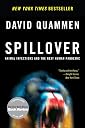
Spillover: Animal Infections and the Next Human Pandemic
Product ID: 1478964
🌍Global field research
📚Top-ranked science bestseller
🦠In-depth zoonotic virus analysis
Desertcart purchases this item on your behalf and handles shipping, customs, and support to Japan.
🦠 Unlock the viral mysteries shaping our future—read Spillover before the next pandemic hits!
Spillover by David Quammen is a critically acclaimed, bestselling exploration of how animal-borne viruses jump to humans, triggering pandemics. Combining global fieldwork, expert interviews, and accessible science, it reveals the origins and risks of diseases like Ebola, HIV, and SARS. This book is a must-read for professionals seeking to understand the complex interplay between ecology, human behavior, and emerging infectious threats.

| Best Sellers Rank | #15,923 in Books ( See Top 100 in Books ) #1 in Public Health (Books) #1 in Infectious Diseases (Books) #1 in Bacteriology |
| Customer Reviews | 4.7 out of 5 stars 4,920 Reviews |
N**N
Fantastic
This is the best book I have read in a long time. It is like a mystery thriller played out in various exotic locations around the world, that simultaneously, gives the reader intriguing and accurate knowledge about various exotic but dangerous pathogens that have the potential to forever change life as we know it. In other words, if you would put the Selfish Gene by Richard Dawkins, a travel diary book by Bill Bryson, and an Agatha Christie thriller in the mixer, you would get something like this. It just doesn't get better than this! David Quammen's writing is accessible and throughout the book I was amazed by his ability to explaining difficult scientific concepts in a way that makes the reader understand... even crave science. Though I have read many scholarly articles, no single text I can recall have given me such a deep understanding and appreciation for a scientific subject. I have always been fascinated by bacteria and viruses, however this book multiplied my fascination and my appreciation for the scientists that study viruses and other pathogens in humans as well as in other species. This book is about spillovers (surprise!). A spillover is when a virus or a bacteria which normally live in one species transfer to a different species. Normally this transition spells the end for the pathogen because they evolved to live in their host species and not in the new species, but sometimes the pathogen survive or even thrive in their new host, which is typically bad news for the new host. Think of pathogens such as Ebola, rabies, HIV, SARS, and the Spanish flu, all of which are spillovers from other species, and you will understand that pathogens that have the potential to spillover a.k.a zoonotic viruses can result in disaster. Be assured, you will learn much about these intriguing pathogens, however, this book is not just a review of what we know about zoonotic viruses. On the very first page Quammen takes us to a sunny idyllic farm in Australia. Recently a number of horses have died following under mysterious circumstances. Worse still, several humans that came into contact with the horse also died. What caused these deaths and from where did the horses acquire it? Quammen instantly grips the reader. It was an instant page turner, with real science in it! You must know how these horses and humans died and you gladly, eagerly, follow Quammen when he takes you on a journey in the scientific literature as it develops over time, with frequent field visits that Quammen personally joined to understand the subject better. Quammen cover several different pathogens, including HIV, Ebola, malaria, and SARS, and he travels accordingly. We get to follow scientists (and Quammen) into crowded Asian markets where hundreds of different animal species, each with their own set of nished pathogens, can be bought for that evenings dinner. We get to visit Bangladesh to analyse date-palm-sap to see if bats have pooped deadly virus into this popular drink. We visit the Congolese jungle where Ebola have completely eradicated large populations of gorillas as well as some smaller human populations. We go to caves filled with snakes, bats and guano. Of course we also get to visit high tech laboratories around the world to talk to researchers who try to understand these zoonotic viruses and predict where the next big pandemic will strike - because if or when "the next big one", capable of killing us by the millions, comes, it will almost certainly be a spillover from another species. The human species is vulnerable. We are around seven billion people. We are an urban species meaning that we tend of cluster in large groups (cities), which provides pathogens with the perfect springboard. We travel extensively, and could thus easily spread a virus around the globe in a short amount of time. We also continually mess with new ecological systems which may or may not have a deadly virus just waiting for a new host... Put another way. Human population growth is an typical example of an outbreak i.e., explosive population growth. Just like with outbreaks of crickets that sweep across Africa eating everything it encounter, humans are sweeping across the entire planet, interfering with lots of ecological systems along the way. Indeed the most massive outbreak of any species that the world had ever seen is not a cricket or a larva, it is homo sapiens. And when there is an outbreak of a particular species what typically halts it? You guessed it - pathogens.
R**K
Gripping stories with good science
The jargon of diseases can be boring, tedious. There are a lot of acronyms and big words. Worse, we often don't know as much as we'd like -- and usually we aren't very certain of what we do know. Telling a good story given those constraints is hard. But Spillover repeatedly provides gripping stories that still impart a good understanding of what we know about zoonotic (animal-origin) diseases. Even better, the author ties disparate stories together to describe some general trend and possible causes for seemingly new infectious diseases. But I don't want to summarize the conclusions: I want you to go read it. You won't be bored and you'll learn a lot (most definitely even if you've read books like The Hot Zone or the Coming Plague). Some other notes: * The author has a less human-centric attitude and a lot of sympathy for the animals, like horses or apes, who sometimes are actually the first animal a disease spills over into only to later infect humans. * He has a wry tone. When noting the euthanasia of a large number of monkeys (even ones likely not infected with a disease), he notes no humans were euthanized despite equal exposure. * He provides full references. Some of those papers are quite readable by a non-expert such as this review ([...]) of the importance of bats as reservoirs for infectious diseases. * The stories are often told from the perspective of the scientists trying to figure out what the heck is really going on. The author is also not afraid to explain when scientists just don't know -- and how they might figure it out more. * The author went on several field collections where he might have been exposed to a disease being investigated. If I had any criticisms I would have two: * The author notes the problem of calling African hunted wild meat "bush meat" which has unsavory connotations to many Europeans and Americans despite Europeans and Americans also hunting wild animals for food. And then he still calls it that repeatedly for the rest of the book (hunted animals are a major source for new infections). I realize this makes it easier to read but it was a bit jarring. * There is a long, imagined story in the chapters on the origin HIV that is, essentially, imagined entirely with details about a possible river fisherman who gets infected with HIV early on and brings it downstream to the (then) Belgian capitol of the Congo. Elsewhere in the book when the explanation for the origin of a disease required some imagination to fill in a plausible sequence of events, the imaginary stories were a lot less elaborate. I don't think the story detracts from the accuracy of the book: something like that had to have happened to explain the origin of HIV (specifically HIV-1). I was also perfectly entertained and learned a bit about the cultures in the region, but it stood out. It might annoy some so I note you can safely skip ahead when you hit it. I call these two things out, but even so the book is still excellent. I have some interesting papers I want to read. I also feel I know more about how infectious diseases "work". Best of all, I am less fearful of them as well.
B**E
A masterpiece! Epic in scope, highly relevant, and excellent writing 10/10
Overall: This book is an absolute masterpiece. Epic in scope, brilliant in how it is all connected, very relevant to today, and extremely eye opening and illuminating. Not an easy read but absolutely worth it! 10/10 Summary: Much of this story is detailing Quammen's adventures and research following various zoonosis around the world. Fun fact: Historically, some 60 percent of the infections that plague humankind, from influenza to H.I.V. and bubonic plague, all originated in the bodies of other animals. This book is neatly divided into sections based around a certain zoonosis or a group of similar ones. Each section is a meticulous telling of the origin, history, pertinent findings and research, development, and current state of these various zoonotic diseases. Take home message: eat more plants and chocolate! Note: though this book is all about zoonosis it should not cause the reader to panic or be scared about them. “Spillover” hardly touches on such pandemic-worthy animal pathogens as avian flu or multi-drug-resistant bacteria, rather, it fully describes the unfolding convergence between veterinary science and human medicine, and how veterinary-minded medical experts discover and track diseases that spread across species. “Spillover” is less public health warning than ecological affirmation: these crossovers force us to uphold “the old Darwinian truth (the darkest of his truths, well known and persistently forgotten) that humanity is a kind of animal” — with a shared fate on the planet. “People and gorillas, horses and duikers and pigs, monkeys and chimps and bats and viruses,” Quammen writes. “We’re all in this together.” “When a pathogen leaps from some nonhuman animal into a person, and succeeds there in establishing itself as an infectious presence, sometimes causing illness or death, the result is a zoonosis.” The Good: I loved this book! Granted it is a subject I am very interested in but I listened to it with my husband who has no medical or animal background, and he immensely enjoyed it as well. The storytelling is amazing, it really does read like a narrative and I felt swept away at many points that I had to remind myself this was nonfiction. Another major positive is the scope. This book has SO MUCH information and yes, you absolutely have to pay attention, but the author does a great job at bringing everything together and explaining difficult to understand topics. It is a blend of science, history, ecology, anthropology, immunology, research, and all presented cohesively in a narrative that grips you with every chapter. My favorite section of all was Ebola. Overall, this book is phenomenal, very relevant to current events, and I learned so much while listening to it. Highly recommend. The Bad: There were a few chapters in the section on AIDS that the author was speculating and theorizing that I was not a fan of. I preferred the remainder of the book which was all based on facts and science that I found these few chapters distracting and out of place. Some sections are dense in material that you really do need to be paying attention in order to keep up. I found this to be a positive though as I really learned a lot while reading this book.
K**R
Excellent book, terribly audio narrator!
I enjoyed this book a great deal, but was truly horrified by the constant mispronunciations by the narrator of scientific terms, names of people and places, and even words that are in common usage by those with a good vocabulary. Do yourself a favor and don't bother with the audio. I'd give the narrator zero stars if I could. I've listened -- briefly -- to other narrators who are boring beyond belief, but I have never run into one who mispronounced so many key terms -- and apparently didn't even bother to ask for help or look it up for himself! That said, the basic concept of the book, the fact that diseases spilling over from animals to humans is only recently being explored to the degree it needs to be since that's where the next pandemic is coming from, was very well covered by the author. It was fascinating to learn more about the various nasty diseases discussed in this book. The author's research was thoroughly done, almost to excess at times -- he got too far into the weeds at times, making it almost impossible to grasp the basic information. At other times, however, he made a difficult concept very clear -- perhaps simplified for the lay person like me, but understandable at a very helpful level. His long flight of fancy of how HIV moved out of the jungle of Cameroon to encircle the world was a bit too fanciful, I thought, although his explanation of why it took from 1908 to the 1960s and 1970s for science to become aware of it was very helpful, and his description of the factors in the Cameroonian society that contributed to the slowness of its spread were also helpful. And his willingness to travel the world and talk to the key scientists involved in the research into the various diseases contributed to his accuracy in the technical details, I'm sure. And he pointed out the areas where our knowledge is either minimal or lacking, which was also useful if a bit worrisome -- such as the reason bats are involved in the transmission of so many diseases between so many species. Which leads to one important lesson I also learned: I will never go into a bat cave again!
G**R
Out of the forests and into the cities
Spillover deals with the phenomenon of disease spread to humans through contact with animals. As humans press into ever more remote corners of the earth, crowding once distant animal populations into ever smaller physical spaces, the frequency of our encounters with them increases...and so does the opportunity for humans to become infected with animal-borne diseases, known as zoonoses. Many frightening human diseases are zoonoses including SARS, AIDS, ebola, Lyme disease, and the so-called "bird flu," H5N1. David Quammen takes the reader on a journey through the scientific process which attempts to isolate and identify these diseases and determine their origins. And a fascinating journey it is. Quammen eschews sensationalism in favor of scientific accuracy. He could have easily gone the route of other recent authors playing up the fear of exotic diseases in a dramatic fashion in order to sell books. Instead, through meticulously researched retellings of some famous hunts for recently emergent diseases, he shows the reader just how painstaking and demanding disease research is. Far from occurring exclusively in white, sterile laboratories, much of the early hard work takes place in the wild, where the disease-carrying animals live. Samples have to be obtained by someone, and it's often very dirty and dangerous work. Some of the tales of entering densely packed bat caves where the risk of accidental infection is high may make your skin crawl. Quammen has an extremely engaging style. While he feeds you a steady stream of detailed virology and bacteriology, he does it in such a way that you barely notice you're getting a real scientific education. His manner is easy-going, conversational, and engaging. It's a good thing, too as "Spillover" clocks in at a hefty 500-pages plus. Despite it's length (and it probably could have been shortened by a good editor), I made quick, steady progress, pulled along by Quammen's tales of scientific detective work. He doesn't report these stories from a distance either; the book chronicles Quammen's extensive travels to remote locations to interview the researchers directly responsible for cracking some of the toughest zoonotic outbreak mysteries. The book's bibliography and end notes are particularly impressive. There's a lot of food for thought in this book. Diseases capable of jumping from animals to humans have always been out there, but in no other time has the opportunity for them to do so been greater. And with the mobility of modern humans, flying from one distant location to another in a matter of hours, a means for distribution and spread that was previously unimaginable is now common. What happens in Africa, Australia or Malaysia can directly affect the health of populations on every continent on earth in a matter of days. Quammen asks us to think about what our reaction will be: irrational fear or pragmatic preparation for what we know will eventually come.
S**Y
Get your flu shot and read Spillover. Today.
Once I saw the subject of David Quammen's latest book, Spillover: Animal Infections and the Next Human Pandemic, I was determined to get my hands on and read it as soon as possible. True - and it is worth every dollar I spent. Likely the next big pandemic will be the result of a spillover virus of some kind. A spillover describes a zoonoses, infectious diseases, that originate in animals and spread to humans. Quammen explains: "When a pathogen leaps from some nonhuman animal into a person, and succeeds there in establishing itself as an infectious presence, sometimes causing illness or death, the result is a zoonosis. (pg.20)" "Ebola is a zoonosis. So is bubonic plague. So was the so-called Spanish influenza of 1918-19 [which killed] as many as 50 million people...(pg. 21)" And: "Emergence and spillover are distinct concepts but interconnected. 'Spillover' is the term used by disease ecologists... to denote the moment when a pathogen passes from members of one species, as host, into members of another. It's a focused event. (pg. 43)" Viruses/diseases discussed include: Ebola, Hendra, hantaviruses, influenza (H5N1, H1N1), Lyme disease, herpes B, the Black Death (perhaps), hepatitis C, AIDS, SARS, dengue, rabies, Marburg, Nipah, Marchupo, yellow fever, Lassa, HIV, and more. It's very likely that most of the virulent viruses we fear begin as a spillover zoonosis. Certainly every time we hear of a new flu virus, we will also hear where it is suspected that it originated from, be it swine or bird. What is truly frightening is that, while the big outbreaks of these viruses seem to be limited, in reality the viruses, like Ebola, are present all the time. Predicting or anticipating when an outbreak will occur is impossible. It is helpful to know what animals carry the viruses. Add to that knowledge the reality that today an infected person or potential carrier of a deadly virus can fly across the world in a short amount of time. It is quite interesting to read Quammen account revealing that "AIDS began with a spillover from one chimp to one human, in southeastern Cameroon, no later than 1908 (give or take a margin of error) and grew slowly but inexorably from there. (pg. 427)" One of the many great qualities of Spillover is the accessibility of Quammen's writing. He creates a palatable sense of drama and anticipation in this very informative nonfiction account. He informs and entertains; even while imparting serious information, he includes witty, humorous comments. I enjoyed this book very much. Get your flu shot and read Spillover. Today. Very Highly Recommended - one of the best
R**E
science exposition at its best - authoritative, balanced and a page turner
Spillover is science exposition at its best. Quammen introduces zoonotic diseases, those that travel to humans from other animals, in plain and accurate language, explaining their discovery, ecology, transmission and impacts. At over 500 pages, it's a longish book but Quammen uses exotic field trips, interviews, research and forensic analysis to give the reader a feel for the work of the range of professionals who tackle it. Having traced the outbreak of Equine Influenza in Australia, I was gratified by the insight with which Quammen identified the salient facts, related the human impact of the outbreak, sized up with dry humour the gap between self interest and credibility of some of the players, and, most importantly, threw into stark relief the ecological causes and health consequences of the outbreak. This is the most balanced and thorough update on zoonoses since The Coming Plague by Laurie Garrett in 1995. Quammen jumps about in time, but the priority he asserts in presenting the common features of zoonoses, their risk, their animal reservoirs and their evolutionary history, makes sense and his warm writing style facilitates this approach. The wild reservoir for Ebola has not been proven, but the story is more complete for malaria, HIV and the flu viruses. This makes for a fascinating build up to the chapter "It Depends" where boom-bust ecology is applied to the human population, and Quammen tries The Analogy on a range of experts. I have ordered some of Quammen's earlier work - can there be a better recommendation.
E**R
Should Be Required Reading and I Wish it Was Longer!!
This book is awesome. There. I've said that. It is also accessible to any reader with an interest in medicine, the history of medical discovery and discoverers, and people who like to experience the world at large in all the places and manners that might be available to them, by travel, or the written word. I only wish I hadn't read it so I could read it again immediately. It was that good. The author has an impressive talent for weaving the stories of science, the tools of the researcher's trade, and in spite of a wealth of technical science, you should still "get it". He has also cleverly imaginaged a purely fictional but amazing story within the actual science that demonstrates ehow the most horrifying "spillovers" of today's killer diseases walked out of remote Africa and Asia, and into the so-called modern world. I came at this book with a (very old) education in genetics, more recent practice of genetic genealogy and understood most of the genetic science. And having just re-read the 1926 classic "Microbe Hunters", which is a great lead-in to the history and method of those who first recognized the microscopic world of the "little things that always get you in the end". You might try that sequence for extra fun and an introduction to some of the very early scientists who first laid down the "germ theory" of disease. You will meet them again in Mr Quammen's book. I highly recommend "Spillover". There were many "OMG", "Holy @$!&" and OH WOW!!" moments for me. Don't be scared away by the subject or worry it might be too scientifically difficult. The author insures his reader will understand and have fun doing just that...understanding. As far as I'm concerned, I could have read on with joy for another 591 pages. I was sorry when I finished it and it will be read again.
M**M
Magnífico
Muy interesante, informativo y ameno. No es un inglés técnico, sino periodístico
A**R
You should read this book.
Amazingly written book that has been compelling in each section and offers great insights. It goes into great detail on the biology (ecology, evolution, and genetics) of many zoonotic diseases, yet is written in a way that is accessible to readers from all walks of life. Terrifyingly accurate in predictions on future "spillover" events. Great read.
J**S
Excelente libro
El libro es muy interesante, y a cada página dan ganas de leer la siguiente. Si compran este libro podrían considerar ahorrarse "The Chimp and the River" porque ese libro derivó de un capítulo con el mismo título de este libro.
K**R
Book That Matters To Us Humans More Than Anything Else On The Table
This book is indeed a page-turner. The topics this book touched upon relate to our day to day lives and our surroundings and the ecosystem we live in. Humans have been destroying this ecosystem for their own benefit, and every act of injury to Nature has repercussions. And the zoonotic diseases that come out of this cauldron of animal killing, deforestation and rapid urbanization are not here to stay put. Viruses like Hendra, Ebola, West Nile, Marburg, HIV, Nipah, Influenza etc. have been given a good share of pages in this book. Other diseases like Malaria, Lyme Disease,... too. It's a big book, not so easy to read, if you are not really into diseases and their origins. But the way it has been written, true to everyone reading this, even a lazy reader can sit on his desk and peruse it for hours. Virus behaviour, evolution, genetic mutations and phylogenetics have been explored while telling the different case studies. However, the best part (for me) is when the spillover of HIV is described using a person "Voyager" in the book. That is how Science books should be written, I guess. And David Quammen was extremely professional throughout the book. I wish him a long and healthy life.
P**M
Essential reading during the 2020 Coronavirus pandemic! Easy to read, informative, compelling.
David Quammen’s book about zoonotic (animal to human) diseases is essential reading in the middle of the 2020 Coronavirus pandemic, because it is highly relevant to this current crisis. This remarkable book is profoundly informative and fascinating. If anyone thought a book about virology, epidemics and human pandemics would be hard work and boring, they would be wrong. Quammen's book is gripping, moving and exciting. And this easy-to-read book clearly explains the complex dynamics between viruses, insects, birds, mammals and humans. This is first book I have found that defines the replication, random mutation and transmission of viruses in a most straightforward manner. Quammen opens with a description of the virus Hendra, which attacks horses with devastating results with occasional spillover to humans. He moves on Ebola before tackling malaria, Lyme disease, SAR-CoV, HIV and many others. His SAR-CoV interviews with scientists, doctors, patients and survivors reveal a frightening similarity and timeline to the current Coronavirus crisis, whilst underlining one of the most important differences: SAR-CoV showed symptoms almost immediately, whilst CoVid-19 symptoms show themselves several weeks after infection, by which time the virus has been widely spread. Quammen's commentaries revealing the suffering and treatment of many of the victims of these epidemics are compelling, compassionate and intensely moving. He also provides superb unbiased analyses of the research into each disease, setting alternative theories side by side, and gently leading the reader through complex matters such epidemiology, virology and mathematical epidemiology. His research is backed up by incredible personal experiences - such as following the catching and sampling of bats in Bangladesh and in the horrendous cobra-infested caves of Uganda. This is an excellent thought-provoking book - intelligent, well researched popular science at its best.
Trustpilot
2 weeks ago
3 days ago