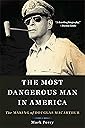
The Most Dangerous Man in America: The Making of Douglas MacArthur
Product ID: 14443512
Desertcart purchases this item on your behalf and handles shipping, customs, and support to Japan.
At times, even his admirers seemed unsure of what to do with General Douglas MacArthur. Imperious, headstrong, and vain, MacArthur matched an undeniable military genius with a massive ego and a rebellious streak that often seemed to destine him for the dustbin of history. Yet despite his flaws, MacArthur is remembered as a brilliant commander whose combined-arms operation in the Pacific -- the first in the history of warfare -- secured America's triumph in World War II and changed the course of history. In The Most Dangerous Man in America , celebrated historian Mark Perry examines how this paradox of a man overcame personal and professional challenges to lead his countrymen in their darkest hour. As Perry shows, Franklin Roosevelt and a handful of MacArthur's subordinates made this feat possible, taming MacArthur, making him useful, and finally making him victorious. A gripping, authoritative biography of the Pacific Theater's most celebrated and misunderstood commander, The Most Dangerous Man in America reveals the secrets of Douglas MacArthur's success -- and the incredible efforts of the men who made it possible. Review: Dangerous and Midunderstood - I've always wondered about the mind of a military genius who holds the lives of millions in his hand, makes strategic decisions that cost lives and wins wars and knows that he is invincible. And I got to find out in reading Mark Perry's 5-star bio of General Douglas MacArthur...a man who stood in the middle of history and whose complex mix of ego, ambition and brilliance was hardly a passive component of shaping the world as we know it today. I usually gloss through the first few chapters of a bio because they are boring to me, but Perry plunges us right into the deep end of the pool when he starts out with one of the most contentious meetings ever between a President and a senior military officer when FDR sought to slice the military budget 51% in 1934...a cut that would fatally erode military readiness in the face of growing Japanese militarism and German aggression. MacArthur warned FDR that when we lost the next war because of these cuts, "and an American boy, lying in the mud with an enemy bayonet through his belly and an enemy foot on his dying throat, spat out his last curse, I wanted that name not to be MacArthur, but Roosevelt." The cuts were not as deep as intended but MacArthur carried on a constant battle with Washington to provide for his troops. His career was not without controversy from his incredible blunder with the Bonus Army at Anacostia, his evacuation from Corregidor and his confrontation with Truman...but he is a huge footprint in history because he was a man of enormous courage and got the nickname "Dugout Doug" which followed him for six decades. MacArthur's military genius resided in his voracious reading and ability to foresee that war was on the horizon and it would be fought differently because of innovations in technology...military theorist B. H. Liddell Hart wrote in 1935, "Someone in America had finally noticed that a war was coming and was thinking about how to fight it." It was MacArthur who recognized the power of aircraft in warfare..."The nation that does not command the air will face deadly odds. Armies and navies to operate successfully must have air cover." His tour of duty in the Philippines brought him to the precipice of his career and he was not alone when Pearl Harbor stunned him with it's sheer violence and the stark contrast with which America was unprepared to meet such a vicious foe. " Inevitably, the American stand in the Philippines became the stuff of legend" when MacArthur proclaimed, "I have not the slightest intention in the world of surrendering." He formulated a "fighting retreat"...the object being not to win but to survive to fight another day." And fight for the next four years he did...in the Pacific and in Washington...The politics is stunning. He fought like a lion for supplies for his troops...landing craft, air assets, food. His supply chief, Richard Marshall worked tirelessly to surmount these difficulties but during one explosive debate he charged, "There are some people in Washington who would rather see MacArthur lose a battle than America win a war." But the thing that makes this a 5-star book is the command Perry has when describing the hard-fought battles...his words take the reader to the heart of the action and gives one a fearful understanding of the horrors of war. He takes us to a beachhead just taken by our troops..."MacArthur tramped through the mud, talked with the men and awarded a Distinguished Service Cross to the first soldier who had made it ashore." Inspecting the front lines an officer warned him, "Excuse me, sir, but we killed a Jap sniper in there just a few minutes ago." MacArthur kept walking..."Fine. that's the best thing to do with them." One of the fascinating stories of World War Two was the MacArthur-Nimitz competition in the Pacific...but Perry finds that "not only did the feud fail to paralyze America's ability to wage war it actually promoted strategic flexibility." Pride never overcame love of country. MacArthur was also a student of Major General Fox Conner, the most influential of a group of army strategic thinkers from World War One...and he understood the three pillars of American warfare..."Never fight unless you have to, never fight alone and never fight for long." This all leads up to MacArthur's finest hour...his walk to the Red Beach on the Leyte coast and announcing "People of the Philippines, I have returned." When he and his staff plowed toward Red Beach on that day, MacArthur's dignified arrival was cut short when the beach master refused to clear a space for the launch and remained unimpressed when told it was MacArthur..."Let 'em walk," he said and MacArthur did though he was irritated he would be arriving soaked to the knees.. He was astonishingly ungrateful and sincerely honest. When told of FDR's death, he said, "So, Roosevelt is dead: a man who would never tell the truth when a lie would serve him just as well." Truman despised him..."He's worse than the Cabots and the Lodges--they at least talk to each other before they told God what to do," he writes in his diary, "Mac tells God right off." MacArthur and his staff put their combined military minds together to plan the final assault on Japan...Operation Downfall...it called for a massive amphibious landing involving 14 Army and Marine divisions...nearly 350,000 men who would come ashore on 35 beaches. On a personal note, my father, a heroic United States Marine, was among those readying themselves for this battle which was planned for Nov. 1, l945. And the rest as they say is history. And yet history has not been kind to MacArthur. A recent Internet poll listed him as America's worst commander...Benedict Arnold was second. I don't take much stock in internet polls these days where those voting don't really know that much about the subject. Just read this book...it is a good story about a good man who fought for a good country...God Bless America. Review: Honestly, It's A Pretty Good Book - The fact that Arthur Herbert used this book to write his (Herbert's) book on MacArthur, caused me to pick back up on this, Perry's book. Frankly, I like Herbert, whatever he writes. So that makes me a conservative, right? But Perry is obviously liberal, if you judge by his tacked-on remarks here and there. He's one of those guys who can't resist a swipe at Courtney Whitney; Perry's version is that Whitney was MacArthur's Flatterer. Roosevelt comes off as the American White Knight here. But curiously, that isn't accompanied by a constant berating of MacArthur. It is almost as if Perry drops in a political remark as an afterthought, since the book as a whole studiously avoids amalgamating the war with politics. Russia is given a pass for spending a few days against Japan so as to get hold of Manchuria, and Yalta is passed over as if it were an afternoon party in the Rose Garden. I appreciate the book because it is based on research of primary sources, and, contrary to what some reviewers have said, I think the book is pretty well written. Many books on MacArthur fall short of this author's ability to synthesize and then summarize. I don't get lost in this book like I do in quite a few MacArthur biographies. He respects MacArthur as a general, but when he turns drugstore psychologist like many liberals do, he loses me. If you know little about psychology -- and he, like most authors do -- then you ought to stay clear of the word "paranoia."
| Best Sellers Rank | #2,048,184 in Books ( See Top 100 in Books ) #774 in WWII Biographies #1,744 in World War II History (Books) #1,979 in American Military History |
| Customer Reviews | 4.3 out of 5 stars 301 Reviews |
S**E
Dangerous and Midunderstood
I've always wondered about the mind of a military genius who holds the lives of millions in his hand, makes strategic decisions that cost lives and wins wars and knows that he is invincible. And I got to find out in reading Mark Perry's 5-star bio of General Douglas MacArthur...a man who stood in the middle of history and whose complex mix of ego, ambition and brilliance was hardly a passive component of shaping the world as we know it today. I usually gloss through the first few chapters of a bio because they are boring to me, but Perry plunges us right into the deep end of the pool when he starts out with one of the most contentious meetings ever between a President and a senior military officer when FDR sought to slice the military budget 51% in 1934...a cut that would fatally erode military readiness in the face of growing Japanese militarism and German aggression. MacArthur warned FDR that when we lost the next war because of these cuts, "and an American boy, lying in the mud with an enemy bayonet through his belly and an enemy foot on his dying throat, spat out his last curse, I wanted that name not to be MacArthur, but Roosevelt." The cuts were not as deep as intended but MacArthur carried on a constant battle with Washington to provide for his troops. His career was not without controversy from his incredible blunder with the Bonus Army at Anacostia, his evacuation from Corregidor and his confrontation with Truman...but he is a huge footprint in history because he was a man of enormous courage and got the nickname "Dugout Doug" which followed him for six decades. MacArthur's military genius resided in his voracious reading and ability to foresee that war was on the horizon and it would be fought differently because of innovations in technology...military theorist B. H. Liddell Hart wrote in 1935, "Someone in America had finally noticed that a war was coming and was thinking about how to fight it." It was MacArthur who recognized the power of aircraft in warfare..."The nation that does not command the air will face deadly odds. Armies and navies to operate successfully must have air cover." His tour of duty in the Philippines brought him to the precipice of his career and he was not alone when Pearl Harbor stunned him with it's sheer violence and the stark contrast with which America was unprepared to meet such a vicious foe. " Inevitably, the American stand in the Philippines became the stuff of legend" when MacArthur proclaimed, "I have not the slightest intention in the world of surrendering." He formulated a "fighting retreat"...the object being not to win but to survive to fight another day." And fight for the next four years he did...in the Pacific and in Washington...The politics is stunning. He fought like a lion for supplies for his troops...landing craft, air assets, food. His supply chief, Richard Marshall worked tirelessly to surmount these difficulties but during one explosive debate he charged, "There are some people in Washington who would rather see MacArthur lose a battle than America win a war." But the thing that makes this a 5-star book is the command Perry has when describing the hard-fought battles...his words take the reader to the heart of the action and gives one a fearful understanding of the horrors of war. He takes us to a beachhead just taken by our troops..."MacArthur tramped through the mud, talked with the men and awarded a Distinguished Service Cross to the first soldier who had made it ashore." Inspecting the front lines an officer warned him, "Excuse me, sir, but we killed a Jap sniper in there just a few minutes ago." MacArthur kept walking..."Fine. that's the best thing to do with them." One of the fascinating stories of World War Two was the MacArthur-Nimitz competition in the Pacific...but Perry finds that "not only did the feud fail to paralyze America's ability to wage war it actually promoted strategic flexibility." Pride never overcame love of country. MacArthur was also a student of Major General Fox Conner, the most influential of a group of army strategic thinkers from World War One...and he understood the three pillars of American warfare..."Never fight unless you have to, never fight alone and never fight for long." This all leads up to MacArthur's finest hour...his walk to the Red Beach on the Leyte coast and announcing "People of the Philippines, I have returned." When he and his staff plowed toward Red Beach on that day, MacArthur's dignified arrival was cut short when the beach master refused to clear a space for the launch and remained unimpressed when told it was MacArthur..."Let 'em walk," he said and MacArthur did though he was irritated he would be arriving soaked to the knees.. He was astonishingly ungrateful and sincerely honest. When told of FDR's death, he said, "So, Roosevelt is dead: a man who would never tell the truth when a lie would serve him just as well." Truman despised him..."He's worse than the Cabots and the Lodges--they at least talk to each other before they told God what to do," he writes in his diary, "Mac tells God right off." MacArthur and his staff put their combined military minds together to plan the final assault on Japan...Operation Downfall...it called for a massive amphibious landing involving 14 Army and Marine divisions...nearly 350,000 men who would come ashore on 35 beaches. On a personal note, my father, a heroic United States Marine, was among those readying themselves for this battle which was planned for Nov. 1, l945. And the rest as they say is history. And yet history has not been kind to MacArthur. A recent Internet poll listed him as America's worst commander...Benedict Arnold was second. I don't take much stock in internet polls these days where those voting don't really know that much about the subject. Just read this book...it is a good story about a good man who fought for a good country...God Bless America.
T**T
Honestly, It's A Pretty Good Book
The fact that Arthur Herbert used this book to write his (Herbert's) book on MacArthur, caused me to pick back up on this, Perry's book. Frankly, I like Herbert, whatever he writes. So that makes me a conservative, right? But Perry is obviously liberal, if you judge by his tacked-on remarks here and there. He's one of those guys who can't resist a swipe at Courtney Whitney; Perry's version is that Whitney was MacArthur's Flatterer. Roosevelt comes off as the American White Knight here. But curiously, that isn't accompanied by a constant berating of MacArthur. It is almost as if Perry drops in a political remark as an afterthought, since the book as a whole studiously avoids amalgamating the war with politics. Russia is given a pass for spending a few days against Japan so as to get hold of Manchuria, and Yalta is passed over as if it were an afternoon party in the Rose Garden. I appreciate the book because it is based on research of primary sources, and, contrary to what some reviewers have said, I think the book is pretty well written. Many books on MacArthur fall short of this author's ability to synthesize and then summarize. I don't get lost in this book like I do in quite a few MacArthur biographies. He respects MacArthur as a general, but when he turns drugstore psychologist like many liberals do, he loses me. If you know little about psychology -- and he, like most authors do -- then you ought to stay clear of the word "paranoia."
D**Y
Excellent on every level!
Occasionally you will meet people who are avid readers, but of a very exclusive kind. They tell you that they do not waste their time reading fiction, which they equate with untruth, for they are only interested in the facts. By taking this rigid stand they are mistaken on two counts. First, they are missing the truth that is conveyed through fiction. They think "facts" are represented only by historical events, or by concrete material objects. Those are facts, all right, but so are moral truths, of the kind that great literature can be particularly adept in communicating to its readers. Second, they are quite naive if they think that in their reading of history they are getting nothing but the straight, unvarnished truth--unlike what they suppose they would be getting in fiction. The actual events of history are, to be sure, objective facts, but historians who write about those facts always do so from a particular, sometimes highly personal, point of view, and they have a way on occasion of doctoring up those facts so as to make them fit that point of view. The "objective," in other words, can become thoroughly mixed up with the-subjective. It is imperative that we learn to appreciate the special value of fictional narrative, the story, as an eminently efficacious and potent means of conveying the truth. Great literature can be defined in many ways, but perhaps the best way to do so is simply to say it is literature which is a vehicle of truth. Who can count the truths transmitted to us by Mr. Perry whose work makes us aware of an array of beneficial truths, truths which should serve to support and sustain us in our efforts to successfully prosecute war when diplomacy fails. General MacArthur was a national hero in the '20s, the soldier became a pariah in the '30s for heavy handed dealing with the veteran squatters in Washington, D.C. As WWII loomed, the U.S. Army needed his expertise. But could he be trusted? President Franklin D. Roosevelt, arguably the only person in America who equaled him in fame was an energetic, confident leader, who had helped jolt a Depression-mired America back to life. It's easy to envision that when General MacArthur was ushered into the Oval Office he found FDR seated behind his desk. It is also easy to envision President Roosevelt with his head thrown back, his trademark cigarette holder tilted rakishly upward. Roosevelt exuded charm, joie de vivre, and an unmistakable air of power and command and no sign of the many grave problems weighing on his mind. Mr. Perry brings, in the course of his genial banter, two titans, scrutinizing one another closely. It is evident that President Roosevelt judges his man quickly and plays him cleverly. General MacArthur comes off of more value to the administration rather than less. It seems to me that the unity necessary for a successful war demands that all viewpoints be presented in Washington and those of the chief naysayer, Secretary of the Interior Harold Ickes, who believed General MacArthur should have remained buried in merciful oblivion and Henry Stimson, the secretary of war who didn't believe General MacArthur could carry on the war with sufficient aggressiveness were counterbalancing discussions that President Roosevelt valued. Mr. Perry presents General MacArthur as a soldier never going far from the center as his thoughts, ideals and convictions about the real enemy. We get the portrait of a man who did not like to be held back by the question of influencing the mass of people or by the desire for adventure to security, freedom to popularity, and conviction to influence. Less than a month before the end of the war in Europe, Franklin D. Roosevelt died of a cerebral hemorrhage in Warm Springs, Georgia. We really don’t know what General MacArthur felt! Having observed him visit old friends at the historic cemetery on the grounds of the United States Military Academy in West Point, New York, it isn't too difficult to imagine true emotion. By all accounts, General MacArthur was supremely happy during those perilous, exciting years. After the war, even some of General MacArthur's harshest critics acknowledged that he had acquitted himself well and never admitted he was wrong about anything he had said or done. Dennis P. Vasey, Colonel, US Army (Ret.)
T**S
THE GOOD, THE BAD AND THE UGLY
When I was growing up in N.Y. in the 1950's the feed back from one of my uncles who had served in the Philippines in 1945 was how great MacArthur was, this is before the out break of the Korean war. In June 1950 when the North Koreans invaded South Korea I was 10 years old and remember a friend of my mothers rushing into our apartment practically screaming that WWIII had just started. When I turned eleven my father purchased an 11 inch Emerson (Black & White) TV and I watched with fascination as the war unfolded. At the time and especially after the Inchon flanking maneuver MacArthur seemed like a god, this was before I became an avid reader of history and in particular, WWII. I remember when President Truman fired the "Field Marshal, High Lord Chamberlain, the American Caesar, thinking, "how could Truman do such a thing? I remember how America greeted the great Caesar, the parades, than the farewell speech, "Old Soldiers Never Die, they just fade away," yak, yak. This was all before I knew the true history of this man and his flawed character. His first wife, his mistress, his part in the "Bonus March" his reputation as a great eccentric officer in WWI, an his retirement as the American Chief of Staff and new position as the Field Marshall of the Philippines. His dismal reaction to the bombing of his Philippine air fields after Pearl Harbor, his manic desire to obtain the Medal of Honor that his father had received during the Civil War. Well getting back to this book, "The Most Dangerous Man In America" by Mark Perry, I cannot praise the author enough for his well balanced appraisal of one of the strangest characters in modern American history. The author does not shy away from describing MacArthur at his (seldom) best and perfectly describes the real egotistical, cold blooded stubborn man surrounded by his staff who for the most part were yes men. His interference in American war aims and political decisions, who had no compulsion in going behind the back of any of his Commander's in Chief if it fit his own needs. He was disloyal, showed little regard for his fighting men and in fact during the Korean war commuted from his Kingdom of Japan to Korea. When he met with President Truman, it was at Midway, MacArthur had refused Truman's request to come to Washington sighting his responsibilities.He had nothing but contempt for Truman and showed it at their meeting. In a nut shell the author Mark Perry brings the real deal to his book. The good, the bad and the ugly. A must read. Yes, to you who still believe, the author comments on MacArthur's handling of occupied Japan and other highlights. This book tells it like it was.
J**R
A good history of MacArthur as a general in WWII, but less so in regards to what might have made him dangerous
Good book, though not a biography per se. This is really a history of MacArthur in WWII, not a biography. The title, taken from a Franklin Roosevelt comment, is not true to the content of this book or these years in Gen. MacArthur's history, though it would have been more appropriate if this had been a history of MacArthur's role in the Korean War and his relations with president Truman. I read William Manchester's book on MacArthur many years ago, which covers MacArthur's life from childhood through retirement. Mark Perry's book is not like that. It focuses tightly on a couple of critical decades and on the political tensions among the key players in the Pacific war -- Gen. MacArthur, President Roosevelt, Admirals King, Nimitz, Halsey, General Marshall.... But, it pretty much side-steps the issues of MacArthur's politics or what might, or might not, have made him dangerous.
J**N
A Good Read
The failures of western world forces to win either the war or the peace in the various conflicts large and small since the Second World War are in dramatic contrast to the successes on both counts in that war. Why is that so? The rehabilitation of shattered Western Europe is a well known story with a well known and wide cast of characters - but that achievement concerned cultures with very much in common with our own. The Japanese culture and economy at that time were almost completely alien to the Western world. Thus their even more dramatic rehabilitation and cultural recasting subsequent to near total destruction is a triumph which, for some odd reason, has received comparatively little analysis and commentary. Possibly that is because the whole exercise was publically associated primarily with only one man, Douglas MacArthur, and his fall from grace near the conclusion of the Japanese occupation has tainted his whole career and obscured his manifold accomplishments. He has been dismissed as a priviledged, blow hard egotist who eventually received his comeuppance from a diametrically different, straight shooting, ex-drapier president renouned for trimming the excess from an inefficient military machine. He has not been deemed worthy of study. It was curiosity about the success of the Japanese occupation which drew me to this book. How did this guy achieve what others have failed at on almost every subsequent occasion? This book provides valuable insights into that conundrum. Another conundrum, not addressed and still a matter of mystery, is why were the principles and techniques employed in Japan so thoroughly ignored in theatres such as VietNam, Iraq and Afghanistan? Perhaps it was ignorance of history. The book first skitters through MacArthur's life from his youth, through honoured service in the First World War, advancement through the military bureaucracy, as aide to his high ranking father in the Philippines, as commander of West Point, to the position of Army Chief of Staff under Roosevelt for several years in the 1930's, as advisor to the President of the Philippines for some years immediately prior to Pearl Harbour, his recall to the US Army as the senior officer in the Philippines, his defeat in the Philippines, his ordered escape from the Philippines to Australia to take up appointment as the leader of the Allied forces in the South West Pacific , his series of island hopping victories in returning to and liberating the Philippines and, finally, his appointment as Supreme Allied Commander in the occupation of Japan - in which role he presided over the Japanese surrender ceremonies and then took up residence in Tokyo as the head of the occupying forces. It starts the story in earnest at the conclusion of the war with Japan, covers the period through MacArthur's involvement with the Korean war and provides an epilogue describing his years of retirement. Its focus is almost entirely on the Japanese occupation. He was provided with a wise set of objectives from his military and civilian superiors as a guide, but his interpretation of those objectives and method of achieving them displayed an unparalleled degree of intelligence, experience of command, understanding of human nature and just plain humanity. The explanation of what he faced and how he went about his task is the meat of the book and reveals the subject to be a truly great and exceptional man. The book is a mine of information presented in a manner unusually chatty for what is essentially a history. At times, with the surrender scene as the prime example, this descended into breathless frothy supposition. Additionally, the introductory sections emphasised the speed of the research and writing entangled with minor facts which even I knew to be in error. That sufficed to undermine my confidence in the its overall veracity. These drawbacks reduced my rating by one star.
C**T
A Fascinating Book with a Few Minor Flaws
This book joins a pile of others about the famous American General and commander of the South-West Pacific Theater during World War II. What sets it apart, I believe, is Perry's emphasis on two main points. The first is McArthur's openness and honesty with his superiors, first with President Roosevelt and later with Chief of Staff of the Army, General George Marshall, which gave the latter two men insight into the true inner workings of the War Department and the Army. Although General MacArthur could be friendly, he may have had few friends; he apparently judged people solely on their effectiveness, which enabled Roosevelt and Marshall to select people for responsible positions during WWII whose names we revere today. It also enabled Roosevelt and Marshall to trust McArthur with vast resources, responsibilities, and authorities never before or since entrusted to an American military officer. The second point that Perry brings out about McArthur is the latter's development of self-awareness. McArthur became almost chameleon-like in his ability to adapt his behavior and demeanor to the people and situations around him. McArthur's adaptability enabled him to get along well with, and secure cooperation from, Australians who were most of his infantry for the first years of his command and later with powerful Navy commanders who apparently were determined that the Pacific Theater was going to be solely a Navy show. What may annoy you about Perry's new book is his version of "facts" about Douglas MacArthur's life and their correlation with those printed in other sources. On the one hand, you may wish that the author was in the same room with you so you could throw his book at him and scream "Why couldn't you have gotten the small stuff right?" On the other hand, it is possible that Perry is right and the other sources wrong, but how long would it take to find out? However, on some third appendage you may ask "What are the implications if both sets of "facts" are correct?" For example, if it's true that when McArthur entered the Philippines he celebrated his birthday in November, given that other sources list it as being in January, what does that say? In summary, this is a fascinating book which not only will you find it almost impossible to put down, but also you may have difficulty falling asleep as you replay portions of it in your mind. Mark Perry is to be congratulated on a totally new take on a great, famous, and effective American personality who influenced hugely and positively the people and countries United States dealt with in the Pacific during and after the Second World War.
M**L
Great book
Good read
B**Y
Obvious, glaring factual error on page 1 - how do you keep reading?
I very much looked forward to reading this book but I got stuck on page 1, in fact the very first paragragh. Perry says that on Innauguration Day in 1934, FDR had then had polio for more than 20 years. That is not true. FDR got polio in 1921. Now wondering what else is wrong ....
P**S
This book gave me an insight to one of Americas greatest generals, he was a tough and difficult man ...
This is general i have been fascinated by since a young man , who ended the second world war with the surrender of Japan.This book gave me an insight to one of Americas greatest generals, he was a tough and difficult man to deal with, he got the job done. America should rightly be proud of this man.
D**Y
Five Stars
A very interesting take on a great general
R**D
Badly Written
Badly written and all over the place with many stories out of context.
Trustpilot
3 weeks ago
3 days ago