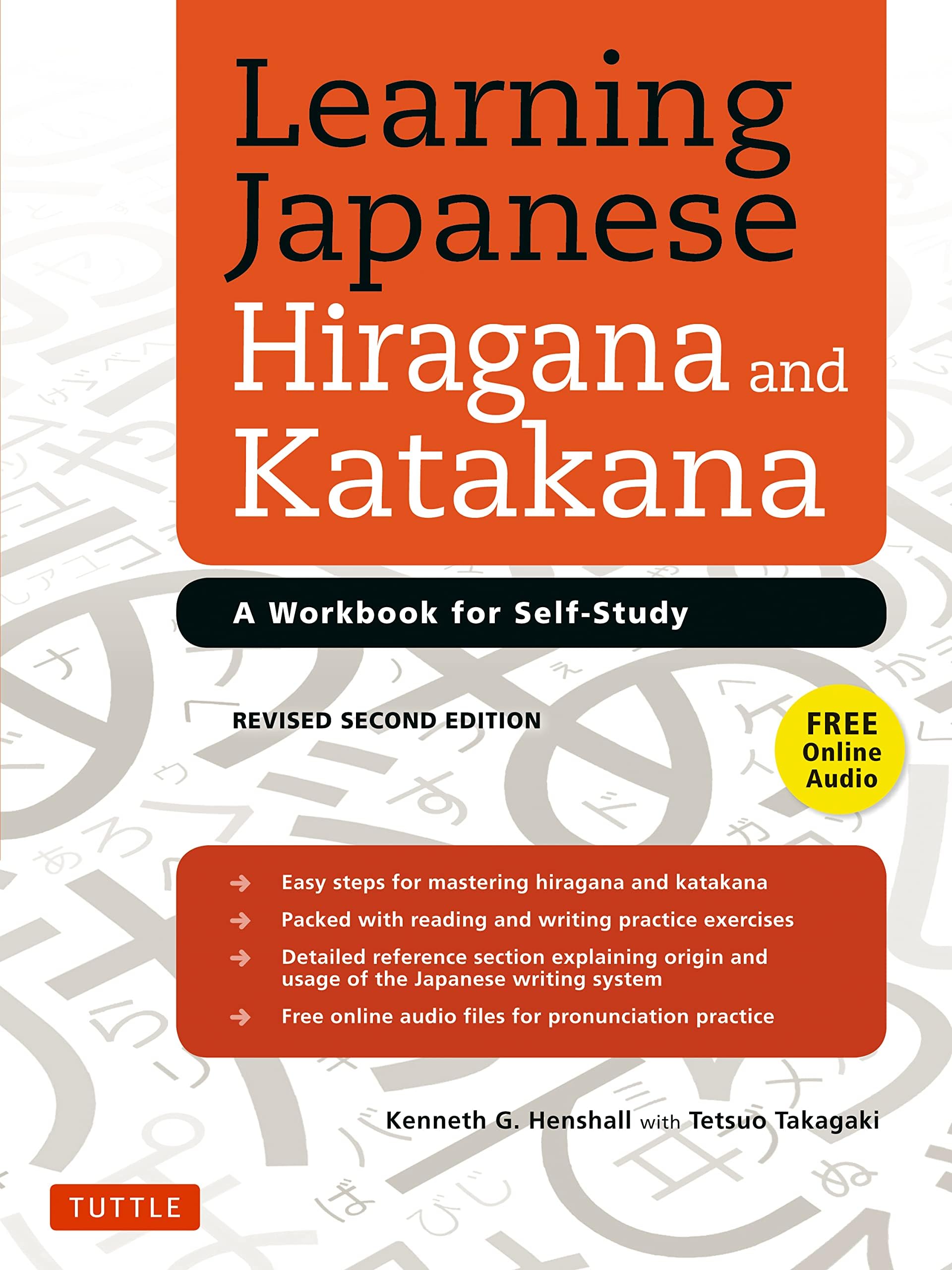
Learning Japanese Hiragana and Katakana: Workbook and Practice Sheets
Product ID: 130717638
🎧Free audio links for pronunciation
📚Comprehensive workbook & practice sheets
🖊️Ample writing space for active practice
🎌 Unlock Japanese fluency with every stroke and sound!
This Kindle workbook offers a structured, interactive approach to mastering Japanese Hiragana and Katakana. Featuring practice sheets, free audio pronunciation guides, and engaging review exercises, it supports active learning with ample writing space and digital note-taking tools. Ideal for beginners aiming to build a solid foundation in Japanese scripts.


| Best Sellers Rank | #256,394 in Kindle Store ( See Top 100 in Kindle Store ) #8 in Grammar Reference (Books) #11 in Alphabet Reference #14 in Polyglot Dictionaries |
B**.
Great introduction to the written language but may not be enough on its own
I am reviewing this as someone who is completely brand new to the language (I had TOTALLY no idea about the Japanese language prior to this book). I feel like this makes a difference with this book as other reviewers may have some degree of familiarity with the language. It's definitely an excellent introductory resource but to truly master the writing systems, this one may be not enough on its own and you may have to seek or create additional resources. PROS: -Great introduction/background about the two kana systems in the beginning of the book. -Great explanation about the distinctive differences in pronunciations between English/Japanese for certain characters -Clear explanations of stroke orders for each character -Provides interesting "history" of how each character evolved and came to be -Ample sized boxes to practice each character (some resources I have seen have pretty narrow, small boxes and aren't enough to practice some characters that have more intricate strokes involved) -Helpful review sections every few characters that introduce you to Japanese words with the characters you have just learned and provide further writing practice. These were really helpful in setting a "pace" for me to study. There is also extensive review towards the end where you practice everything you have learned. -Great price! CONS (these may be more of a concern for those who are unfamiliar with the language): -Although there are ample sized boxes, the number of boxes provided simply may not be enough to "drill" the characters into memory. More practice is definitely needed on your own. I should note that the book also provides additional photocopiable grid paper at the end where you can practice further. -Section for half-voiced sounds, etc. seems rushed. Although it is understandably based on things discussed earlier in the book, the sections dedicated to it are quite small. Flashcards, etc. may be needed. -There are great English "equivalents" provided of how the characters are pronounced. However, there is no way for you to remember what sounds each makes (I used tofugu.com quirky mnemonic chart to help me remember). -As other reviewers have mentioned, the binding does it make it a bit difficult to write in the book at times. Overall, I give it five stars as it is a phenomenal resource even for someone like me who did not have a single clue about the language. I am almost done with the book and now I can pick out characters in Japanese texts and sound out some of them even though I still have quite a bit of to learn.
Z**G
Incredible book!
Absolutely love this book! Here is why: 1). They add practice words for each set of hiragana and katakana you learn. This is very helpful for getting used to the way it is written and read. 2). They include free audio with a link that can be found in the book! Super helpful for people to use 3). They include many examples and explanations. 4). Lots of writing space for each letter! 5). They include Dakuten ! This is super important when it comes to pronunciation and reading. My only suggestion is to practice both the hiragana and katakana sets at once. They have a chapter for hiragana and one for katakana, and they separate them into small sections, like the first two columns, the vowels and k line. I find it best to learn the same hiragana and katakana lines at once. For example, I find it best to learn the hiragana vowels and katakana vowels at once. However, either way you chose will work with practice! I also think it’s important to realize you won’t become fluent with this one book! I recently started kanji, and it is a completely different matter, and it will take a while to become fluent, however, this will definitely help you become able to sound out words and help you learn how to begin writing! This book alone won’t completely teach someone hiragana and katakana, active recall and repetition are very important to memorize the writing system, and kanji will take a while to learn, but this is a very helpful resource, and I 100 percent recommend this!
L**L
Great practice
I already know kana but I bought this book for additional practice. I really like the practice writing sections. The quality is good
B**A
writing practices
I recently bought this book and I think it’s a great book if you want to practice the writing stroke orders and it’s good to help remember stuff, so if you’re a beginner I’ll definitely recommend I’m rating it 4 stars because it’s mainly just writing practices they don’t really go in depth of how you should be remembering the kana if anything I feel like the online apps to learn helps better and make better practice for remembering BUT this book does a great job helping you get the writing stroke orders down which in which case can help you memorize the stroke orders which is helpful
T**I
Wonderful instruction workbook with stroke order and lots of details!
The best part of this book is that it breaks learning the Hiragana and Katana up into manageable sections, so you don't need to take on too much. After each section of symbols you learn several words that utilize the characters that you've learned up to that point, so you're learning more quickly how to combine what you've learned. Pros: - Stroke order for each character. - Detailed information on pronunciation and origin information for each character - Cumulative word formulation, so you learn new words as you go. - Review practice after each set of characters. - Includes both Hiragana and Katana characters - Quizzes/Reviews Cons: - No flash cards. Of course you can make your own, but if this book added perforated flashcards, it would be absolutely the best all around workbook with ZERO flaws! If you do want to get a workbook that includes flash cards, these are highly recommended: Kodansha's Hiragana Workbook: https://www.amazon.com/Kodanshas-Hiragana-Workbook-Step-Step/dp/1568364415/ Kodansha's Katakana Workbook: https://www.amazon.com/Kodanshas-Katakana-Workbook-Step-Step/dp/1568364776/ Those are inexpensive ways to get a workbook that includes the flashcards you can easily pop out, but the workbook portion itself isn't as detailed/helpful as this one in my opinion. Together these 3 resources are really great!
J**.
Great for beginners
I'm really enjoying this workbook. A good mix of repetition and practical use. Great for a beginner.
A**T
A Perfect Companion for Duolingo Learners!
I've been using the "Learning Japanese Hiragana and Katakana: A Workbook for Self-Study" alongside my Duolingo sessions, and I must say, it’s a game changer! While the workbook is fantastic on its own, combining it with Duolingo really brings out its strengths. This guide nails it when it comes to teaching the writing and characters of Japanese. It offers that extra bit of practice that I was craving. If you're diving into learning Japanese and want a solid grasp of Hiragana and Katakana, this workbook is your go-to. It complements digital learning tools beautifully by reinforcing sentence structure and continuous practice. Would I recommend it? Absolutely, especially if you're pairing it with an app like Duolingo to keep the momentum going. For anyone serious about learning Japanese, this combo is a powerhouse!
@**N
Tuttle Brand is the Best 👍
The Tuttle brand books are the best i've ecperienced. The other brands use weird cartoon-like fonts and Tuttle uses a font more like a natural handwriting which i want my handwriting to look like. I wish this book had numbers included though... it would have only been a few more pages to get 1-10, 100, 1000, & 10,000 and would have made it feel like a more complete resource.
A**M
Excelente producto
Es un libro muy útil, tiene ejercicios sencillos que ayudan a memorizar y practicar la escritura.
N**H
No worries just get it! It’s as beginner friendly as it gets
Super great and helpful! I love have the make you write out sentences right after you finish a character
A**.
Excellent learning tool!
Wonderful!
T**A
A good workbook for beginners
This book is very good for beginners who start to learn hiragana and katakana. There are ample spaces to practice writing within the book. There are additional exercises to help you remember hiragana and katakana letters.
H**O
Good
Good
Trustpilot
1 month ago
4 days ago