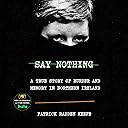

NEW YORK TIMES BESTSELLER NOW AN FX LIMITED SERIES STREAMING ON HULU NATIONAL BOOK CRITICS CIRCLE AWARD WINNER From the author of London Fallingโ a stunning, intricate narrative about a notorious killing in Northern Ireland and its devastating repercussions. One of The New York Times โs 20 Best Books of the 21st Century A Kirkus Reviews Best Nonfiction Book of the Century A Los Angeles Times Best Nonfiction Book of the Last 30 Years "Masked intruders dragged Jean McConville, a 38-year-old widow and mother of 10, from her Belfast home in 1972. In this meticulously reported bookโas finely paced as a novelโKeefe uses McConville's murder as a prism to tell the history of the Troubles in Northern Ireland. Interviewing people on both sides of the conflict, he transforms the tragic damage and waste of the era into a searing, utterly gripping saga." โ New York Times Book Review " Reads like a novel. . . . Keefe is . . . a master of narrative nonfiction. . . . An incredible story. "โRolling Stone A Best Book of the Year: The New York Times, The Washington Post, The Wall Street Journal, TIME, NPR, and more! Jean McConville's abduction was one of the most notorious episodes of the vicious conflict known as The Troubles. Everyone in the neighborhood knew the I.R.A. was responsible. But in a climate of fear and paranoia, no one would speak of it. In 2003, five years after an accord brought an uneasy peace to Northern Ireland, a set of human bones was discovered on a beach. McConville's children knew it was their mother when they were told a blue safety pin was attached to the dress--with so many kids, she had always kept it handy for diapers or ripped clothes. Patrick Radden Keefe's mesmerizing book on the bitter conflict in Northern Ireland and its aftermath uses the McConville case as a starting point for the tale of a society wracked by a violent guerrilla war, a war whose consequences have never been reckoned with. The brutal violence seared not only people like the McConville children, but also I.R.A. members embittered by a peace that fell far short of the goal of a united Ireland, and left them wondering whether the killings they committed were not justified acts of war, but simple murders. From radical and impetuous I.R.A. terrorists such as Dolours Price, who, when she was barely out of her teens, was already planting bombs in London and targeting informers for execution, to the ferocious I.R.A. mastermind known as The Dark, to the spy games and dirty schemes of the British Army, to Gerry Adams, who negotiated the peace but betrayed his hardcore comrades by denying his I.R.A. past-- Say Nothing conjures a world of passion, betrayal, vengeance, and anguish. Review: The Madness of the Troubles: A Nation Lost in Violence and Memory - Patrick Radden Keefeโs Say Nothing: A True Story of Murder and Memory in Northern Ireland is one of the most powerful works of nonfiction ever written about political violence, memory, and the human cost of a divided society. It is far more than a history of the Troubles; it is a haunting examination of how ideology, revenge, and fear can consume generations. Keefe takes the reader into a world where the boundaries between freedom fighter and terrorist, patriot and murderer, justice and vengeance become increasingly blurred. At the center of the book is the tragic disappearance of Jean McConville, a widowed mother of ten who was abducted from her Belfast home in 1972 and secretly murdered by the IRA. Her story becomes the doorway into a much larger exploration of the Irish Republican Army, British security forces, political leaders, and the countless families trapped in the nightmare of the Troubles. The mystery of what happened to McConville is compelling, but the true power of the book lies in its portrayal of a society where violence became normalized and where truth itself became another casualty of war. Keefe masterfully captures the madness and confusion that engulfed Northern Ireland. It was a place where neighbors watched neighbors, where suspicion was everywhere, and where a person could be branded a traitor one day and a hero the next depending on who was telling the story. Young men and women were drawn into underground movements that demanded absolute loyalty and often required them to commit acts of brutality that would haunt them forever. Retaliation followed retaliation until the original grievances were buried beneath decades of bloodshed. The book also examines the role of Gerry Adams, one of the most influential and controversial figures of the Northern Ireland conflict. Keefe presents Adams as a complex figure: a leader who helped guide Sinn Fรฉin from an armed struggle toward a political solution, but also a man whose relationship with the IRA and its violent campaign has been the subject of intense debate and controversy. The book explores allegations from former IRA members and others who claimed Adams held significant influence within the movement while publicly maintaining distance from its military operations. Whether viewed as a political strategist, a peacemaker, or a figure who carried unresolved contradictions from the era of violence, Adams represents the complicated moral landscape that defines the Troubles. One of the greatest strengths of Say Nothing is that Keefe refuses to reduce the conflict into a simple story of good versus evil. He does not excuse murder or terrorism, but he also shows how ordinary people can become trapped inside systems of hatred, fear, and loyalty. The result is a deeply human account of how political causes can transform into cycles of violence that are nearly impossible to escape. Keefeโs writing is exceptional. He combines the suspense of a great thriller with the depth of investigative journalism and historical analysis. The book moves with remarkable pace while never losing sight of the human suffering behind the events. Ultimately, Say Nothing is a devastating meditation on memory and truth. Even after the guns went silent, the questions remained: Who was responsible? Who should be forgiven? Can a society heal when so many secrets remain buried? This is a masterpiece of nonfictionโbrilliantly researched, beautifully written, and deeply unsettling. It is a powerful reminder that political violence rarely produces the victories people imagine, but instead leaves behind grief, bitterness, and generations struggling to understand the cost. Review: Insightful - Interesting and easy read. Puts into perspective the Northern Irish history of The Troubles.
T**R
The Madness of the Troubles: A Nation Lost in Violence and Memory
Patrick Radden Keefeโs Say Nothing: A True Story of Murder and Memory in Northern Ireland is one of the most powerful works of nonfiction ever written about political violence, memory, and the human cost of a divided society. It is far more than a history of the Troubles; it is a haunting examination of how ideology, revenge, and fear can consume generations. Keefe takes the reader into a world where the boundaries between freedom fighter and terrorist, patriot and murderer, justice and vengeance become increasingly blurred. At the center of the book is the tragic disappearance of Jean McConville, a widowed mother of ten who was abducted from her Belfast home in 1972 and secretly murdered by the IRA. Her story becomes the doorway into a much larger exploration of the Irish Republican Army, British security forces, political leaders, and the countless families trapped in the nightmare of the Troubles. The mystery of what happened to McConville is compelling, but the true power of the book lies in its portrayal of a society where violence became normalized and where truth itself became another casualty of war. Keefe masterfully captures the madness and confusion that engulfed Northern Ireland. It was a place where neighbors watched neighbors, where suspicion was everywhere, and where a person could be branded a traitor one day and a hero the next depending on who was telling the story. Young men and women were drawn into underground movements that demanded absolute loyalty and often required them to commit acts of brutality that would haunt them forever. Retaliation followed retaliation until the original grievances were buried beneath decades of bloodshed. The book also examines the role of Gerry Adams, one of the most influential and controversial figures of the Northern Ireland conflict. Keefe presents Adams as a complex figure: a leader who helped guide Sinn Fรฉin from an armed struggle toward a political solution, but also a man whose relationship with the IRA and its violent campaign has been the subject of intense debate and controversy. The book explores allegations from former IRA members and others who claimed Adams held significant influence within the movement while publicly maintaining distance from its military operations. Whether viewed as a political strategist, a peacemaker, or a figure who carried unresolved contradictions from the era of violence, Adams represents the complicated moral landscape that defines the Troubles. One of the greatest strengths of Say Nothing is that Keefe refuses to reduce the conflict into a simple story of good versus evil. He does not excuse murder or terrorism, but he also shows how ordinary people can become trapped inside systems of hatred, fear, and loyalty. The result is a deeply human account of how political causes can transform into cycles of violence that are nearly impossible to escape. Keefeโs writing is exceptional. He combines the suspense of a great thriller with the depth of investigative journalism and historical analysis. The book moves with remarkable pace while never losing sight of the human suffering behind the events. Ultimately, Say Nothing is a devastating meditation on memory and truth. Even after the guns went silent, the questions remained: Who was responsible? Who should be forgiven? Can a society heal when so many secrets remain buried? This is a masterpiece of nonfictionโbrilliantly researched, beautifully written, and deeply unsettling. It is a powerful reminder that political violence rarely produces the victories people imagine, but instead leaves behind grief, bitterness, and generations struggling to understand the cost.
L**Z
Insightful
Interesting and easy read. Puts into perspective the Northern Irish history of The Troubles.
R**E
Great book, should have bought new
The bookโs content on its own would get 5 stars but I bought a used copy that smells faintly of tobacco and triggers my asthma when I read. Book shipped quickly and otherwise was in great shape. I donโt know how this hasnโt been optioned as a limited series or film. Itโs an important history and the writing is so engrossing Iโm almost done after starting just last night.
D**N
Five Enthusiastic Stars
Say Nothing is at once a true crime/murder mystery; history of the Troubles mainly the IRAโs side. as seen through the eyes of Delours Price, Brendan Hughes, and Gerry Adams; character study, and political thriller all rolled into one. It reads like a novel because Radden Keefe does such a fantastic job allowing the reader to get to know the main characters; there is never a dull moment in the book. The book begins with the disappearance of Jean McConville, a 38-year-old widow and mother of ten, on December 7, 1972. From there, the history of the Troubles comes into focus, with the violence beginning in the mid-1960s, even though as Radden Keefe points out the strife in Northern Ireland didnโt begin at that time. The IRAโs violent wing, the Provisionals, as opposed to the Stickies, emerged during that time, as the IRA had been in existence long before, with some of the Provos coming from a long line of IRA family members. Say Nothing pierces into the nature of the human condition and political power. The Troubles serve as a sort of microcosm of the general nature of political violence in the name of a cause. Does anything justify innocent people been killed in the name of a cause?
P**L
Be Prepared for a Riveting Book You Can't Put Down
Say Nothing by Patrick Radden Keefe is subtitled A True Story of Murder and Memory in Northern Ireland. It is very rare for me to ignore everything around me and become completely immersed in a book, no matter how great or suspenseful it is, but that is exactly what happened with this one. Being across the ocean, I really didnโt know that much about life in Northern Ireland during The Troubles, which stretched from 1968 to 1998, at the time events were happening. I first became aware of the deep divisions only after I began researching my ancestry, which led to Ballygawley, County Tyrone, Northern Ireland. During trips there, I visited Belfast and took the bus tours which included much about The Troubles and brought me past the Peace Walls and art commemorating both sides. In fact, one of the last British soldiers to be killed had the same last name as my ancestors (Neely), who was killed in an IRA bomb attack outside Ballygawley. So when I came across the story of Jean McConville, a 38-year-old mother of 10 children who was abducted and murdered by the IRA, I was intrigued. Who would burst into someoneโs home, knowing the father had died of cancer, and remove the mother of children as young as six years of age right in front of them, take her to a remote location and murder her? They had to have known the children would be left on their own, perhaps even to die without adult care. And why would anyone be that inhumane? Patrick Radden Keefeโs book, Say Nothing, answers those questions in a very balanced way. Being a journalist by tradeโa New Yorker Magazine award-winning journalistโI immediately knew from the level of detail that he had painstakingly researched not only Jean McConville and her family but also each of the individuals that had some level of participation in her abduction and murder. The result is an absolutely riveting story that delves deep into what causes people to become terrorists, the changes that occur in a personโs mind when they are raised among extreme levels of hatred and the extent to which they will go because they believe in a cause larger than themselves. What was particularly striking was the revelation that many of the people involved in acts of terrorโthe bombing of London and Northern Ireland and the killing of innocent civiliansโsuffered abnormally high rates of drug dependency, alcoholism and PTSD after The Troubles had officially ended with the Good Friday Peace Agreement of 1998. The agreement caused the IRA to stand down, the British to release political prisoners held without trial or conviction, but it fell short of turning Northern Ireland over to the Irish Republicans. Because that was the goal of the IRA, members were left wondering what the killing and maiming was all about if their leaders were willing to simply give up the goal and work with the British politically through Sinn Fein. In Jean McConvilleโs caseโthe central subject of this bookโshe was a Protestant that had taken work as a domestic in a Catholic household, subsequently falling in love with her bossโ Catholic son. In America, this would not have been perceived as a problem at all. In Northern Ireland, it led to the kiss of death and a generation of children traumatized by their fatherโs death, their motherโs murder and their subsequent separation and hellish time in abusive, Catholic-run childrenโs homes that seem right out of a Charles Dickens novel. The investigations into Jean McConvilleโs disappearance would lead to Dolours and Marian Priceโit is Doloursโ picture that appears on the front cover, her face partially hidden consistent with IRA terrorists of the time. The damning evidence was in the form of Doloursโ own voice as she participated in a Boston College project in which she admitted on audiotape that she drove McConville across the border to Dundalk in the Republic of Ireland. Later, when the men instructed to kill her did not want to do that because McConville was a widowed mother of ten, Dolours drove back to Dundalk with two others, assumed to be her sister Marian and Ivor Bell, and murdered McConville, burying her in an unmarked grave. It would take decades and particularly strong storms to erode the ground in which sheโd been hastily buried, for her body to be found. By that time, her children were grown and had families of their own. We do find out who fired the fatal shot that killed Jean McConville. But the story is far larger than that. It is the story of a country that had been invaded by foreign forces more than 700 years ago and divided in the early 20th century so that one part of the country became the free and independent Republic of Ireland while the other part remained a colony controlled by Great Britain. It is the story of those loyal to the United Kingdom as well as those carrying on a tradition of a free Ireland for which their ancestors fought for hundreds of years. It is also the story of supposed men of Godโpriests and ministersโwho fueled the hatred within their communities, leading to spiraling violence and extremism on both sides. With Brexit, tensions have once again increased between the two factions and ultimately, it will be London who will decide its fate. I highly recommend this book. Be prepared for a riveting tale and a book you canโt put down.
C**U
Excellent Read
excellent book movie is true to the book as well
J**A
Wonderful Nonfiction on Ireland and its Violent History with the I.R.A.
This is an excellent, brutally honest book on the happenings in Ireland back then. Keefe does a really great job at capturing your attention in the beginning with McConvilleโs capture and subsequent disappearance. He then pivots to the I.R.A. and the unrest in Ireland, and seems to forget the buildup that he started with at the beginning after a while. Or maybe I got lost in all the details. It felt to me that I got lost in all the details towards the end, I was โhistoried outโ, if you will, and wanted to get on with solving the murder. He eventually did and I was very satisfied. Overall, this was a thoroughly researched, well-written book, and I clearly did not know enough about Irelandโs violent history prior to reading this. I am blown away by how long the violence went on, by how many people suffered, and by the craziness of the I.R.Aโs tactics to get what they wanted. They used hunger strikes to some success (but some also died). A hunger strike was successful in electing a member of the I.R.A. to Parliament (he was in jail, whaat?!), and last but certainly not least, we have Dolours and Marian Price. There is a lot to unpack with these two. They are sisters that caused so much havoc in Ireland, using their beauty to appear innocent, as in, โWho us? We couldnโt possibly be this dangerous, we are just two pretty sisters, move alongโฆโ And yet, they were quite possibly the masterminds behind much of the destruction during this time in Ireland. I will neither confirm nor deny whether this is a fact, you must read for yourself.
S**R
awesome book
Great read. Written in a great manner that kept my reading and reading.if you are into the history of onNorthern Ireland and The Troubles, this is a must read
P**R
Nail biting and well written
Very gripping book
C**A
Great
Great book in perfect condition.
G**E
amazing read. I could not put it down
I left Belfast in 1973 to go to London as young woman barely 19 years old to train as a nurse like many before me. I kept abreast of the news from Northern Ireland and was always very doubtful of Gerry Adamโs and his motivations but the detail in this book is phenomenal. The death of Jean McConville and her story has fascinated me since her disappearance but I was unaware of the consequences for her children and my heart goes out to them. I am so glad to have come across this book and will recommend it to my family as an incredible historical account of the troubles and the people who were integral to the continuance of the deaths and destruction during those years.
C**E
Interesting, well written and entertaining
A book to add to my top list of recommendations. The characters and facts are well explained with all the nuances required for an immersion in the human drama and thus the personal misery to which a process of violent radicalisation leads. Entertaining to read to boot
A**S
Best book on IRA fighters and Ulster war ! ( Spoiler alert)
This was the first book I read on the terrible war in Northern Ireland . The book is a non fiction book, but it is readable and exciting as a novel . It is one of the best book you will find that shows the human and moral side of war and IRA fighters . The book chronicles the history of some Ulster Catholics who, after having been mistreated by the English soldiers and the Protestant English citizens of user, decide to fight back . They become part of Ira, the Catholic guerrilla group which fight with terror attacks thรฉ English occupiers . They accept the idea to die and kill for the freedom of Ulster and the Catholic freedom, but all the Irish protagonists become disillusioned . Some of the Irish protagonists become politicians and start negotiations with the British occupiers, in order to have a democracratic process and build peace between protestants and Catholics. Other protagonists become hardened fighters of the Ira, who fight against British soldiers and execute spies of the British intelligence. The problem is that these spies of the British are actually innocent people or people of the IRA who have broken certain rules of the terror group. The protagonists rationalize the guilt of having executed innocent people believing that they have killed informers of the British army, but probably the victims were only poor people who were caught in the war and were killed only for some stupid suspicion. This fact is a terrible burden for the IRA fighters and the book also expose how they dealt with the guilt of having killed innocent people during the war: some will remain silent about the crimes made by ira, other will speak about them. The end of the book is very sad and I felt very sad for all the terrible events this poor people lived only some decades ago . The author has written this book in a very engaging way and explains clearly the origins, political and psychological aspects of the Irish troubles and how people can find peace after a terrible war . I found disappointing only the fact that no British soldiers or officers, involved in the counter insurgency operations against Ira, were interviewed for the book. A British prospective about the events would have given more depth to the book .
Trustpilot
2 months ago
2 months ago