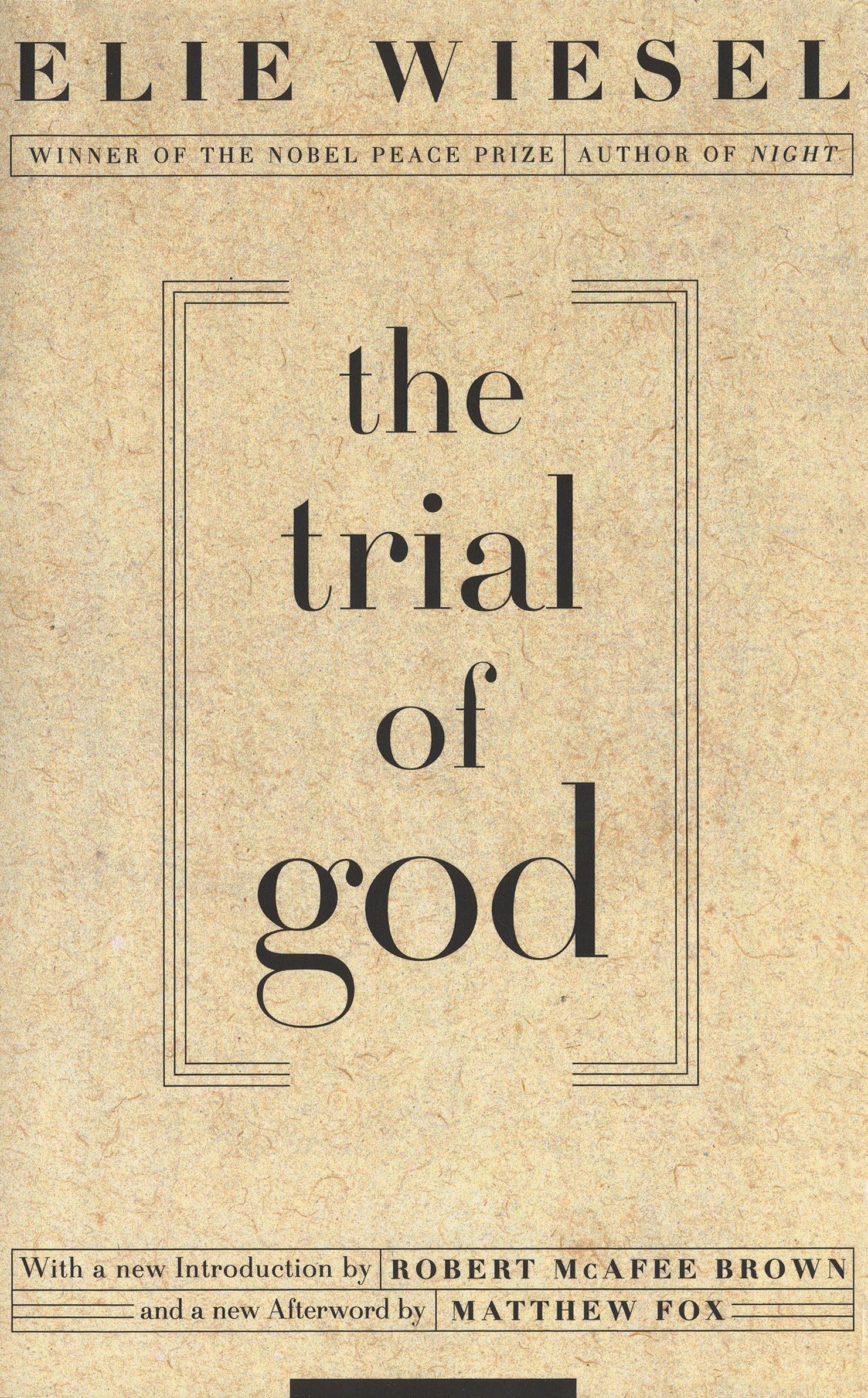
The Trial of God: (as it was held on February 25, 1649, in Shamgorod)
Product ID: 11045623
Desertcart purchases this item on your behalf and handles shipping, customs, and support to Japan.
The Trial of God (as it was held on February 25, 1649, in Shamgorod) A Play by Elie Wiesel Translated by Marion Wiesel Introduction by Robert McAfee Brown Afterword by Matthew Fox Where is God when innocent human beings suffer? This drama lays bare the most vexing questions confronting the moral imagination. Set in a Ukranian village in the year 1649, this haunting play takes place in the aftermath of a pogrom. Only two Jews, Berish the innkeeper and his daughter Hannah, have survived the brutal Cossack raids. When three itinerant actors arrive in town to perform a Purim play, Berish demands that they stage a mock trial of God instead, indicting Him for His silence in the face of evil. Berish, a latter-day Job, is ready to take on the role of prosecutor. But who will defend God? A mysterious stranger named Sam, who seems oddly familiar to everyone present, shows up just in time to volunteer. The idea for this play came from an event that Elie Wiesel witnessed as a boy in Auschwitz: “Three rabbis—all erudite and pious men—decided one evening to indict God for allowing His children to be massacred. I remember: I was there, and I felt like crying. But there nobody cried.” Inspired and challenged by this play, Christian theologians Robert McAfee Brown and Matthew Fox, in a new Introduction and Afterword, join Elie Wiesel in the search for faith in a world where God is silent. Review: Disturbing - This is a disturbing book that tells a disturbing story. Since other reviewers have done a great job providing a synopsis of the book I will go right to the matter of what I think of it. In many ways I was dissapointed. I would have much rather that Wiesel wrote about the trial that he witnessed in Auschwitz rather than placing it in a Ukrainian villege. However, I think he tried and for some reason could not do it. My personal opinion is that the original trial was too painful. So, the play seems to have been inspired by actual events but goes off in another direction entirely. Or does it? I have trouble deciding. There are many layers to this play - just like the four levels introduced by Bachya ben Asher for the interpretation of scripture: peshat, or "plain meaning"; derash, or "rabbinic aggadah"; derekh hassekhel, or "philosophical"; and sod, or "kabbalistic." The discerning, or knowledgable, reader will find all those levels present in this work. Wiesel is never an easy writer to read or to understand, and this play is no different. Review: The space between the words... - All of Elie Wiesel's writings are worth a few read through. Wiesel has a beautiful way with words that allow the reader to put themselves and their experiences into anything he writes. This then leads to many personal lessons being ingrained in every text for each person, and also adds many layers of complexity to his writings. This text especially has so much more to give, when you look a little closer.
| Best Sellers Rank | #95,188 in Books ( See Top 100 in Books ) #38 in Playwriting (Books) #44 in Play & Scriptwriting Writing Reference #794 in Dramas & Plays |
| Customer Reviews | 4.6 out of 5 stars 207 Reviews |
M**I
Disturbing
This is a disturbing book that tells a disturbing story. Since other reviewers have done a great job providing a synopsis of the book I will go right to the matter of what I think of it. In many ways I was dissapointed. I would have much rather that Wiesel wrote about the trial that he witnessed in Auschwitz rather than placing it in a Ukrainian villege. However, I think he tried and for some reason could not do it. My personal opinion is that the original trial was too painful. So, the play seems to have been inspired by actual events but goes off in another direction entirely. Or does it? I have trouble deciding. There are many layers to this play - just like the four levels introduced by Bachya ben Asher for the interpretation of scripture: peshat, or "plain meaning"; derash, or "rabbinic aggadah"; derekh hassekhel, or "philosophical"; and sod, or "kabbalistic." The discerning, or knowledgable, reader will find all those levels present in this work. Wiesel is never an easy writer to read or to understand, and this play is no different.
D**H
The space between the words...
All of Elie Wiesel's writings are worth a few read through. Wiesel has a beautiful way with words that allow the reader to put themselves and their experiences into anything he writes. This then leads to many personal lessons being ingrained in every text for each person, and also adds many layers of complexity to his writings. This text especially has so much more to give, when you look a little closer.
S**E
Great tale that Elie Wiesel does so well
I can not fathom the depths for which one who has experienced the Holocaust must question his faith. But this book, as in the setting of the Sun, anticipates a new day. Elie Wiesel has experienced much and done great justice to humankind for his many stories that highlight in great depth the human condition. Yet, in this book, a trial of G-d is used to bring justice for events passed. Elie does this so well. And if we look ahead then we must consider that Berish may yet be killed. It is in future events that we may hold hope. "Sam" can be set in the Ukraine. Just as well "Samuel" may yet have voice, "...hope without memory is like memory without hope."
D**A
Enlightening
Religious or not, makes you look at God and our place as humans in this world in a whole new light. Quick read and beautifully written.
S**K
Disturbing, Thought Provoking
[i]The idea for this play came from an event that Elie Wiesel witnessed as a boy in Auschwitz: “Three rabbis - all erudite and pious men - decided one evening to indict God for allowing His children to be massacred. I remember: I was there, and I felt like crying. But there nobody cried.”[/i]Taken from the blurb on the back cover of the book. Set in Shamgorod, Ukraine, on Purim eve 1649, this tragic farce follows two Jewish survivors after a savage pogrom. Three Jewish minstrels arrive to perform a Purim play but instead, the two survivors stage a Din Torah (trial of God), questioning divine silence amid their suffering. This act highlights human dignity and moral courage, akin to Job’s biblical struggle. With humor and irony, the play reveals raw anguish as no one initially defends God. It becomes a testament to enduring faith through honest questioning, transforming into a powerful expression of resilience and hope. Elie Wiesel’s work honors the indomitable human spirit that defies despair, reminding us that questioning deepens faith, art and community affirm life, and even in darkness, the choice to protest, remember, and hope persists, urging us to confront suffering while embracing creativity, solidarity, and life itself.
C**R
It will stay with you.
This play leaves the reader with more questions than it does answers, which, of course, is part of the point. Thought provoking and well-written, it will appeal to those who are angry, bitter, scornful, justice-seeking, confused, questioning, thankful and joyful. I have to say while I didn’t expect (or want) everything to be neatly tied in a bow at the end, I did not like the author’s choice of reveal, and was hoping it would be the stranger’s opposite who would choose to reveal himself at the end. I think it says a lot about the author’s view on the topic at hand (and perhaps my own) and thus takes away from the unanswered question, guilty or not guilty?
P**Y
Missing print
I enjoyed the book, however there were a number of pages that were missing print..hard to follow the text when it's not there..wished I'd known earlier so I could have returned
M**U
A masterpiece
This is a masterpiece, a great book that makes you think about man and God, about history, about prejudice and injustice, about how people react when pushed to the edge.
P**R
You want to put it down and stop reading it but then again you need to know how it ends!
It shocks and forces you to think deeper on the concept of justice and God.
A**O
Elie Wiesel era extremamente criativo
Absolutamente perfeito
M**L
Amazing
This is one of the most interesting books on the subject that I've every read. The author has such a wonderful way of communicating a most difficult subject. He does it with humour, pathos, and a sensitivity that I found compelling. I had read it several times and will probably read it several more times in the years to come.
S**U
Priceless
I am a huge fan of Elie Wiesel so was very happy with this book, since I read "Night" and saw his interview with Oprah Winfrey, I was hooked. The writing is graceful and strong and poignant. Elie Wiesel came out of a hellish place and was restored, enlightened, changed, and forgiving. His writing is soft and passionate and easy to read. The Trial of God is awesome, more trials please for the injustices caused by mankind (man unkind) The price was reasonable and the book was delivered very quickly. I am currently reading 'Dawn' and 'Day' by the same author.
N**K
Five Stars
Excellent service would use again
Trustpilot
2 days ago
5 days ago